Artwork
Untitled
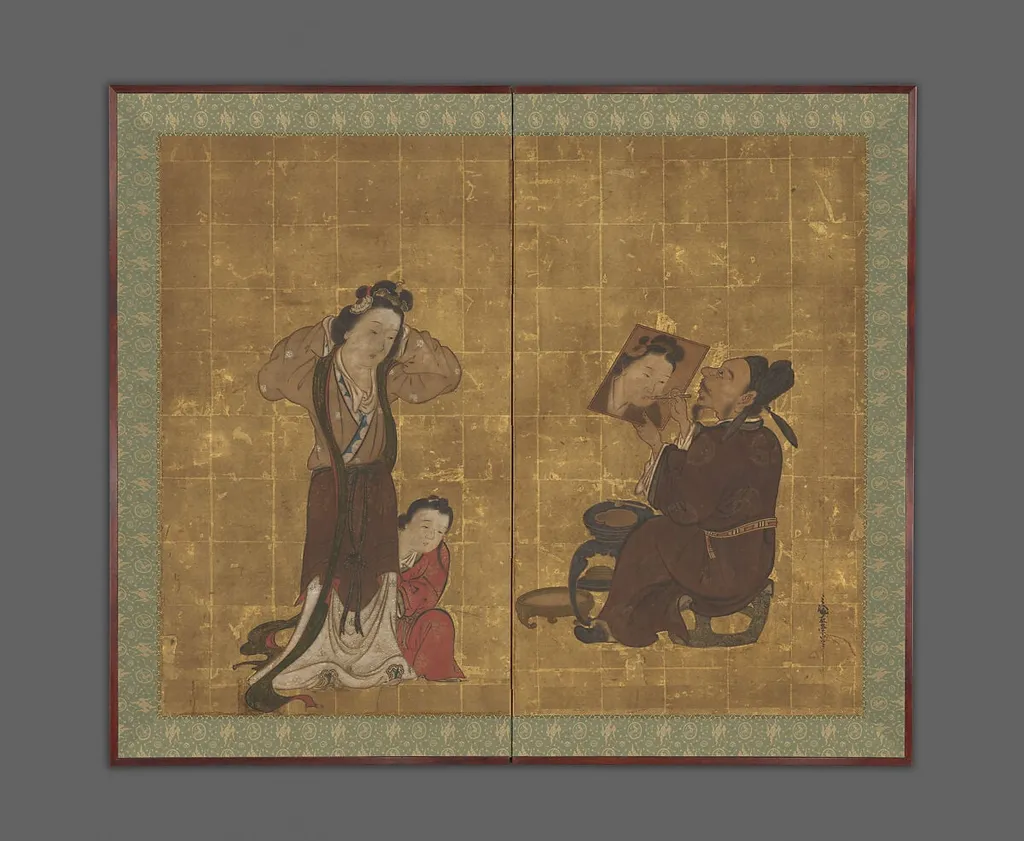
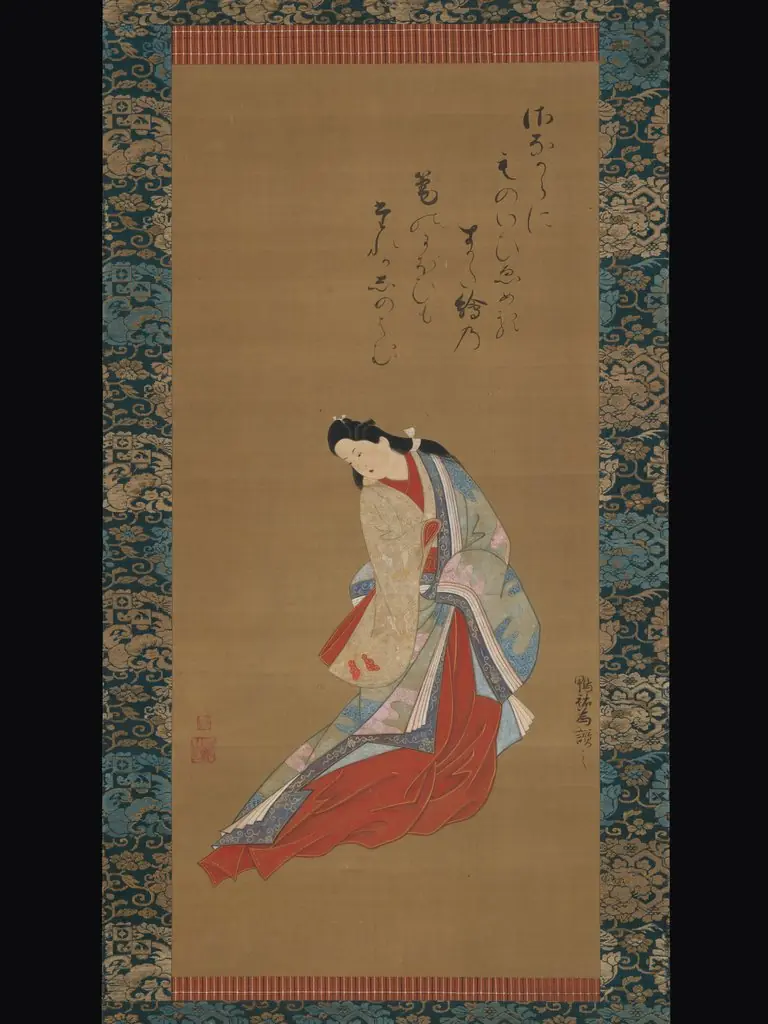
Untitled is an ink painting by the Baroque artist Miwa Zaiei. It dates from 1750 and is held in the collection of the Metropolitan Museum of Art.
About this work
Overview
This two-panel folding screen, created around 1750 by Miwa Zaiei, is executed in ink, color, and gold leaf on paper. It depicts a quiet domestic moment divided across its panels, framed by green borders and set against a luminous gold ground. The composition balances human figures with ornamental detail, reflecting the refined aesthetic of Edo-period Japanese painting.
Subject & Meaning
The left panel shows a woman with one hand raised to her head, a child kneeling beside her, suggesting contemplation or distress. The right panel portrays a man seated cross-legged, intently studying a portrait he is painting, holding a small mirror to observe his own features. Together, the scenes imply a meditation on identity, observation, and the private rituals of artistic creation.
Technique & Style
Gold leaf forms a continuous, reflective background that elevates the figures without depicting a physical space. Fine brushwork defines the folds of clothing and facial expressions, while the green borders frame the scenes with restrained elegance. The use of ink and subtle color emphasizes line and texture over dramatic contrast, characteristic of literati-inspired traditions.
History & Provenance
The screen entered the collection of The Metropolitan Museum of Art as part of its broader acquisition of Japanese decorative arts in the early 20th century. Its attribution to Miwa Zaiei, a lesser-known Edo-period painter, reflects scholarly efforts to document regional artists beyond the dominant schools of the time.
Context
Created during the mid-Edo period, the work aligns with a growing interest in domestic life and the artist’s own process. While courtly and religious themes dominated earlier periods, this screen reflects a quieter, introspective turn in painting, valuing personal ritual and the act of making art as worthy subjects.
Legacy
Miwa Zaiei’s screen contributes to a broader understanding of Edo-period genre painting beyond major urban centers. Its preservation and display in a major Western institution highlight the global recognition of Japan’s nuanced visual culture, particularly works that capture intimate, everyday moments with technical restraint.
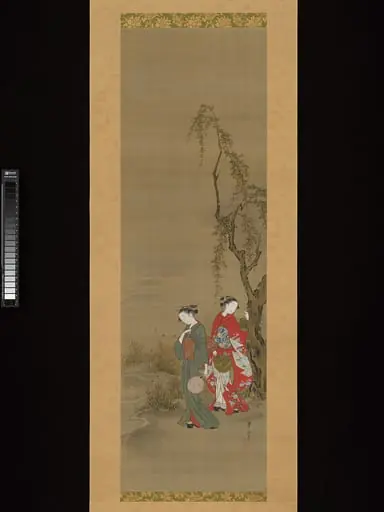
Artist & collection

- Untitled
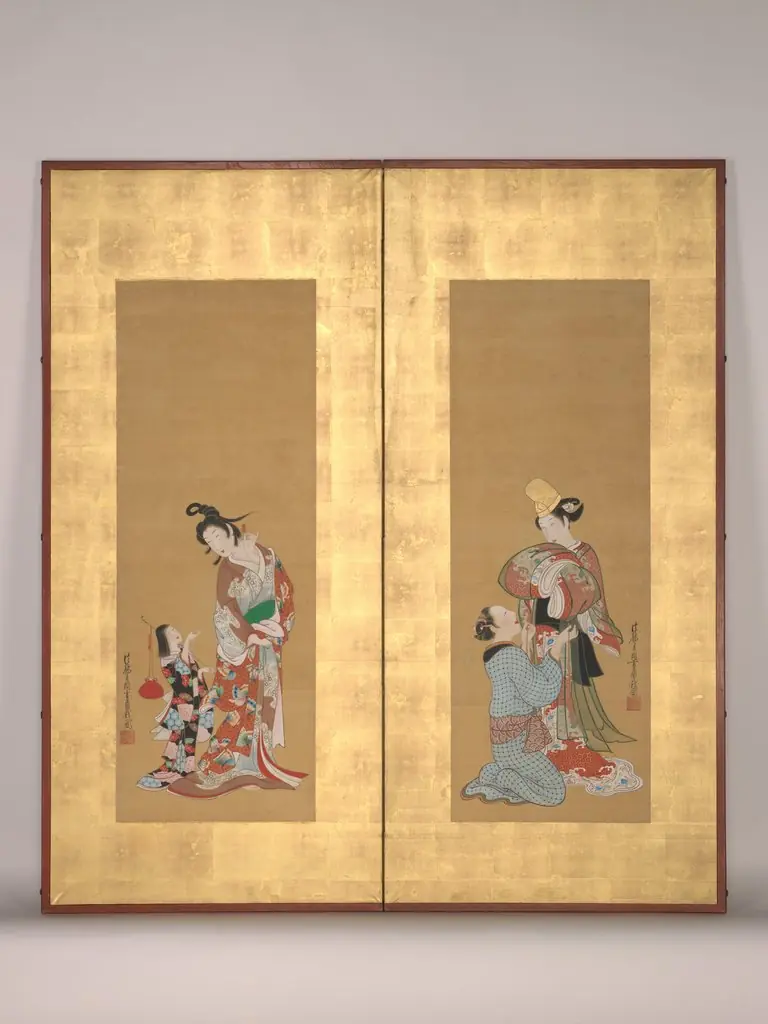 Shirabyōshi Dancer and Female Servant; Courtesan and Girl Attendant
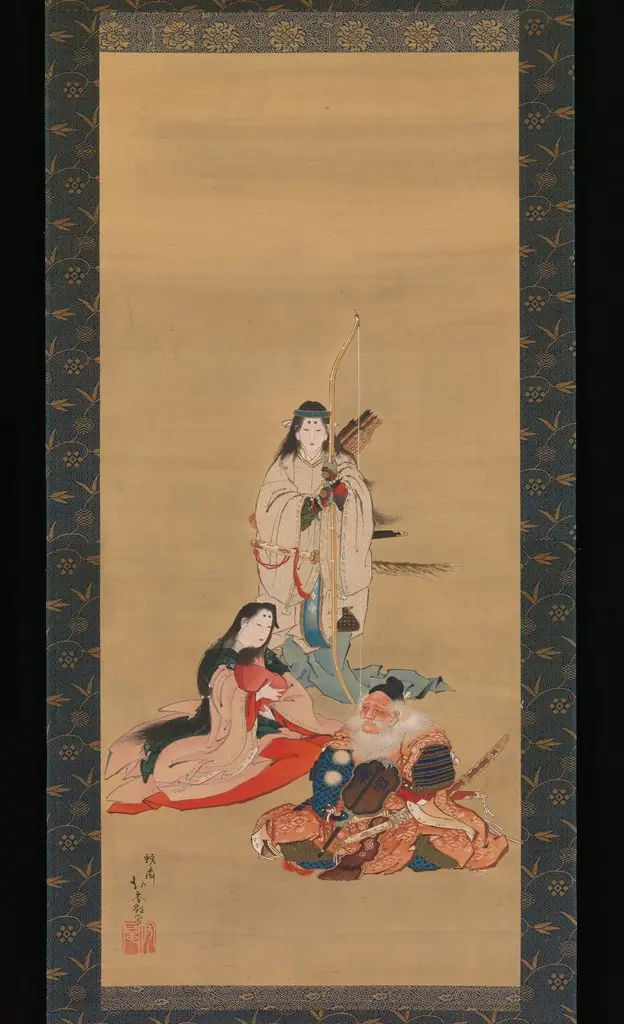 The Legendary Empress Jingū
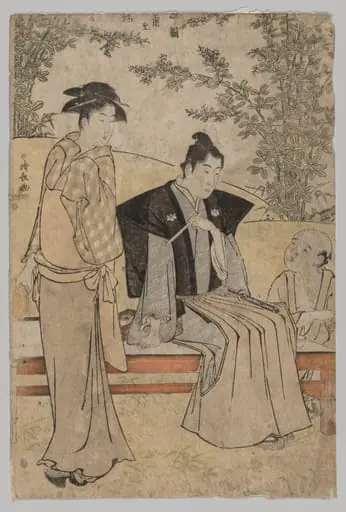 Two Lovers (from the series Brocades of the East in Fashion)
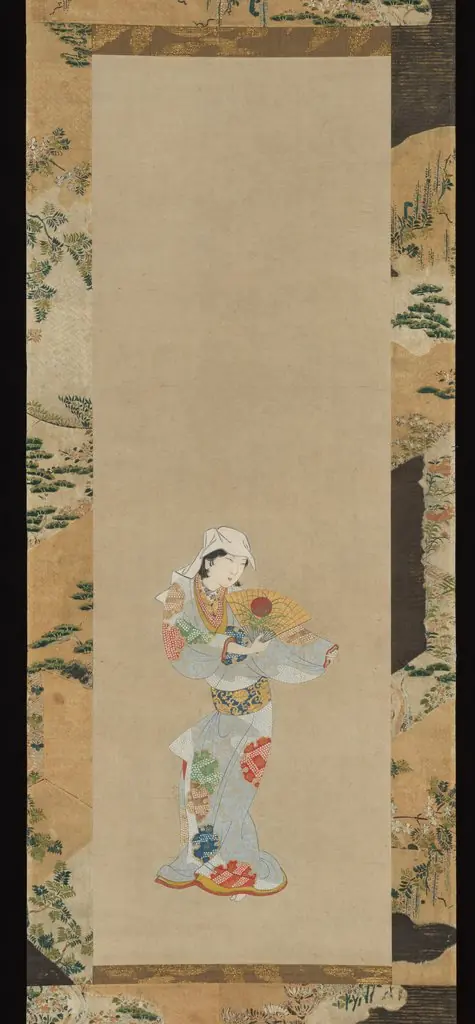 Dancer with a Fan
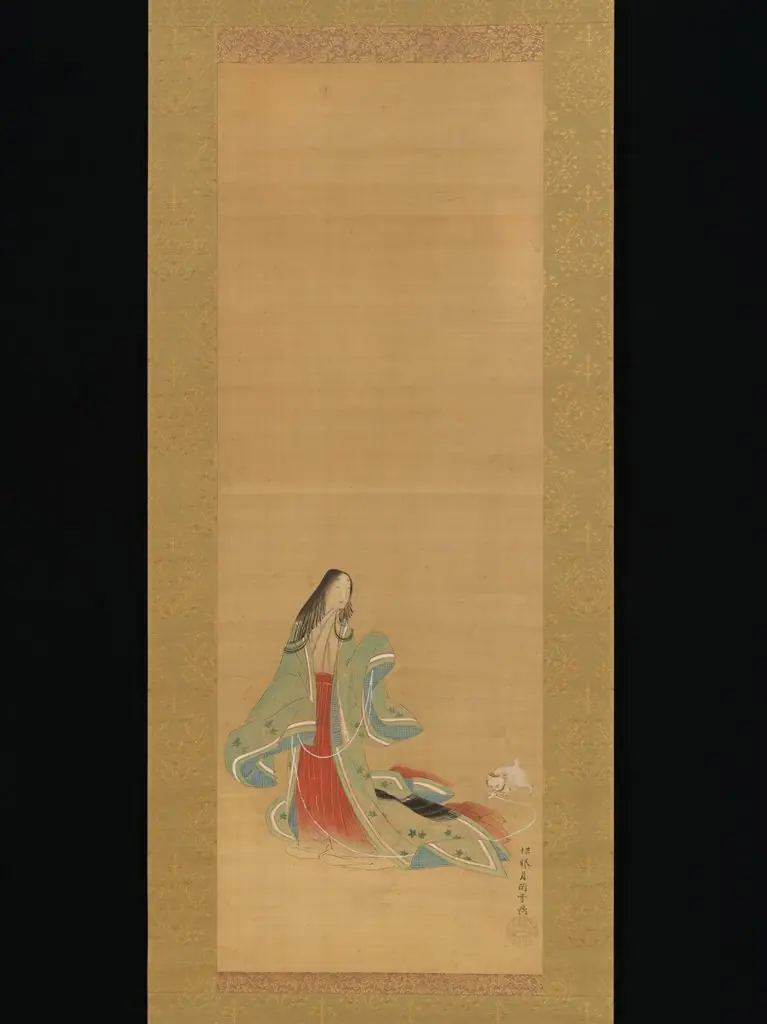 The Third Princess with her Cat, from the "New Herbs I" (Wakana I) chapter The Tale of Genji (Genji monogatari}
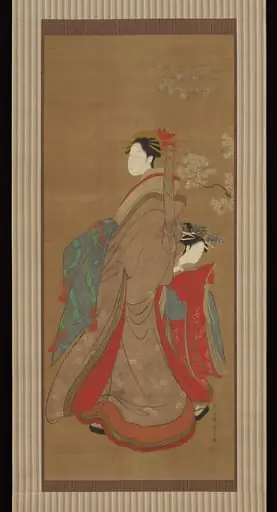 Untitled
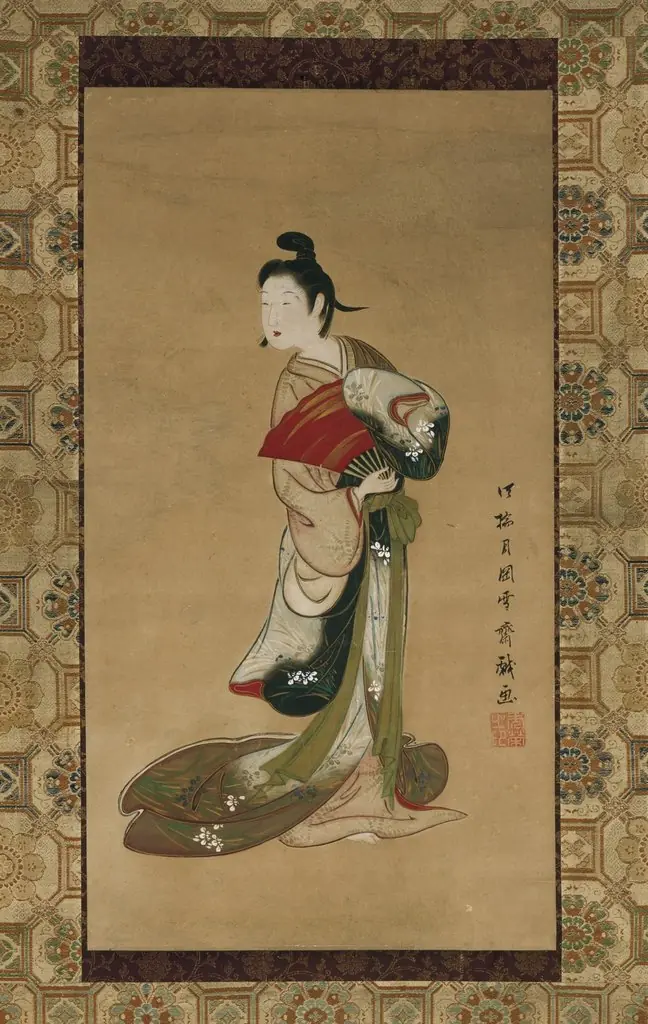 Courtesan
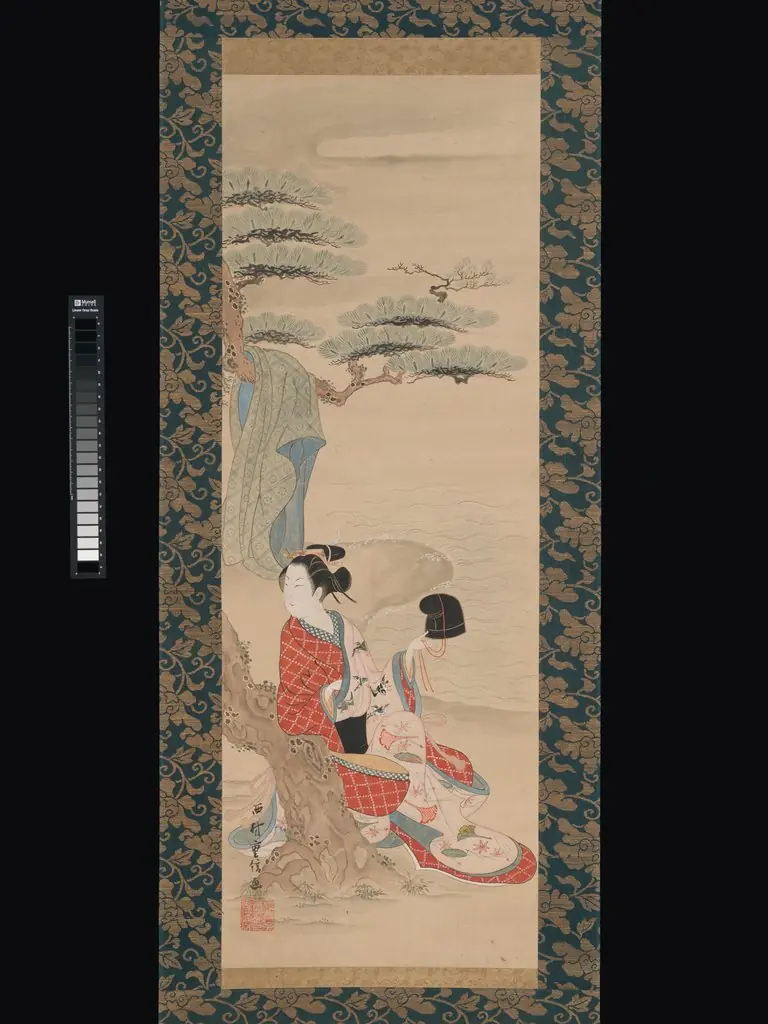 The Brine Maiden Matsukaze
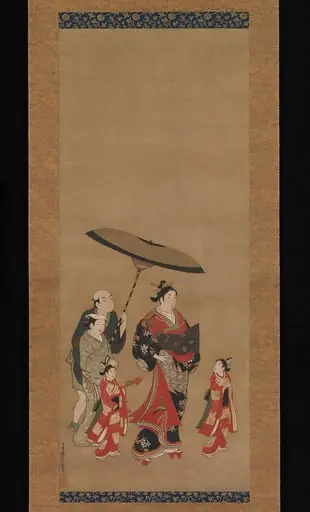 Untitled
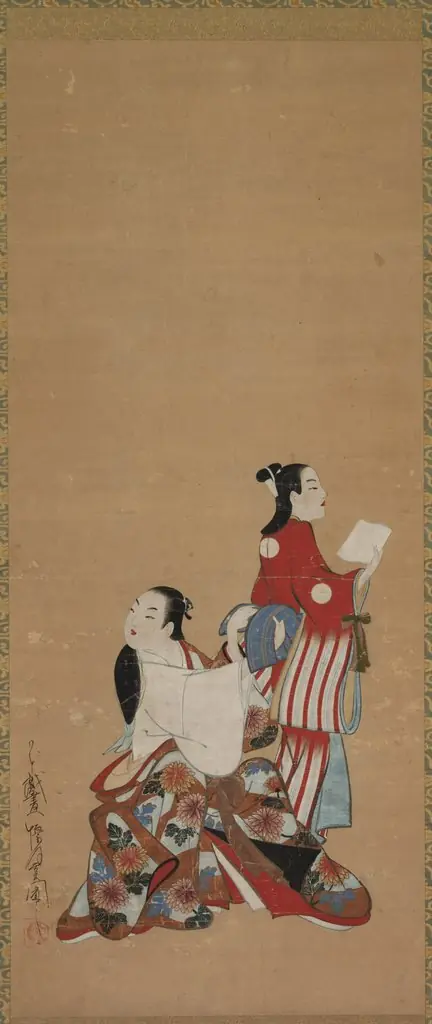 Courtesan and Attendant
 Standing Courtesan