Artwork
Untitled
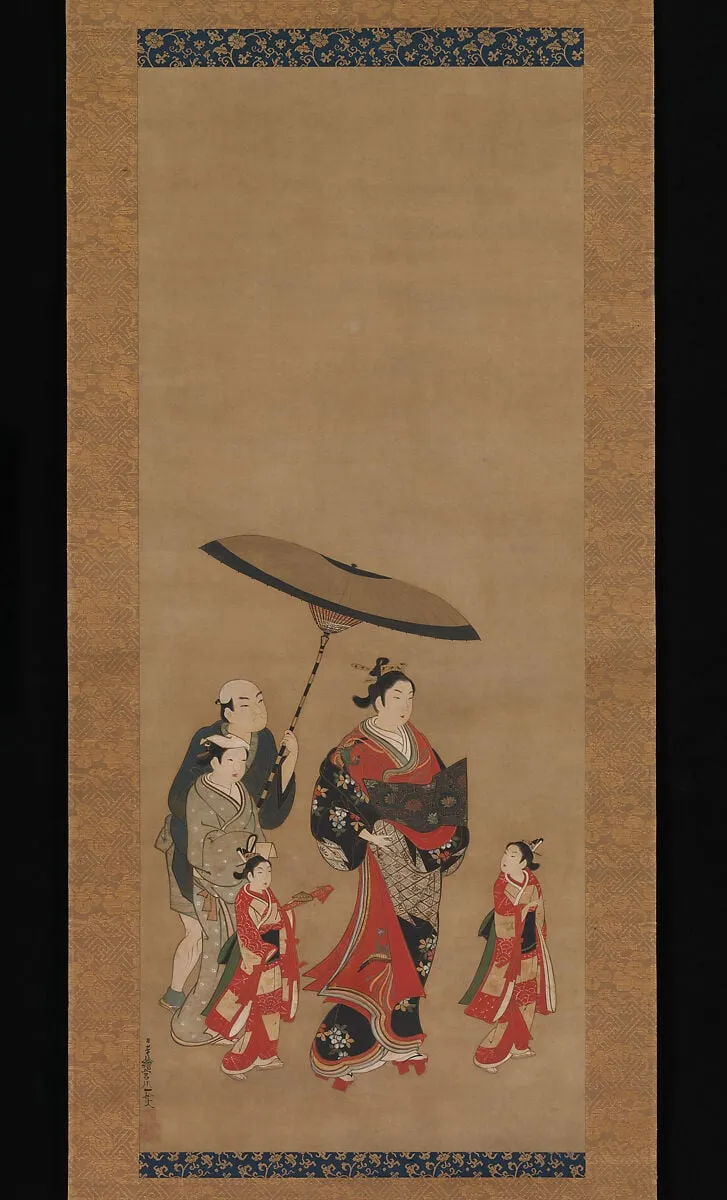
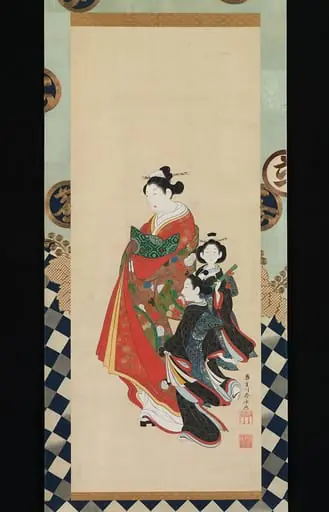
Untitled is an ink painting by the Baroque artist Miyagawa Issho. It dates from 1740 and is held in the collection of the Metropolitan Museum of Art.
- Accession no.
- 2015.500.9.20
- Credit line
- Gift of Florence and Herbert Irving, 2015
About this work
Subject & Meaning
A parasol is a central visual element, likely serving as a narrative device to indicate weather conditions or social status within the Edo-period setting.
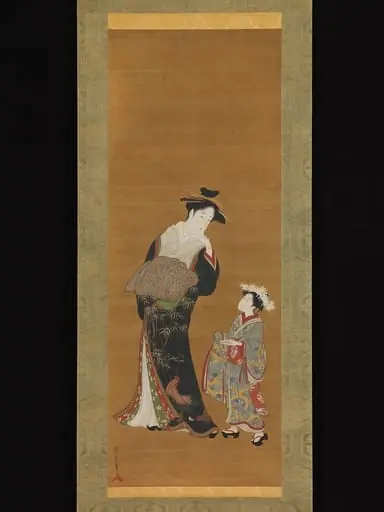
Created in 1740 by Miyagawa Isshō, this hanging scroll on silk presents a genre scene rather than a mythological or religious narrative. The composition depicts a specific interaction between a man and a woman, accompanied by a girl, set within a domestic or street context. A parasol is a central visual element, likely serving as a narrative device to indicate weather conditions or social status within the Edo-period setting.
As a genre painting, the work functions as a representation of everyday life in 18th-century Japan, focusing on the human figures and their immediate environment. The inclusion of gold and color on silk elevates these ordinary subjects, suggesting an appreciation for the aesthetic details of contemporary social customs and interactions.
Technique & Style
This work is executed as a hanging scroll. The artist employed ink and opaque color enhanced with gold on a silk support. Measuring 90 cm in height and 37 cm in width, the painting depicts a genre scene featuring a man, a woman, and a girl, with a parasol included among the figures.
The combination of ink, color, and gold on silk reflects traditional Japanese painting methods of the period, utilizing the lustrous quality of the metallic pigment against the textile ground.
History & Provenance
The hanging scroll was created by the Japanese artist Miyagawa Isshō in 1740. Executed in ink, color, and gold on silk, the work measures 90 cm in height and 37 cm in width. The painting is currently held in the collection of the Metropolitan Museum of Art in New York. The specific commission details and earlier ownership history are not recorded in the available documentation.
Overview
Miyagawa Isshō created this untitled hanging scroll around 1740, utilizing ink, color, and gold on silk. The painting captures a genre scene, depicting a procession of figures moving along a narrow path, sheltered by open parasols. This work offers a glimpse into the social life and fashion of its period.
Context
Miyagawa Isshō was active in Kyoto during a period characterized by bustling urban life. The city was a hub of cultural activity, filled with numerous teahouses and frequent festivals. This environment provided rich subject matter for artists like Isshō, who often depicted genre scenes reflecting contemporary customs, fashion, and social interactions within the city's vibrant public spaces.
Artist & collection

Artist
Miyagawa Isshō (宮川 一笑, 1689 – 20 January 1780) was a Japanese painter in the ukiyo-e style, primarily depicting kabuki actors, geisha, sumo wrestlers, and other elements of everyday urban culture.

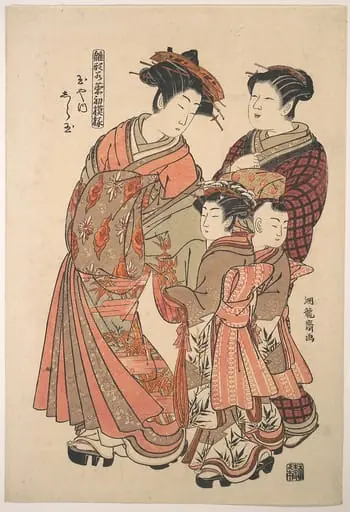
- 『雛形若菜初模様 玉や内 しら玉』|The Courtesan Shiratama of the Tamaya Brothel, from the series “A Pat-tern Book of the Year’s First Designs, Fresh as Spring Herbs” (“Hinagata wakana hatsu moyō”)
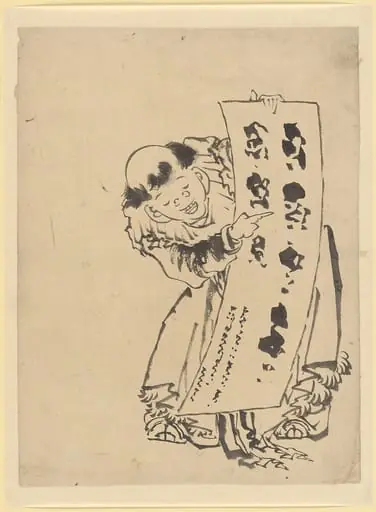 Untitled
 Untitled
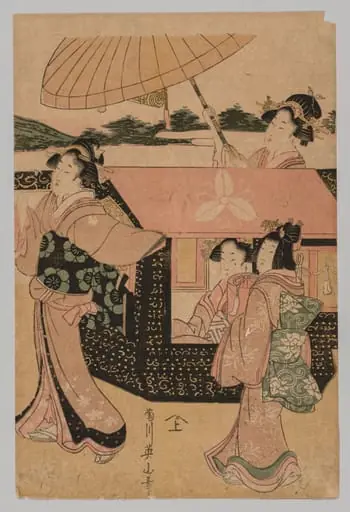 No Title
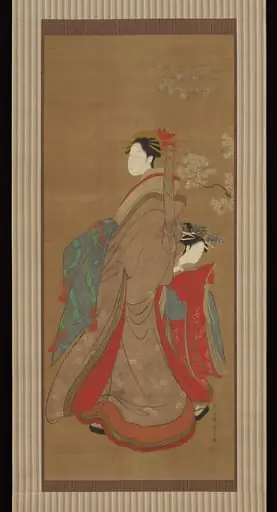 Untitled
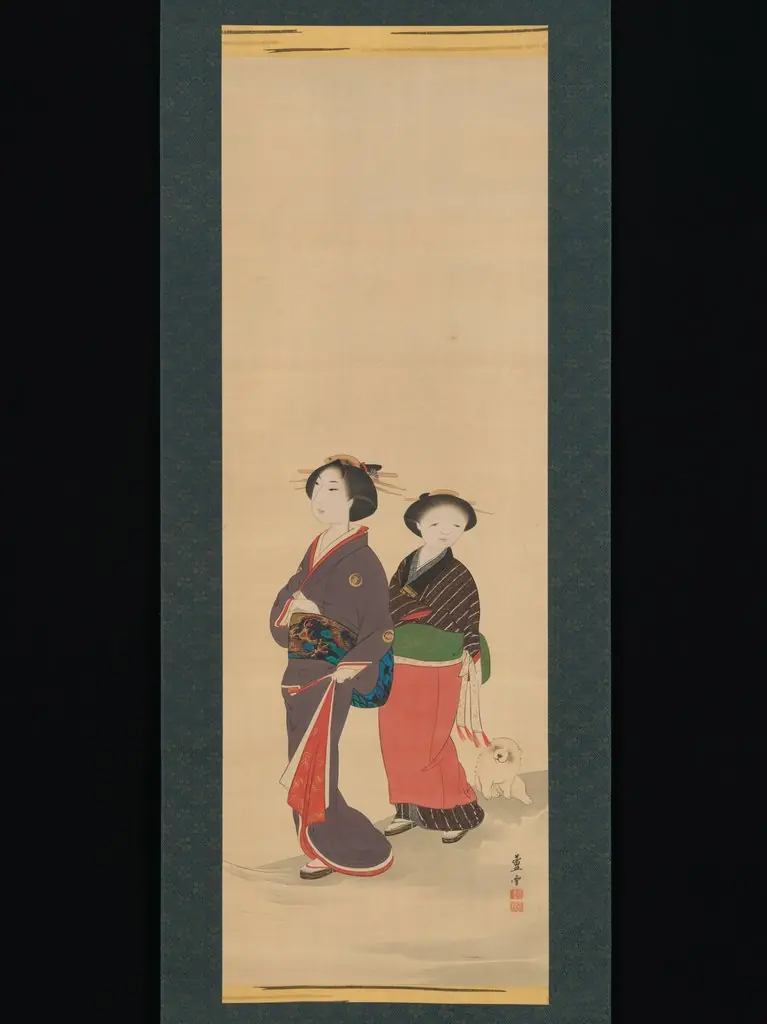 Two Women and a Puppy
 Untitled
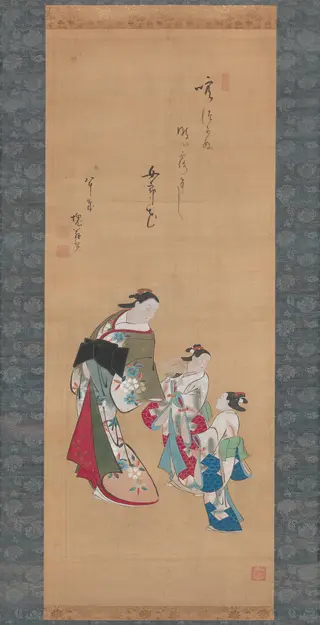 Courtesan and Two Attendants
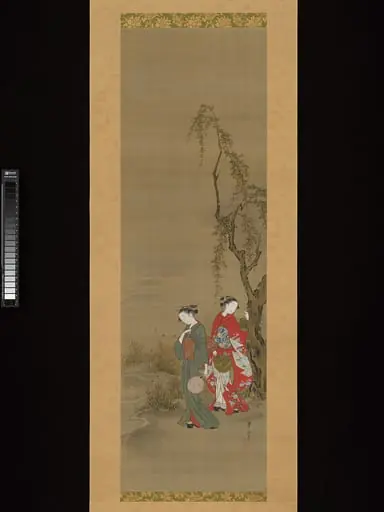 Untitled
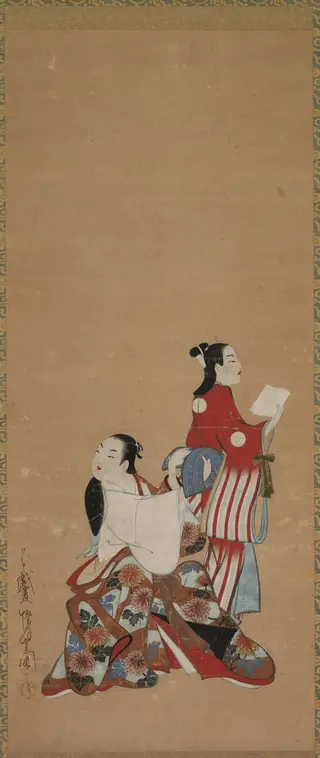 Courtesan and Attendant
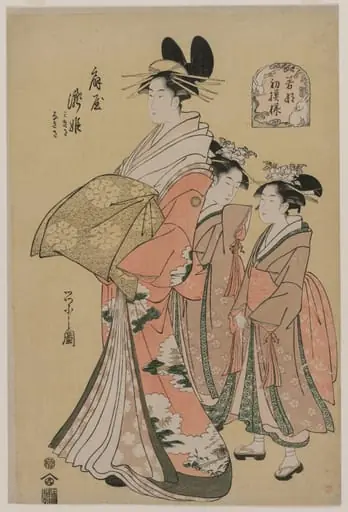 The Courtesan Takihime and Attendants (from the series New Patterns of Young Greens)
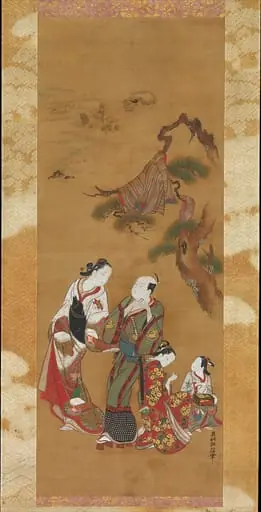 Untitled