Artwork
The Legendary Empress Jingū
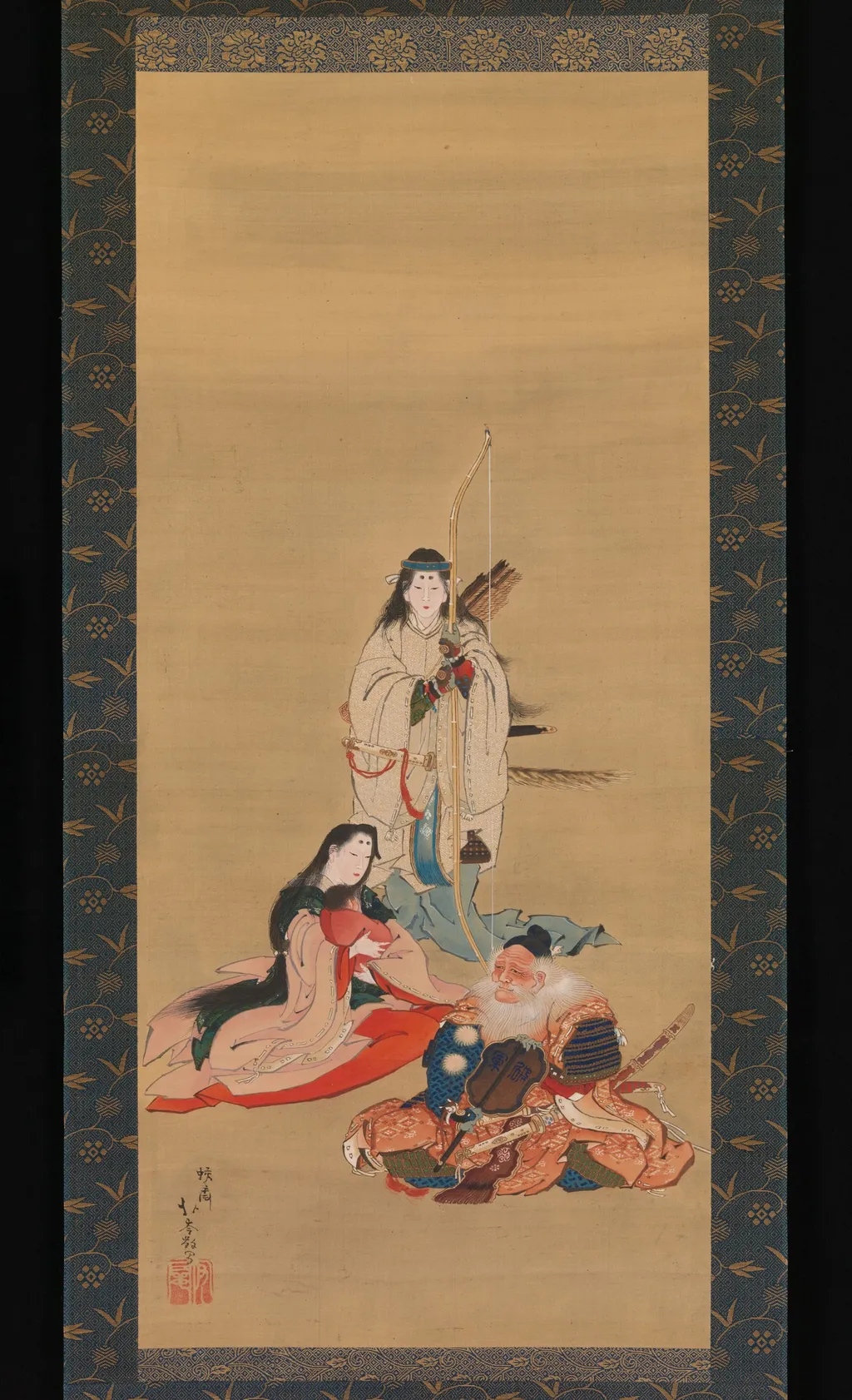
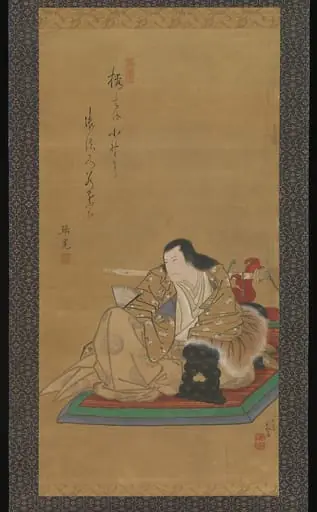
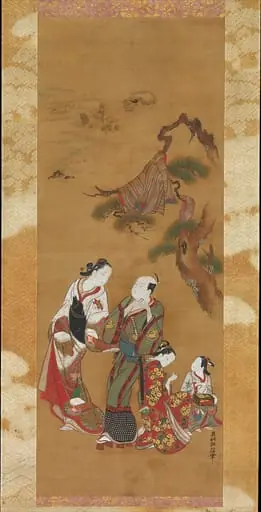
The Legendary Empress Jingū is an unspecified painting by the Ukiyo-e artist Hokushin Kosai. It dates from 1850 and is held in the collection of the Metropolitan Museum of Art. This painting depicts three distinct figures set against a plain gold ground.
About this work
Subject & Meaning
The painting depicts the legendary Empress Jingū, a semi-mythical figure in Japanese history known for her role in the invasion of Korea during the 3rd century.
The painting depicts the legendary Empress Jingū, a semi-mythical figure in Japanese history known for her role in the invasion of Korea during the 3rd century. She is portrayed holding a hand fan, bow and arrow, and accompanied by a man and an infant, likely symbolizing her martial prowess, leadership, and familial legacy. The inclusion of these attributes reinforces her identity as a powerful and authoritative figure, embodying both military strength and maternal continuity.
The composition underscores her historical significance as a unifying symbol of imperial authority and cultural heritage in Edo-period Japan.
Technique & Style
Created in 1850 by Hokushin Kosai, The Legendary Empress Jingū is a painting executed on a support typical of Japanese portrait works from that period. The artwork functions as a formal portrait, depicting a central female figure alongside a man and an infant. Formal qualities include the representation of specific attributes such as a hand fan and a bow and arrow, which define the subject's iconography.
The composition integrates these elements to convey the legendary status of Empress Jingū. While the specific pigments or binding media are not detailed in the available records, the piece is classified within the genre of portraiture originating from Japan. The work remains part of the collection at the Metropolitan Museum of Art, preserving its condition as a mid-nineteenth-century painted artifact.
History & Provenance
The painting was created in 1850 by Hokushin Kosai in Japan. It is classified as a portrait and depicts a hand fan, bow and arrow, a woman, a man, and an infant. The work is held in the collection of the Metropolitan Museum of Art, where it remains located.
No further details regarding commission, intermediate ownership, or chain of custody prior to its accession by the museum are documented in the available sources.
The painting is held by the Metropolitan Museum of Art, where it is accessioned with the inventory number 2005.446.1. It was first exhibited at the museum in 2005 after its acquisition, as part of the permanent collection’s holdings of Japanese ukiyo-e portraits.
Overview
This painting depicts three distinct figures set against a plain gold ground. At the forefront, a woman dressed in a white robe stands poised with a bow and arrow. Below her, another woman, adorned in vibrant red and green garments, gently holds an infant. An older male figure completes the composition, kneeling nearby with a hand fan and a scroll.
Own this work as a print
Artist & collection

- Untitled
 The Brine Maiden Matsukaze
 Untitled
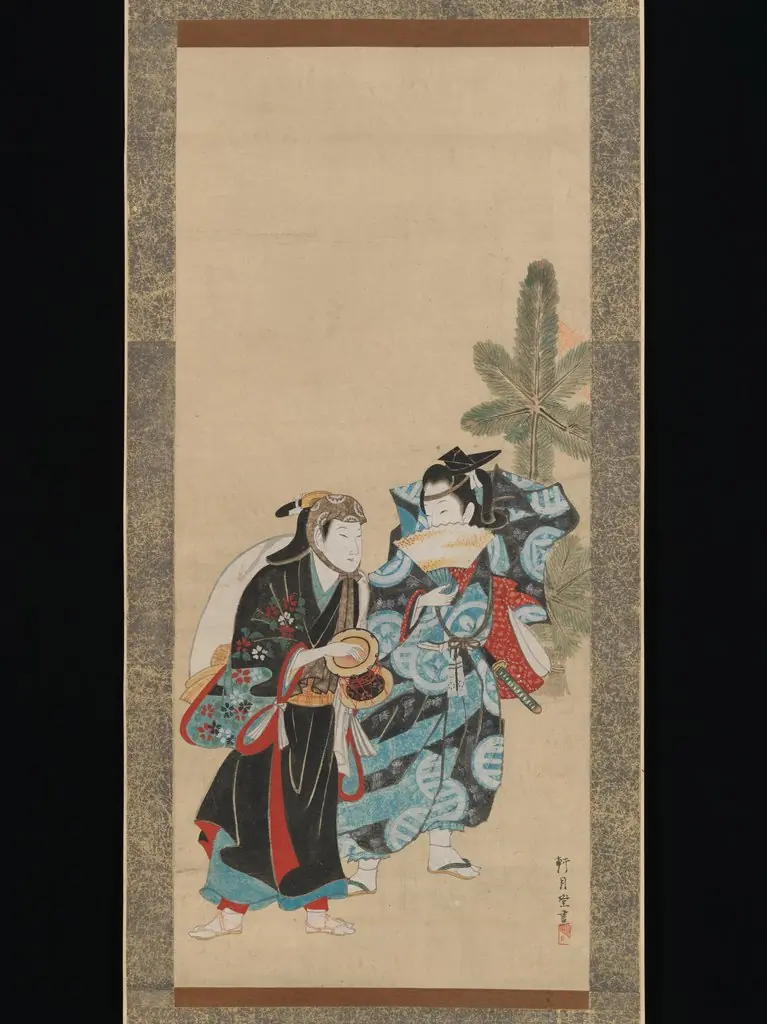 Itinerant Actors
 Untitled
 Untitled
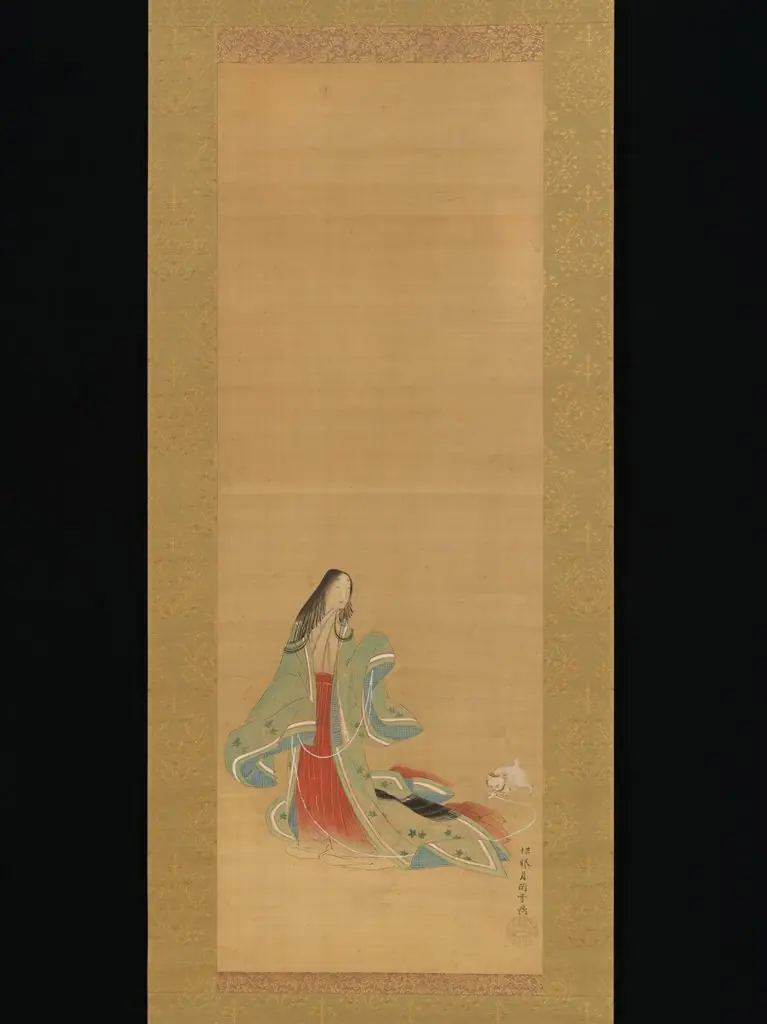 The Third Princess with her Cat, from the "New Herbs I" (Wakana I) chapter The Tale of Genji (Genji monogatari}
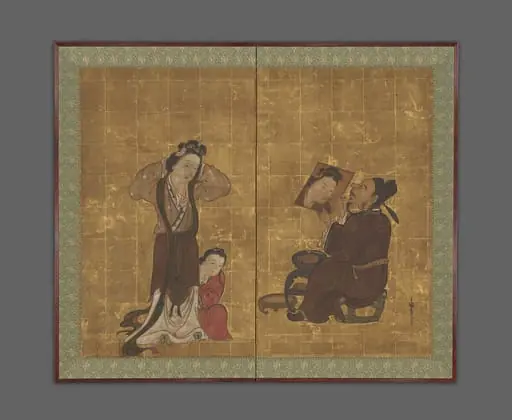 Untitled
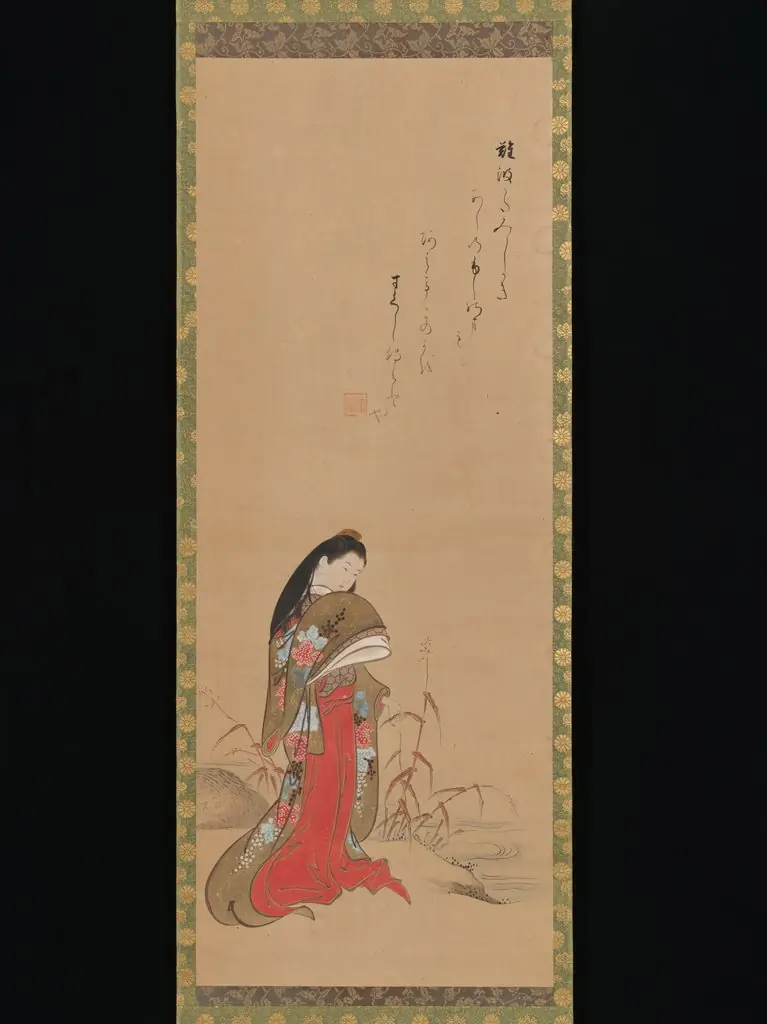 Lady Ise by the Riverbank
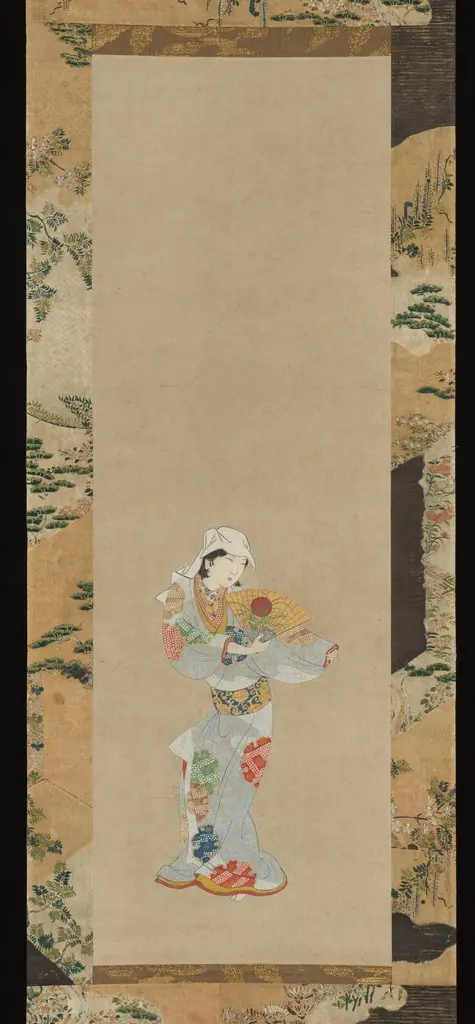 Dancer with a Fan
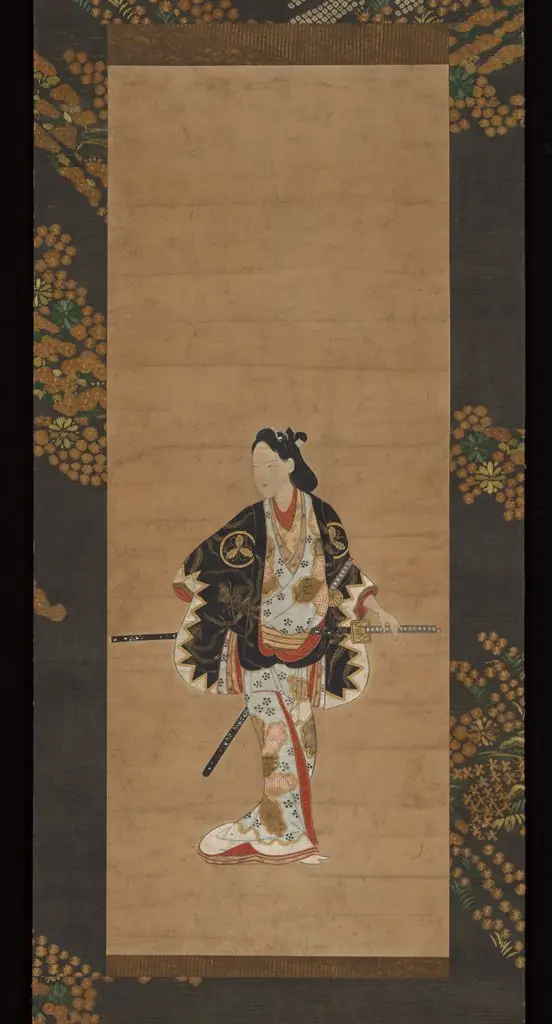 Standing Beauty with Two Swords 若衆立姿図 (Wakashū tachisugata zu)
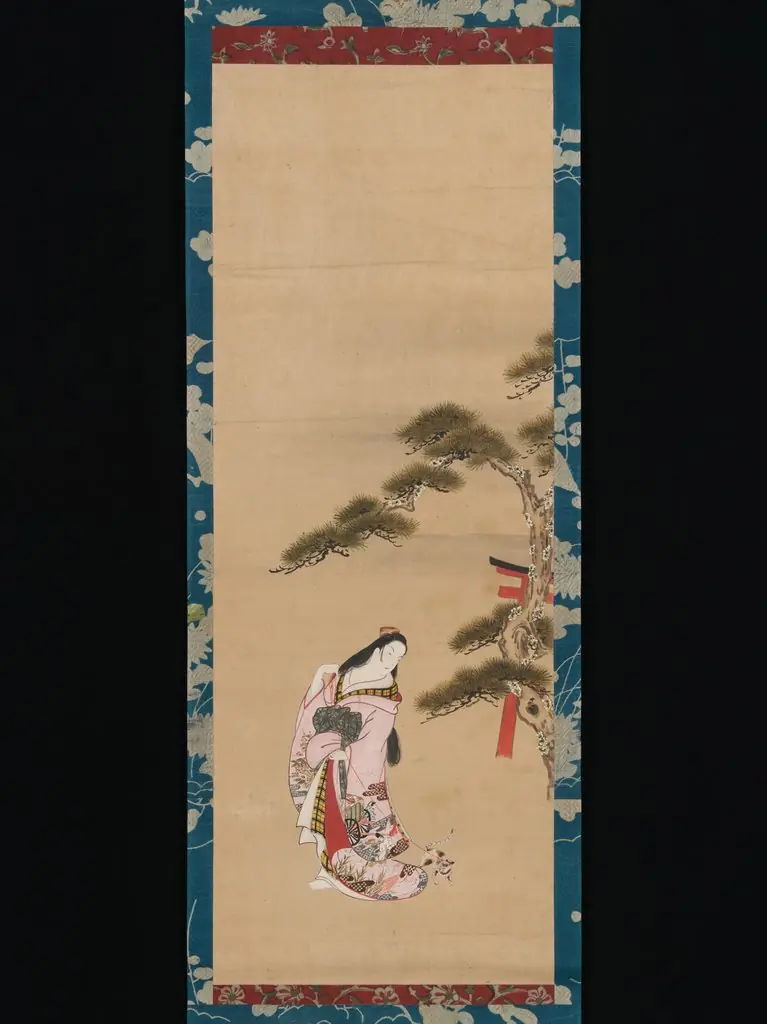 The Third Princess and a Cat, from the "New Herbs I" (Wakana I) chapter The Tale of Genji (Genji monogatari}