Artwork
Samurai and Wakashu (Bushi to wakashu)
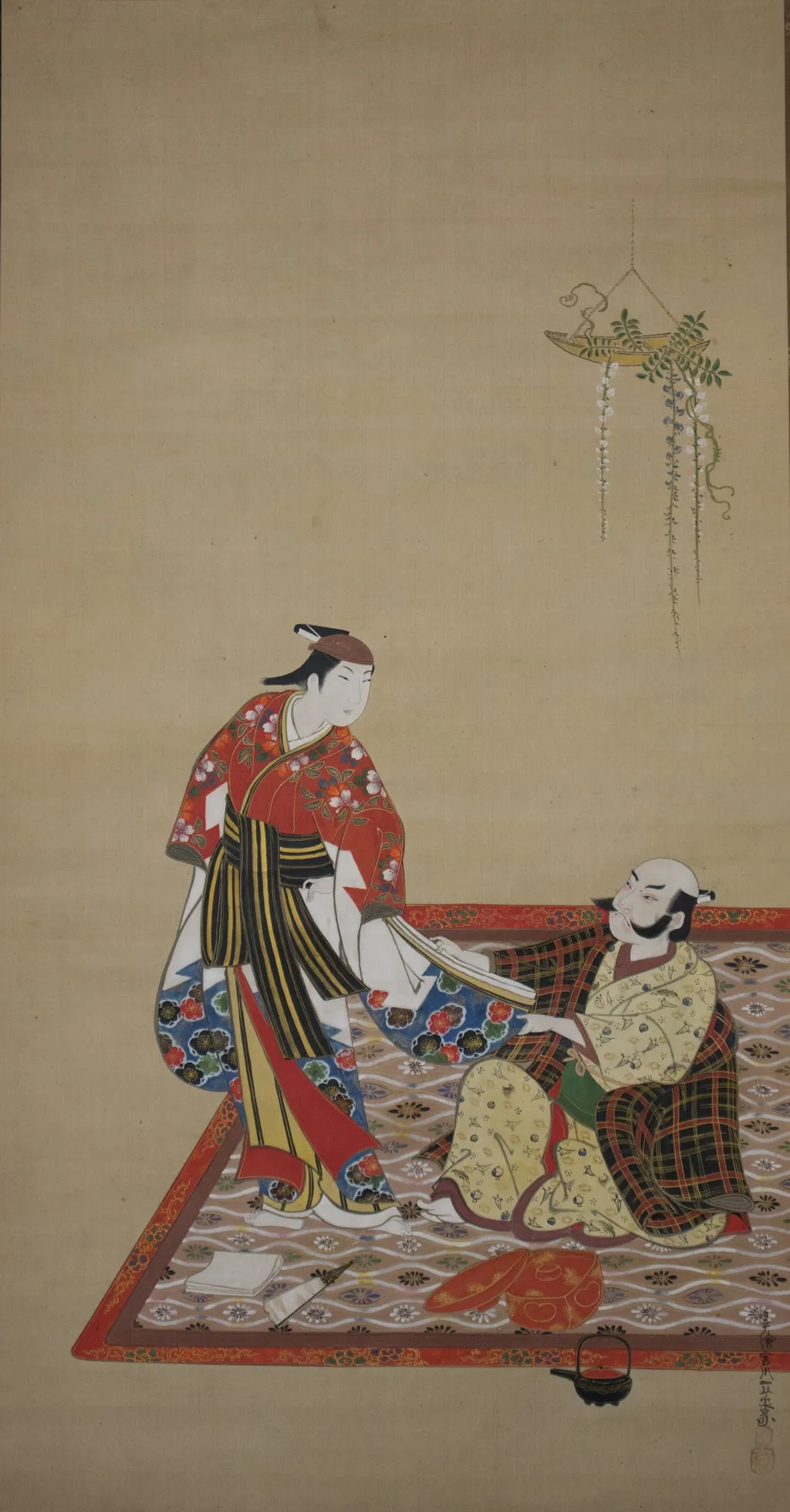
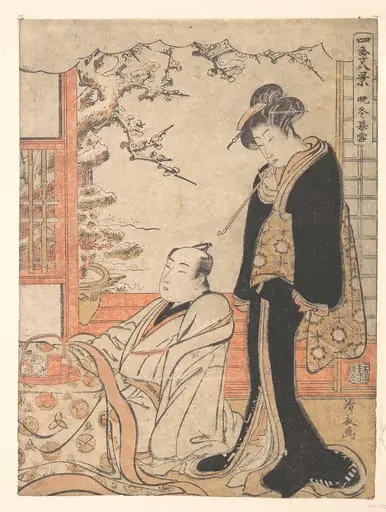
Samurai and Wakashu (Bushi to wakashu) is an unspecified painting by the Ukiyo-e artist Miyagawa Issho. It dates from 1716 and is held in the collection of the Metropolitan Museum of Art.
About this work
Subject & Meaning
The pairing of a warrior and a wakashu reflects themes of loyalty, martial virtue, and homoerotic affection within the cultural context of the time.
The painting Samurai and Wakashu (Bushi to wakashu) by Miyagawa Issho depicts a samurai accompanied by a young male lover, a relationship historically associated with the concept of wakashu in Edo-period Japan. The pairing of a warrior and a wakashu reflects themes of loyalty, martial virtue, and homoerotic affection within the cultural context of the time. The work is housed in the Metropolitan Museum of Art and was created in Japan in 1716.
History & Provenance
The painting Samurai and Wakashu (Bushi to wakashu) by Miyagawa Issho is dated to 1716, indicating it was created in the early eighteenth century during the Edo period in Japan.
The work is currently held by the Metropolitan Museum of Art, where it is listed as part of the museum’s collection. Its provenance prior to acquisition by the museum is not specified in the available sources.
The painting Samurai and Wakashu (Bushi to wakashu) by Miyagawa Issho is held in the collection of the Metropolitan Museum of Art in New York. The work, created in 1716, is part of the museum's holdings of Japanese art. No specific accession number or detailed exhibition history is provided in the available sources.
Overview
Miyagawa Isshō’s Samurai and Wakashu (Bushi to wakashu), executed in 1716, is an ukiyo-e composition that presents a domestic interior populated by two young men. The work reflects the everyday visual culture of Edo’s urban milieu, capturing a moment of leisure within a richly patterned setting.
Technique & Style
Executed in the ukiyo-e woodblock tradition, Isshō employs flat areas of saturated colour and delicate line work to delineate clothing and interior details. The patterned rug, floral ceiling plant, and scattered papers are rendered with precise brush‑like strokes, characteristic of the Kyōhō era’s refined aesthetic.
Context
The image belongs to a broader visual culture that documented the social roles of samurai and wakashū in Edo society. Such works often served both as decorative art and as subtle commentaries on the fluid boundaries of gender and status within the pleasure districts of the time.
Artist & collection

Artist
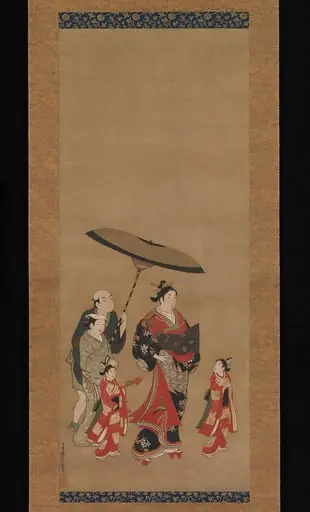
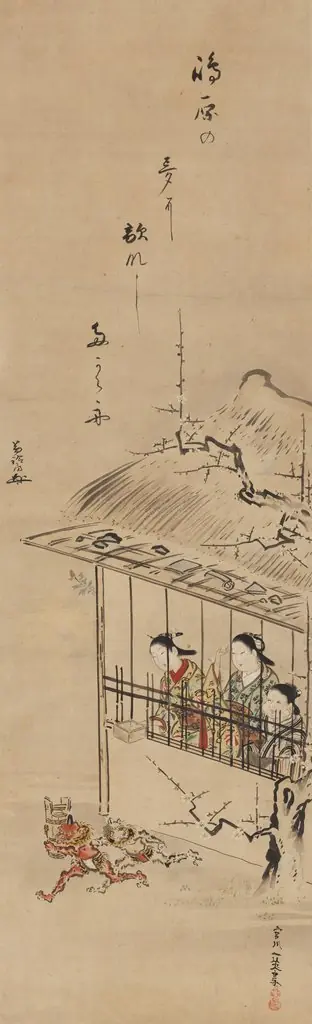
Miyagawa Isshō (宮川 一笑, 1689 – 20 January 1780) was a Japanese painter in the ukiyo-e style, primarily depicting kabuki actors, geisha, sumo wrestlers, and other elements of everyday urban culture.

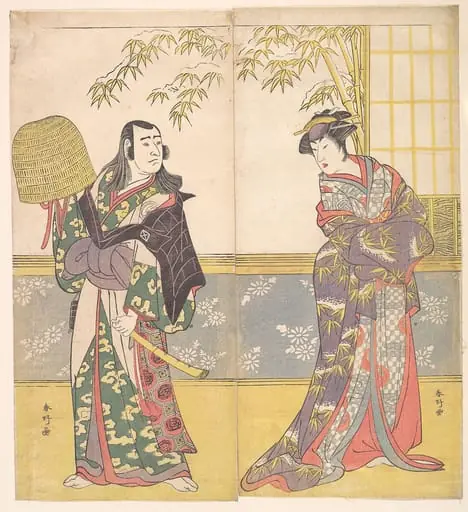
- 勝川春好画 三代目澤村宗十郎 三代目佐野川市松 |Kabuki Actors Sawamura Sōjūrō III and Sanogawa Ichimatsu III in "A Courtesan’s Mirror for the Eastern Provinces" (Keisei Azuma kagami)
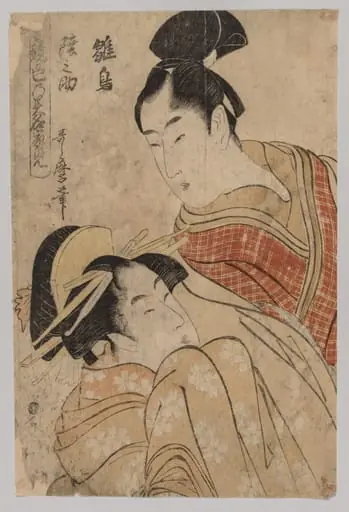 Making Love
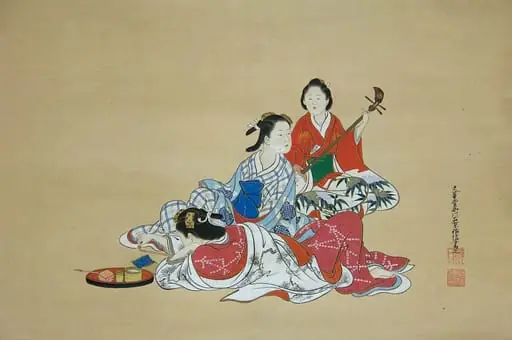 Untitled
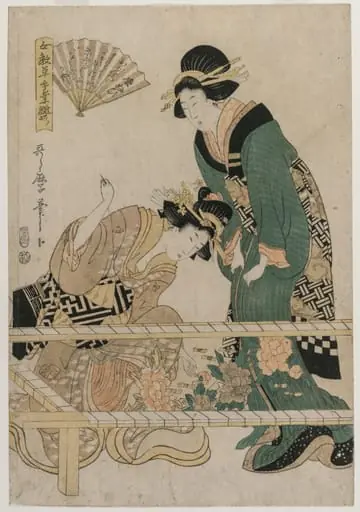 Chinese Embroidery (from the series Instructive Patterns for Women's Handicraft)
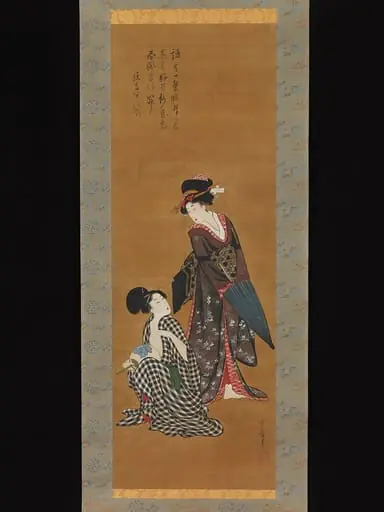 Untitled
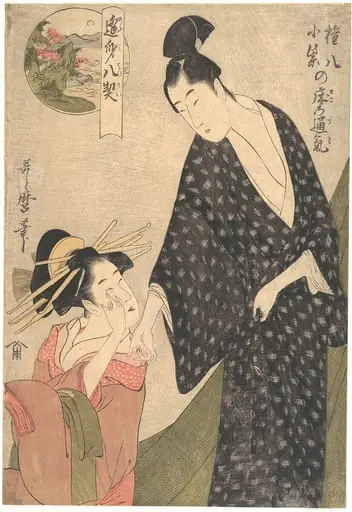 Gompachi Komurasaki no Toko no Tsuki|逢身八契 権八小紫の床の通気|Shared Feelings in the Bedchamber of Komurasaki and Gompachi
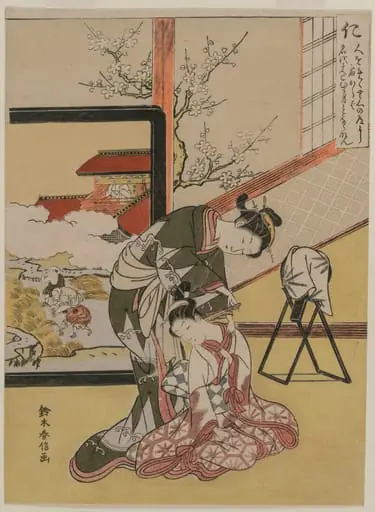 Benevolence, from The Five Virtues
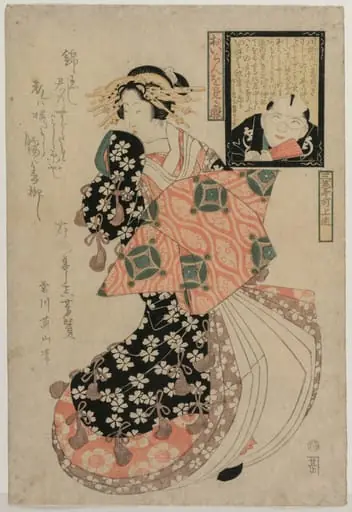 Eyes for Looking at a Courtesan
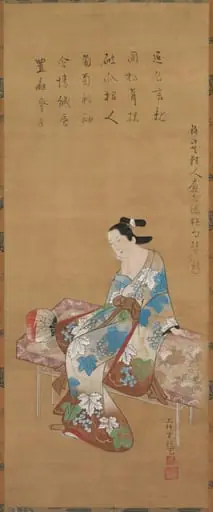 Courtesan Seated on a Bench Enjoying the Evening Cool in Summer
 Untitled
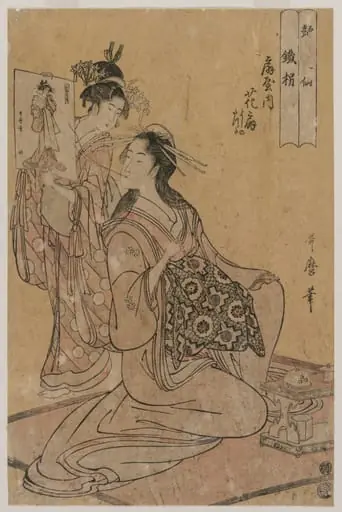 The Courtesan Hana-ogi of Ogiya as the Sennin Tekkai (from the series Eight Immortals of Sensuality)
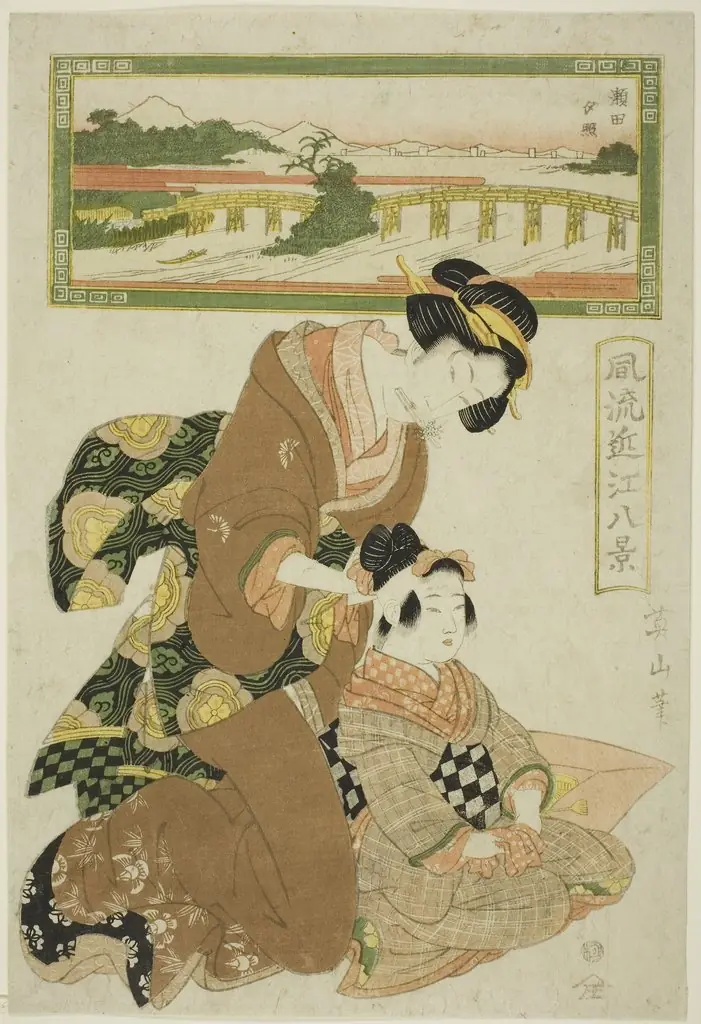 Evening Glow at Seta (Seta sekisho), from the series "Fashionable Eight Views of Omi (Furyu Omi hakkei)"