Artwork
Hayk Nahapet
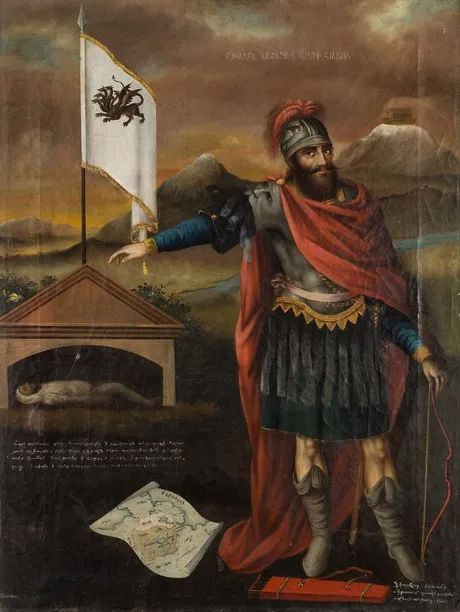
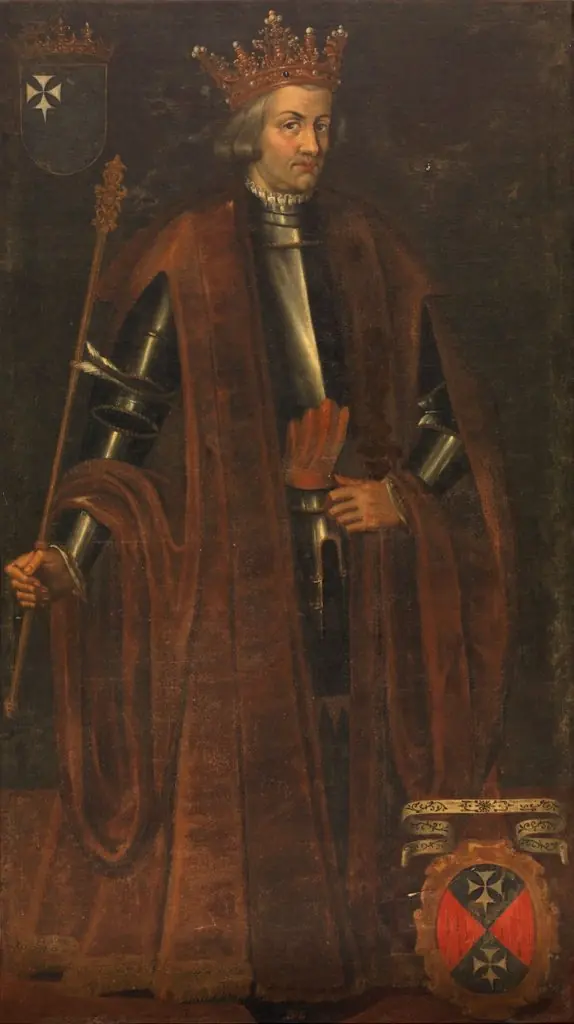
Hayk Nahapet is an oil painting by Mkrtoum Hovnatanyan. It dates from 1822 and is held in the collection of the National Gallery of Armenia.
About this work
Overview
Its composition centers on a solitary, authoritative figure set against a rugged landscape, blending realism with symbolic elements drawn from folklore.
Painted around 1822 by Mkrtoum Hovnatanyan, this oil work portrays Hayk Nahapet, a legendary figure in Armenian tradition. The painting is part of the National Gallery of Armenia’s collection and reflects early 19th-century efforts to visually anchor national identity through historical myth. Its composition centers on a solitary, authoritative figure set against a rugged landscape, blending realism with symbolic elements drawn from folklore.
Subject & Meaning
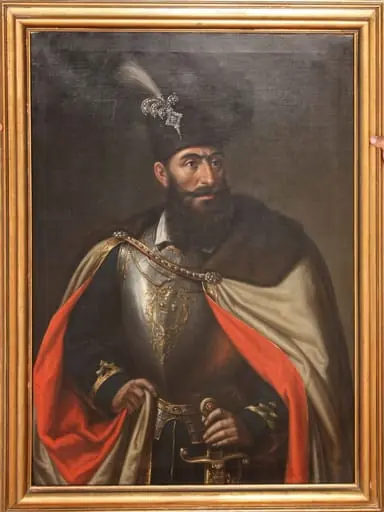
Hayk Nahapet is depicted as a founding patriarch and warrior, embodying resistance and sovereignty. His extended arm and banner with a dragon motif suggest leadership and defiance, while the armor and plumed helmet evoke antiquity. The map at his feet implies territorial claim, and the stone structure may reference ancient Armenian architecture. Together, these elements construct a visual narrative of ancestral authority and cultural continuity.
Technique & Style
Hovnatanyan employs oil paint with careful attention to texture and light, rendering the metallic surfaces of armor and the folds of the crimson cape with subtle gradations. The background landscape is rendered in muted tones, drawing focus to the figure. The composition is frontal and balanced, avoiding dramatic movement in favor of stillness and gravitas. This restrained approach aligns with academic traditions of the period, emphasizing dignity over theatricality.
History & Provenance
Created in the early 1820s, the painting emerged during a period of renewed interest in Armenian heritage under Russian imperial rule. It was likely commissioned or produced for cultural preservation rather than public display. The work entered the National Gallery of Armenia’s collection in the 20th century, where it remains a key example of early Armenian national art, though little is documented about its early ownership or exhibition history.
Context
Hovnatanyan worked in a time when Armenian intellectuals were reexamining pre-Christian history to forge a distinct cultural identity. This painting responds to broader 19th-century trends in Europe, where national myths were visualized to unify populations. Unlike Western historical paintings, it avoids overt political messaging, instead relying on symbolic archetypes familiar to Armenian audiences, myth, landscape, and ancestral lineage.
Legacy
The image of Hayk Nahapet in this painting became a foundational visual reference in Armenian nationalist iconography. Later depictions of the figure, especially in the 20th century, often echo its composition and symbolism. While not widely known outside Armenia, it holds enduring significance within the country’s art historical narrative as one of the earliest attempts to give mythic history a tangible, painted form.
Artist & collection