Artwork
Adrienne (Woman with Bangs)
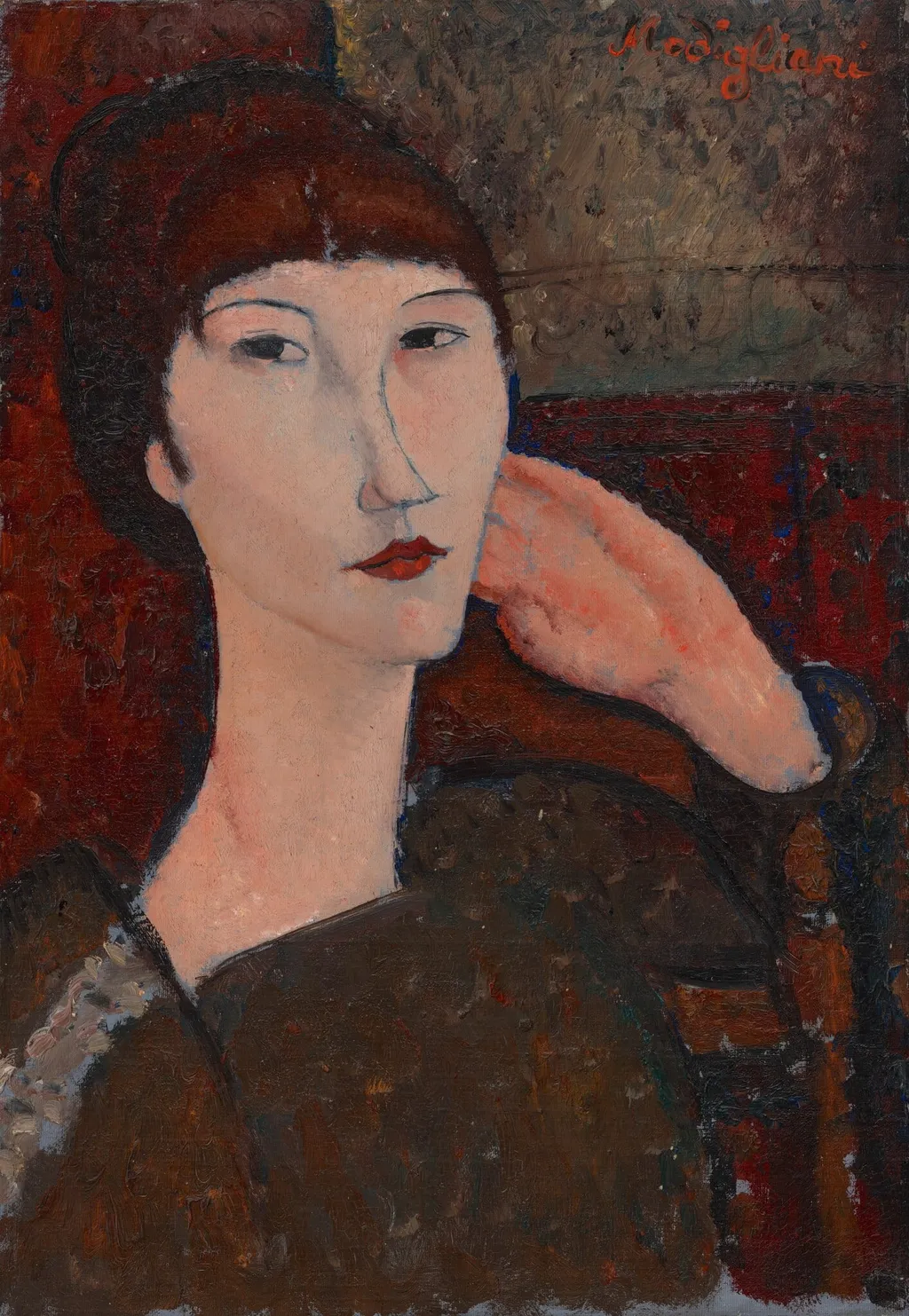
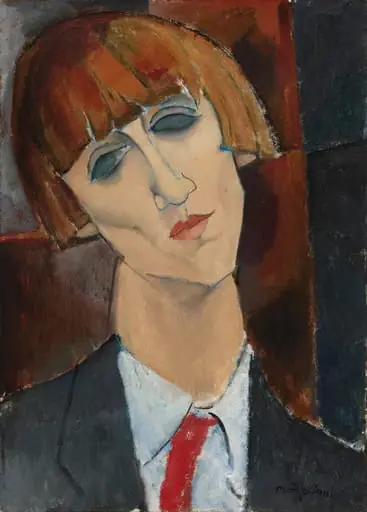
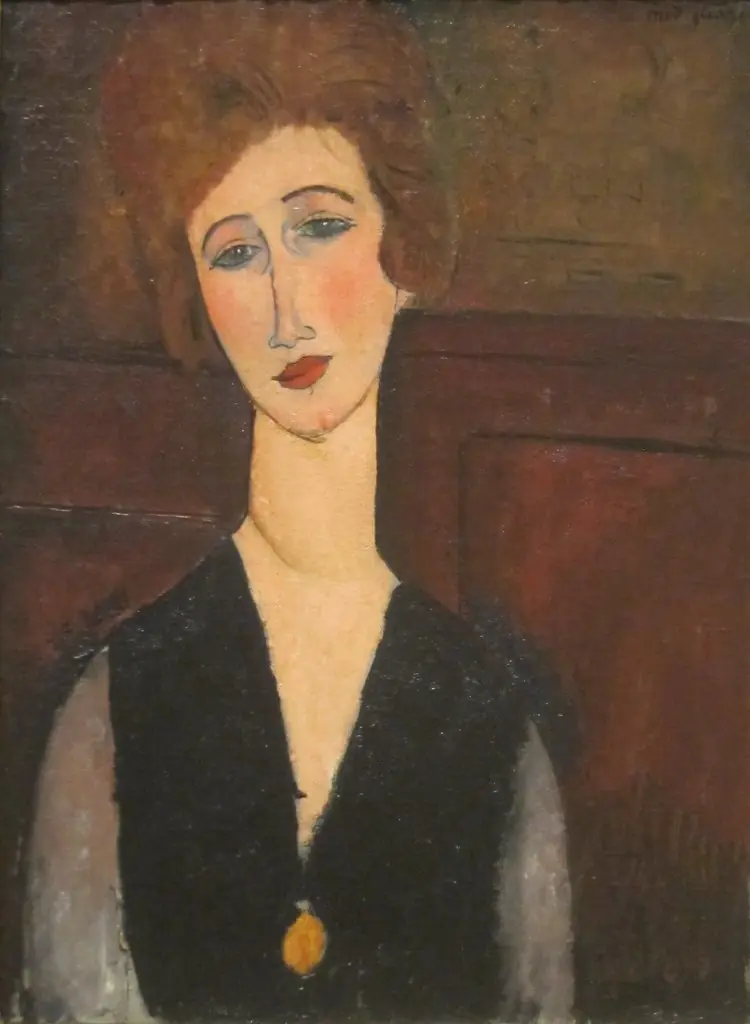
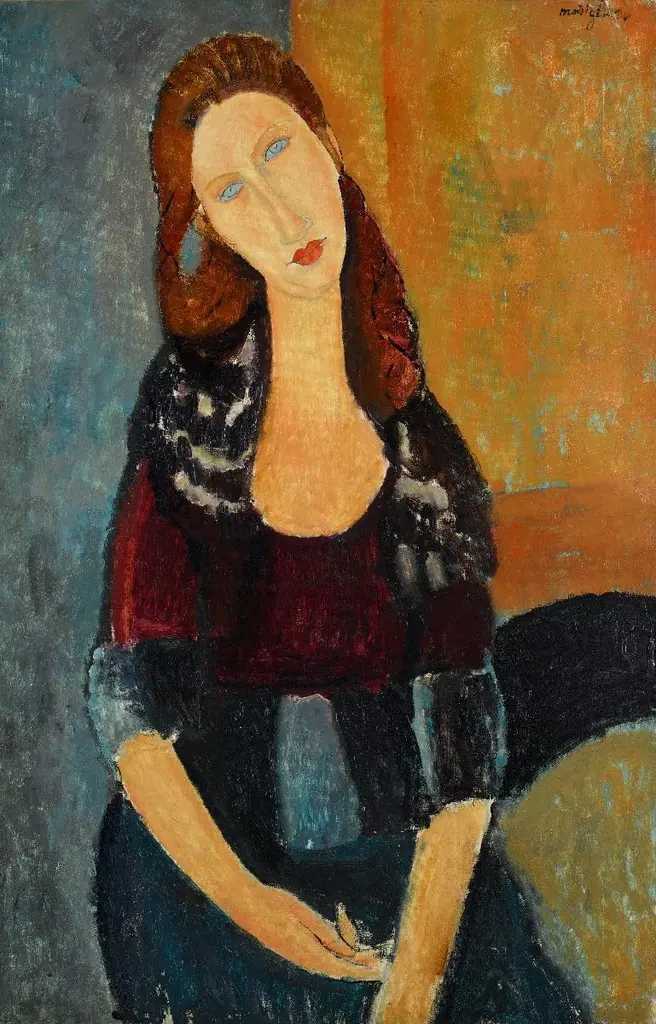
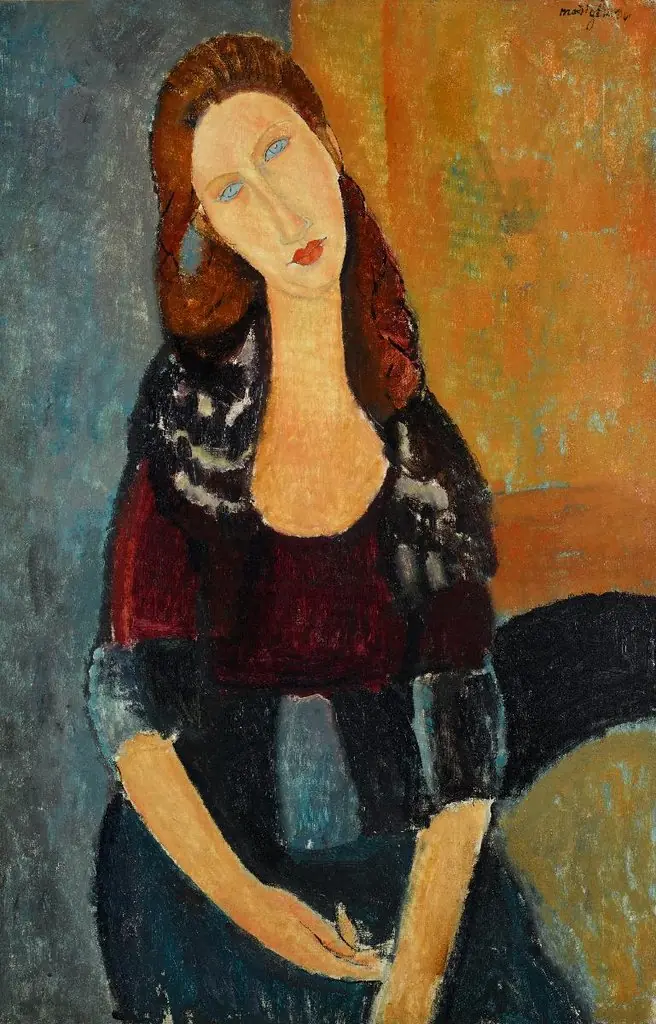
Adrienne (Woman with Bangs) is an oil painting by Amedeo Modigliani. It dates from 1917 and is held in the collection of the National Gallery of Art. Created in 1917, this oil painting on linen presents a seated woman with dark hair cut in a blunt fringe.
- Inscription
- Inscribed:upper right: Modigliani
About this work
Subject & Meaning
The title identifies the figure as Adrienne, while the French descriptor "Femme à la frange" highlights the specific iconographic feature of her bangs.
Adrienne (Woman with Bangs) depicts a bust-length portrait of a seated woman characterized by a prominent fringe of hair across her forehead. The subject is shown resting one hand behind her cheek, a pose that emphasizes her contemplative demeanor. As a portrait genre work created in 1917, the painting focuses on the physical presence and stylistic rendering of the sitter rather than explicit narrative symbolism.
The title identifies the figure as Adrienne, while the French descriptor "Femme à la frange" highlights the specific iconographic feature of her bangs.
Technique & Style
Created in 1917, Adrienne (Woman with Bangs) is an oil painting executed on a linen support. The work functions as a bust-length portrait depicting a seated woman with bangs, resting her hand against her cheek. The physical dimensions of the canvas measure 55.3 cm in height and 38.1 cm in width.
As a portrait genre piece, the composition focuses on the figure's upper body and distinctive hairstyle, capturing the sitter in a static, seated pose.
Context
Adrienne (Woman with Bangs), painted by Amedeo Modigliani in 1917, exemplifies his distinctive portrait style marked by elongated forms and flattened spatial depth, situating the work within his mature period and the broader Parisian modernist milieu of the early twentieth century. The painting depicts a young woman with a pronounced fringe, seated and rendered in oil on linen, reflecting Modigliani’s synthesis of Cubist fragmentation and expressive line within figurative portraiture. Its provenance traces from Paul Guillaume to Chester Dale in 1928, and it entered the National Gallery of Art in Washington, D.C., through Dale’s bequest in 1963, where it remains part of the permanent collection.
Scholarly attention has highlighted the work’s role in documenting Modigliani’s engagement with contemporary artistic networks, particularly through his association with dealers such as Guillaume and Dale, while its classification as a portrait underscores evolving representations of femininity and identity in modern art. The painting’s formal qualities, including its restrained palette and focus on psychological presence, continue to inform discussions of Modigliani’s influence on later portraitists and his place within the narrative of avant-garde portraiture in the interwar period.
Overview
Created in 1917, this oil painting on linen presents a seated woman with dark hair cut in a blunt fringe. She wears a dark garment, her right hand gently touching her cheek, and her lips are painted a vivid red. The background consists of deep, muted tones of red, brown and black, framing the figure in a subdued atmosphere.
History & Provenance
Painted by an Italian-born artist who settled in Paris in the early 20th century, the piece emerged during his most productive period among the École de Paris circle. Though the creator’s reputation grew posthumously, this particular portrait reflects his mature approach to portraiture before his untimely death in 1920.
Own this work as a print
Artist & collection

Artist
Amedeo Clemente Modigliani (US: ; Italian: ; 12 July 1884 – 24 January 1920) was an Italian painter and sculptor of the École de Paris who worked mainly in France.