Artwork
A City Farm—New York
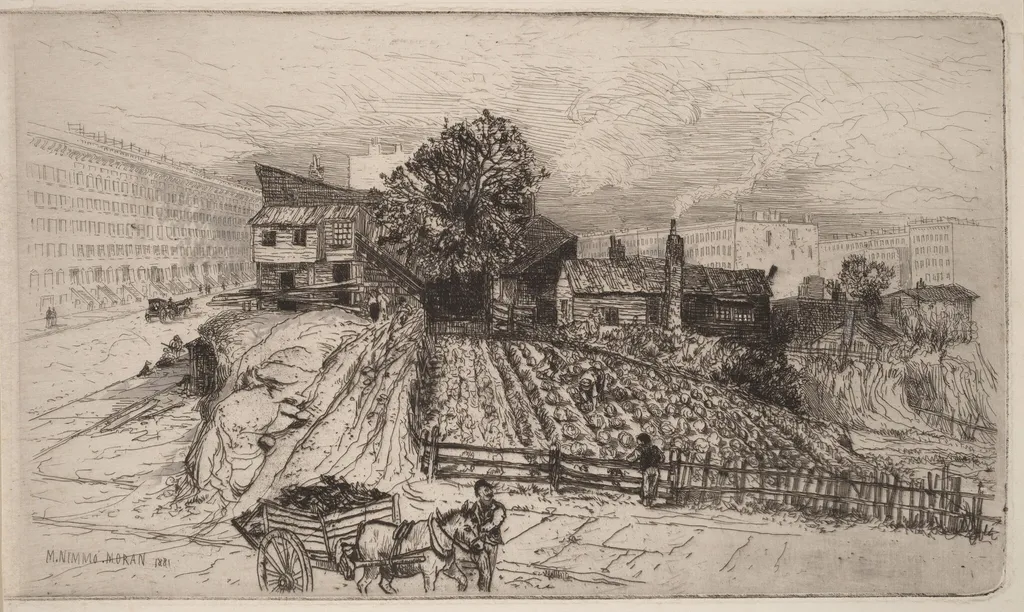
A City Farm—New York is an ink print by the Impressionist artist Mary Nimmo Moran. It dates from 1881 and is held in the collection of the National Gallery of Art.
- Inscription
- Inscribed:lower left in plate: M. Nimmo Moran 1881; lower edge of support in graphite: 56th Street.
About this work
Overview
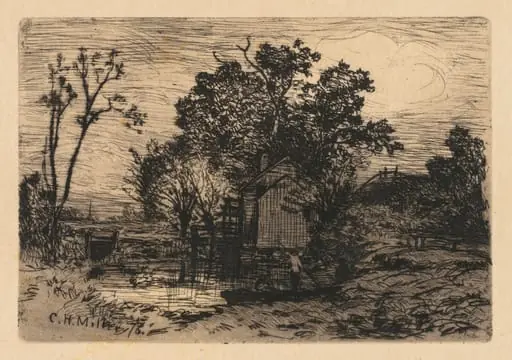
A City Farm, New York is an 1881 etching in black by Mary Nimmo Moran, depicting a serene blend of urban and rural elements within a cityscape.
Subject & Meaning
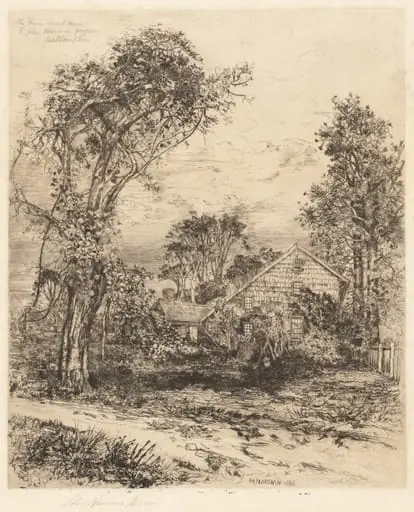
The etching captures a tranquil city scene, juxtaposing natural terrain, a rocky hillside with scattered trees and a fence, with built environments, including simple houses and a prominent, detailed structure possibly serving as a farmhouse or estate. A horse-drawn wagon on a dirt road adds a sense of everyday activity.
Technique & Style
Moran employed fine etching lines to convey texture, evident in the detailed rendering of tree bark and the horse’s coat. The overall execution balances precision with a slightly sketchy quality, suggesting careful yet rapid drawing.
History & Provenance
Created in 1881, the same year Moran became the first female fellow of the Royal Society of Painter-Etchers in London, this work reflects her contribution to landscape etching, a field where she was a pioneering American woman.
Context
Part of Moran’s broader output of around 70 etchings focusing on rural and urban landscapes across the U.S. and Europe, A City Farm, New York highlights her interest in capturing diverse environments, including those in Long Island and New Jersey.
Own this work as a print
Artist & collection
Artist
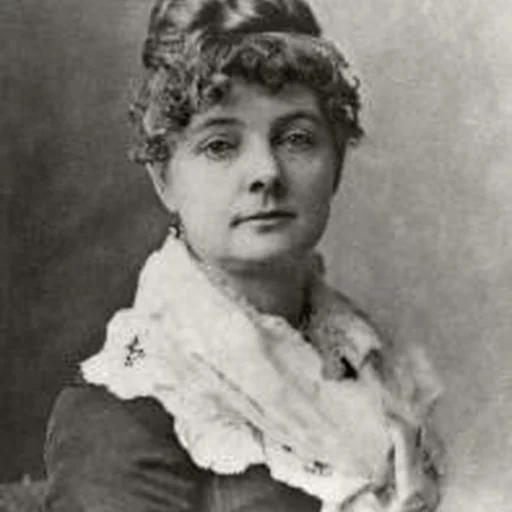
Mary Nimmo Moran (May 16, 1842 – September 25, 1899) was an American landscape printmaker, specializing in etchings.

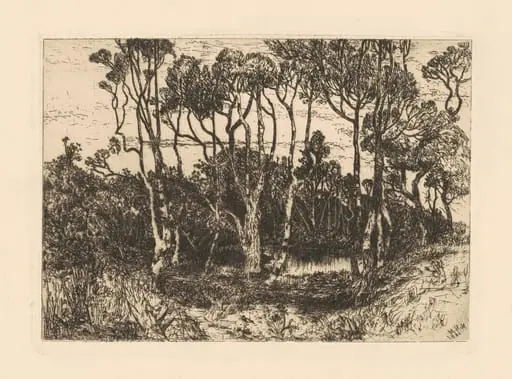
 Landscape with Horses
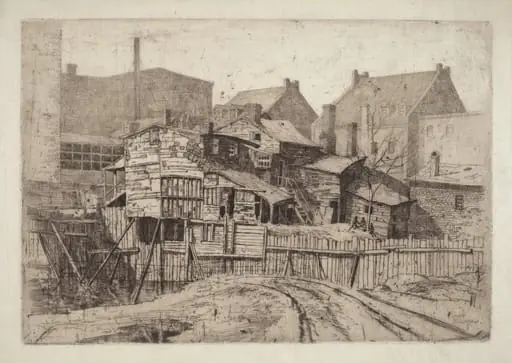
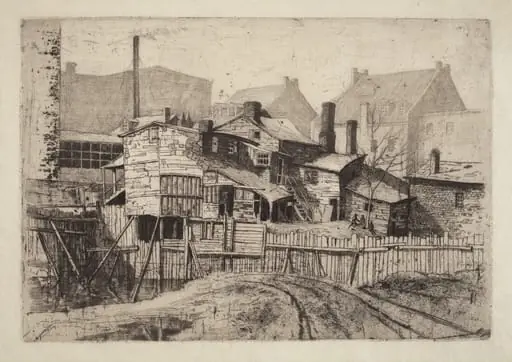 Untitled (Wooden House in City)
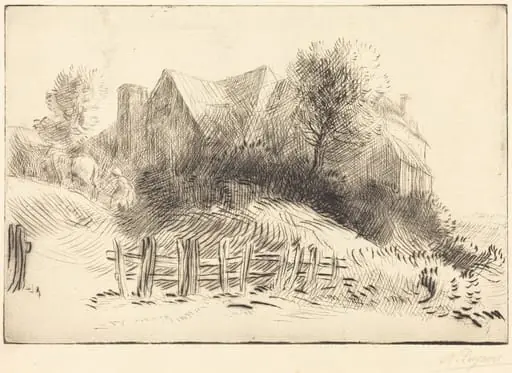 Old Inn (Une ancienne auberge)
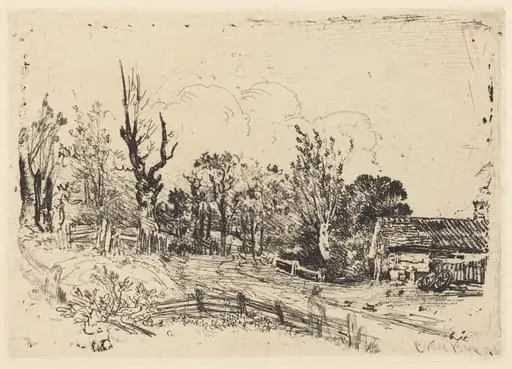 Road with a Farmhouse on the Right
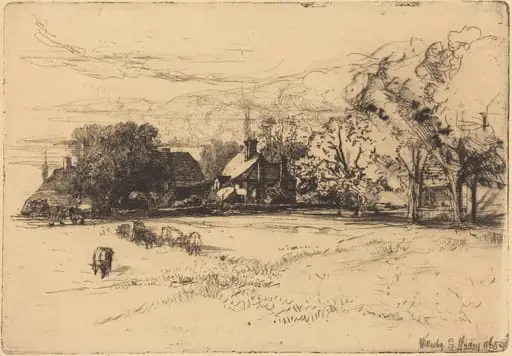 Old Willesley House
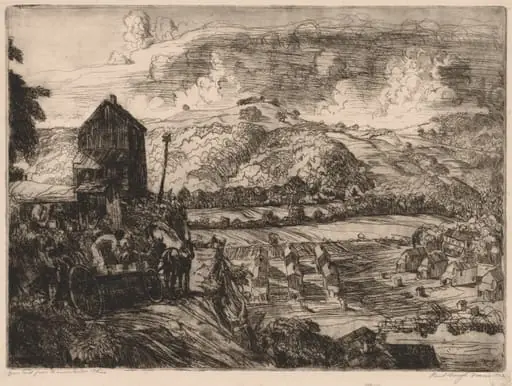 Our Hill from Dumstown, Ohio
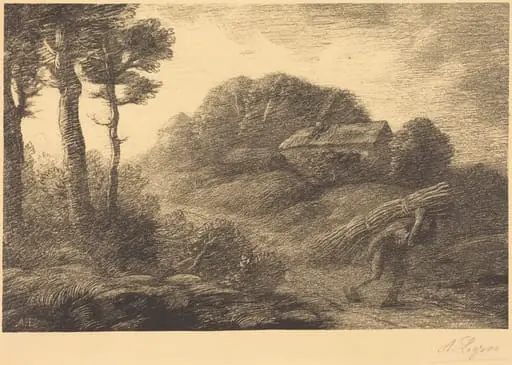 Return of the Fagot-gatherer, 2nd plate (Le retour du fagotier)
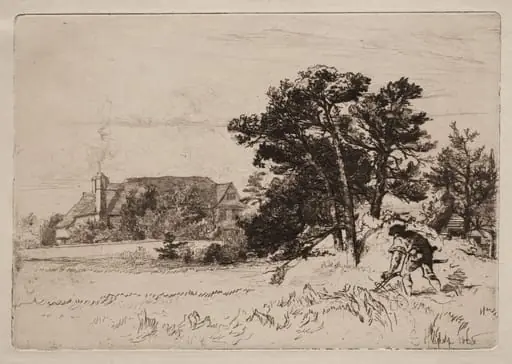 Old Willesley House
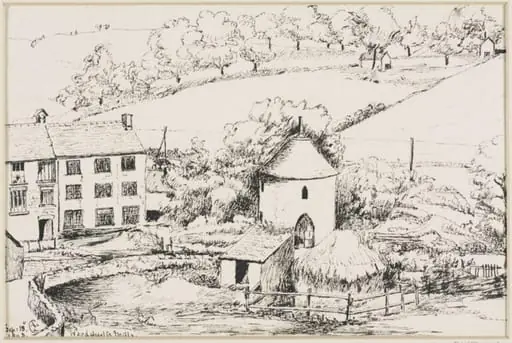 Woodchester Mills
 Cottage and Two Figures in a Boat
- Untitled (Wooden House in City)