Artwork
York River
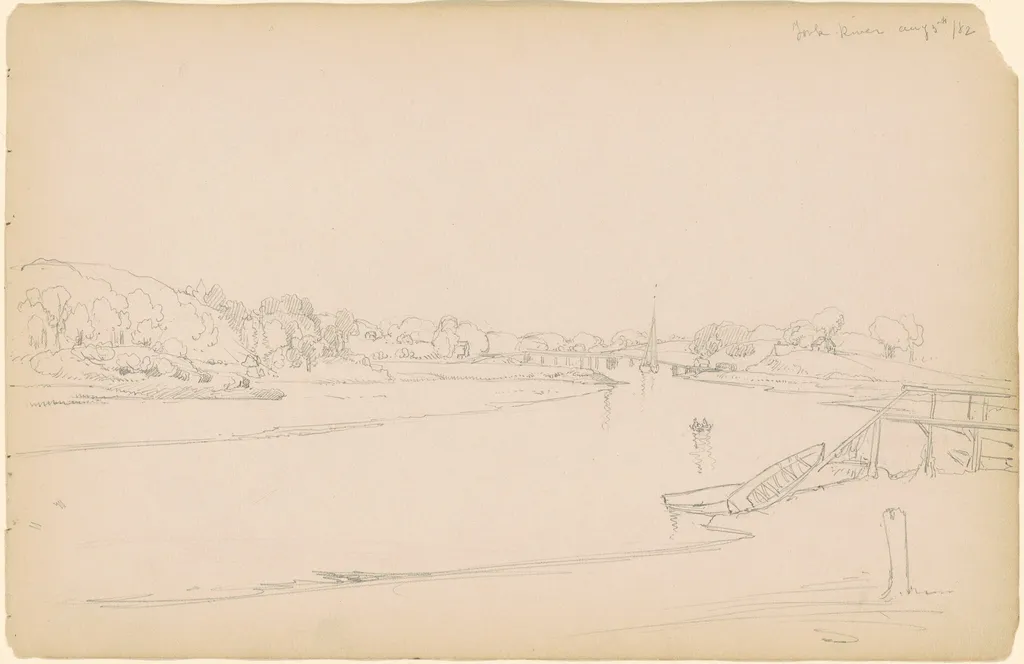
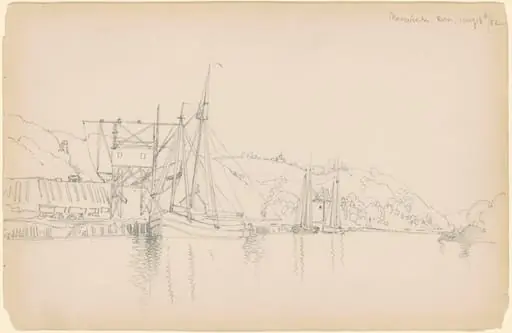
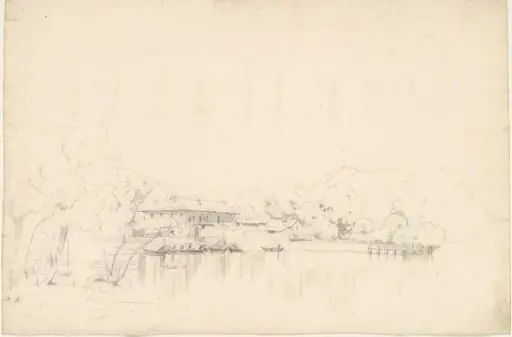
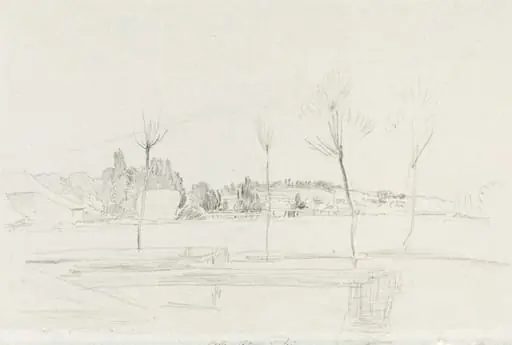
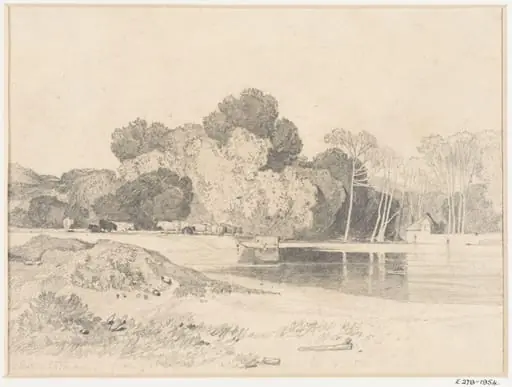
York River is a graphite drawing by the Impressionist artist Peter Moran. It dates from 1882 and is held in the collection of the National Gallery of Art.
- Inscription
- Inscribed:upper right in graphite: York River Aug 5th/82; upper center verso in graphite by unknown hand: Peter Moran
About this work
Overview
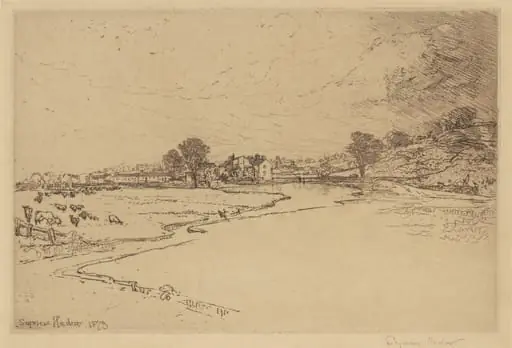
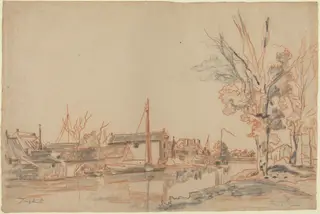
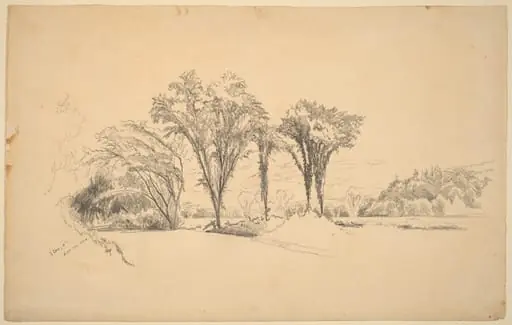
York River, executed in 1882 by Peter Moran, is a graphite drawing on wove paper that portrays a tranquil river landscape. The composition centers on a gently curving waterway that extends toward a low horizon, while a modest boat rests near the right margin. Distant trees and structures emerge in the background, providing a sense of depth and atmosphere.
Subject & Meaning
The work captures a moment of quiet repose along the river, emphasizing the stillness of the water and the modest human presence of the docked boat. The inclusion of natural and built elements suggests a harmonious coexistence between the landscape and nearby habitation, inviting contemplation of the everyday serenity found in such settings.
Technique & Style
Moran employed graphite on a smooth wove surface, allowing for fine, controlled lines and subtle tonal gradations. Through delicate hatching and shading, the artist renders texture in foliage, water, and architectural forms, achieving a nuanced interplay of light and shadow that conveys atmospheric calm without relying on bold contrasts.
History & Provenance
Created in the late nineteenth century, the drawing reflects Moran’s interest in American river scenes during a period of expanding interest in regional landscapes. The piece has remained within private collections before entering its current institutional setting, where it contributes to a broader understanding of Moran’s graphic oeuvre.
Context
York River belongs to a tradition of 19th‑century American topographical drawing, where artists documented the nation’s waterways and rural environments. Moran’s approach aligns with contemporaneous efforts to record the visual character of the landscape, offering a measured, observational perspective rather than a romanticized vision.
Own this work as a print
Artist & collection