Artwork
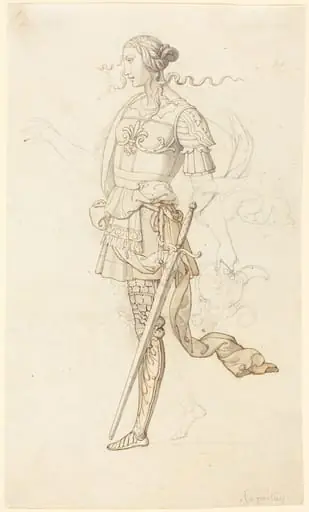
Pittacus the Tyrant in War Costume
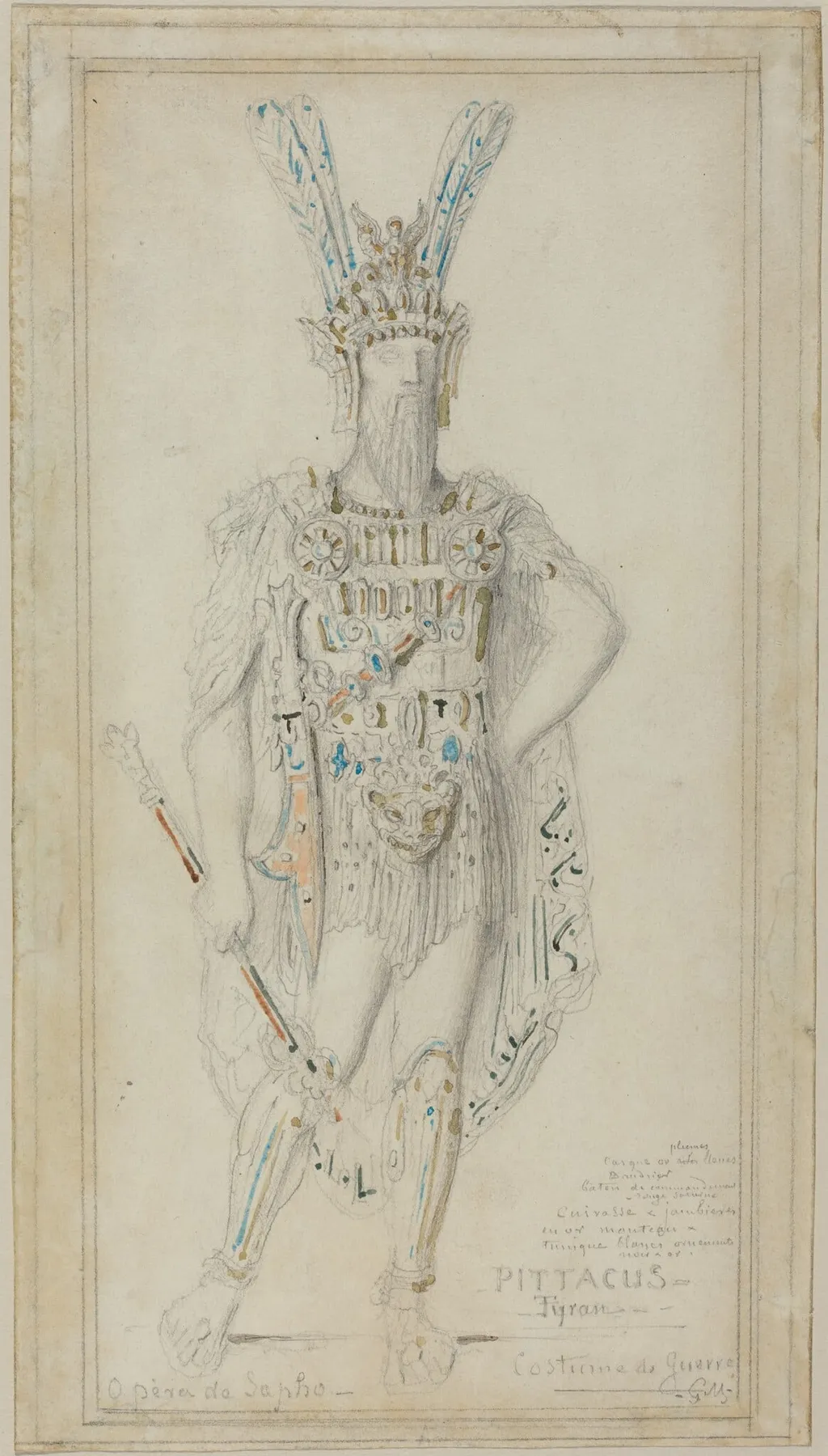
Pittacus the Tyrant in War Costume is a graphite drawing by the Impressionist artist Gustave Moreau. It dates from 1883 and is held in the collection of the National Gallery of Art.
- Inscription
- Inscribed:lower right in graphite: -GM-; lower left in graphite: Opéra de Sapho; lower right in graphite: plumes / Casques ou ailes [crossed out] bleues / Baudrier / bâton de commandement / rouge saturne / Cuirasse & jambieres / en or manteau & / tunique blancs ornements / noir & or. / PITTACUS- / Tyran- / Costume de Guerre; by later hand, lower right verso in graphite: WWA 63
About this work
Overview
Created in 1883, Pittacus the Tyrant in War Costume is a drawing by French artist Gustave Moreau. Executed with graphite and watercolor on wove paper, the work measures a modest size typical of Moreau’s studies. It exemplifies the artist’s prolific output during the later phase of his career, a period marked by an intense engagement with symbolic and historical subject matter.
Subject & Meaning
The composition centers on a solitary figure clad in an ornate war costume, suggesting a ruler or military leader from antiquity. While the title invokes Pittacus, one of the legendary Seven Sages of Greece, the attire is rendered with a theatrical richness that invites interpretation beyond literal biography, hinting at broader themes of power, tyranny, and the moral complexities of warfare.
Technique & Style
Moreau combines precise graphite line work with delicate watercolor washes, allowing the metallic sheen of armor and the texture of fabrics to emerge through subtle tonal variations. The use of wove paper provides a smooth surface that supports fine detailing, while the watercolor introduces a muted palette that softens the otherwise stark drawing, reflecting the Symbolist preference for atmospheric nuance over strict realism.
History & Provenance
The drawing belongs to the later period of Moreau’s career, when he produced the bulk of his estimated 15,000 works across various media. Though specific ownership records are scarce, the piece has been catalogued among the artist’s drawings that were bequeathed to French public collections after his death, ensuring its preservation within the national artistic heritage.
Artist & collection

Artist
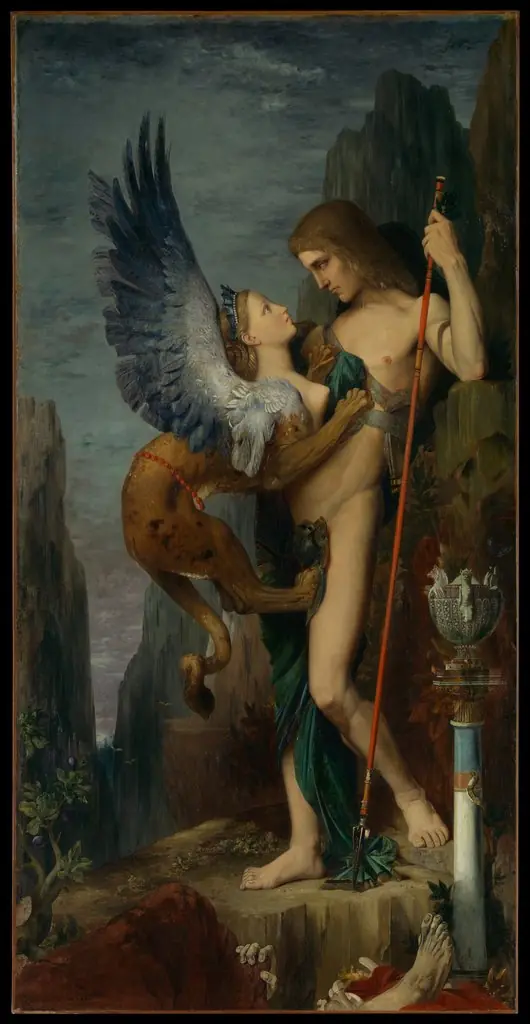
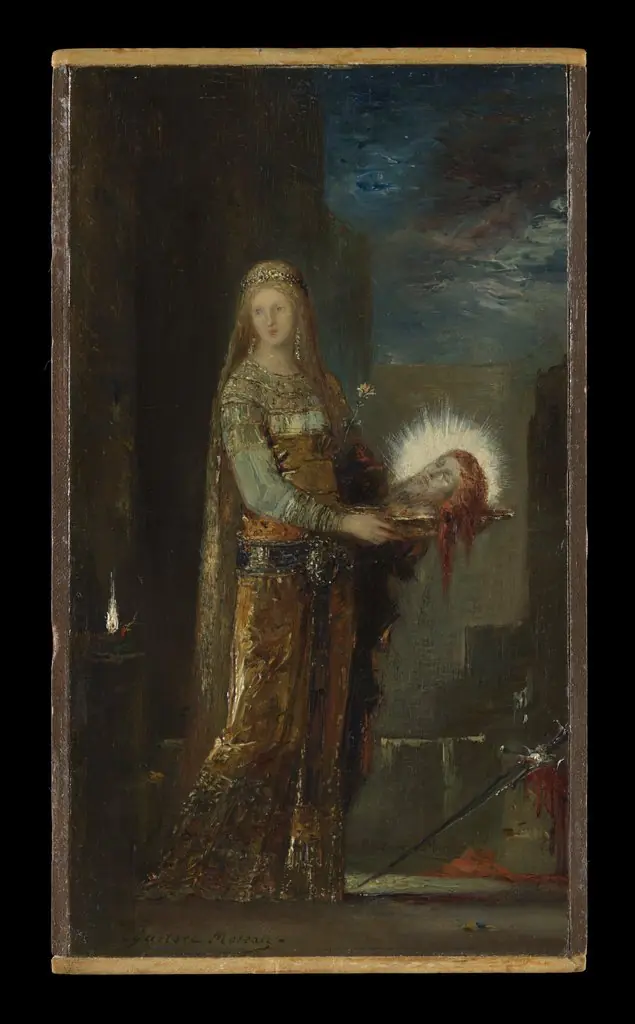
Gustave Moreau was a French artist and an important figure in the Symbolist movement.

 Erminia
 Design for an illusionistic panel in the Great Hall at Blenheim Palace
 H Beard Print Collection
 Design for Stained Glass
 A Pursuivant from the Garter Procession
 Anonymous design for fountain
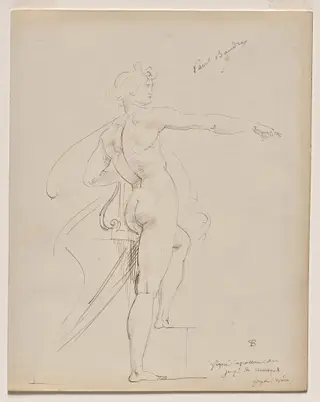 Study of Apollo for Marsyas (recto)
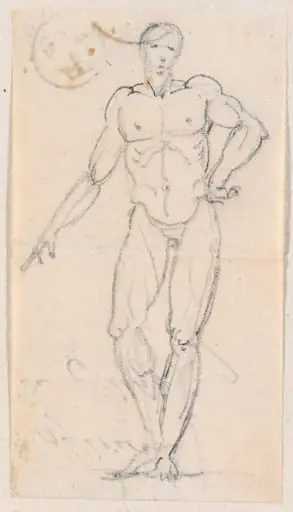 Statue of a Male Nude with Hand on Hip
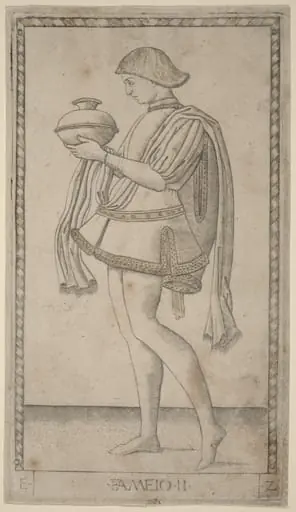 Fameio (Servant)
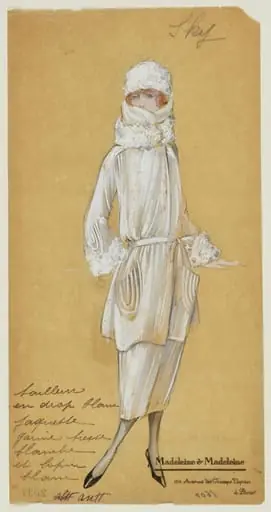 Moussette
 Untitled
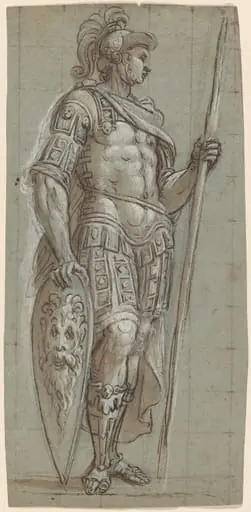
- A Soldier in Ancient Roman Costume with Pike and Shield