Artwork
Oedipus and the Sphinx
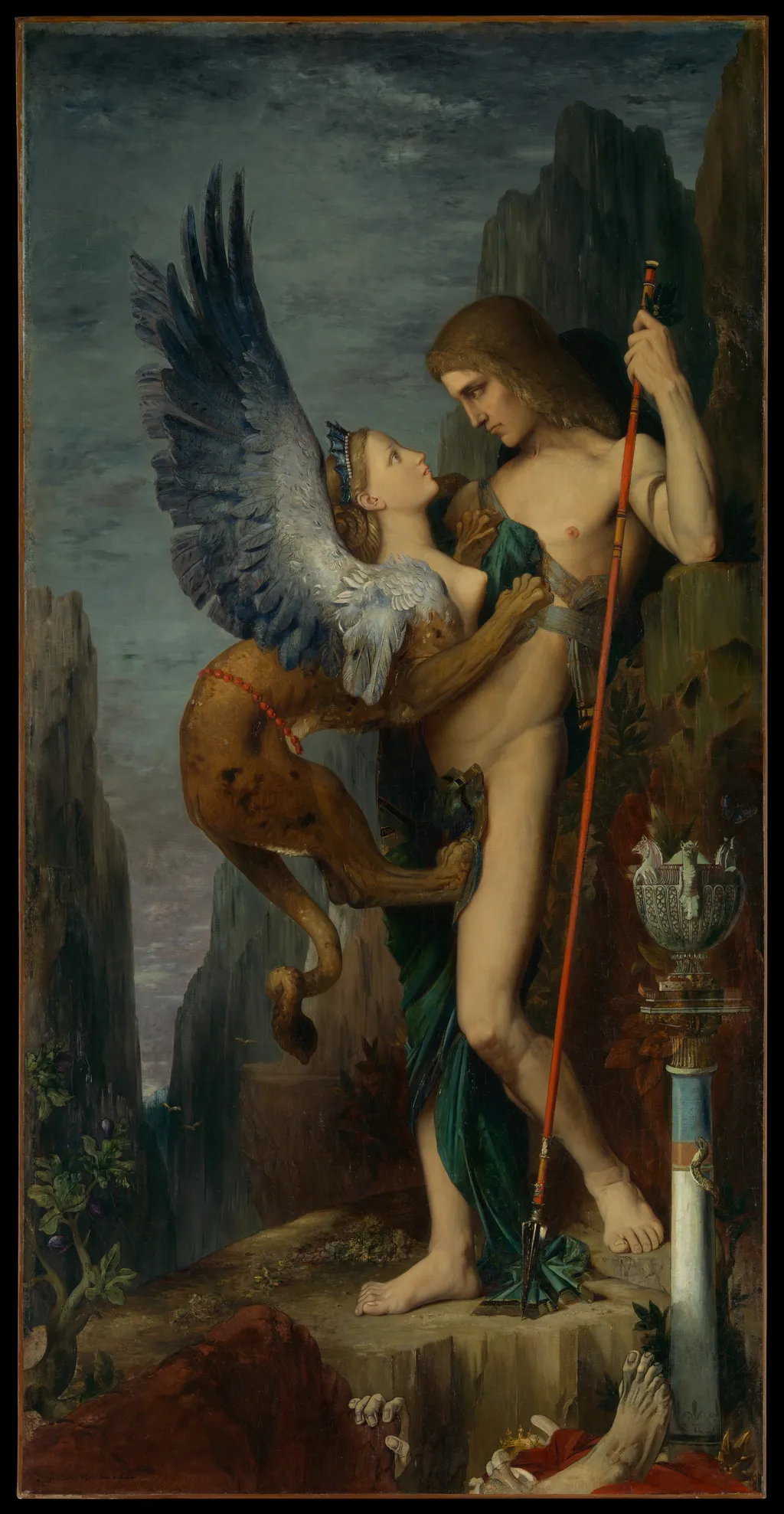
Oedipus and the Sphinx is an oil painting by the Academic Art artist Gustave Moreau. It dates from 1864 and is held in the collection of the Metropolitan Museum of Art.
About this work
At the Paris Salon of 1864, the thirty-eight-year-old Gustave Moreau showed a tall canvas of the Greek prince Oedipus locked in a silent stare with the Sphinx, amid the bones of her victims. He had turned from the realism then dominating French painting toward an archaic, jewel-like precision that unsettled critics. Prince Napoléon Bonaparte bought it on the spot for eight thousand francs.
Subject & Meaning
Gustave Moreau's 1864 painting depicts the legendary encounter between Oedipus and the Sphinx at the crossroads, drawn from Greek myth.
Gustave Moreau's 1864 painting depicts the legendary encounter between Oedipus and the Sphinx at the crossroads, drawn from Greek myth. The scene shows the Sphinx clawing at Oedipus, who remains composed. Iconographic details include corpses with a crown (symbolizing the vanity of earthly power), a snake (chthonic death) and a butterfly (immortal soul), and shrubs of fig (time) and laurel (immortality).
Symbolically, the Sphinx acts as a femme fatale, representing matter and sensuality, while Oedipus embodies moral strength and reason. Critics interpret the confrontation as a battle between good and evil, spirit and matter, and between the sexes. The intense shared gaze suggests an ambiguous mirror-image of mutual recognition.
Moreau rejects realism, adopting a deliberately archaic style to create an allegory of human struggle against base instincts, imbuing the myth with psychological tension.
Technique & Style
The painting is executed in oil on canvas. Moreau adopted a deliberately archaic style, rejecting the realism and naturalism prevalent in mid-19th-century France. Unusually for the artist, he employed a meticulous, analytical method comprising preparatory drawings, studies, sketches, and squaring of the canvas, a process that spanned roughly four years.
The handling is refined and detailed, contrasting with the broad spatula application he used in other works. The composition centers on the intense, locked gaze between Oedipus and the Sphinx, set against a rocky landscape with symbolic details such as a snake, butterfly, and corpse fragments. The formal qualities emphasize contemplative immobility and a dense layering of symbolic meaning.
History & Provenance
Gustave Moreau painted Oedipus and the Sphinx in 1864, reportedly working on it for about four years. The painting debuted at the French Salon of 1864, where it was an immediate success. At the Salon, it was purchased by Prince Napoléon Bonaparte, a cousin of Emperor Napoleon III, for 8,000 francs.
In 1868, the work was sold to the prominent art dealer Paul Durand-Ruel, and later that same year it was acquired by William H. Herriman of Rome. Herriman donated the painting to the Metropolitan Museum of Art in 1920, where it remains one of the few major works by Moreau outside France.
Context
Exhibited at the 1864 Salon, Gustave Moreau's Oedipus and the Sphinx achieved immediate critical success, garnering praise from Théophile Gautier, Maxime Du Camp, and Paul de Saint-Victor, and earning a medal. It revived history painting amid the dominance of realism and naturalism, positioning Moreau as a pivotal figure in the emergence of Symbolism. Critics lauded the work for uniting 'thought and execution' and uncovering 'the symbol hidden behind the fable.'
While some noted influences from Mantegna and Carpaccio, the painting was celebrated for its enigmatic, archaic treatment of classical myth. Subsequent scholarship (e.g., von Holten, Dorra) has interpreted the canvas as engaging with the idealism–materialism debate and as a forerunner of Symbolist themes of the femme fatale. The painting's triumph launched Moreau's career and remains central to his legacy.
Overview
Gustave Moreau's 1864 oil on canvas, Oedipus and the Sphinx, marked a significant debut at the French Salon. This painting depicts the mythical encounter between the hero and the monstrous Sphinx, a scene drawn from classical literature. Its exhibition garnered immediate acclaim, establishing Moreau's distinct artistic vision and securing its place in the Metropolitan Museum of Art.
Artist & collection

Artist
Gustave Moreau was a French artist and an important figure in the Symbolist movement.

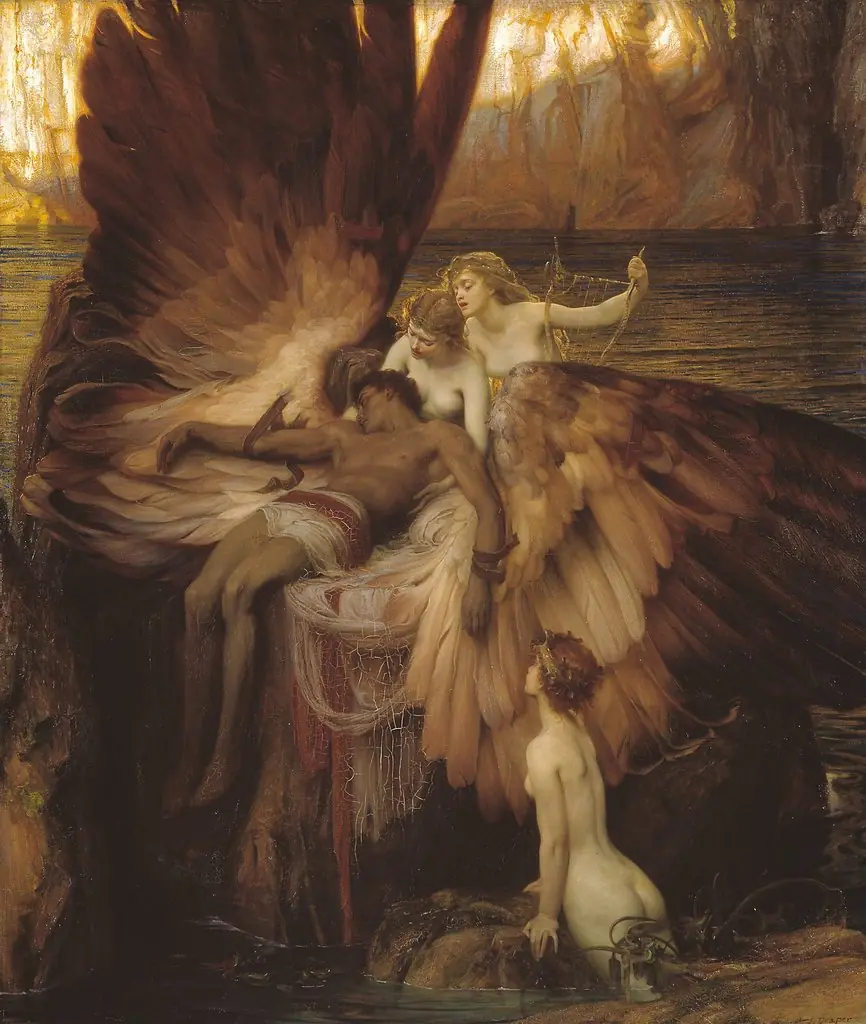 The Lament for Icarus
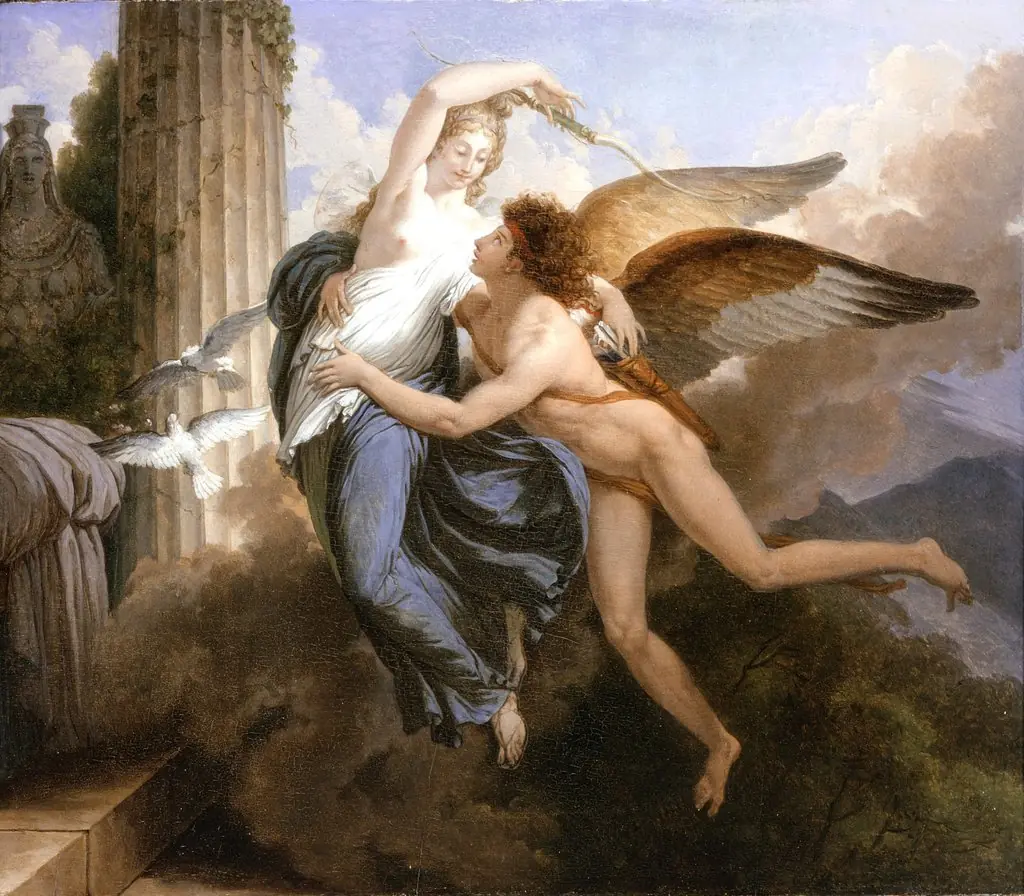 The Reunion of Cupid and Psyche
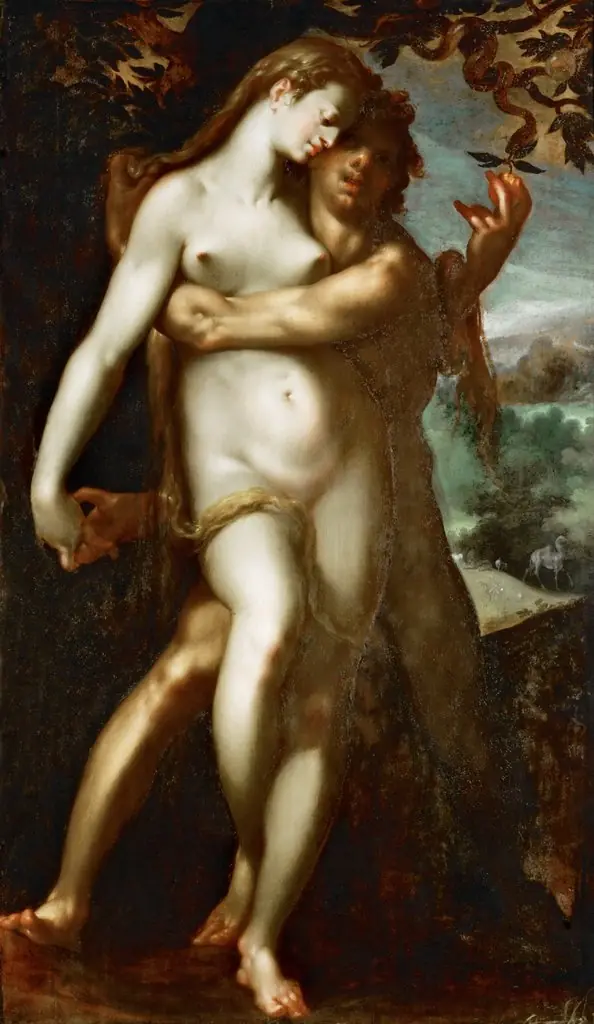 Fall of Man
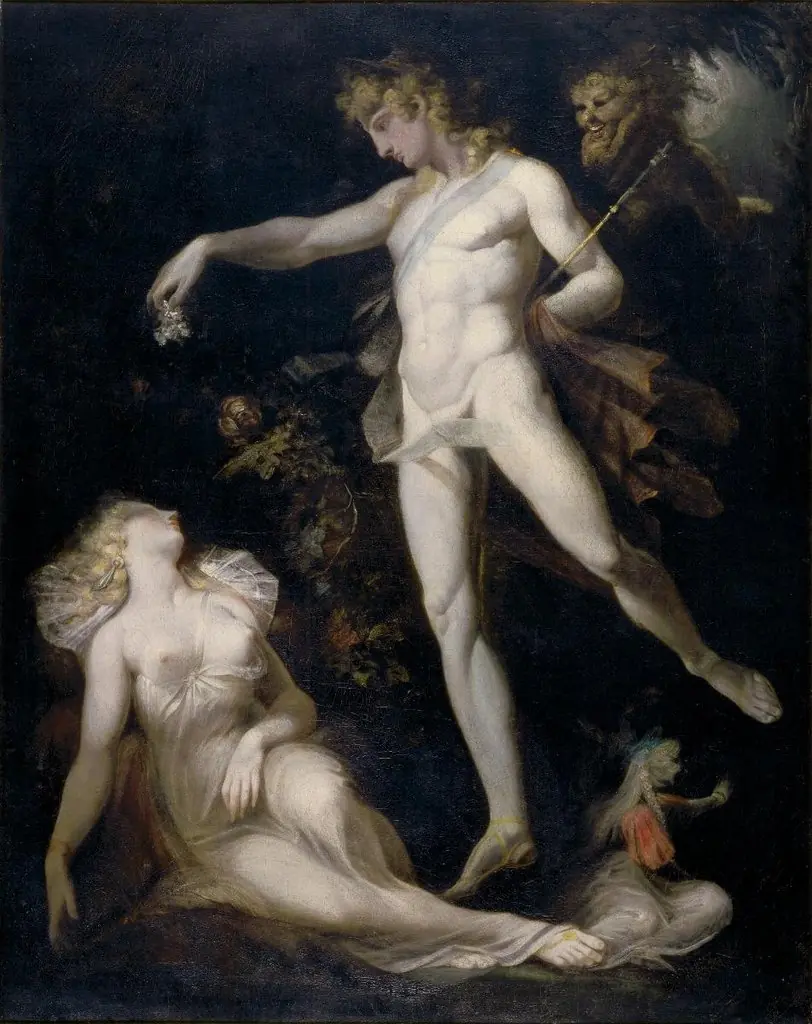 Oberon träufelt Blumensaft auf die Augen der schlafenden Titania
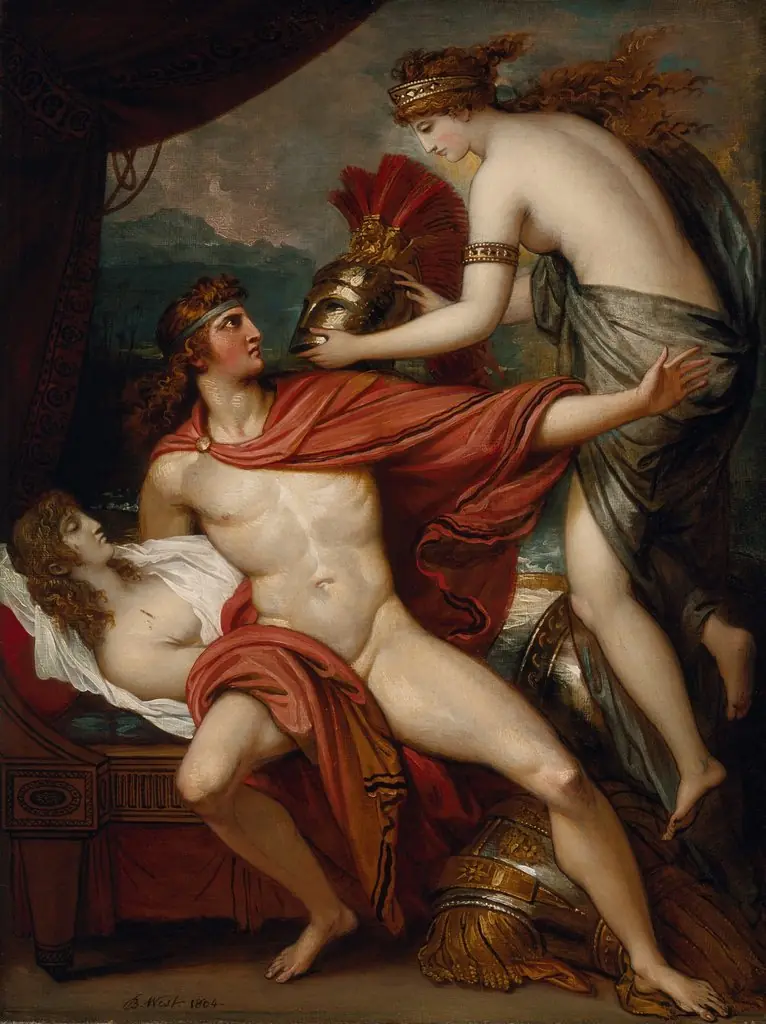 Thetis Bringing the Armor to Achilles
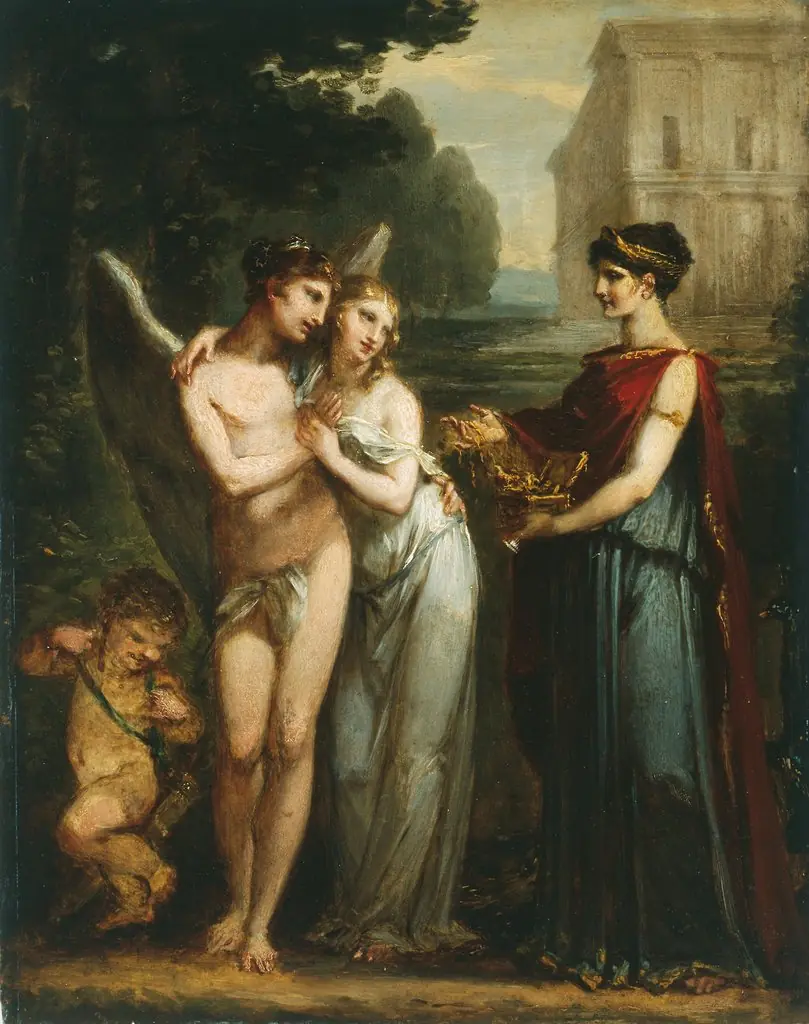 Innocence Choosing Between Love and Riches
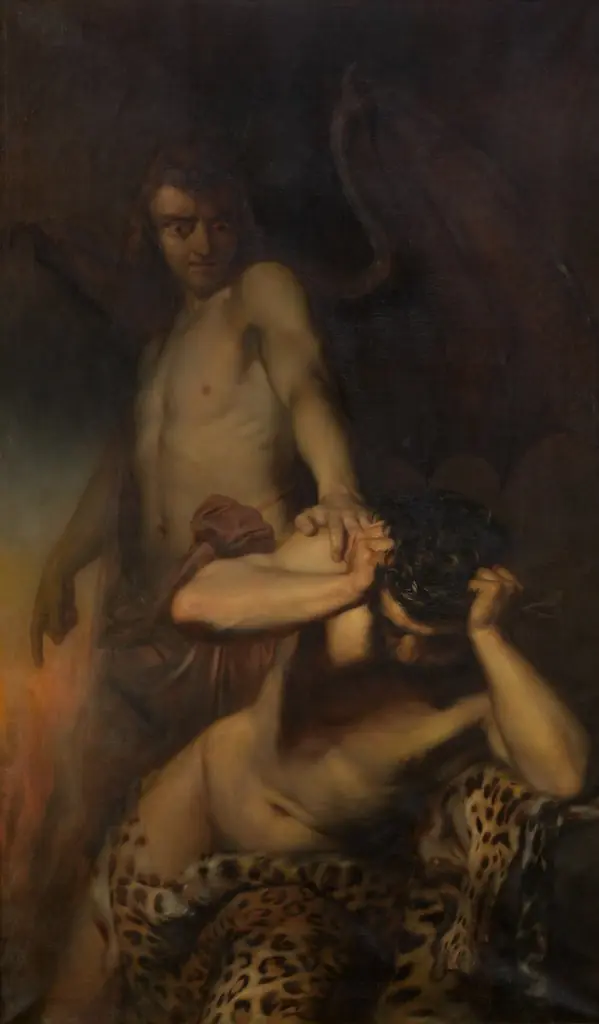 Cain in the Spell of Satan
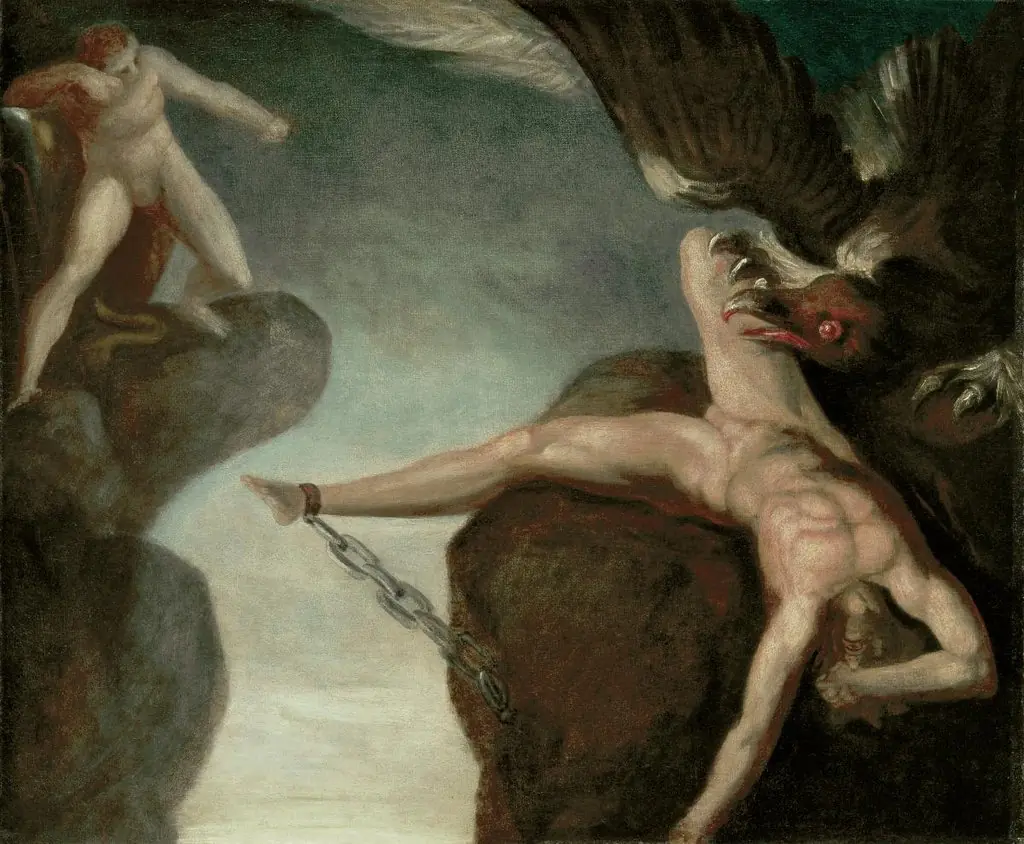 Herakles erlegt den Adler des Prometheus
 Hercules and the Hydra
 Saint Michael Archangel attacking the dragon