Artwork
The Entombment
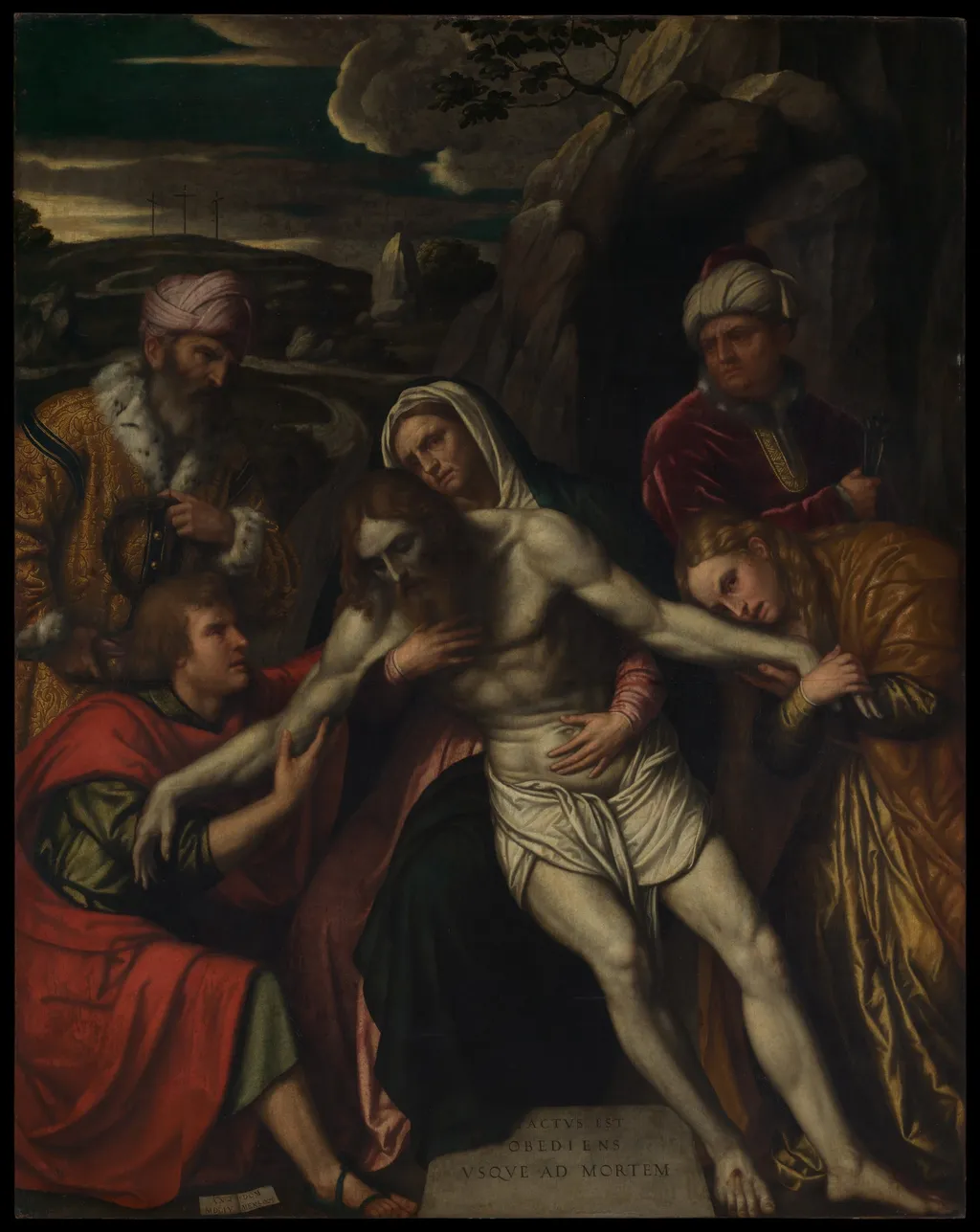
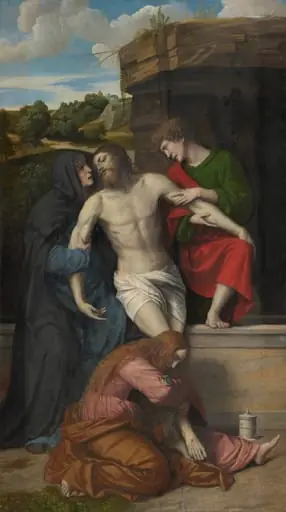
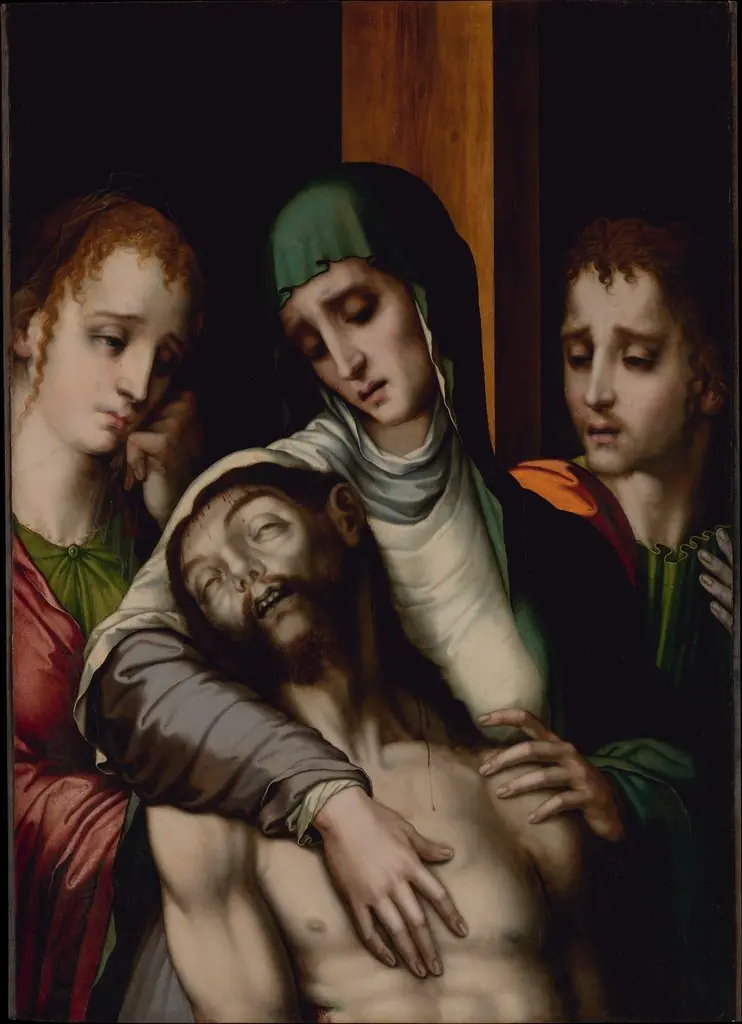
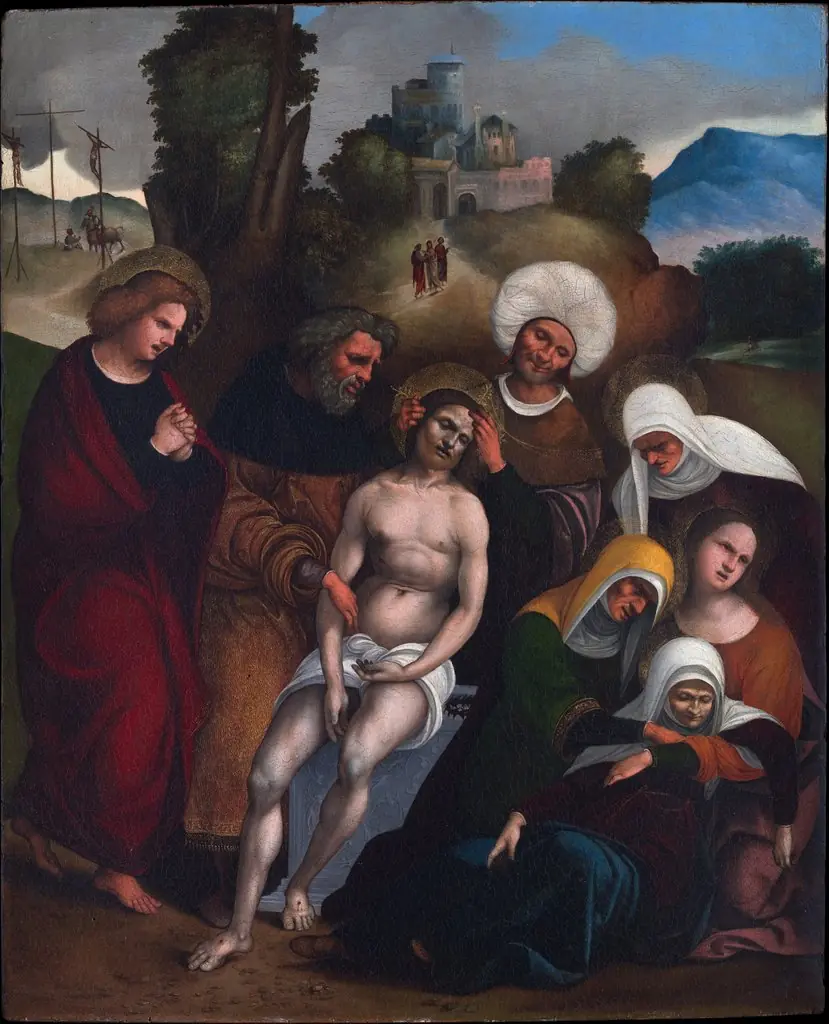
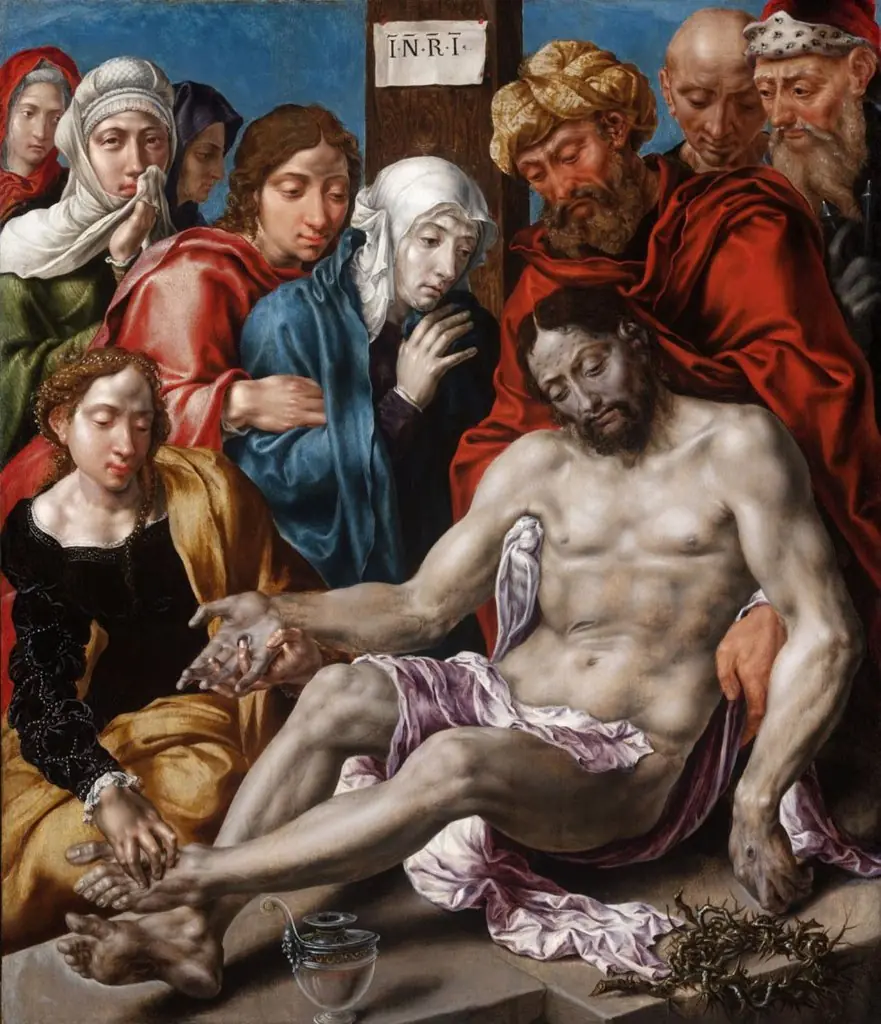
The Entombment is an oil painting by the Mannerist artist Moretto da Brescia. It dates from 1554 and is held in the collection of the Metropolitan Museum of Art.
About this work
Subject & Meaning
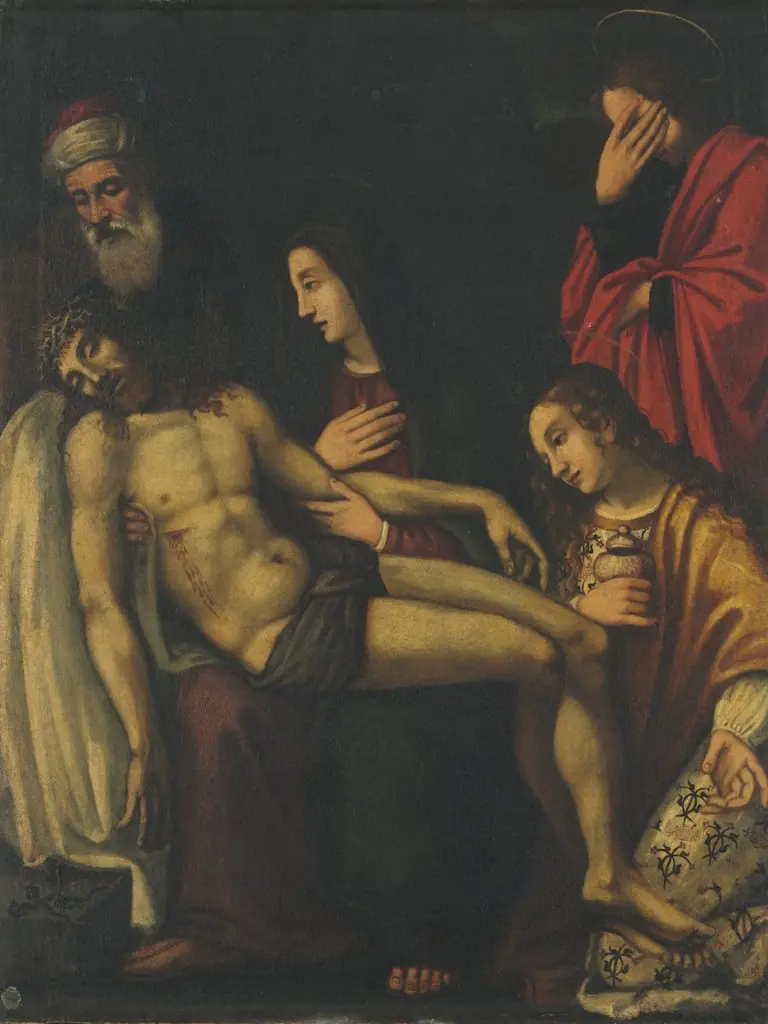
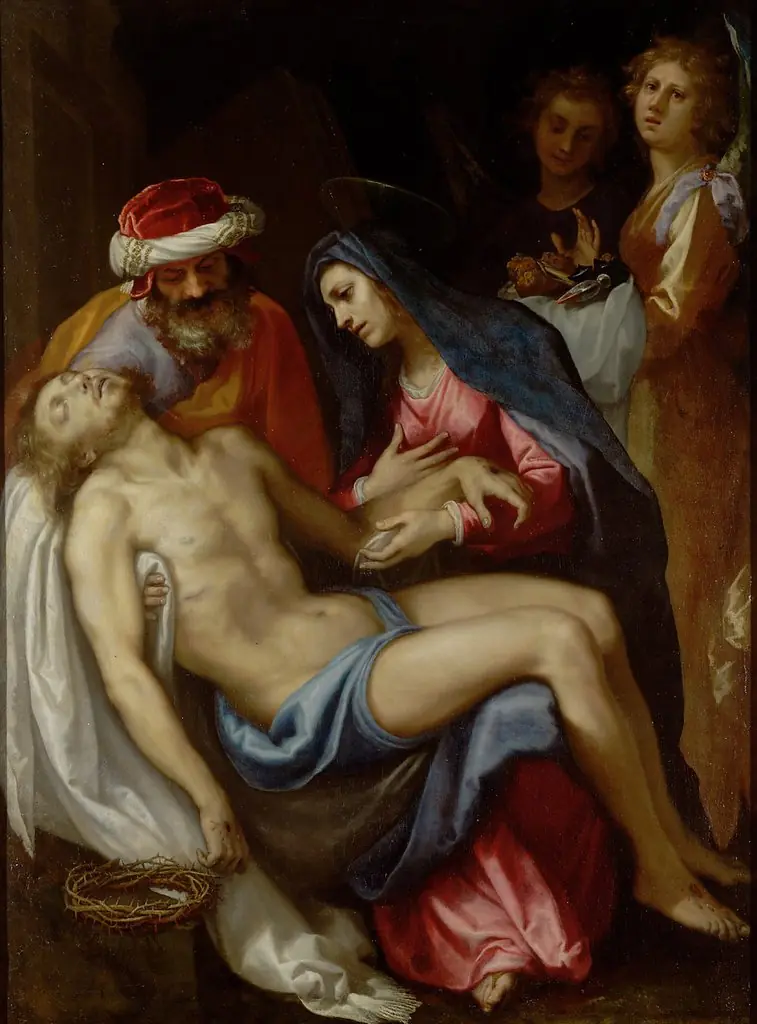
The painting portrays the Entombment of Christ, the biblical moment after the Crucifixion when Jesus' body is laid in the tomb.
The painting portrays the Entombment of Christ, the biblical moment after the Crucifixion when Jesus' body is laid in the tomb. Central to the composition is the lifeless Christ, supported by the Virgin Mary and Mary Magdalene, whose gestures and expressions convey deep sorrow and mourning. The presence of the two Marys emphasises their roles as witnesses to Christ's death and devotion, while the somber atmosphere underscores the theme of sacrifice and the anticipation of resurrection.
The work thus functions as a devotional image that invites contemplation of Christ's passion and the hope of redemption.
History & Provenance
The Entombment was painted by Moretto da Brescia in 1554 in oil on canvas. Its documented ownership passed through the collectors Edward Habich and Eduard Friedrich Weber before the work entered a public collection. It is now held in the Metropolitan Museum of Art in New York, catalogued among the European paintings.
No information regarding the original commission or patron is recorded, and the available sources note no specific accession number or major exhibition history for the work.
Overview
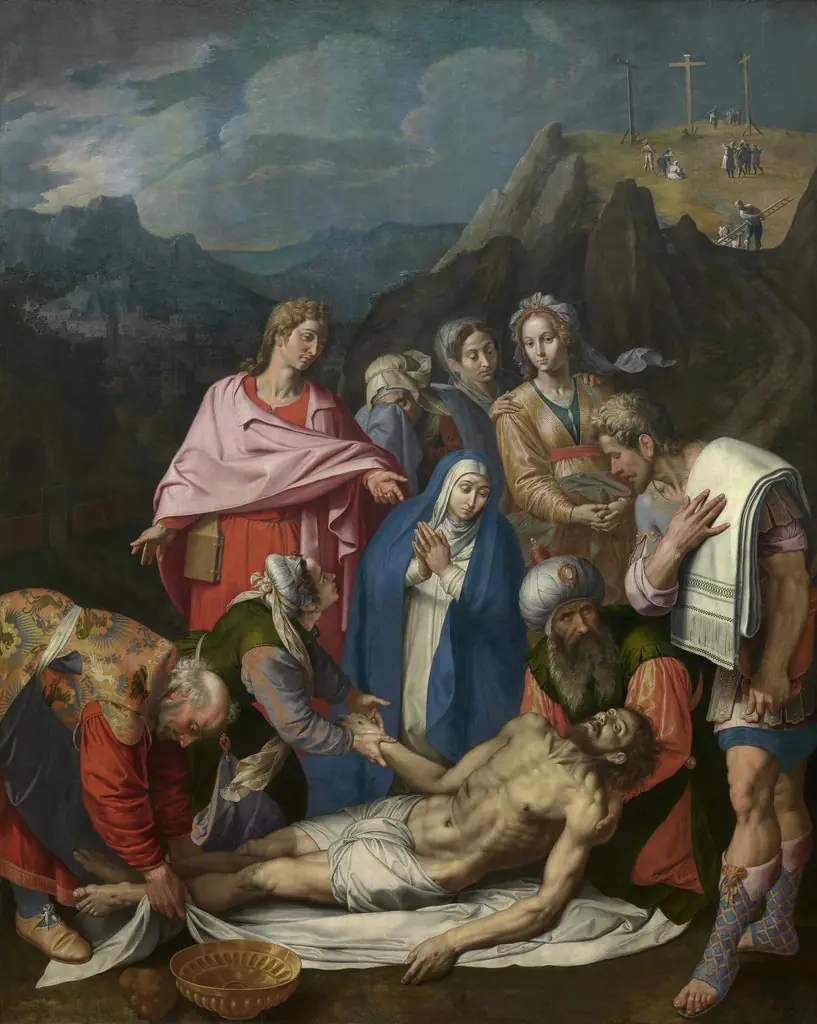
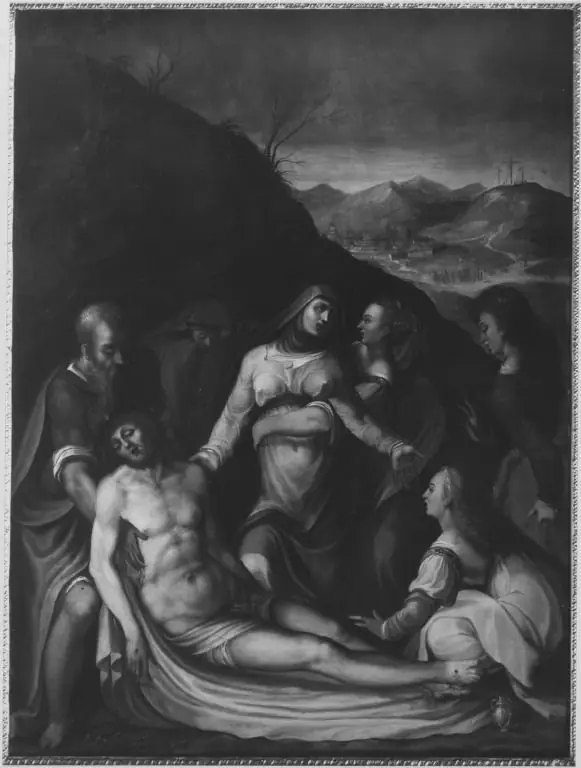
Moretto da Brescia's The Entombment, executed in 1554, represents the artist's final major contribution to religious painting before his death. The work depicts the deposition of Christ's body, showing a group of mourners carrying the pale, lifeless figure of the deceased toward a tomb. The composition is tightly arranged, emphasizing the physical weight of the corpse and the solemnity of the moment.
Christ's body, wrapped only in a cloth around the waist, is rendered with a stark, naturalistic pallor that contrasts with the darker, earthy tones of the surrounding figures. A woman in a dark headscarf leans over the body, her expression conveying profound grief, while other figures support the weight with careful deliberation. The background features a rocky hill and a dark sky punctuated by distant crosses, situating the scene at Golgotha.
Painted in oil, the work exemplifies Moretto's late style, characterized by a somber palette, restrained emotion, and a focus on the human reality of the Passion. As a late work, it reflects the artist's mature approach to religious narrative, moving away from the vibrant colorism of his earlier career toward a more introspective and austere tone that anticipates the Counter-Reformation aesthetic.
Technique & Style
The artist utilizes strong contrasts between light and shadow, a technique known as chiaroscuro, to enhance the dramatic impact of the scene. The luminous, pale form of the deceased figure stands out against the darker tones of the surrounding mourners' garments and the somber background. This stylistic choice effectively draws the viewer's attention to the central act of mourning and underscores the gravity and emotional weight of the moment.
Own this work as a print
Artist & collection
Artist
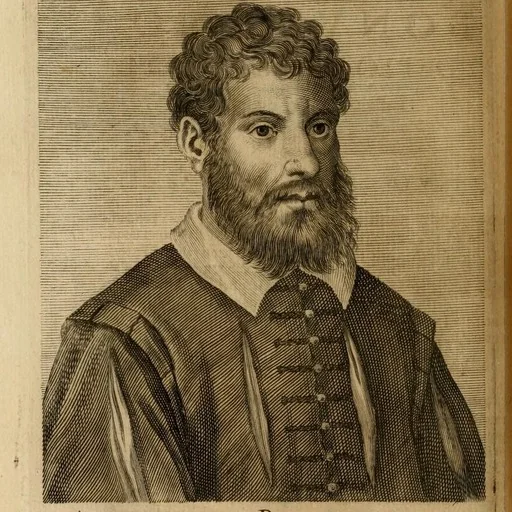
Alessandro Bonvicino (also Buonvicino) (c. 1498 – possibly 22 December 1554), more commonly known as Moretto, or in Italian Il Moretto da Brescia (the Moor of Brescia), was an Italian Renaissance painter from Brescia,…