Artwork
Landscape
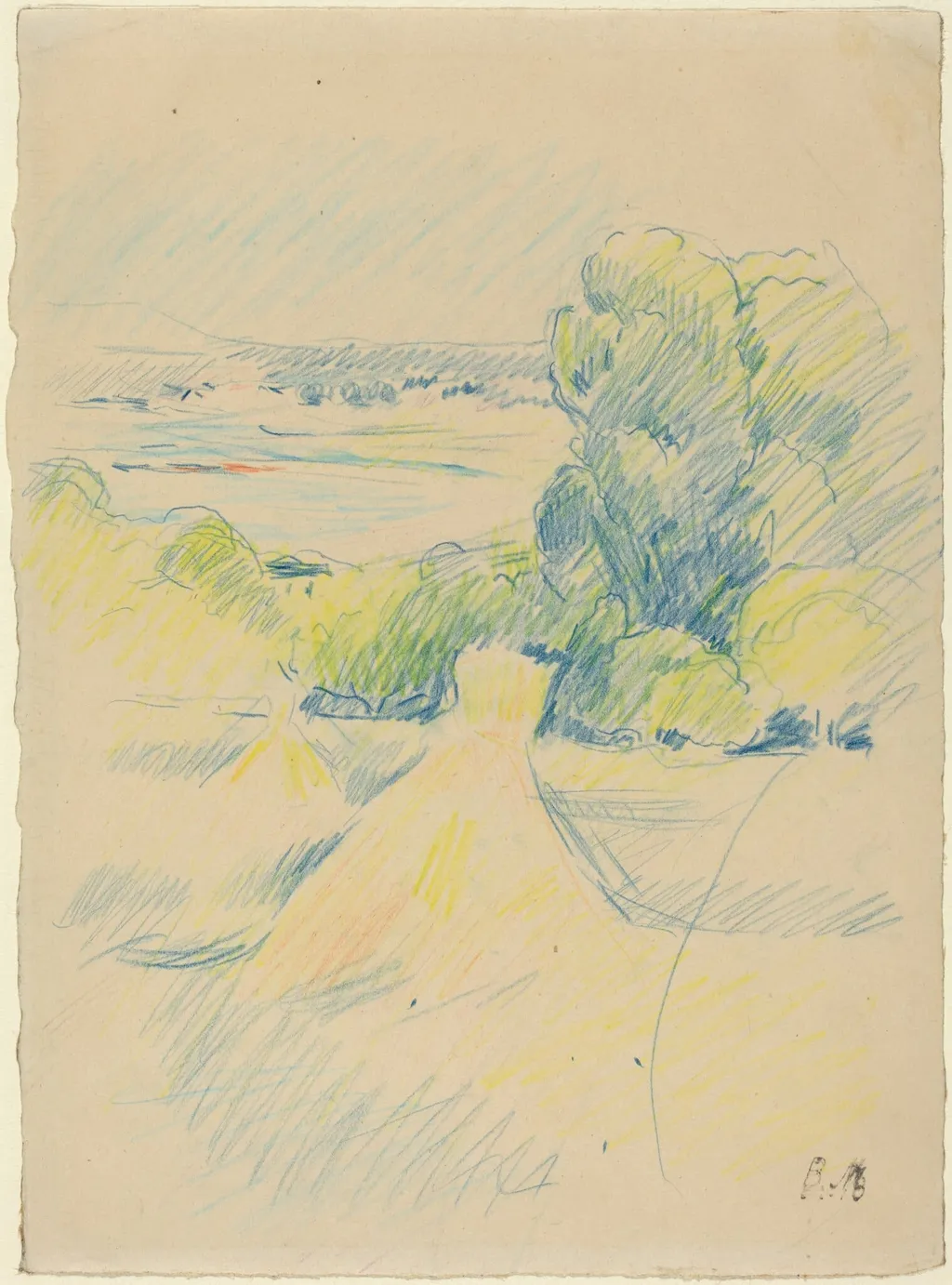
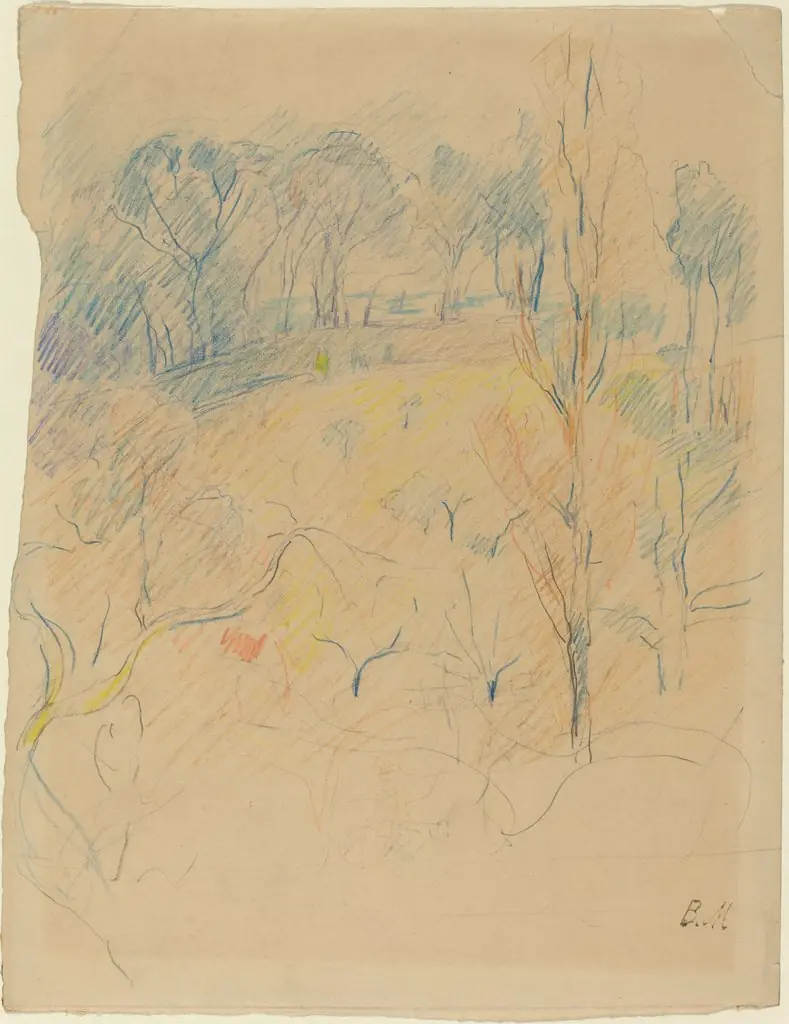
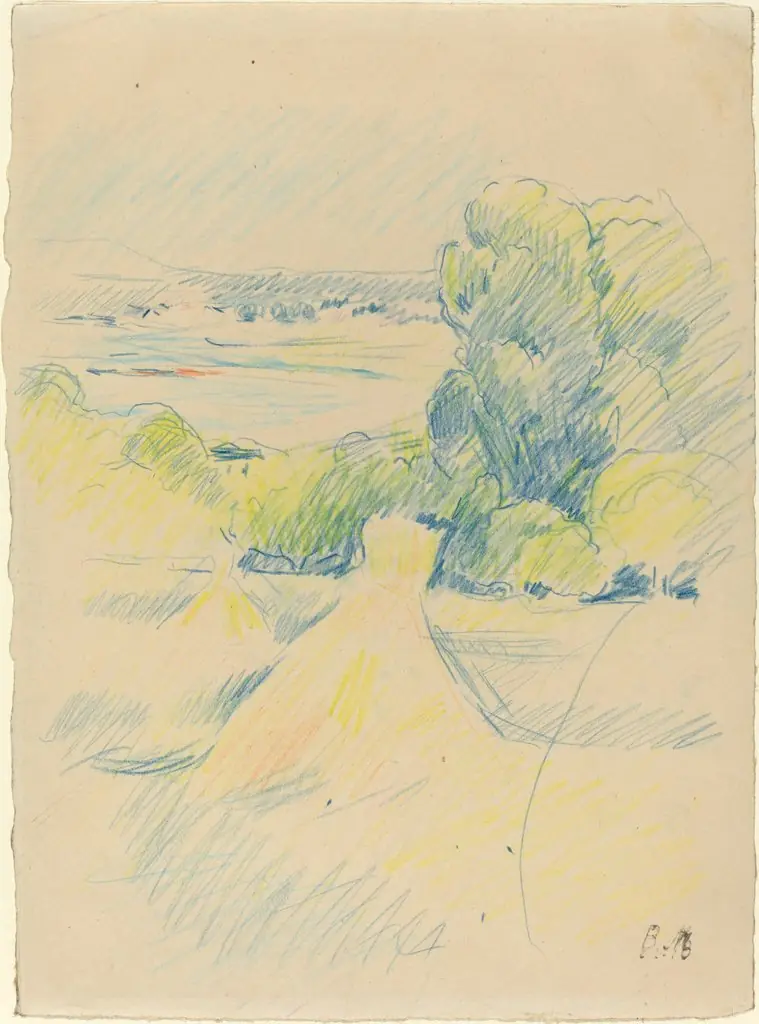
Landscape is a graphite drawing by the Romanticist artist Berthe Morisot. It dates from 1868 and is held in the collection of the National Gallery of Art.
- Inscription
- Inscribed:lower right artist's stamp: B.M (Lugt Supp.388a)
About this work
Overview
Landscape is a colored pencil drawing created by Berthe Morisot in 1868. This work exemplifies her association with the Impressionist movement, characterized by its emphasis on capturing light and everyday subjects.
Subject & Meaning
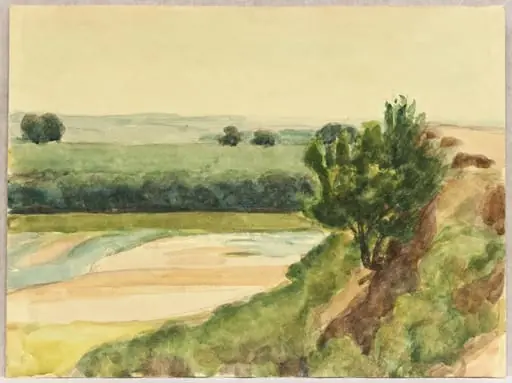
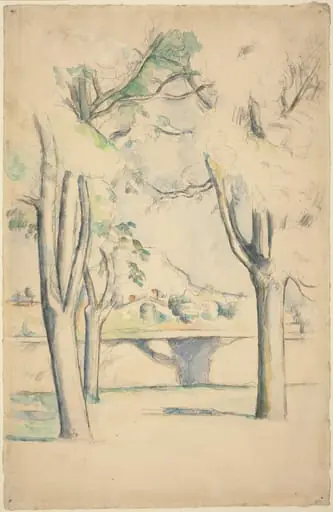
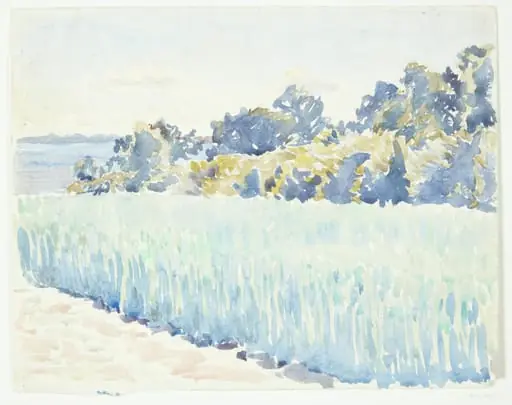
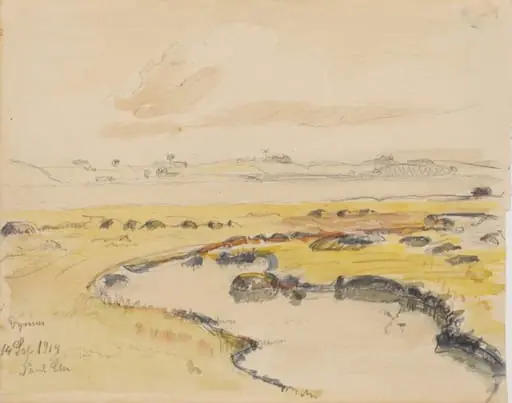
The drawing depicts a serene natural landscape featuring rolling hills and a few trees. The composition prioritizes a tree on the right, with the background hills suggested through minimal, loose rendering.
Technique & Style
Executed in colored pencils on rough-textured paper, the piece showcases quick, uneven strokes and soft, powdery hues predominantly in yellows, greens, and blues. The overall effect is intentionally unfinished, reflecting a spontaneous, preliminary approach.
History & Provenance
Morisot, an active member of Paris's Impressionist circle, exhibited at the Paris Salon from 1864 and later at the Impressionists' independent shows starting in 1874. The specific provenance of Landscape is not detailed here.
Context
Within Morisot's oeuvre, Landscape aligns with her exploration of Impressionist principles outside of traditional painting media, highlighting her versatility with colored pencils.
Own this work as a print
Artist & collection
Artist
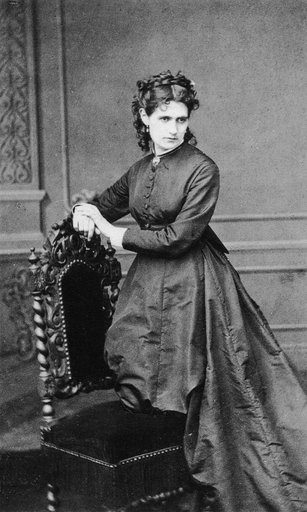
Berthe Marie Pauline Morisot was a French painter, printmaker and a member of the circle of painters in Paris who became known as the Impressionists.