Artwork
The Artist's Sister, Edma, with Her Daughter, Jeanne
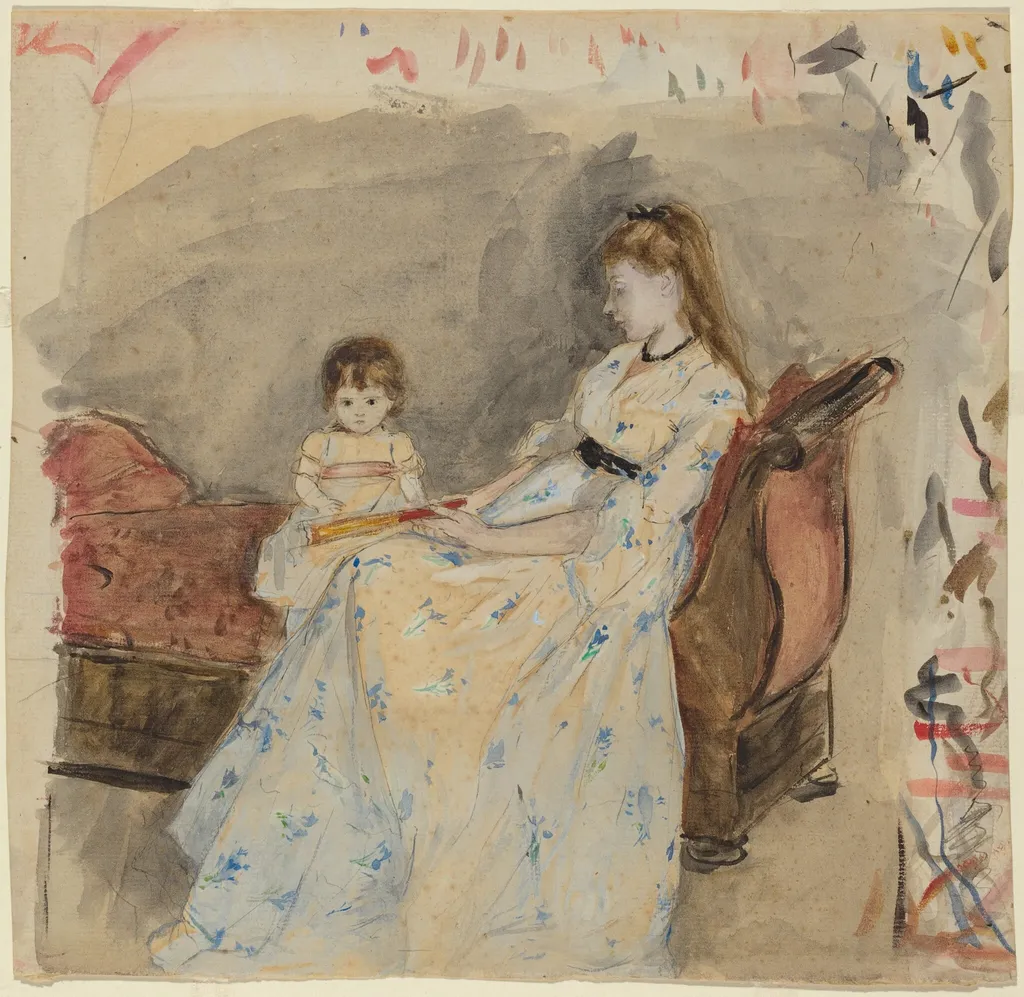
The Artist's Sister, Edma, with Her Daughter, Jeanne is a graphite drawing by the Impressionist artist Berthe Morisot. It dates from 1872 and is held in the collection of the National Gallery of Art.
About this work
The loose brushwork feels quick, like a private snapshot, not a stiff portrait.
A woman holds a little girl on her lap in soft light. The girl wears a white dress and stares past the painter. Watercolor blends with pencil lines, leaving edges light and dreamy.
Morisot painted her sister Edma and niece Jeanne in 1872. The loose brushwork feels quick, like a private snapshot, not a stiff portrait. Edma’s face is half in shadow, adding quiet mystery to the scene.
Look for more Morisot at the National Gallery of Art, Washington.
Overview
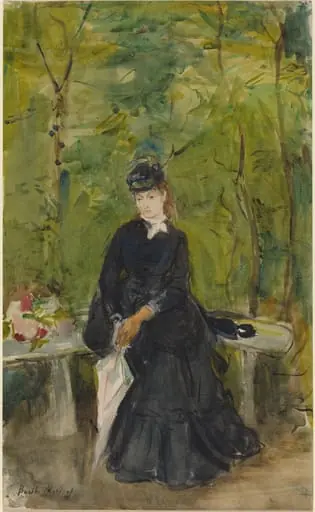
The Artist's Sister, Edma, with Her Daughter, Jeanne is an 1872 watercolor over graphite on laid paper by the French Impressionist Berthe Morisot. Measuring approximately 25.1 by 25.9 centimeters, the work depicts the artist's older sister, Edma Morisot, and Edma's young daughter in a quiet domestic moment. Classified as a drawing, it captures an intimate family scene with the spontaneity characteristic of Morisot's practice. The sheet is notable for containing a second work on its verso, titled The Artist's Sister Edma Seated Outdoors. The recto composition entered the collection of the National Gallery of Art in Washington, D.C., in 1970 as part of the Ailsa Mellon Bruce bequest, where it remains accessible under accession number 1970.17.160.a-b.
Subject & Meaning
The drawing captures a private domestic interaction between the seated Edma Morisot and a small child, identified as her daughter Jeanne. Edma occupies the center, seated in a wooden armchair with reddish upholstery, her body turned slightly left toward the standing child. She wears a long, pale dress patterned with blue florals, accented by a dark ribbon at her neck and waist, while Jeanne wears a pale dress with a pink sash. Jeanne reaches toward a long, thin object, possibly a book or album, that Edma holds. The physical proximity and shared focus of the figures emphasize a deep familial bond and maternal connection. The scene conveys a sense of stillness and tenderness, framing everyday motherhood as a subject worthy of artistic attention.
Technique & Style
Morisot executed the recto composition using fluid, transparent watercolor washes over sketchy graphite lines on laid paper, a technique that imparts an informal, spontaneous quality. The paper itself bears an A. ANNONAY watermark. Light enters from the left, illuminating the figures against a darker, arched gray wash that suggests a sofa or shaded backdrop. Her handling is loose and abstract, particularly in the background and margins, where brushstrokes in pink, gray, blue, and brown reveal the underlying paper texture and leave areas unfinished. The overall palette is muted, dominated by soft grays and warm beiges with touches of blue and rose. This emphasis on spontaneity and the transient effects of light aligns the work with the broader Impressionist movement, prioritizing the essence of the fleeting moment over meticulous detail.
History & Provenance
Created in 1872, the watercolor likely remained within the family initially, possibly passing to Edma Morisot herself. By 1941, it was in the possession of Edma's daughter, Blanche Marie Berthe Joséphine Pontillon, known as Mme. Forget. The work subsequently entered the collection of Captain Edward H. Molyneux in Paris by 1952. Ailsa Mellon Bruce acquired it in 1955, and it came to the National Gallery of Art via her bequest in 1970. The drawing's exhibition history began in 1929 at the Bernheim-Jeune gallery in Paris. It was later shown in Copenhagen and London in 1949 and 1950, and featured in the 1952 Molyneux Collection exhibition in Washington and New York under the title Portrait of Madame de Pontillon and Her Daughter. Subsequent displays include a 1961 exhibition in San Francisco and a 1985 graphics survey at the National Gallery of Art.
Context
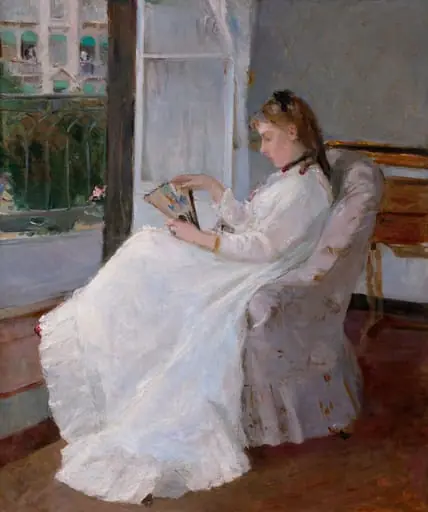
This watercolor emerged during a pivotal period for Morisot, just a year before she helped organize the first Impressionist exhibition in 1874. The work fits squarely within her broader exploration of modern domestic life and the candid portrayal of women in private spaces, themes she shared with contemporaries like Mary Cassatt. The intimate focus on her sister Edma was a recurring motif, as seen in Morisot's 1869 oil painting The Artist's Sister at a Window, which shares a similar provenance history through the Molyneux and Mellon Bruce collections. Scholarly cataloging of the watercolor includes its listing as number 621 in the 1961 Bataille and Wildenstein catalogue raisonné of Morisot's paintings, pastels, and watercolors, and it has been referenced in studies concerning iconographic themes such as pregnancy and domestic iconography.
Legacy
The work's long exhibition history, spanning from 1929 to at least 1985, underscores its enduring role in shaping the public and scholarly understanding of Morisot's oeuvre. By appearing in major postwar retrospectives in Copenhagen, London, and the United States, the drawing helped solidify Morisot's reputation as a vital contributor to Impressionism. Its inclusion in the Ailsa Mellon Bruce bequest at the National Gallery of Art ensured its preservation and accessibility within a major public institution. The shifting titles under which it was exhibited, from Portrait of Madame de Pontillon and Her Daughter to its current descriptive title, reflect evolving curatorial approaches to Morisot's work, moving from formal portraiture designations toward an emphasis on the personal, familial intimacy that defines her legacy.
Own this work as a print
Artist & collection
Artist
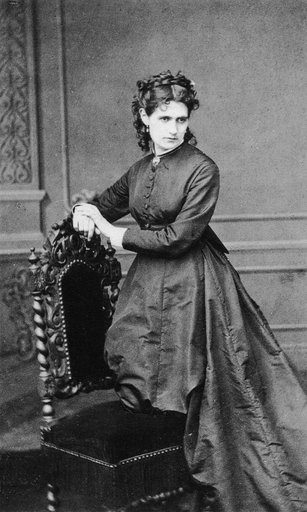
Berthe Marie Pauline Morisot was a French painter, printmaker and a member of the circle of painters in Paris who became known as the Impressionists.

![The Artist's Son Georges [verso], by Camille Pissarro](https://artifactworldgallery.com/img/camille-pissarro--the-artist-s-son-georges-verso--053697550e9f2889-w320.webp)