Artwork
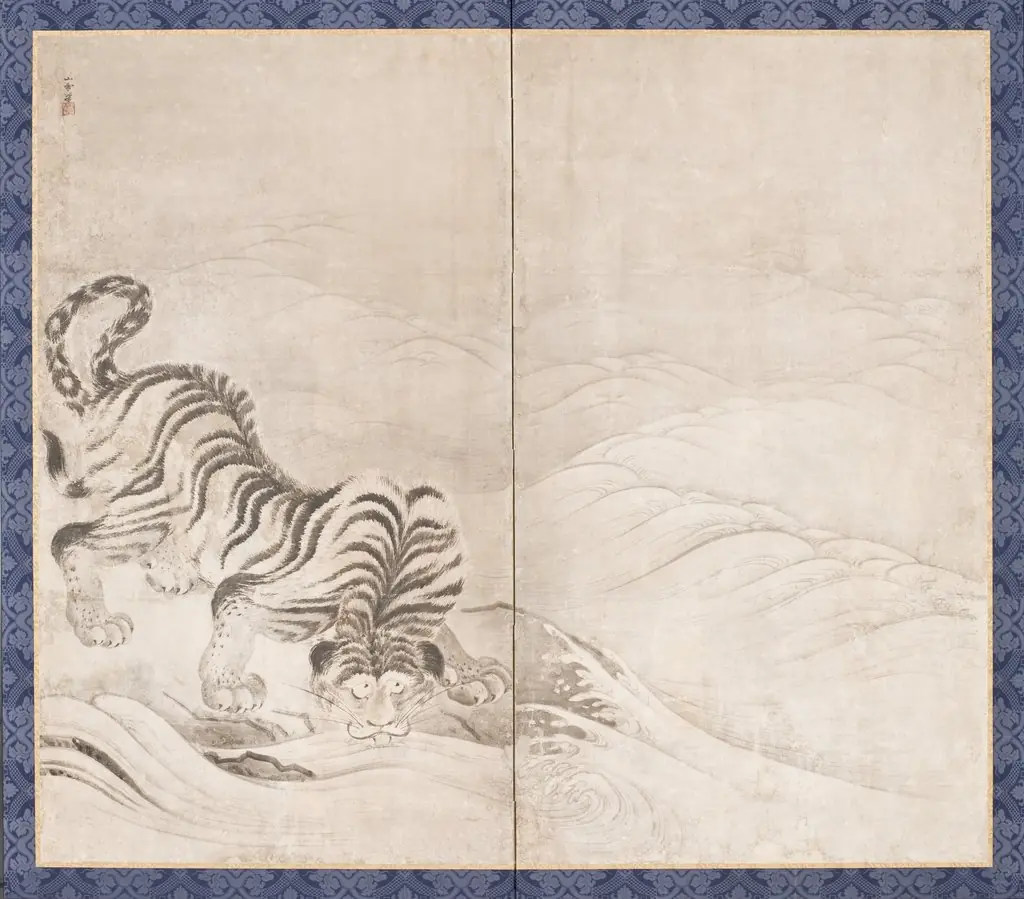
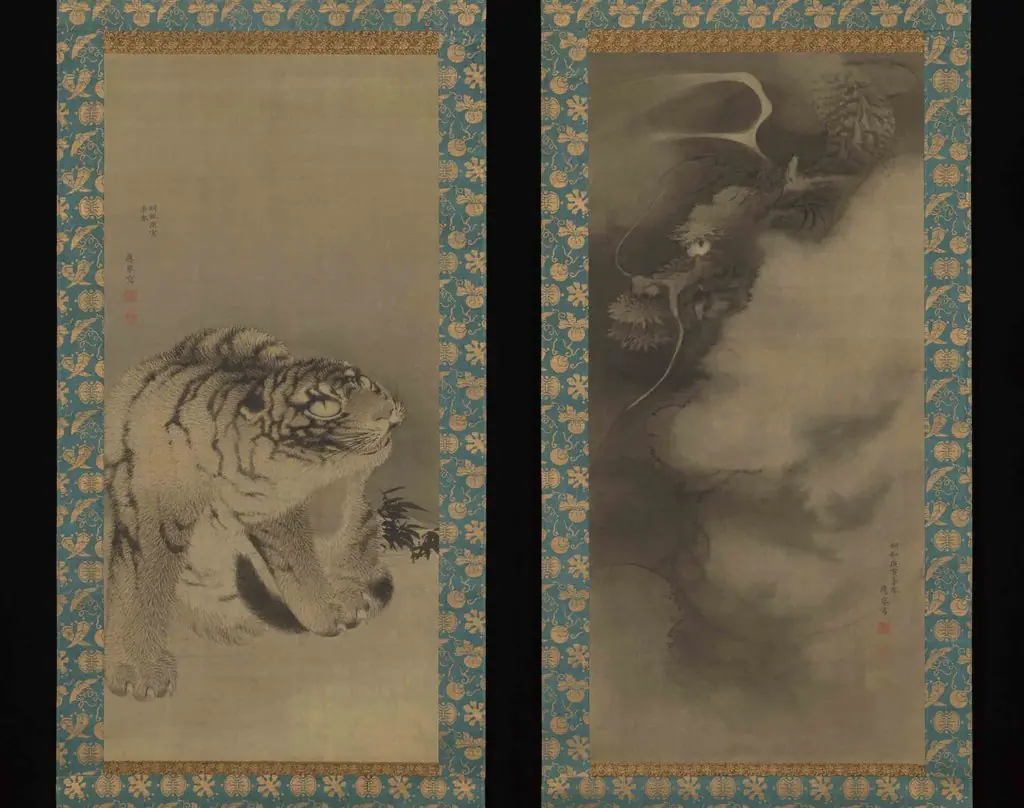
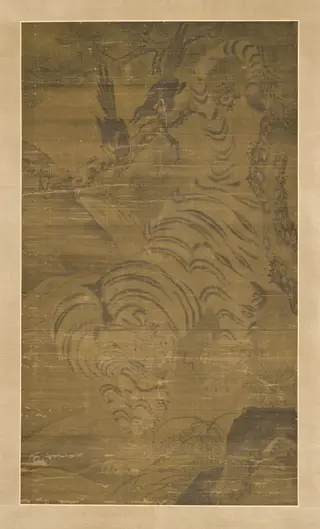
작자미상 용과 호랑이 조선 또는 일본 (에도)|簋簅痡萳 樻虎圖 朝鮮 日本 江戶|Tiger
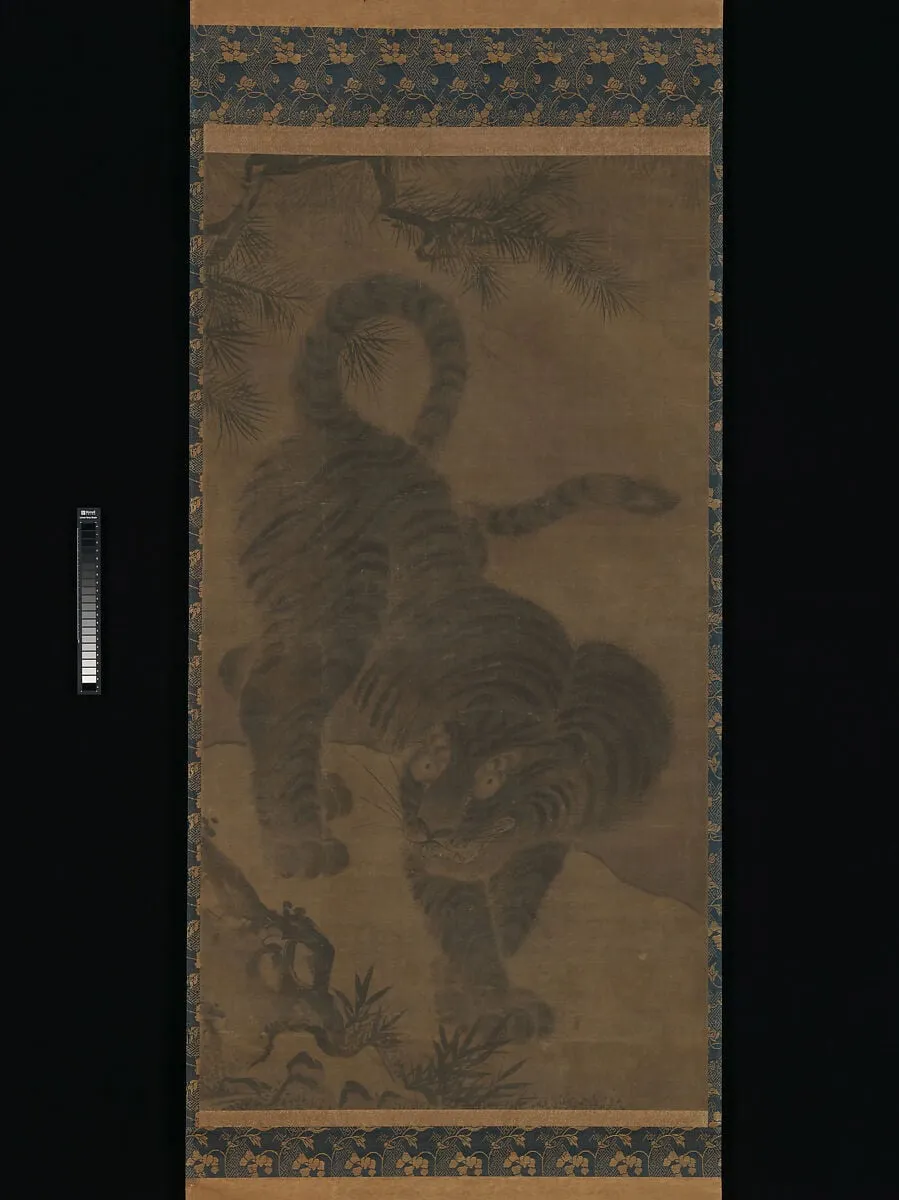
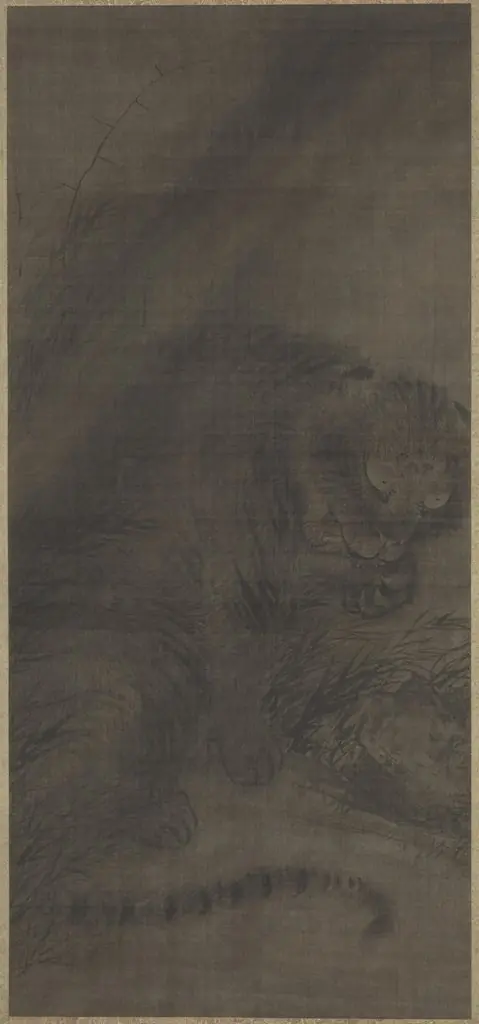
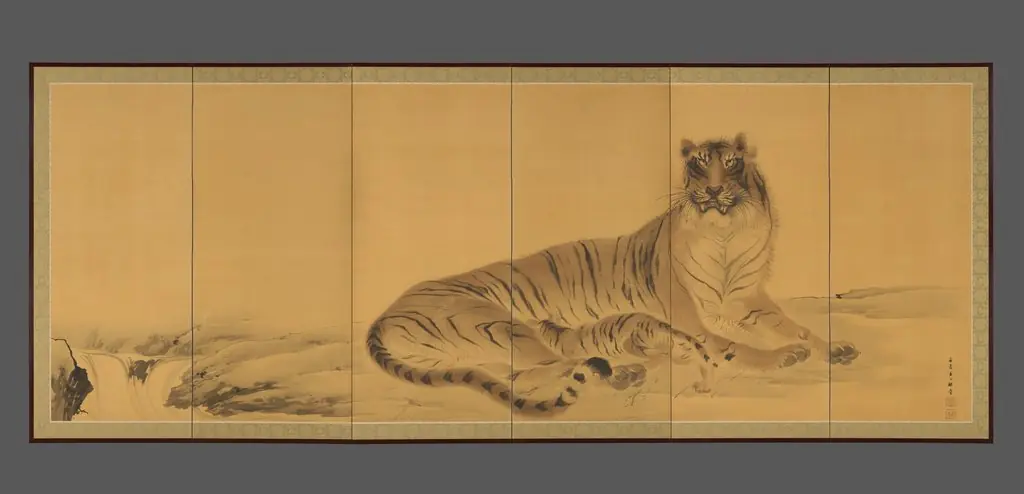
작자미상 용과 호랑이 조선 또는 일본 (에도)|簋簅痡萳 樻虎圖 朝鮮 日本 江戶|Tiger is an ink painting by the Ming dynasty painting artist Muqi. It is held in the collection of the Metropolitan Museum of Art. A hanging scroll executed in ink on silk presents a solitary tiger perched on a rock.
About this work
Technique & Style
The composition shows the tiger rendered in bold, abbreviated brushwork, using layered ink washes to suggest volume and fur texture without detailed line.
The hanging scroll is executed in ink on silk, a pairing typical of East Asian painting formats. The composition shows the tiger rendered in bold, abbreviated brushwork, using layered ink washes to suggest volume and fur texture without detailed line. The silk support is mounted with a plain border, allowing the ink's tonal variations to dominate the surface.
The handling favors rapid, expressive strokes for the animal's musculature and patterned stripes, while the background remains largely unmodulated to focus attention on the subject. The scroll's dimensions (130.2 cm × 69.9 cm) and vertical format emphasize the tiger's commanding presence.
History & Provenance
The work titled Tiger is an ink-on-silk hanging scroll dated 1599 and attributed to an unidentified artist. As its title indicates, it was produced either in Joseon Korea or within the Japanese Edo-period cultural sphere, and it depicts a tiger. The scroll entered the collection of the Metropolitan Museum of Art, where its presence is recorded in the museum's catalogue.
No earlier ownership records are provided in the source material, and the work is not known to have been commissioned by a specific patron. The specific accession number for this piece is not given in the available documentation.
Overview
A hanging scroll executed in ink on silk presents a solitary tiger perched on a rock. The animal’s tail is animated, and its gaze is directed toward an unseen point, creating a sense of tension. The composition is rendered with swift, expressive strokes that give the impression of breath‑like ink splashes.
Subject & Meaning
The work focuses on a single tiger, a creature traditionally associated with power and wildness in East Asian symbolism. By isolating the animal and emphasizing its alert posture, the painting conveys a moment of poised energy, inviting contemplation of the tiger’s instinctual vigilance.
Context
During the Edo era, Korean and Japanese artists often looked to Chinese models for inspiration, especially in monochrome ink painting. This cross‑cultural exchange facilitated the adoption of Chinese brush techniques in local workshops, producing works that blend regional sensibilities with broader East Asian artistic conventions.
Artist & collection