Artwork
Venus and Bacchus
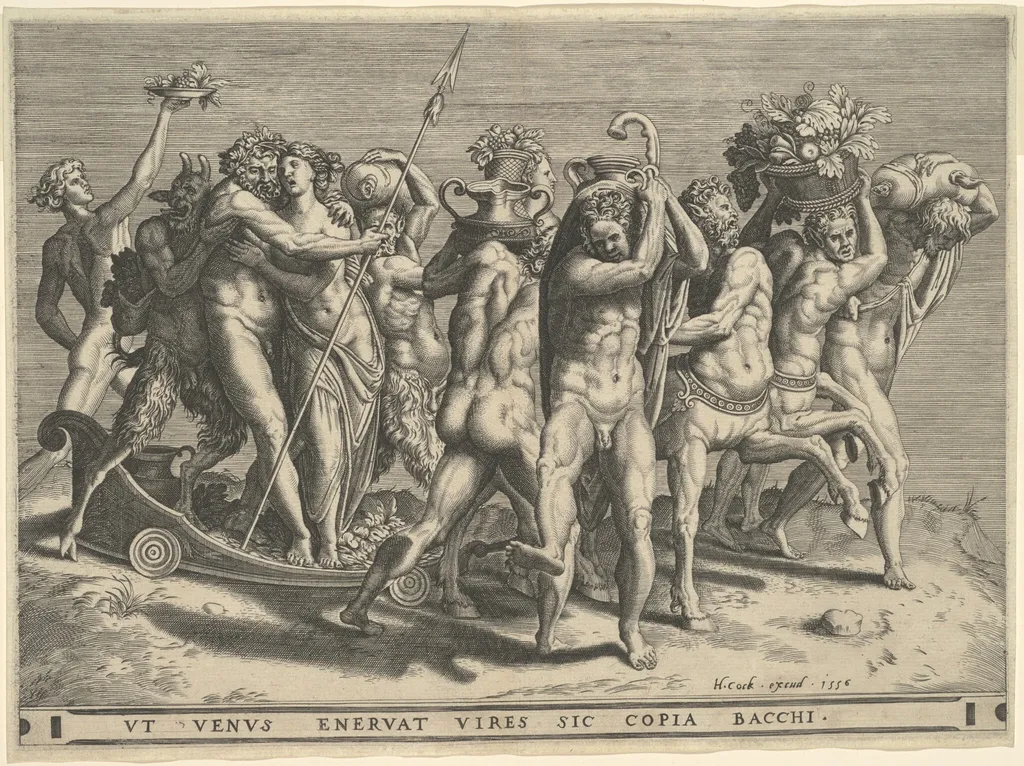
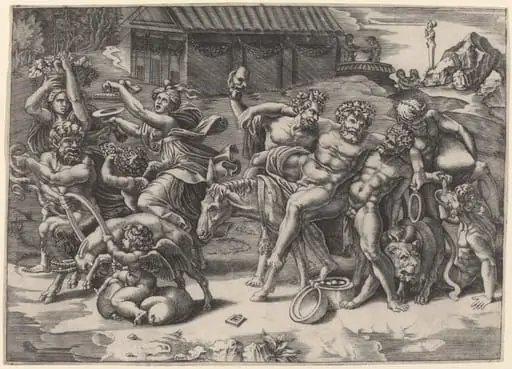
Venus and Bacchus is an ink print by the Renaissance artist Netherlandish 16th Century. It dates from 1556 and is held in the collection of the National Gallery of Art.
- Inscription
- Inscribed:lower right in plate: H. Cock excud 1556; lower center in plate: VT VENVS ENERVAT VIRES SIC COPIA BACCHI.
About this work
Overview
A distant boat and rocky shore suggest an outdoor setting, while the title anchors the imagery in classical mythological themes of love and intoxication.
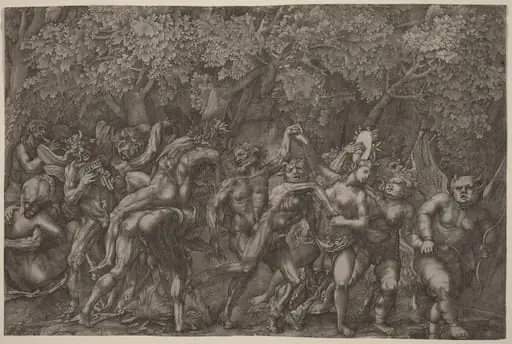
This black-and-white engraving depicts a dense, dynamic grouping of nude figures associated with Venus and Bacchus. Rendered on laid paper, the composition is tightly packed with intertwined bodies, wine vessels, and vines. The scene conveys movement and revelry through overlapping limbs and expressive gestures.
A distant boat and rocky shore suggest an outdoor setting, while the title anchors the imagery in classical mythological themes of love and intoxication.
Subject & Meaning
The figures represent deities and followers of Venus, goddess of love, and Bacchus, god of wine and ecstasy. Their unrestrained postures and the presence of wine jugs and vines evoke a Dionysian celebration. The chaotic arrangement implies a moment of uncontrolled joy, possibly referencing ancient rites tied to fertility and indulgence.
The inclusion of Venus, though not clearly singled out, ties the scene to themes of desire and sensual abundance.
Technique & Style
The image is an engraving, created by incising fine lines into a metal plate. The artist employed cross-hatching and varied line weights to model form and suggest volume. Sharp, precise strokes define musculature and fabric, while dense shading adds depth and contrast.
The tactile quality of the lines enhances the three-dimensionality of the figures, characteristic of Renaissance printmaking techniques focused on clarity and detail.
History & Provenance
The print likely dates to the 16th century, a period when mythological subjects were popular in Northern European printmaking. Though the artist’s identity is unconfirmed, the style aligns with engravers active in the Low Countries or Germany. The work was probably produced for collectors interested in classical themes, circulating as part of a broader market for reproductive prints after paintings or drawings.
Context
During the Renaissance, mythological scenes were frequently adapted for prints, serving both artistic and intellectual purposes. This engraving reflects a revival of classical antiquity, where stories of gods and rituals were reinterpreted through contemporary visual language. Such images appealed to educated audiences familiar with Ovid and other Latin texts, blending pagan symbolism with humanist ideals of the body and nature.
Legacy
This print contributes to a tradition of mythological engravings that influenced later depictions of Bacchanalian scenes in European art. Its emphasis on dynamic composition and anatomical expression helped standardize visual conventions for representing divine revelry. Though not widely known today, it remains an example of how printmaking disseminated classical narratives across social classes in early modern Europe.
Artist & collection

Artist
This artist carved scenes with fine lines, mostly religious and mythological ones.

![Battle of the Sea Gods [left half], by Andrea Mantegna](https://artifactworldgallery.com/img/andrea-mantegna--battle-of-the-sea-gods-left-half--084dd803fb0016b2-w320.webp)