Artwork
The Flag of Truce
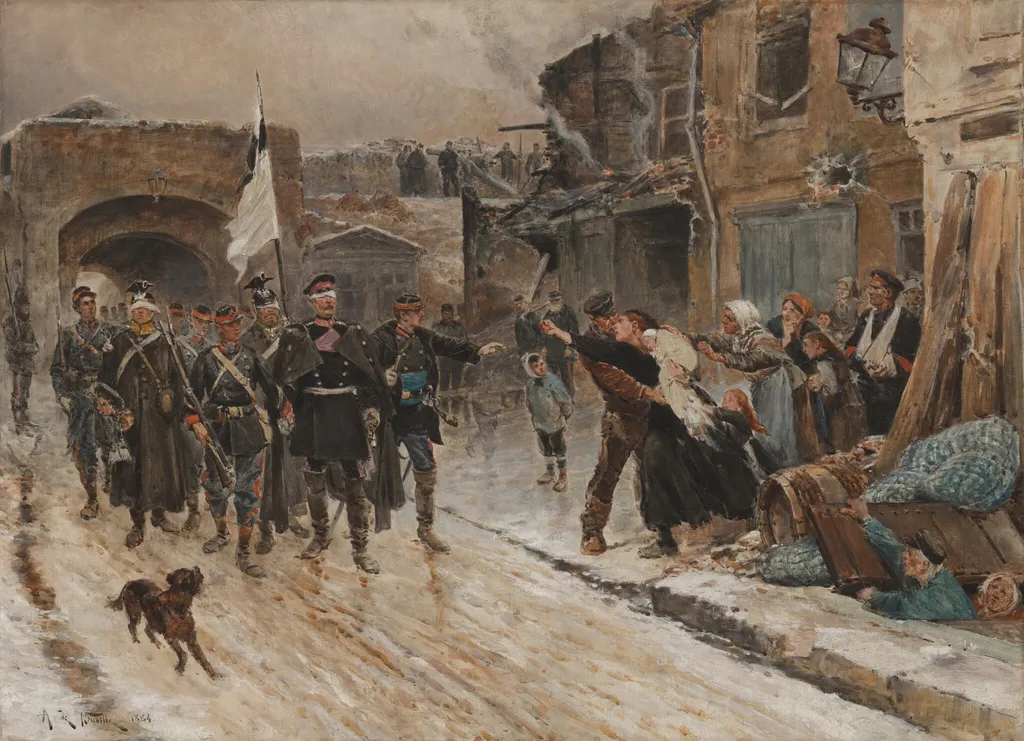
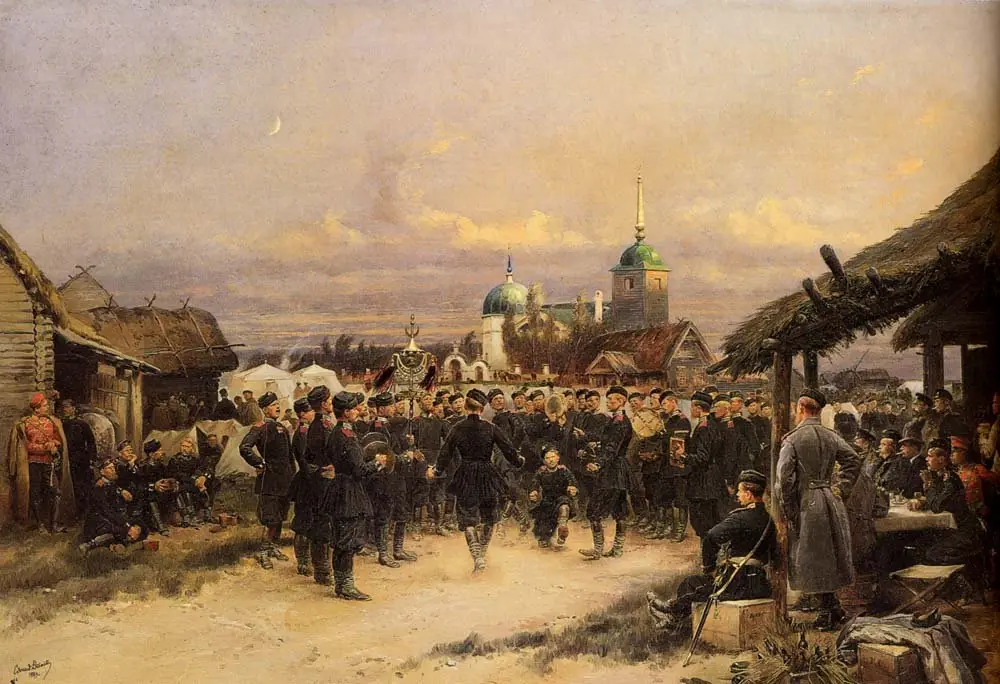
The Flag of Truce is a gouache painting by the Impressionist artist Alphonse de Neuville. It dates from 1884 and is held in the collection of the National Gallery of Art.
- Inscription
- Inscribed:lower left: A. de Neuville 1884.
About this work
Technique & Style
12 cm in width, yielding a horizontal format that accommodates the extended narrative scene.
The Flag of Truce is executed in gouache on canvas, a water-based opaque medium that allowed Alphonse de Neuville to build up matte, densely pigmented passages suited to the work's somber subject matter. The canvas support measures 65.41 cm in height by 91.12 cm in width, yielding a horizontal format that accommodates the extended narrative scene.
The painting is classified as a painting within the Corcoran collection's records. Provenance notes indicate that a related watercolor of the same subject, measuring 0.83 by 1.20 meters, is held by the Musée de l'Armée in Paris, while the present canvas corresponds to the larger oil/gouache composition that passed through Pitet Ainé and Knoedler and Co. before entering the Waggaman and Clark collections.
No specific condition report or stylistic analysis is documented in the available sources.
History & Provenance
The Flag of Truce was painted by Alphonse de Neuville in 1884. Its early ownership began with a sale at Galerie Georges Petit, Paris, on 6 May 1886, where it appeared as number 212 among works titled _Parlementaire_. By August 1886 it was held by Pitet Ainé, Paris, and shortly thereafter, on 5 August 1886, it was sold to M. Knoedler and Co., New York.
Knoedler then transferred the work to Thomas E. Waggaman of Washington on 2 November 1886. After Waggaman’s death, it was auctioned at the American Art Association, New York, on 25 January 1905 and acquired by William A. Clark. Upon Clark’s death in 1925, the painting entered the Corcoran Gallery of Art, Washington, as a bequest in 1926. In 2015 it was transferred to the National Gallery of Art, Washington.
The Flag of Truce is currently held by the National Gallery of Art in Washington, D.C., having been acquired in 2015. Prior to this transfer, the work was part of the Corcoran Gallery of Art's collection, where it arrived in 1926 as a bequest from William A. Clark. Clark had purchased the piece in 1905 at an American Art Association sale in New York, following its earlier ownership by Thomas E. Waggaman and the New York dealer M. Knoedler and Co.
The painting's documented history begins with a possible appearance at the artist's sale at Galerie Georges Petit in Paris in May 1886, listed as number 212. It subsequently passed through the Parisian dealer Pitet Ainé before being sold to Knoedler in August 1886. No specific exhibition history is recorded in the provided sources.
Legacy
The painting The Flag of Truce has been part of several notable collections, including the Corcoran Gallery of Art where it was bequeathed in 1926 and later acquired by the National Gallery of Art in 2015. Its provenance reflects a clear chain of ownership from the artist's sale in Paris to American collectors and institutions, underscoring its historical journey. The work is held today in the National Gallery of Art in Washington, D.C., where it remains accessible to the public.
The painting's legacy is tied to its representation of diplomatic themes during the 19th century, contributing to discussions on wartime diplomacy and artistic depictions of peace initiatives. Its inclusion in major museum collections highlights its significance within the broader narrative of European historical painting and its influence on American art institutions.
The artwork is cataloged in the National Gallery of Art's collection and continues to be referenced in scholarly discussions of 19th-century French military art and diplomatic symbolism.
Overview
Alphonse de Neuville’s 1884 work titled The Flag of Truce is executed in gouache on canvas. The composition captures a winter street where soldiers in dark uniforms line up opposite civilians wrapped in winter attire. A woman in a black coat and white headscarf extends her hand toward a soldier who bears a white flag, while smoke curls from nearby chimneys.
Subject & Meaning
The scene juxtaposes military presence with civilian life, suggesting a moment of negotiation or cease‑fire amid harsh weather. The white flag, a universal sign of truce, is highlighted by the woman’s reaching gesture, creating a visual tension between authority and vulnerability. The surrounding snow‑laden street and muted palette reinforce the atmosphere of uncertainty.
Own this work as a print
Artist & collection

 A Battle Scene, Soldiers in a Barn
 Transport of colonial soldiers
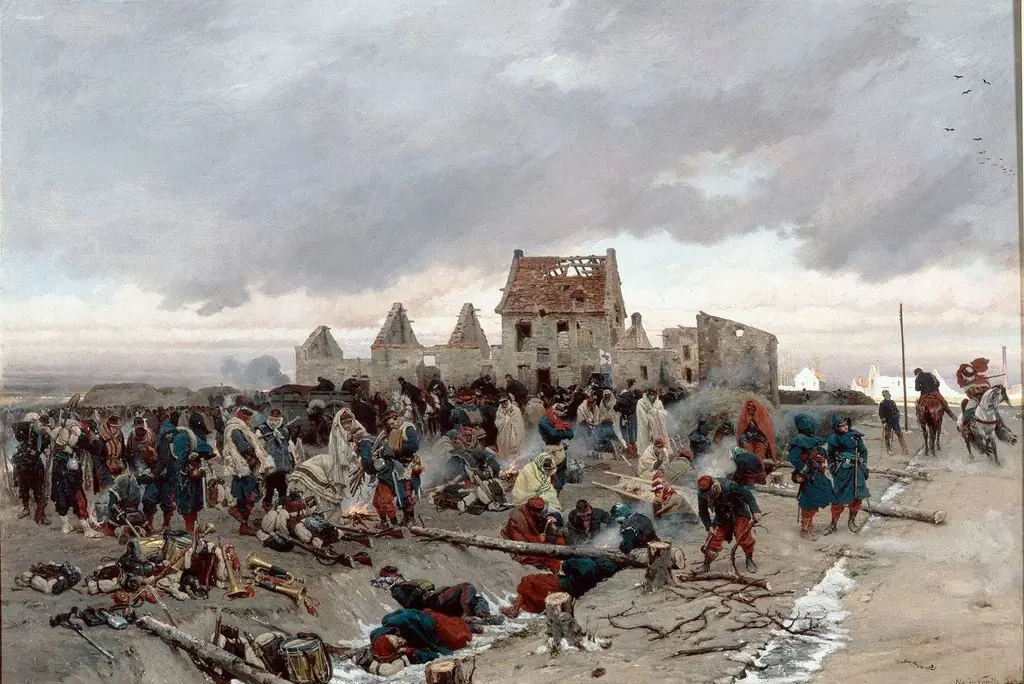 Bivouac après le combat du Bourget, 21 décembre 1870
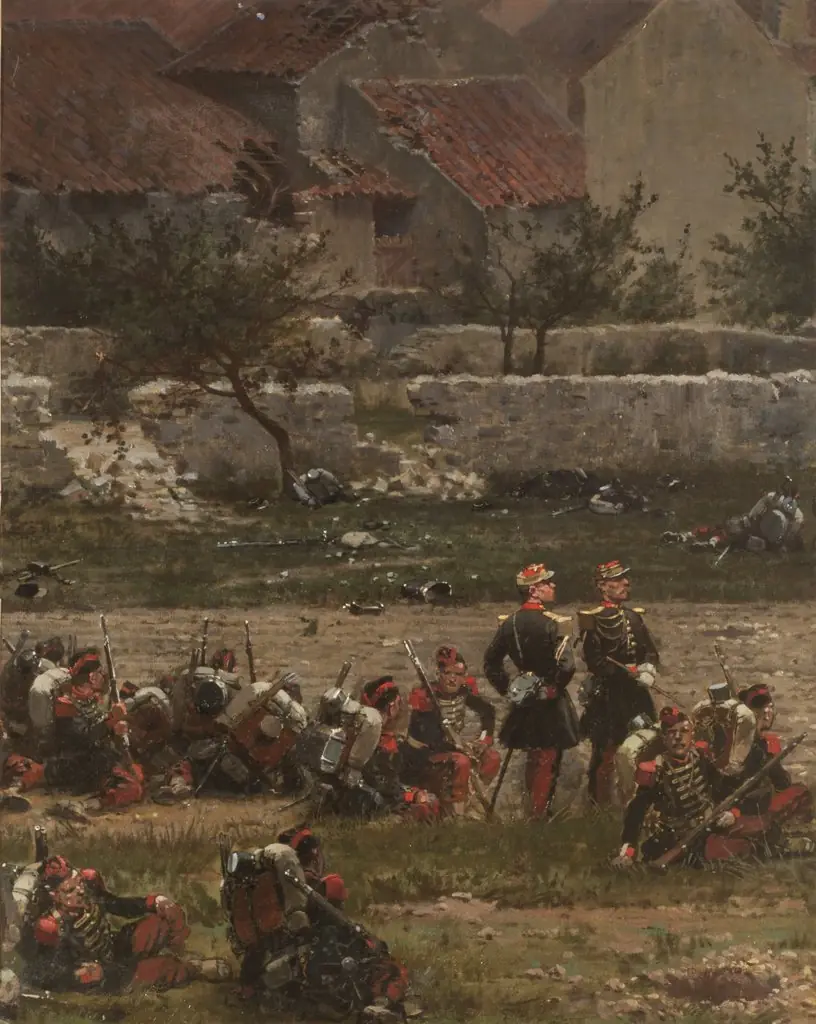 Soldiers at Rest (Panorama of the Battle of Rezonville) (Fragment)
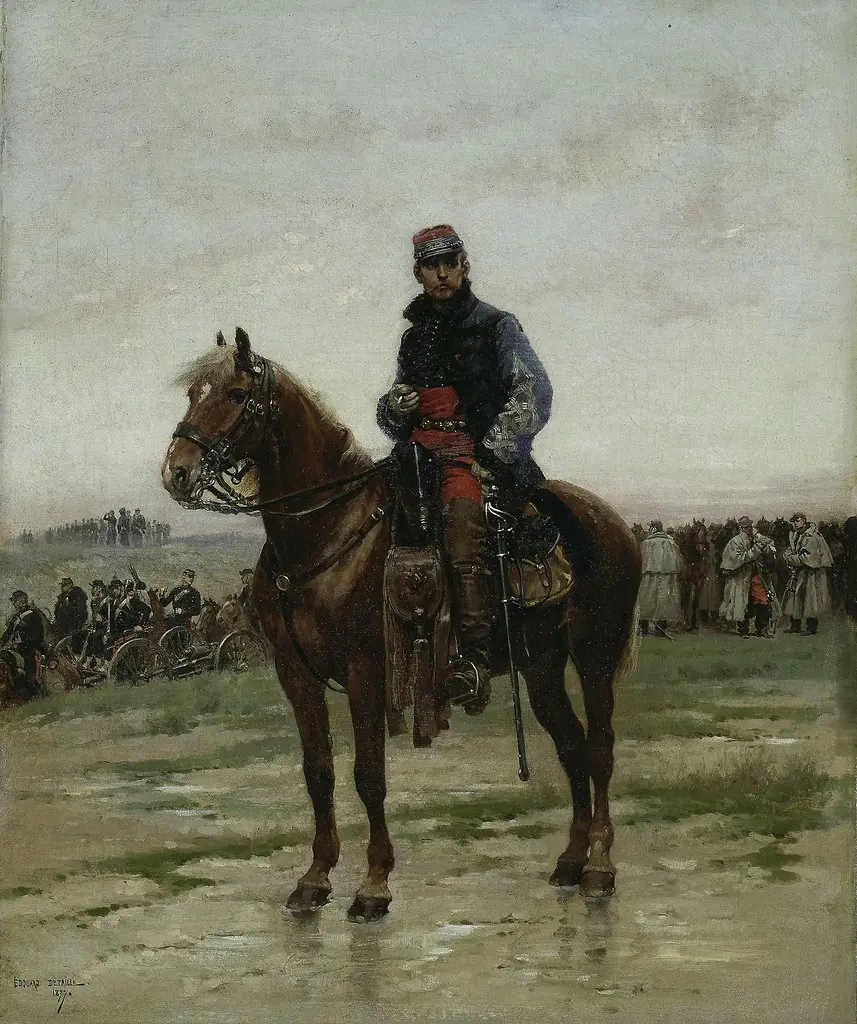 A Mounted Officer
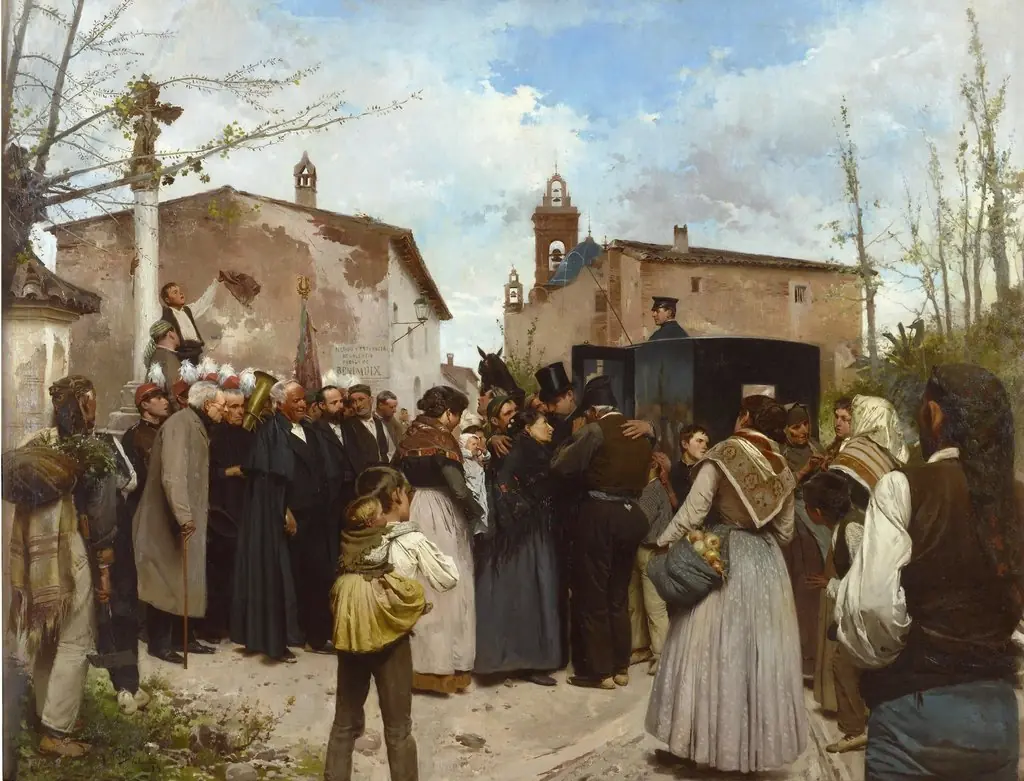 La gloria del pueblo
 Halt for prisoners
 Parade of the Austrian troops before King Jan Sobieski
 On the way to exile (Convicts on the way to Siberia)
 Insurrection episode
 Singer of the 4th Rifle Battalion at Tsarskoe Selo
- Skirmish on the road