Artwork
水竹居图轴
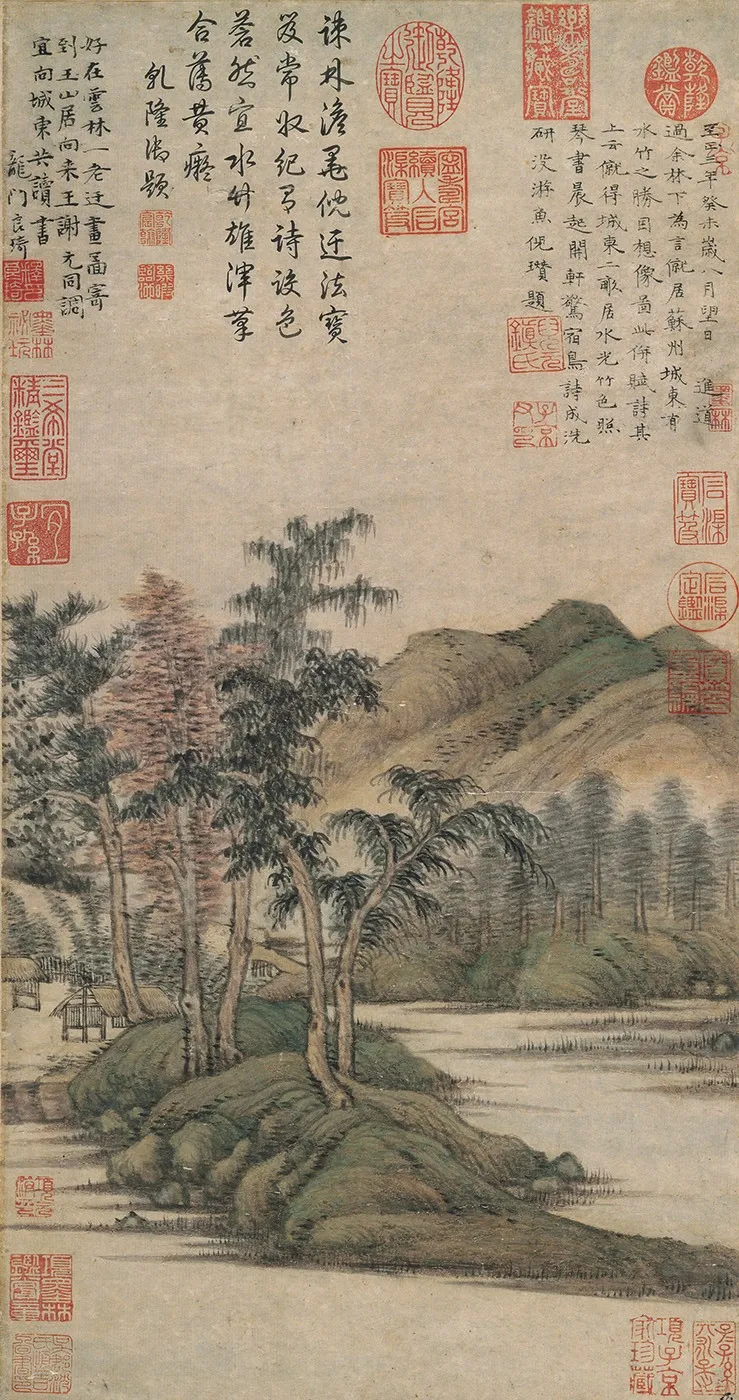
水竹居图轴 is an unspecified painting by the Yuan dynasty literati painting artist Ni Zan. It dates from 1343 and is held in the collection of the National Museum of China.
About this work
Overview
Created in 1343 by Ni Zan, a leading figure among the Yuan dynasty’s Four Masters, this hand‑scroll presents a modest riverside tableau. The composition centers on a handful of trees perched on a low rise, with a diminutive building receding into the distance, all rendered in restrained, earthy hues that convey a quiet, contemplative atmosphere.
Subject & Meaning
The scene portrays a solitary dwelling beside water, surrounded by sparse vegetation, suggesting a retreat from worldly bustle. The minimalistic setting and muted palette emphasize isolation and refined taste, reflecting the literati ideal of finding harmony through simplicity and personal introspection.
Technique & Style
Ni Zan employs delicate brushwork and a subtle color range, allowing forms to emerge softly from the paper. The trees and structures are outlined with fine strokes, while the background fades into a hazy wash, creating depth without overt detail and reinforcing the overall sense of calm.
History & Provenance
Executed during the height of the Yuan literati movement, the scroll exemplifies the scholar‑painter tradition that valued personal expression over decorative excess. It has remained in Chinese collections since its creation, serving as a reference for later artists who admired Ni Zan’s restrained aesthetic.
Context
Within the broader Yuan artistic climate, Ni Zan’s work aligns with a shift toward understated elegance, contrasting with the more elaborate court paintings of earlier periods. His focus on minimalism and inner tranquility mirrors contemporary philosophical currents that prized detachment and scholarly refinement.
Artist & collection

Artist
Ni Zan (simplified Chinese: 倪瓒; traditional Chinese: 倪瓚; Wade–Giles: Ni2 Tsan4; 1301–1374) was a Chinese painter during the Yuan and early Ming periods.

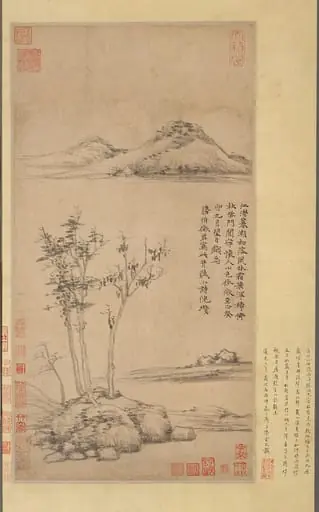 元 倪瓚 江渚風林圖 軸|Wind among the Trees on the Riverbank
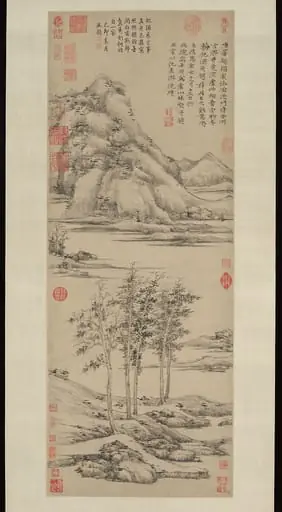 元 倪瓚 虞山林壑圖 軸|Woods and Valleys of Mount Yu
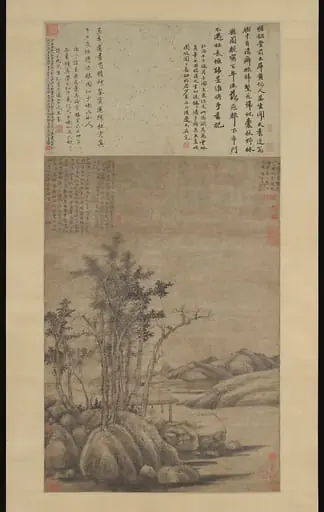 元 倪瓚 秋林野興圖 軸|Enjoying the Wilderness in an Autumn Grove
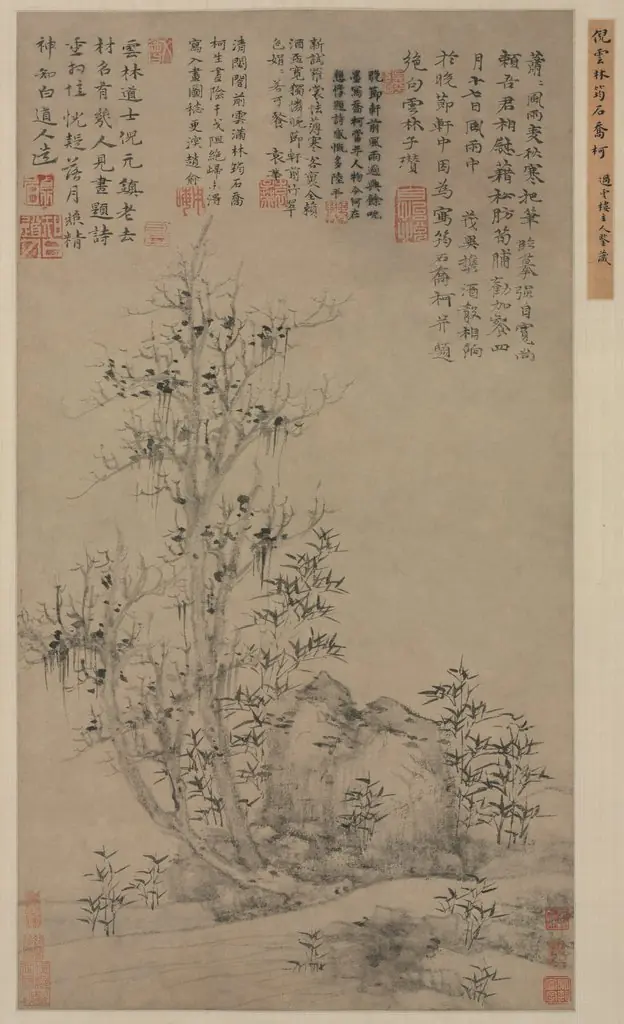 Bamboo, Rock, and Tall Tree
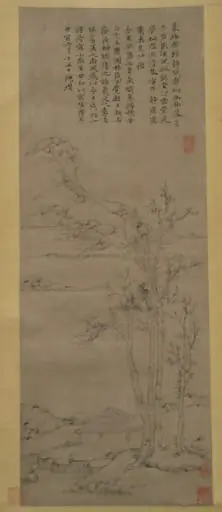 明/清 佚名 倣倪瓚 樂圃林居圖 軸|Landscape after Ni Zan (1306–1374)
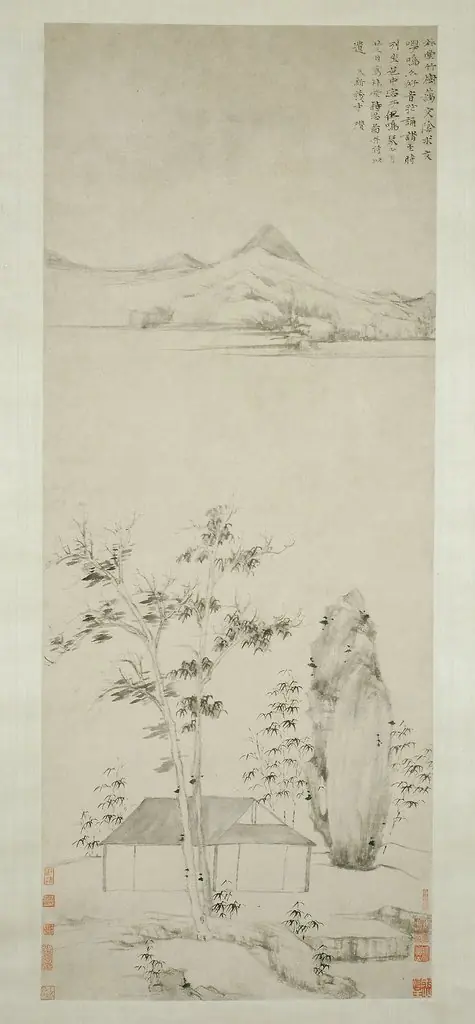 Poetic Thoughts in a Forest Pavilion
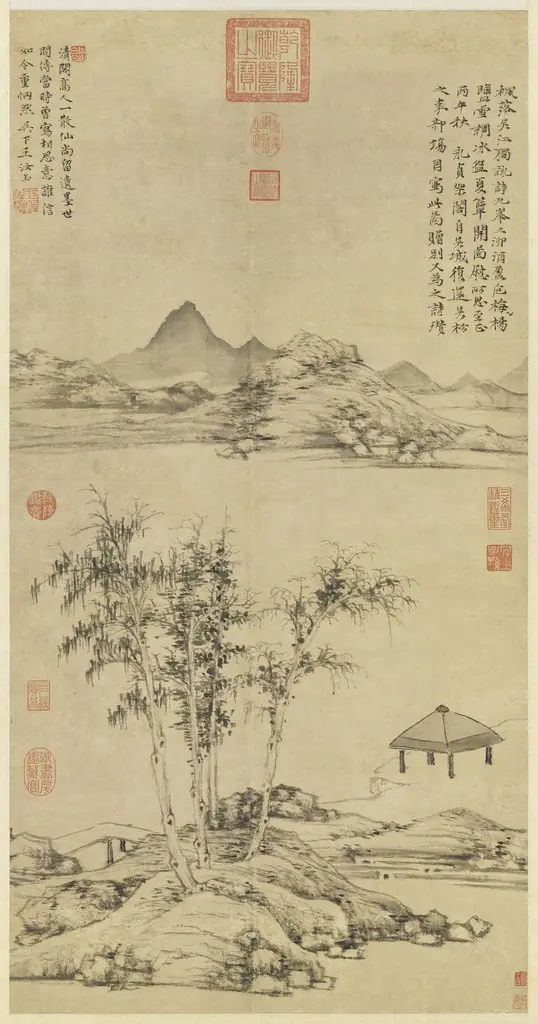 Falling Maple Leaves on the Wu River
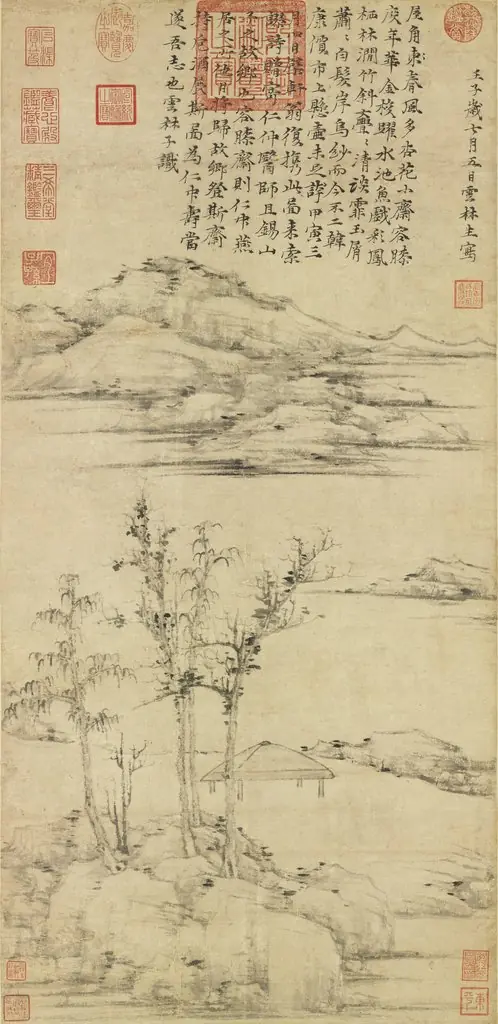 The Jung-hsi Studio
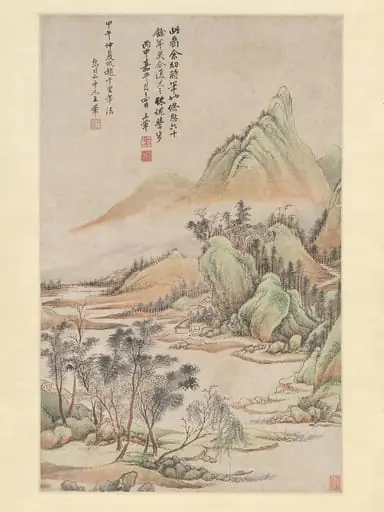 倣趙伯駒山水圖 軸|Landscape in the Style of Zhao Boju (Fang Zhao Boju shanshui)
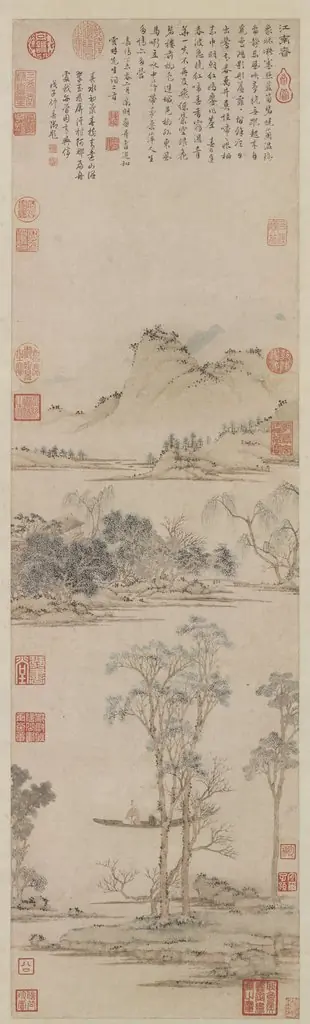 Spring in Chiang-nan
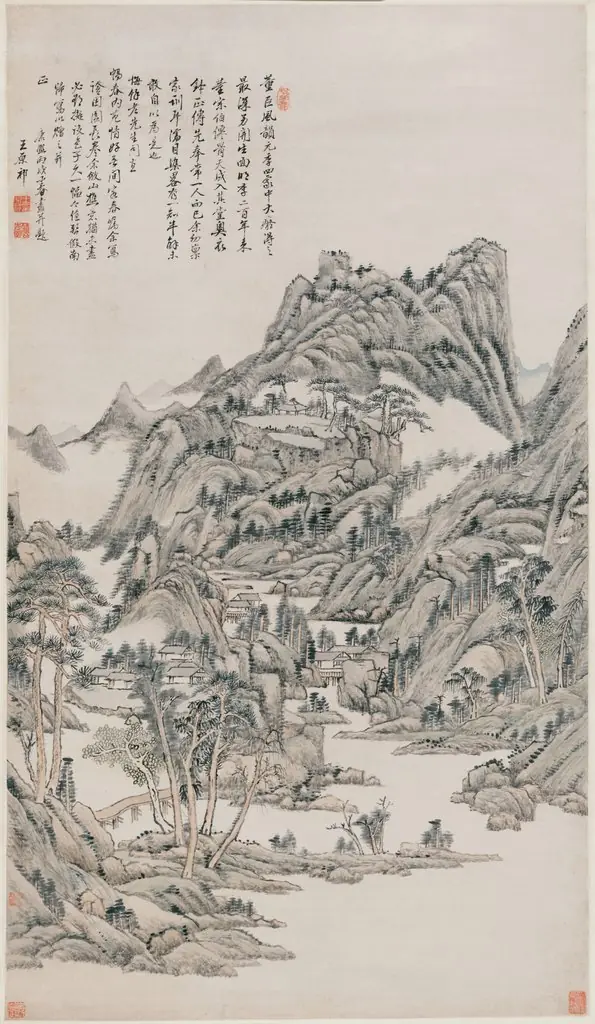 Landscape
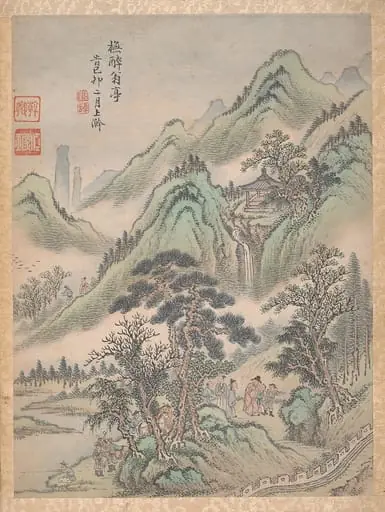 清 陸漢 山水八開 冊|Eight landscapes
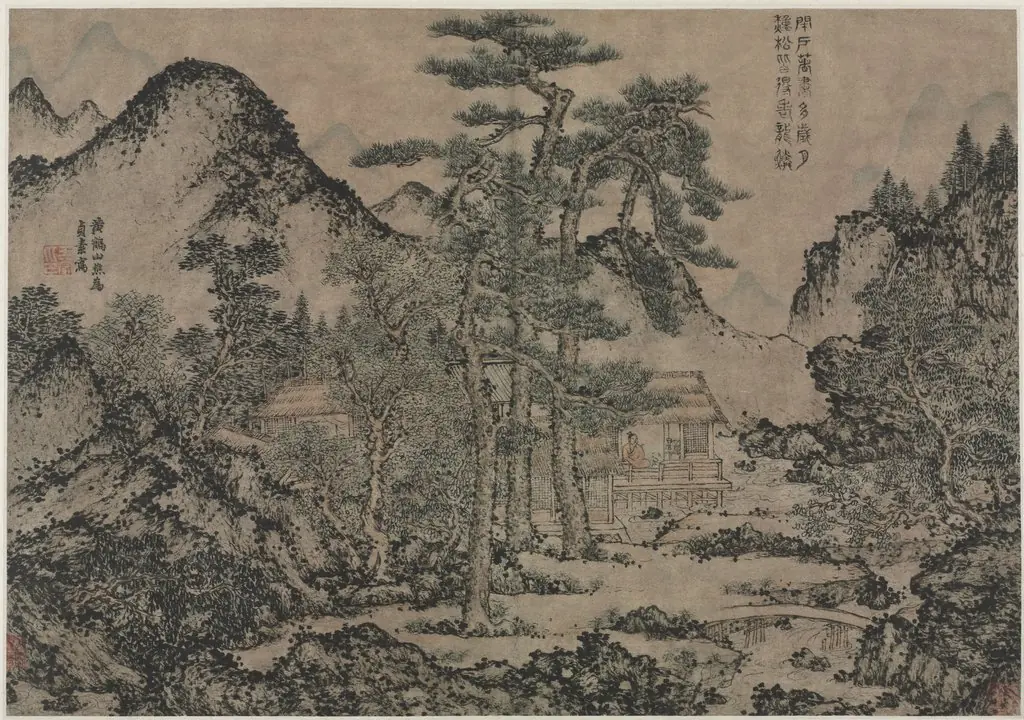
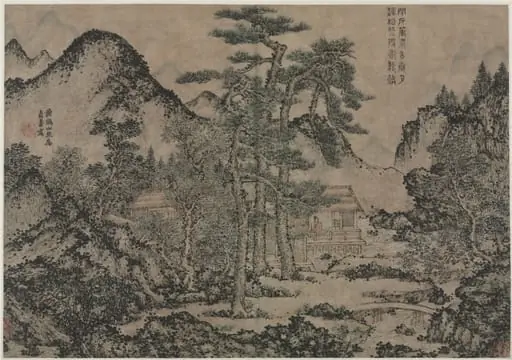 Writing Books under the Pine Trees
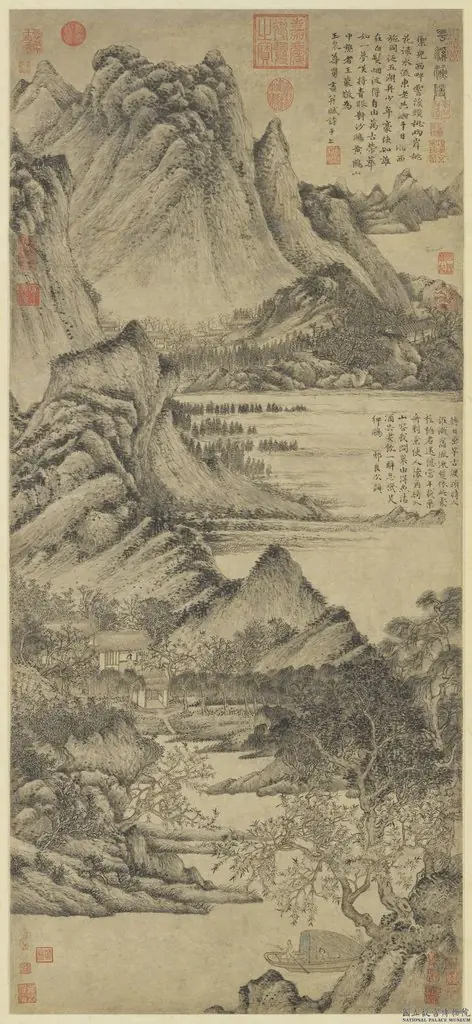 Recluse on a Flowering Stream
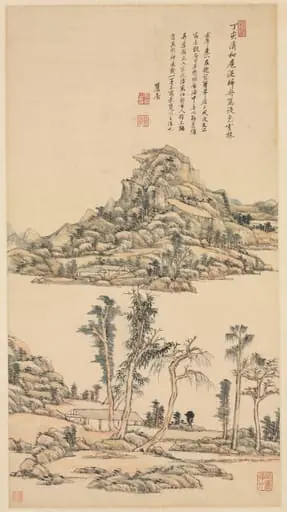 Landscape after Ni Zan
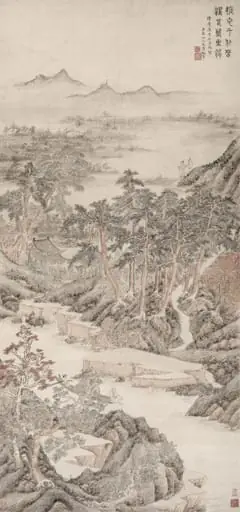 Washing the Feet (from the Dusty World)
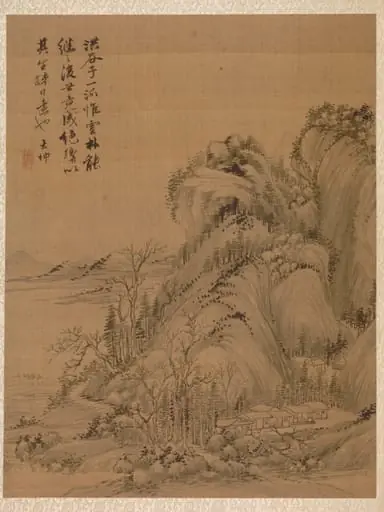 Landscape in the Style of Ching Hao
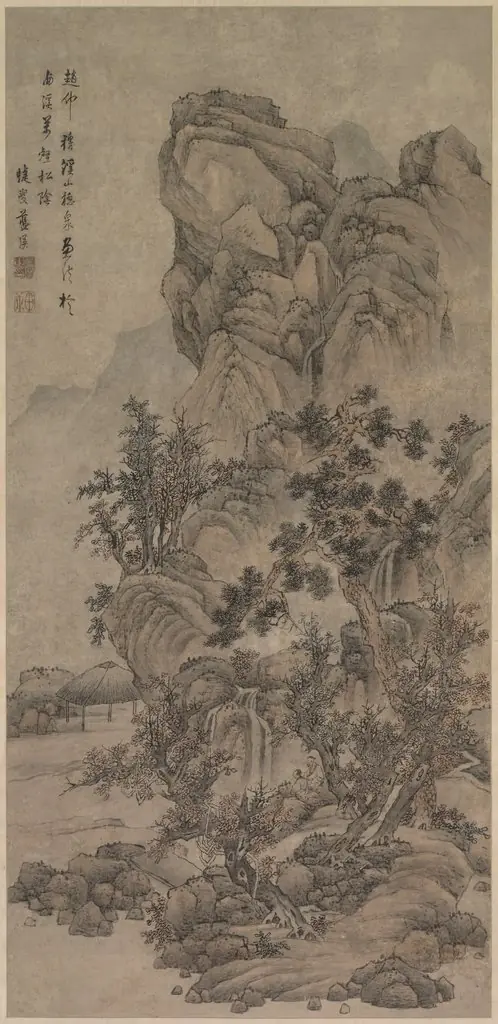 Landscape with Figures
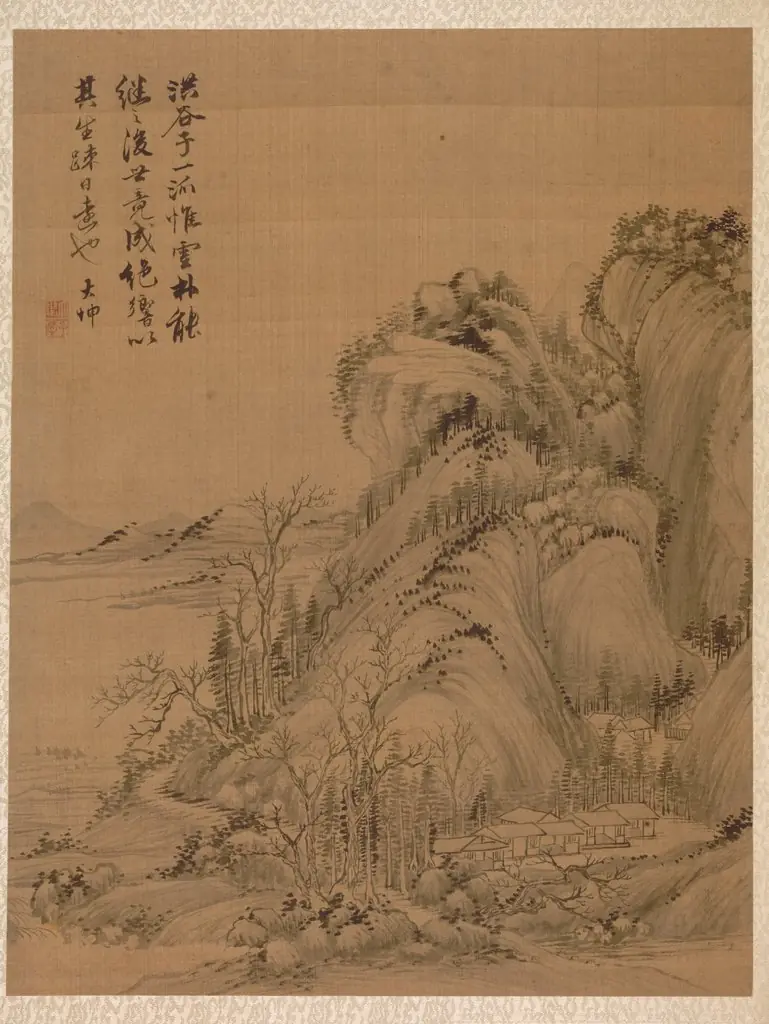 Landscape in the Style of Ching Hao
- Writing Books under the Pine Trees