Artwork
Falling Maple Leaves on the Wu River
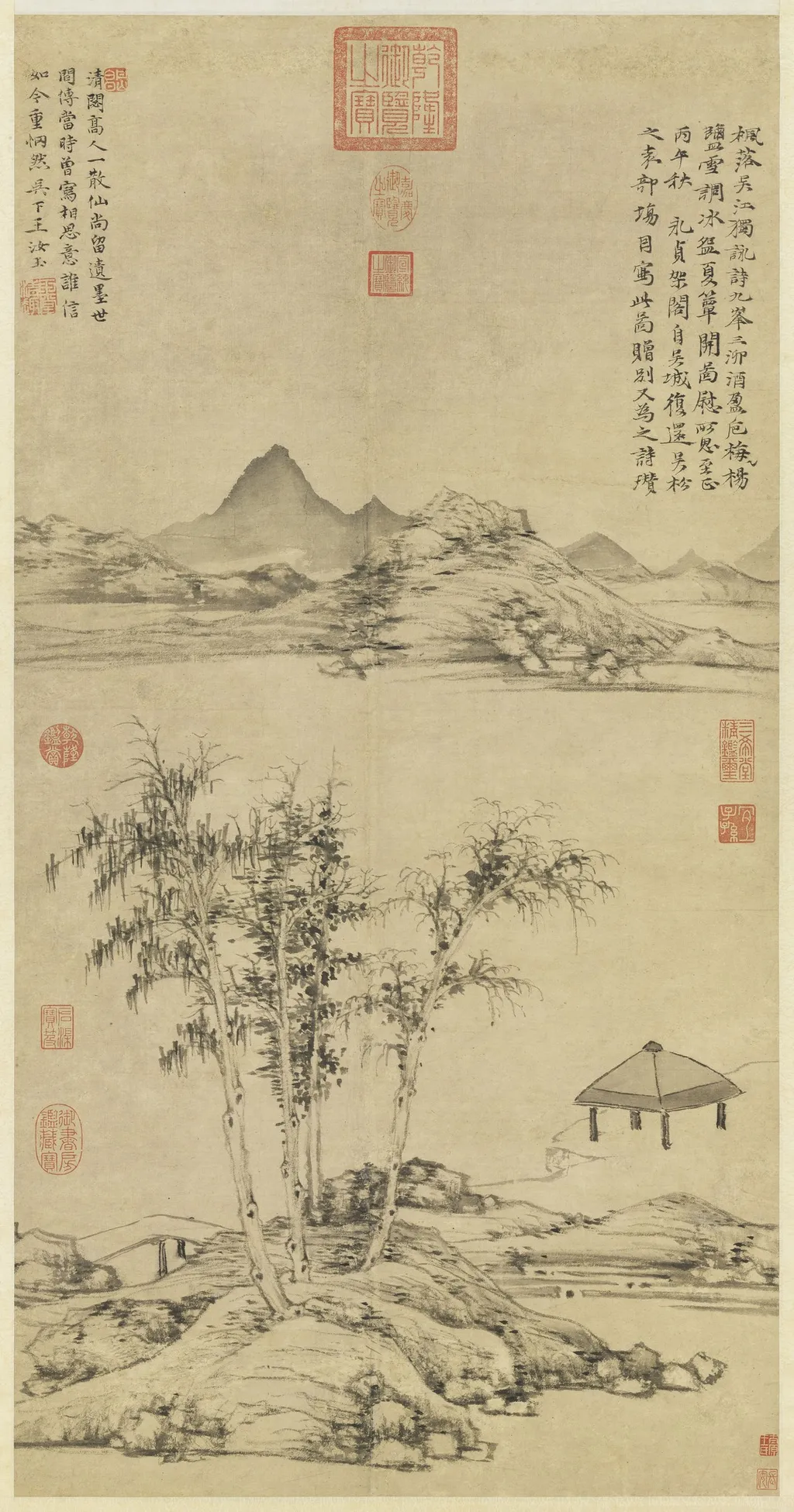
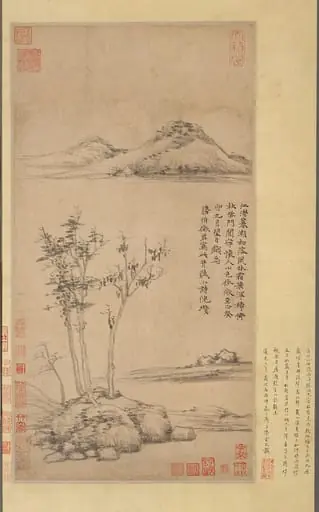
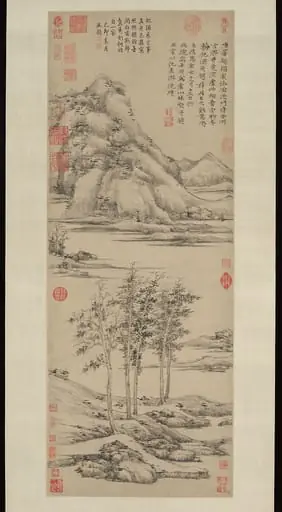
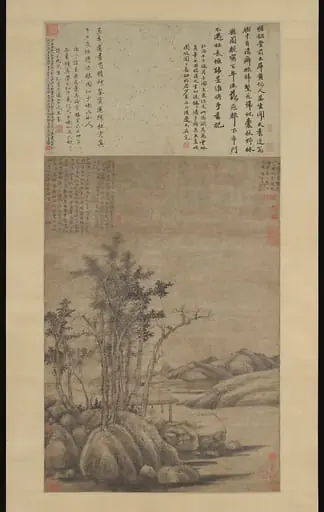
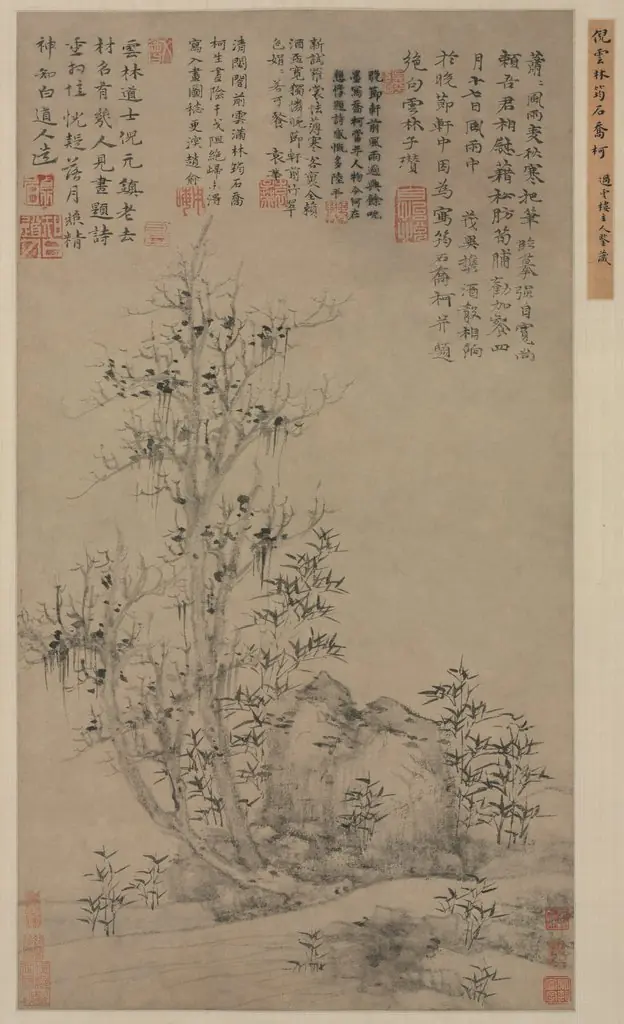
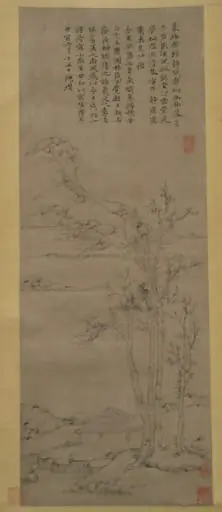
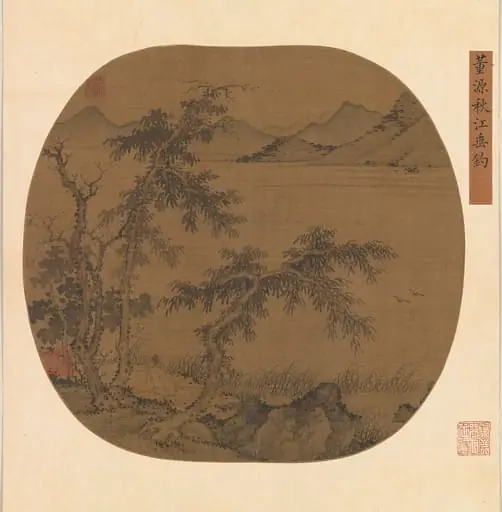
Falling Maple Leaves on the Wu River is an unspecified painting by the Yuan dynasty literati painting artist Ni Zan. It dates from 1366 and is held in the collection of the National Palace Museum.
About this work
Overview
Falling Maple Leaves on the Wu River is a 1366 painting by Ni Zan, a prominent figure among the Four Masters of the Yuan dynasty. Characterized by its serene and contemplative landscape, the work embodies the aesthetic principles of the Yuan literati movement.
Subject & Meaning
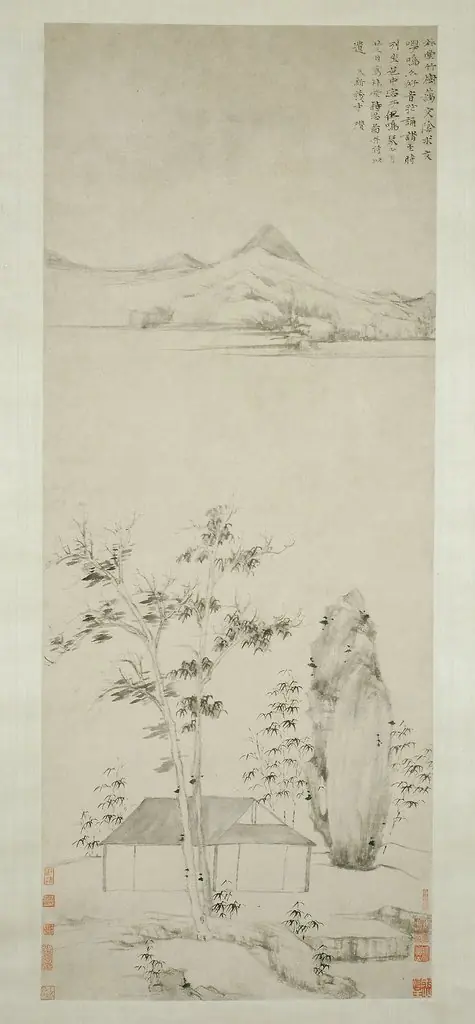
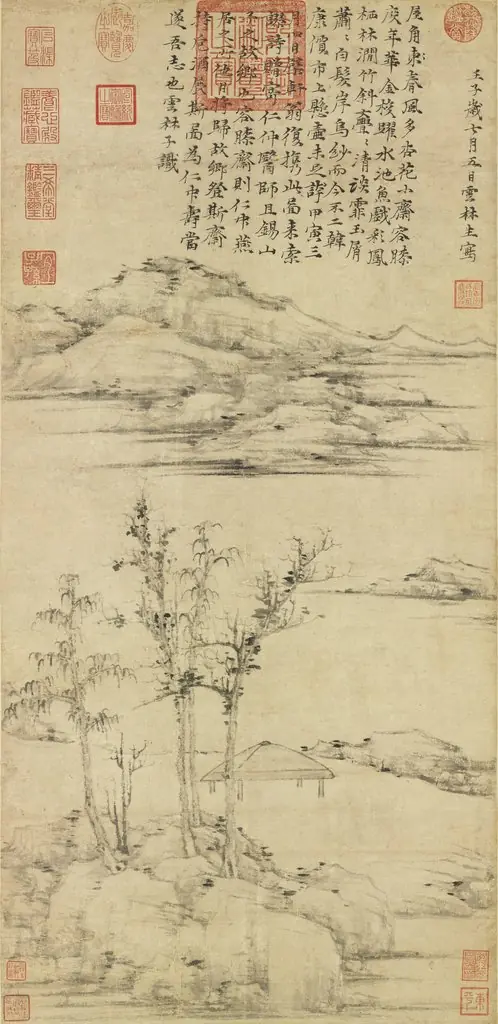
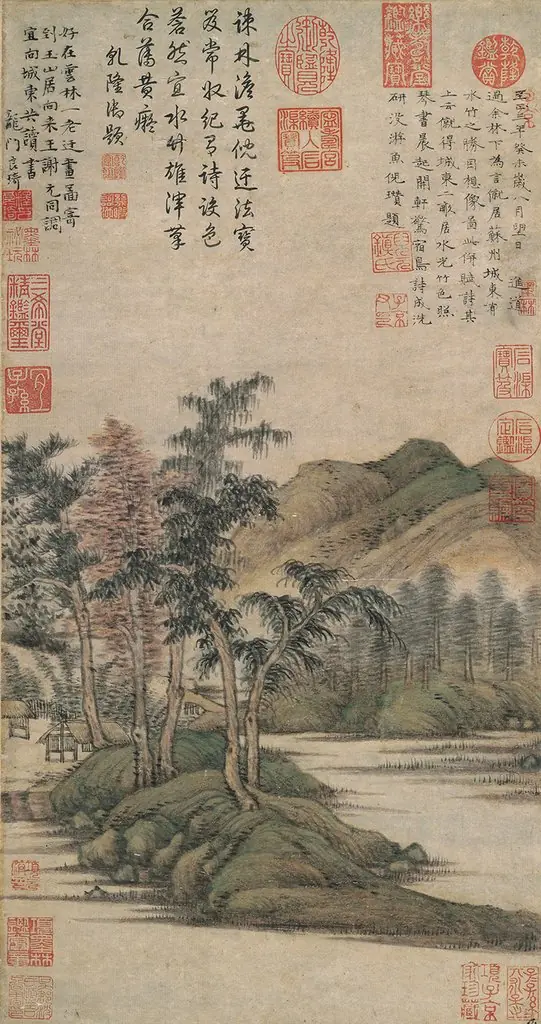
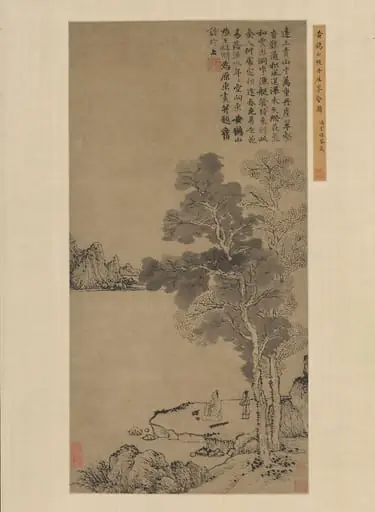
The painting depicts a tranquil riverside scene with a pavilion, sparse tree branches, and scattered maple leaves, set against a misty mountain range. This composition conveys a sense of restrained elegance, reflecting the emphasis on personal expression and contemplation in Yuan literati art.
Technique & Style
Ni Zan's restrained style is evident in the painting's muted tone palette, subtle gray and white gradations, and the prioritization of suggestive simplicity over detailed realism, aligning with the scholar-painter tradition's values.
History & Provenance
Created in 1366, Falling Maple Leaves on the Wu River is a key work from the Yuan dynasty's literati movement, with Ni Zan's authorship placing it within the esteemed lineage of the Four Masters.
Context
This work reflects the Yuan literati's preference for landscapes that inspire introspection, differing from more ornate or realistically detailed artworks of the time, and positioning it within a cultural shift towards valuing subtle, personal artistic statements.
Legacy
As a work by Ni Zan, Falling Maple Leaves on the Wu River contributes to the enduring influence of the Four Masters on subsequent Chinese painting traditions, particularly in the development of literati aesthetics and the emphasis on expressive simplicity.
Artist & collection

Artist
Ni Zan (simplified Chinese: 倪瓒; traditional Chinese: 倪瓚; Wade–Giles: Ni2 Tsan4; 1301–1374) was a Chinese painter during the Yuan and early Ming periods.