Artwork
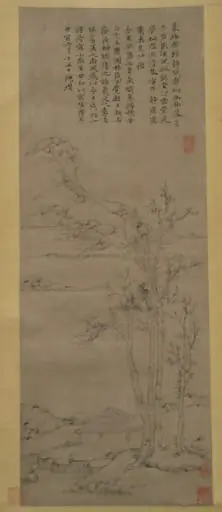
元 倪瓚 秋林野興圖 軸|Enjoying the Wilderness in an Autumn Grove
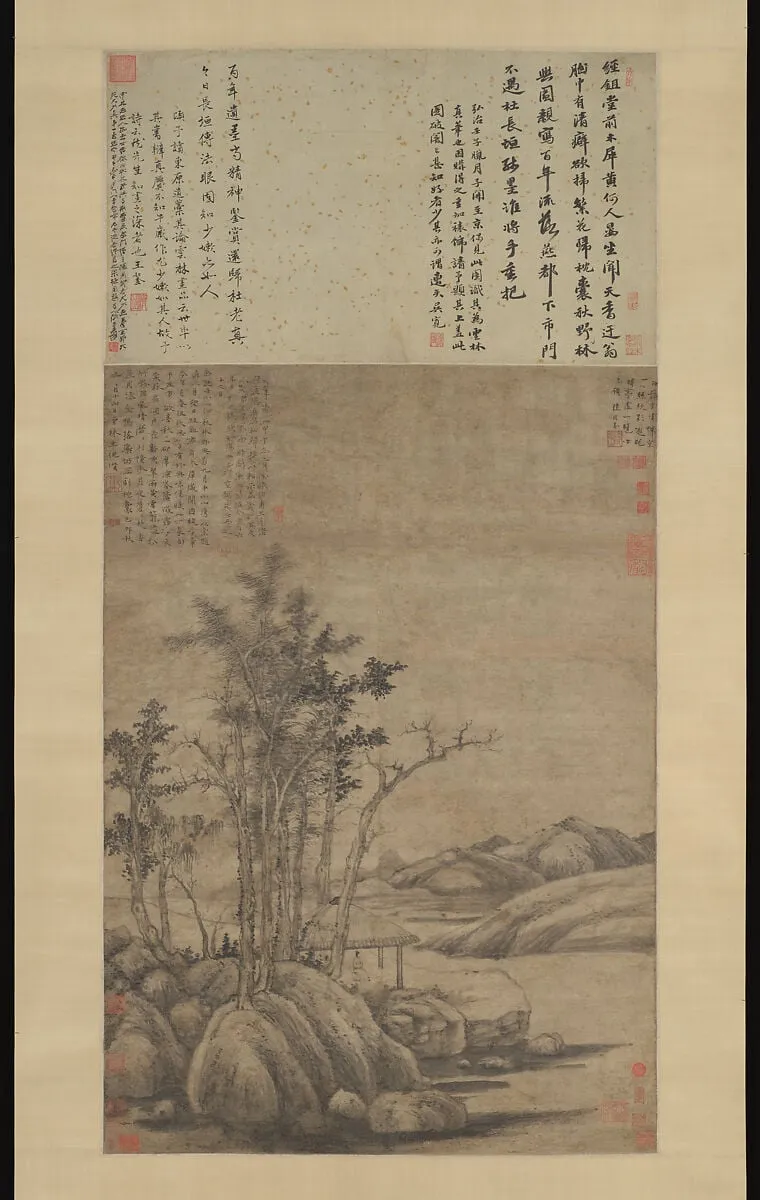
元 倪瓚 秋林野興圖 軸|Enjoying the Wilderness in an Autumn Grove is an ink painting by the Yuan dynasty literati painting artist Ni Zan. It dates from 1339 and is held in the collection of the Metropolitan Museum of Art.
About this work
A few bare trees stand on a hill above a flat river, with two tiny huts in the distance and the paper left mostly empty. Ni Zan painted it in 1339, as China's scholars withdrew from politics toward calm, uncrowded art. The simple trees and open space are the point, not an oversight.
Subject & Meaning
The work depicts a landscape scene featuring trees within an autumnal grove, consistent with the title 'Enjoying the Wilderness in an Autumn Grove.
The work depicts a landscape scene featuring trees within an autumnal grove, consistent with the title 'Enjoying the Wilderness in an Autumn Grove.' Created in 1339 by Ni Zan, the painting presents a natural setting defined by its arboreal elements and open terrain. As a landscape painting, the subject matter centers on the wilderness itself, inviting contemplation of the natural world during the fall season.
The composition focuses on the interplay between the trees and the surrounding environment, reflecting the artist's engagement with the genre of landscape painting. The imagery serves to represent the solitude and atmosphere of an autumn forest, capturing the specific seasonal character of the depicted grove.
Technique & Style
Created in 1339 by the Yuan dynasty artist Ni Zan, this work is executed as a hanging scroll utilizing ink on paper. The piece functions as a landscape painting, formally characterized by its depiction of trees within a natural setting. As a monochromatic composition, the artist relies exclusively on ink handling to define the autumnal grove and wilderness elements without the application of color.
The support material is paper, a medium frequently associated with Ni Zan's literati style, which emphasizes brushwork and spatial arrangement over decorative embellishment. The surviving object is classified within the painting genre and remains part of the collection at the Metropolitan Museum of Art.
Overview
Ni Zan, a prominent figure among the Four Masters of the Yuan dynasty, created Enjoying the Wilderness in an Autumn Grove in 1339. This ink-on-paper hanging scroll exemplifies a landscape painting. The composition presents a notably sparse and tranquil natural scene, characterized by a restrained yet evocative aesthetic that became a hallmark of the artist's distinctive approach to painting.
Context
Created during a period when many Chinese scholars withdrew from political life, Enjoying the Wilderness in an Autumn Grove reflects a broader cultural desire for peace and introspection. Artists like Ni Zan sought to create art that offered a sense of calm and uncrowded contemplation, moving away from more elaborate or politically charged themes. The painting embodies this pursuit of inner tranquility.
Artist & collection

Artist
Ni Zan (simplified Chinese: 倪瓒; traditional Chinese: 倪瓚; Wade–Giles: Ni2 Tsan4; 1301–1374) was a Chinese painter during the Yuan and early Ming periods.

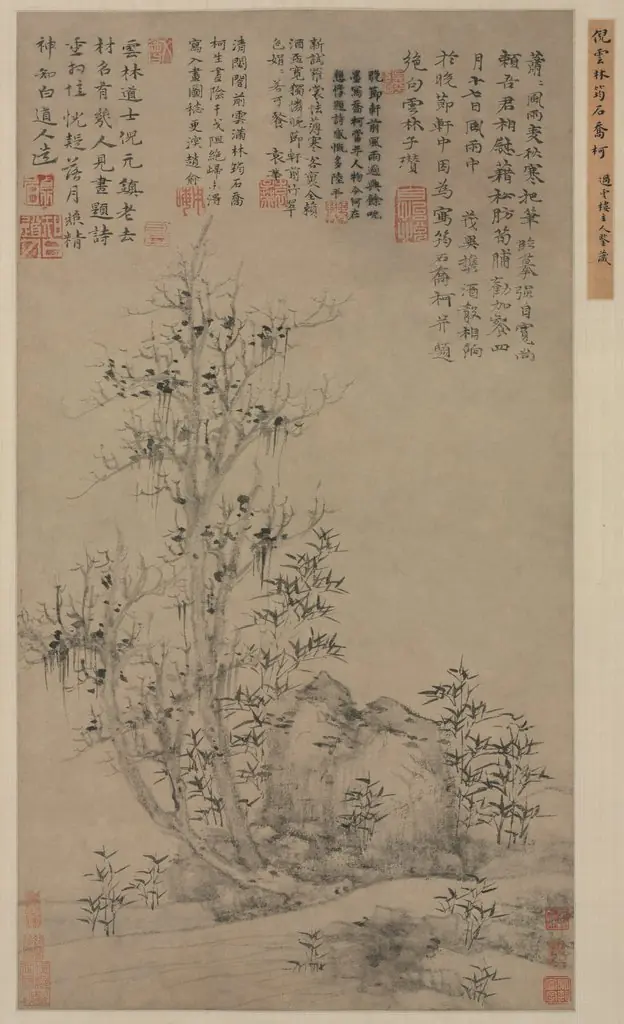
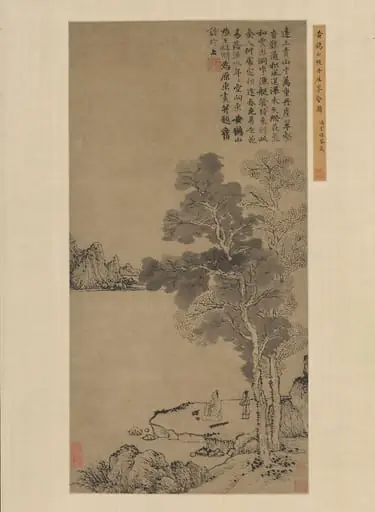 元 王蒙 丹崖翠壑圖 軸|Red Cliffs and Green Valleys
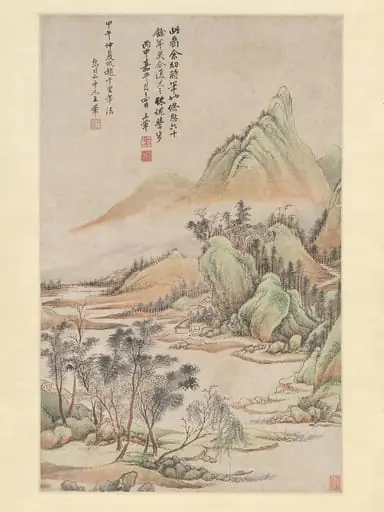 倣趙伯駒山水圖 軸|Landscape in the Style of Zhao Boju (Fang Zhao Boju shanshui)
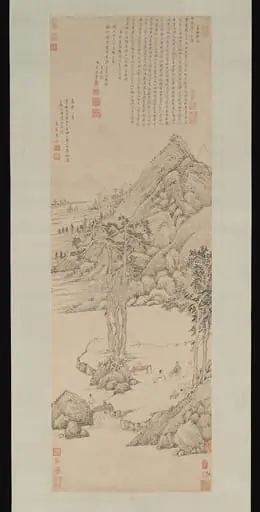 明 文嘉 為項元汴作山水圖 軸|Landscape dedicated to Xiang Yuanbian
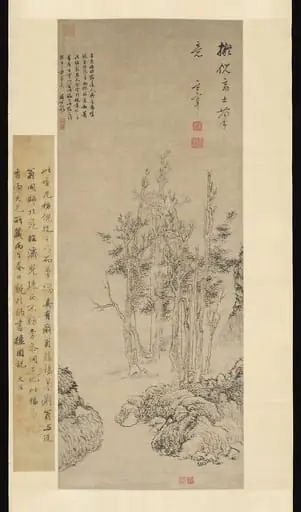 明 董其昌 倣倪瓚山水圖 軸|Landscape with Trees in the Manner of Ni Zan (1301–1374)
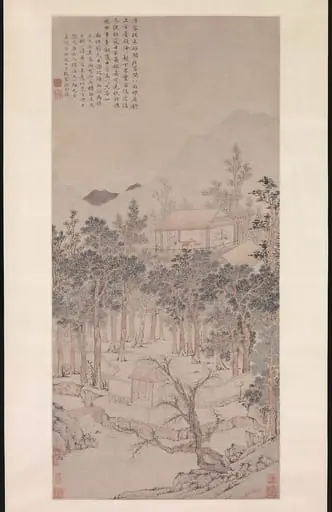 明 文徵明 樓居圖軸|Living Aloft: Master Liu's Retreat
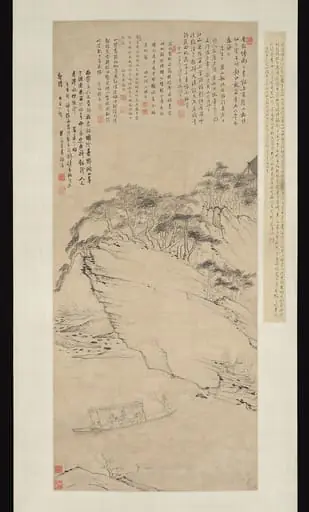 清 倣梅清 響山泛舟圖 軸|Boating beneath Echo Hill