Artwork
清 陸漢 山水八開 冊|Eight landscapes
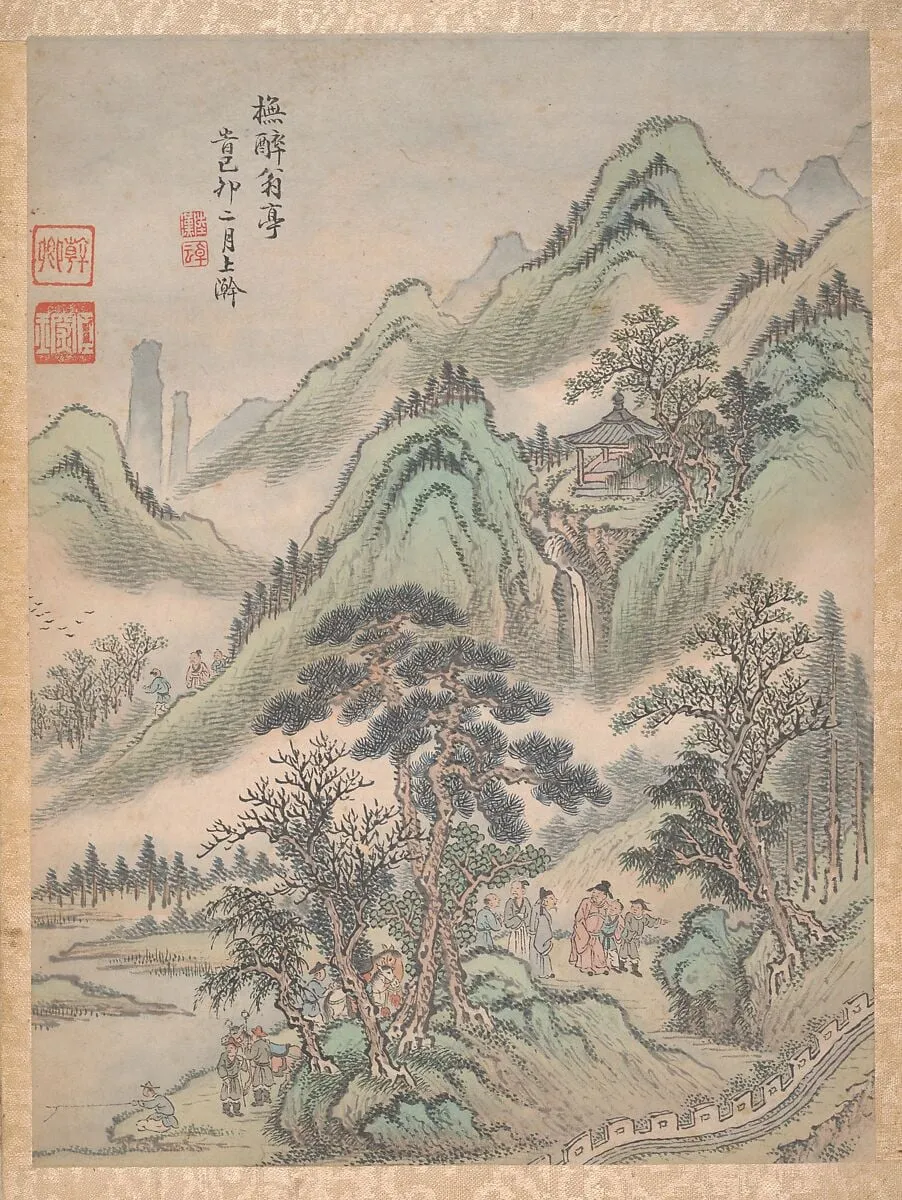
清 陸漢 山水八開 冊|Eight landscapes is an ink painting by the Baroque artist Lu Han. It dates from 1699 and is held in the collection of the Metropolitan Museum of Art.
About this work
You see eight small ink-and-color scenes of misty mountains, rivers, and tiny pavilions on paper leaves.
Each leaf feels like a quiet breath, no people, just rock, water, and sky. The brushwork is light, almost like the ink is floating. Lu Han painted these in 1699, when artists often worked in albums instead of big scrolls.
If you like these, look up the subject mountains.
Technique & Style
The medium consists of ink washes combined with subtle coloration applied to thin paper supports bound together as a folding album.
The work is an album of eight leaves, executed in ink and color on paper, characteristic of Qing dynasty album painting. Lu Han created the piece in China in 1699, and it is catalogued as a landscape painting depicting mountains. The medium consists of ink washes combined with subtle coloration applied to thin paper supports bound together as a folding album. The object resides in the Metropolitan Museum of Art.
History & Provenance
The album Eight Landscapes by Lu Han, dated 1699, is held in the collection of the Metropolitan Museum of Art. The work consists of eight leaves executed in ink and color on paper. While the provided sources confirm the institution holding the piece and its creation date, they do not specify a unique inventory or accession number for this particular album. No specific exhibition history or public display dates are recorded in the available documentation.
Legacy
Dated 1699, the album of eight ink-and-color leaves by Lu Han is housed in the Metropolitan Museum of Art, a collection that signals its scholarly and curatorial recognition. Its inclusion in a major Western museum has helped sustain interest in Qing-era Chinese landscape traditions, reinforcing Lu Han's place within the genre.
Overview
Lu Han's Eight Landscapes is an album from 1699, comprising eight individual leaves executed in ink and color on paper. This collection of paintings presents a series of serene natural vistas, characteristic of traditional Chinese landscape art. Each leaf offers a distinct view, inviting contemplation of the natural world through the artist's refined brushwork and subtle palette.
Subject & Meaning
Across its eight leaves, this album portrays a sequence of tranquil natural environments. The compositions consistently feature misty mountains, flowing rivers, and small, secluded pavilions, often nestled within the landscape. The absence of human figures directs the viewer's attention entirely to the interplay of rock, water, and sky, emphasizing the grandeur and solitude of nature.
Context
Created at the close of the 17th century, this album reflects a common practice among artists of the Qing dynasty. During this period, albums often served as a preferred medium for landscape painters, offering a format distinct from large-scale scrolls. This allowed for a more personal and sequential exploration of themes, often shared among a select circle of connoisseurs.
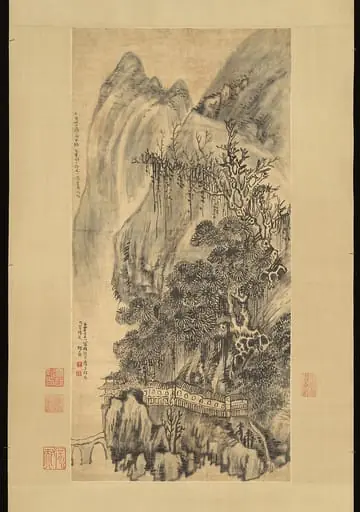
Artist & collection
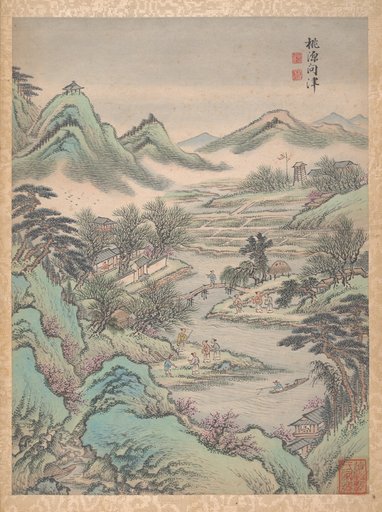

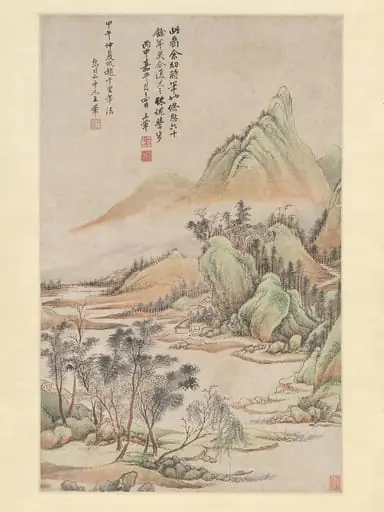 倣趙伯駒山水圖 軸|Landscape in the Style of Zhao Boju (Fang Zhao Boju shanshui)
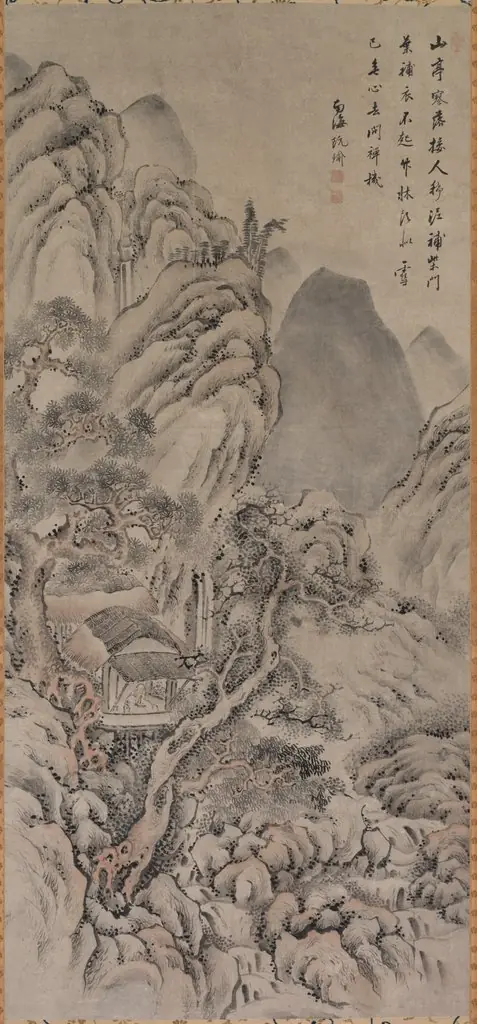 Landscape
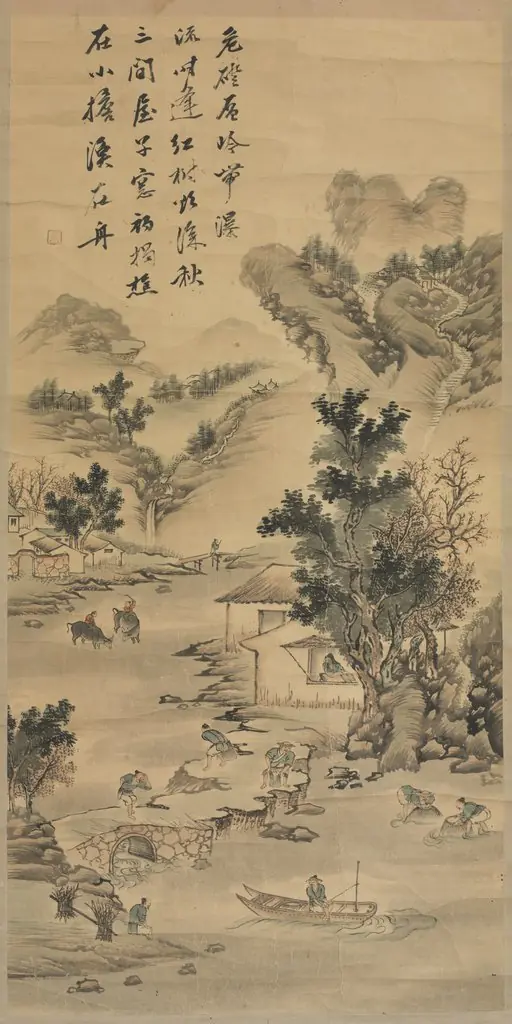 Landscape
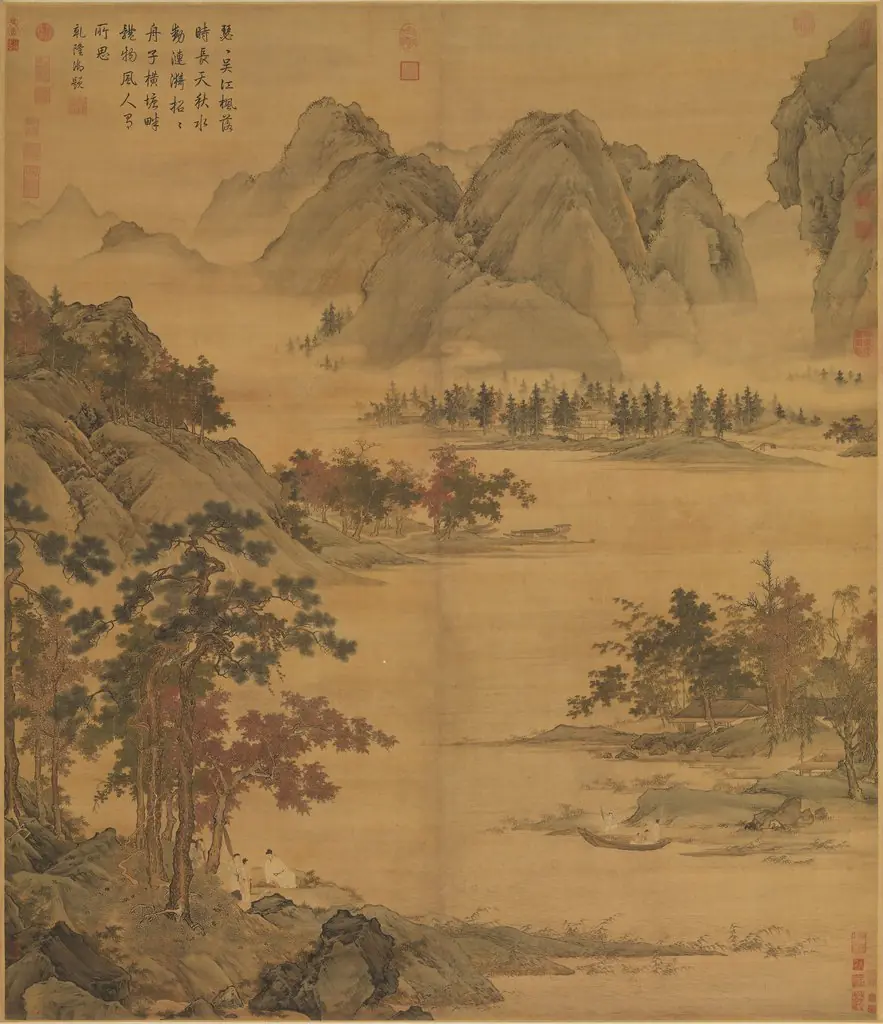 Waiting for the Ferry on an Autumn River
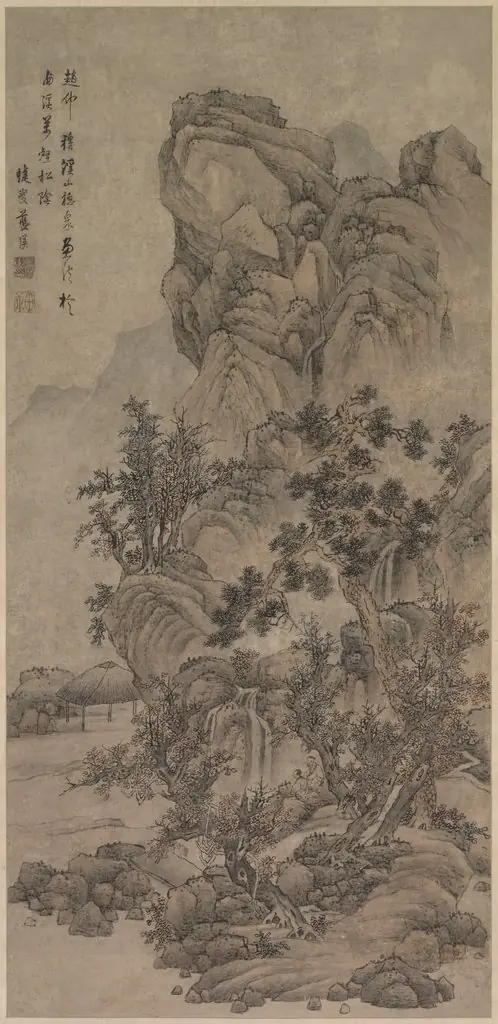 Landscape with Figures
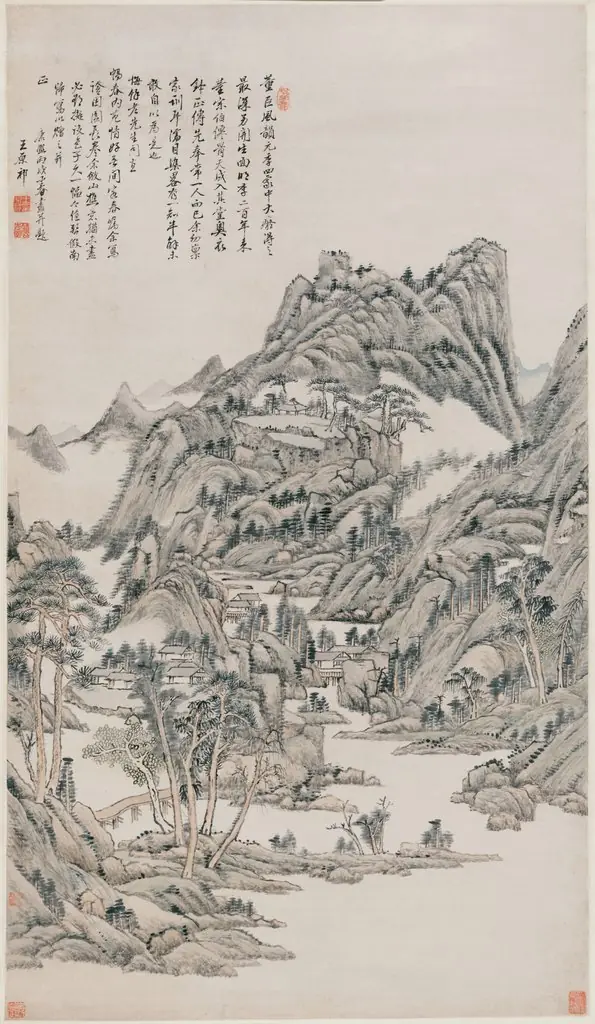 Landscape
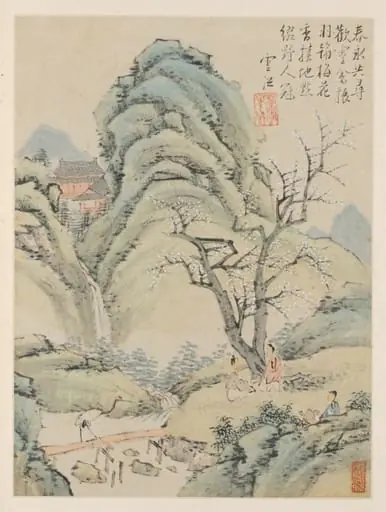 Album of Seasonal Landscapes, Leaf A (previous leaf 4)
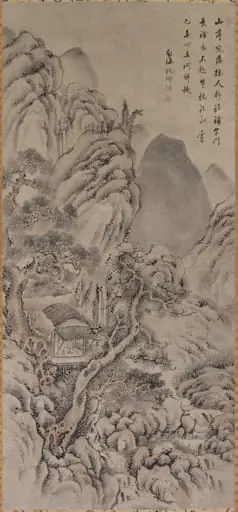 Landscape
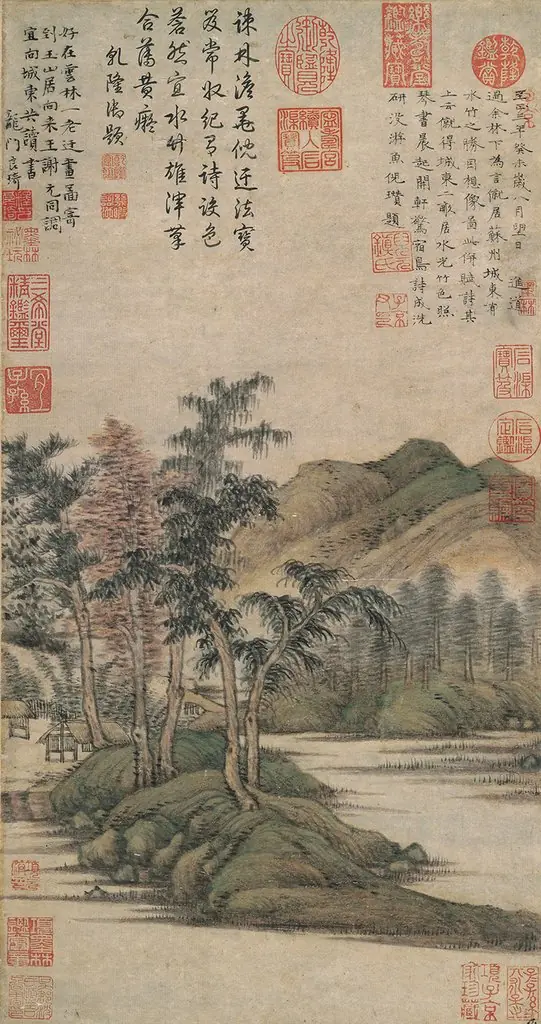 水竹居图轴
水竹居图轴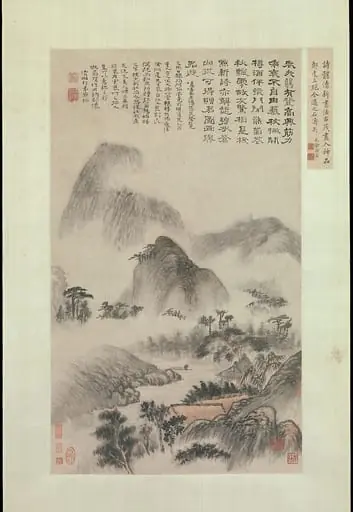 清 石濤(朱若極) 重陽山水圖 軸|Landscape Painted on the Double Ninth Festival
 Untitled
- 明/清 王鐸 山水圖 軸|Landscape