Artwork
倣趙伯駒山水圖 軸|Landscape in the Style of Zhao Boju (Fang Zhao Boju shanshui)
About this work
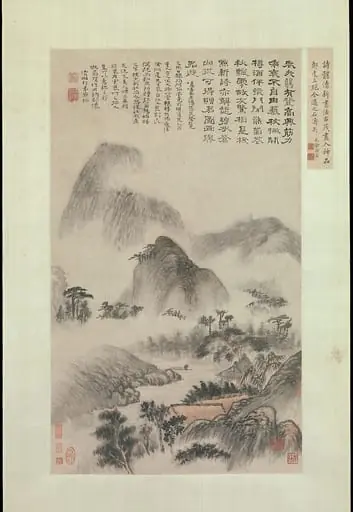
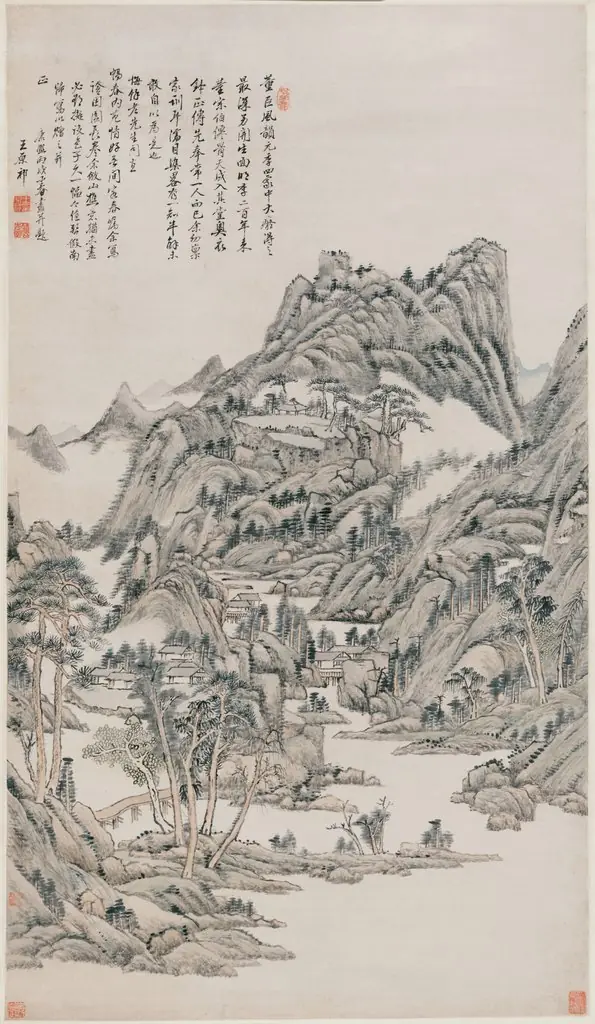
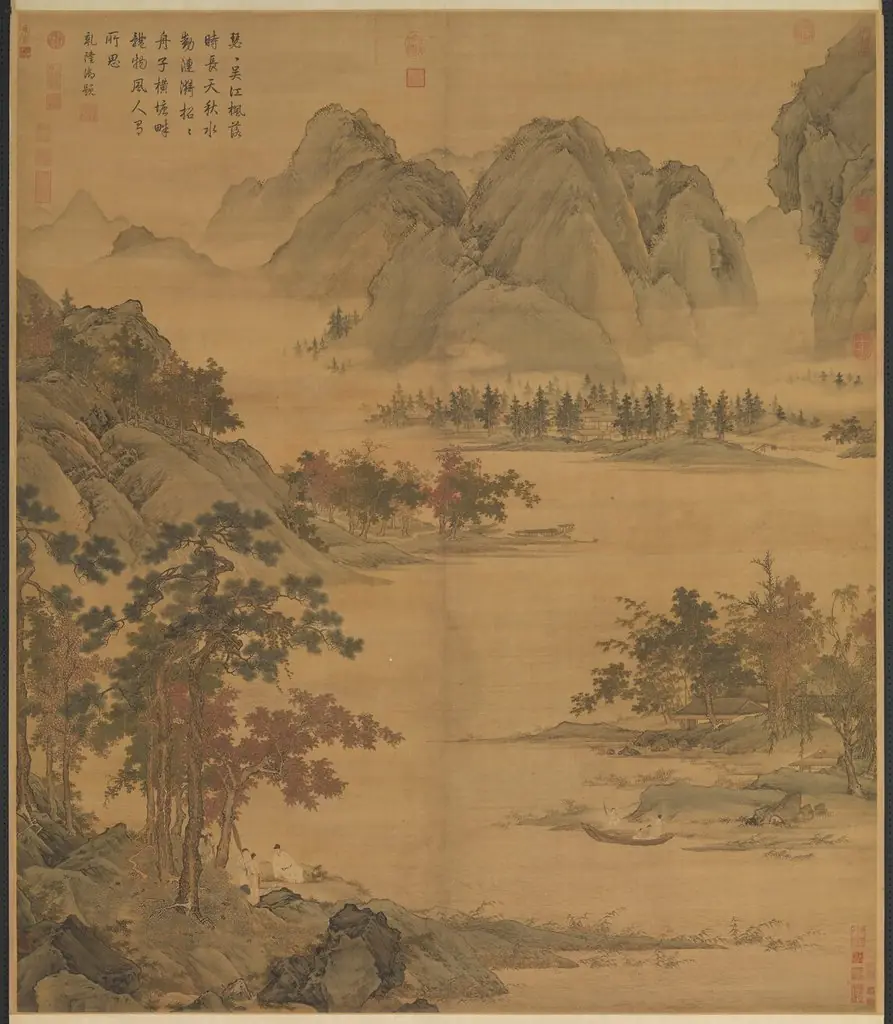
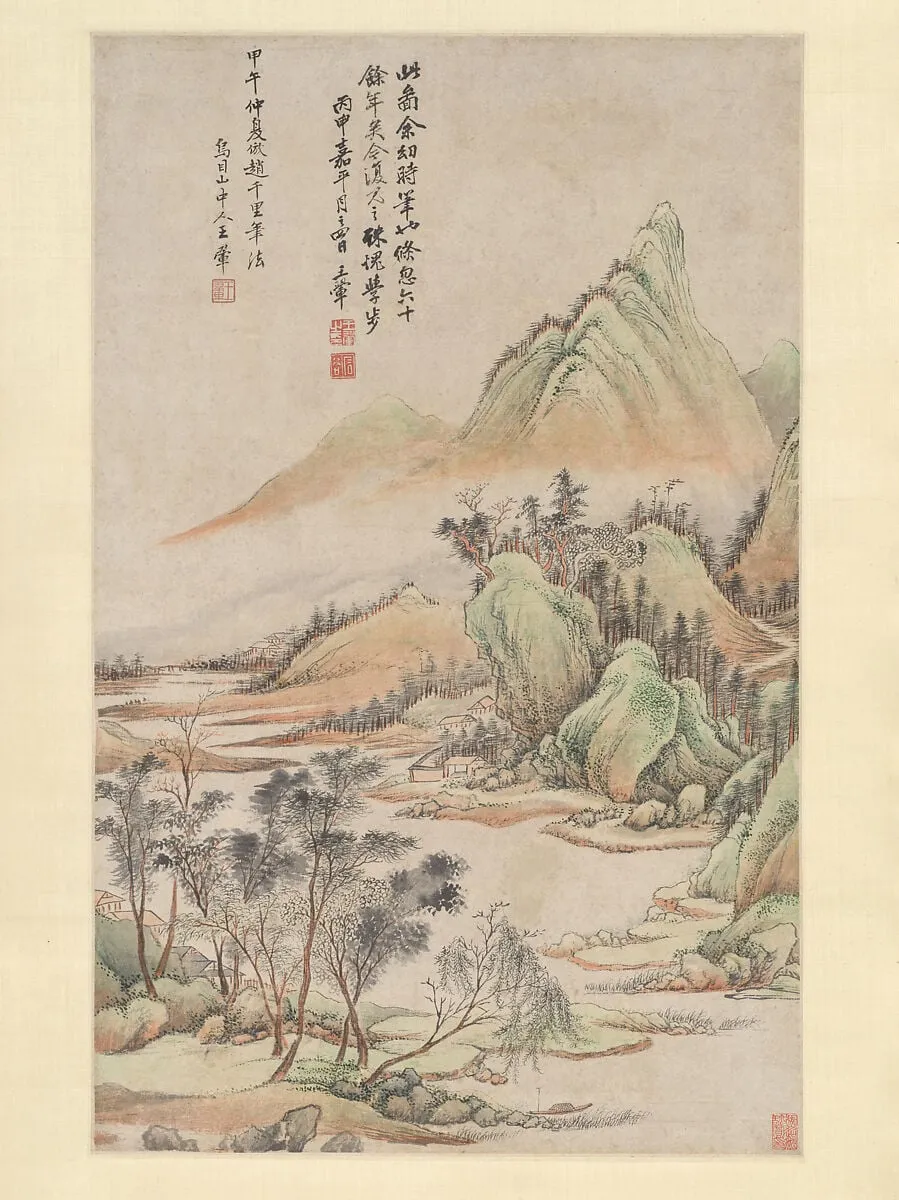
You see a tall scroll of layered mountains, mist, and tiny trees in soft ink and pale green.
Wang Hui painted this in 1654, copying a 12th-century artist named Zhao Boju. The copy isn’t meant to fool anyone, it’s a quiet nod to the past, like a musician covering an old song.
To see how ink can build a whole world, look up other works in the subject: mountains.
Subject & Meaning
The artwork depicts a mountain landscape, situating it firmly within the traditional Chinese landscape painting genre.
The artwork depicts a mountain landscape, situating it firmly within the traditional Chinese landscape painting genre. Beyond its literal representation of mountains, the painting's title explicitly indicates that it is an homage to Zhao Boju, signifying that its deeper meaning lies in artistic emulation and the continuation of classical stylistic traditions. By recreating the aesthetic of a past master, the work represents both a technical exercise in historical style and a broader cultural reverence for established artistic lineage in Chinese painting.
Technique & Style
The work is executed as a hanging scroll using ink and polychrome pigments on paper, a medium typical of mid-17th-century Chinese landscape painting. Wang Hui completed it in 1654, employing a brush technique that follows the compositional conventions of Zhao Boju, resulting in a lyrical, mist-filled mountain scene. The scroll's formal qualities include a restrained palette, layered washes that suggest atmospheric depth, and a balanced spatial arrangement characteristic of the Southern School.
Its stylistic reference to Zhao Boju underscores a deliberate homage to earlier Song-dynasty aesthetics, while the use of color accents adds subtle vibrancy to the otherwise monochrome landscape tradition.
History & Provenance
The hanging scroll titled Landscape in the Style of Zhao Boju is currently held in the collection of the Metropolitan Museum of Art. The work, created by Wang Hui in 1654, is classified as a landscape painting depicting mountains. While the specific inventory or accession number is not provided in the available records, the museum's location is confirmed as New York. The provided sources do not contain any details regarding a specific exhibition history for this piece.
Overview
Wang Hui's Landscape in the Style of Zhao Boju (Fang Zhao Boju shanshui), created in 1654, is a hanging scroll rendered with ink and color on paper. This painting presents a detailed mountain scene, characteristic of traditional Chinese landscape art. It serves as an example of Wang Hui's engagement with historical artistic traditions, reinterpreting past masters through his own brushwork.
Context
This painting is explicitly titled as being "in the style of" Zhao Boju, a prominent artist from the 12th century. Rather than an attempt at forgery, Wang Hui's approach was a deliberate act of homage and scholarly engagement. Such an artistic "cover version" allowed later painters to demonstrate their mastery of historical techniques and to interpret the spirit of earlier works, acknowledging their lineage within a rich artistic heritage.
Artist & collection


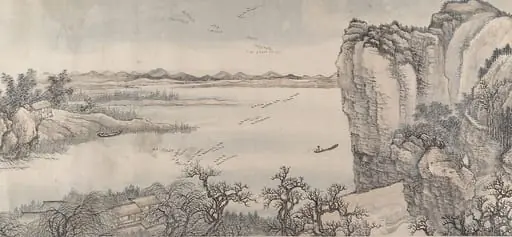 清 王翬 倣巨然燕文貴山水圖 卷|Landscape in the Style of Juran and Yan Wengui
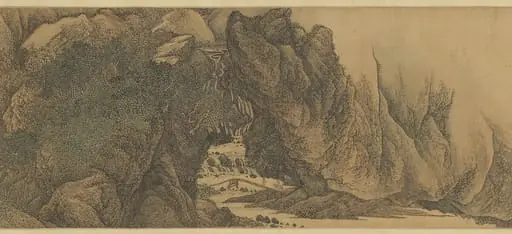 清 王翬 太行山色圖 卷|The Colors of Mount Taihang
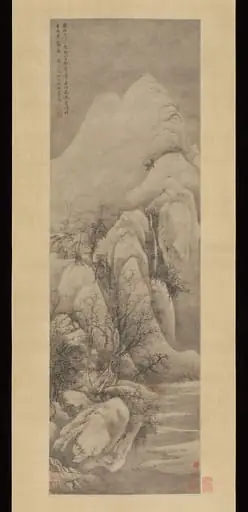 清 王翬 倣李成雪霽圖 軸|Snow Clearing: Landscape after Li Cheng
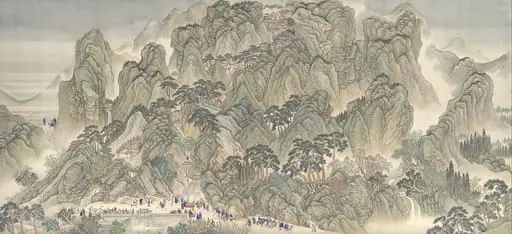 清 王翬等 康熙南巡圖 (卷三: 濟南至泰山) 卷|The Kangxi Emperor's Southern Inspection Tour, Scroll Three: Ji'nan to Mount Tai
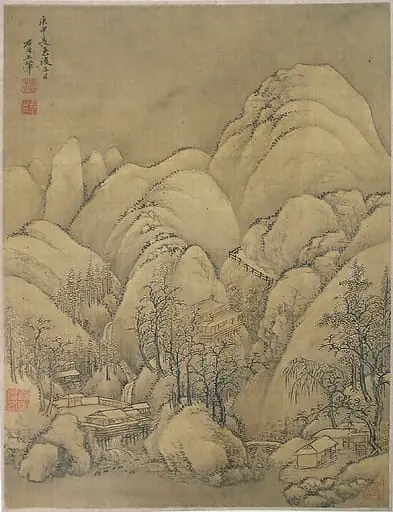 清 佚名 倣王翬 倣李成山水圖 軸|Landscape after Li Cheng
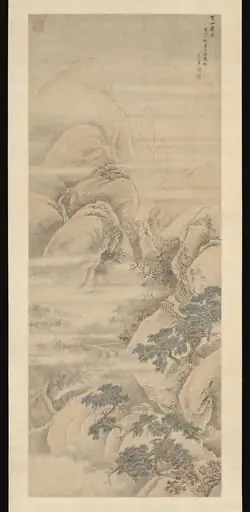 清 (傳)王翬 雪景山水圖 軸|Snowscape
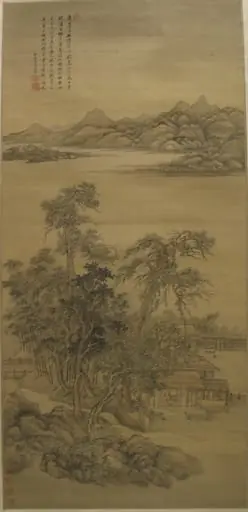 清 佚名 倣王翬 倣李公麟草堂圖 軸|Landscape in the Style of Li Gonglin
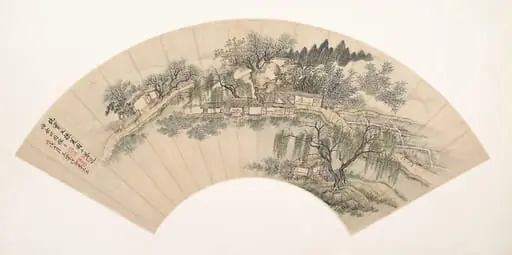 清 佚名 倣王翬 倣仇實父採菱圖 扇|Gathering Water Chestnuts