Artwork
元 王蒙 丹崖翠壑圖 軸|Red Cliffs and Green Valleys
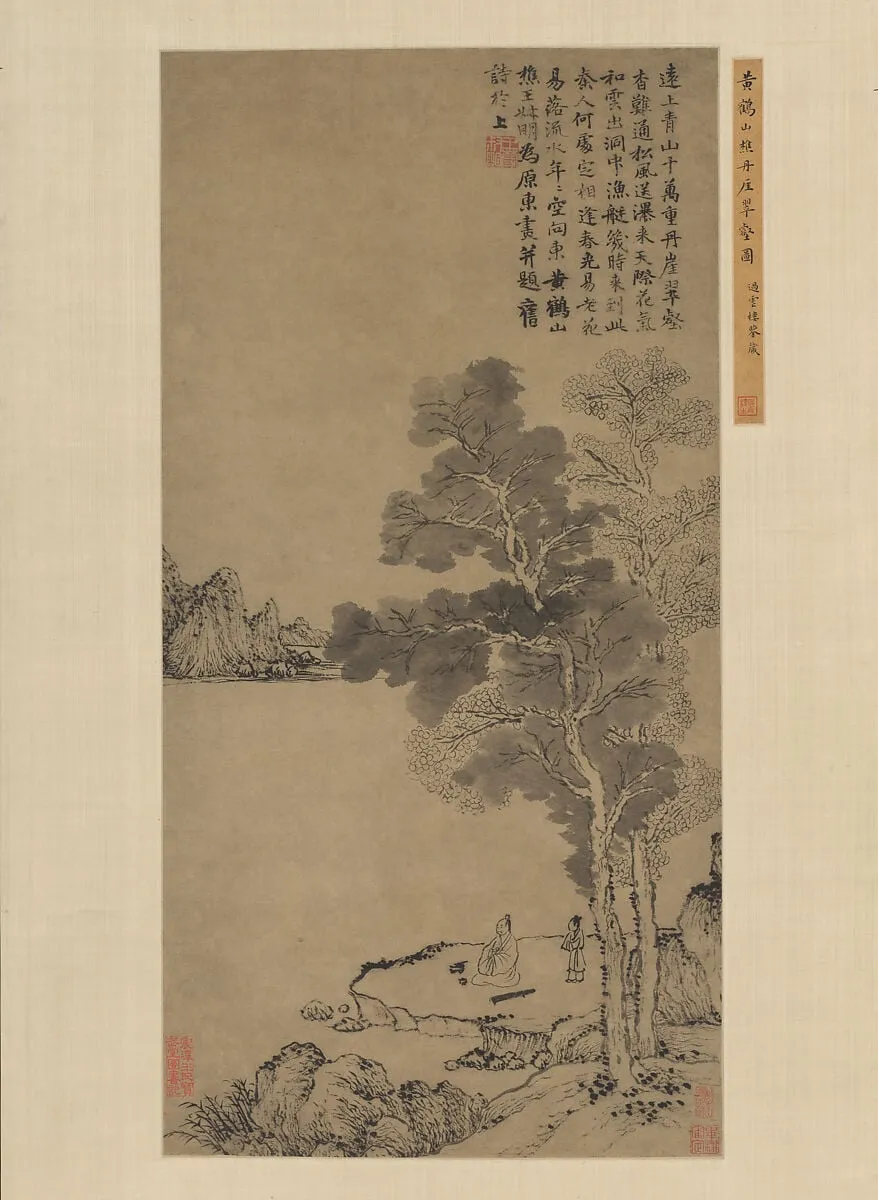
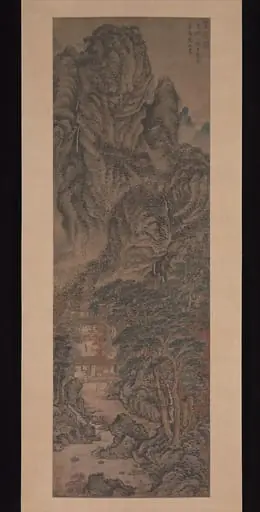
元 王蒙 丹崖翠壑圖 軸|Red Cliffs and Green Valleys is an ink painting by the Yuan dynasty literati painting artist Wang Meng. It dates from 1367 and is held in the collection of the Metropolitan Museum of Art.
About this work
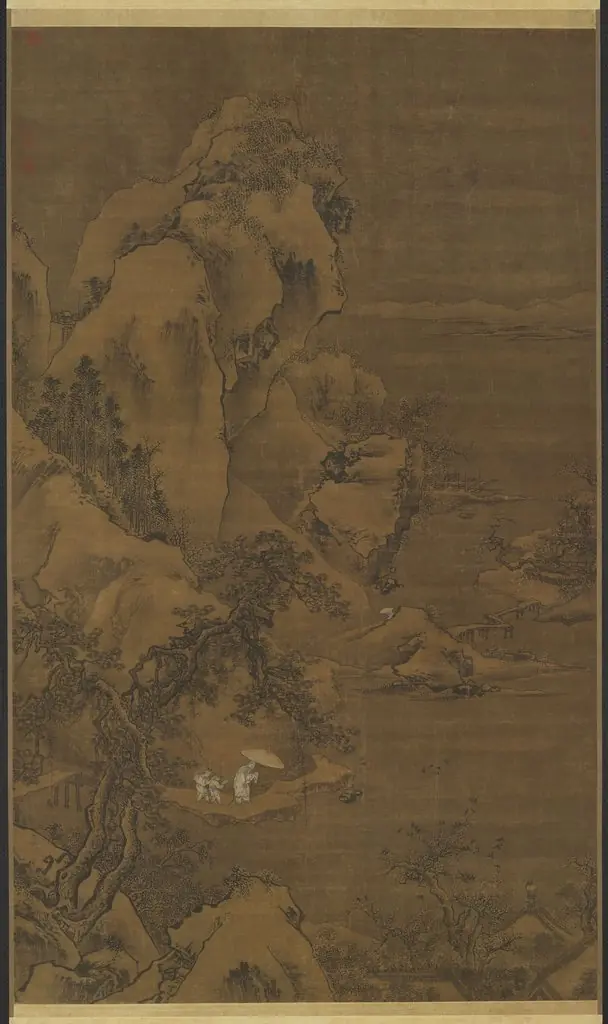
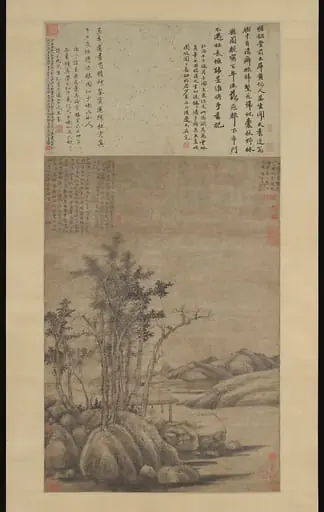
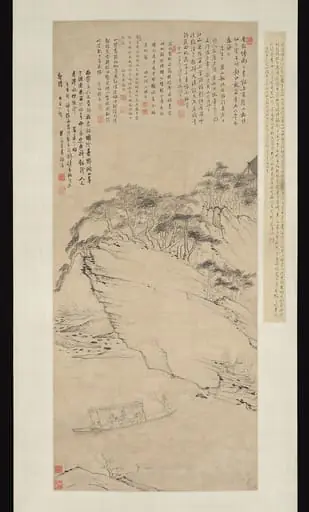
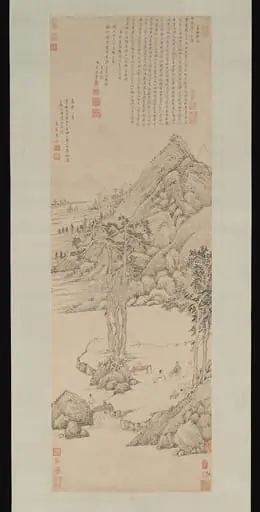
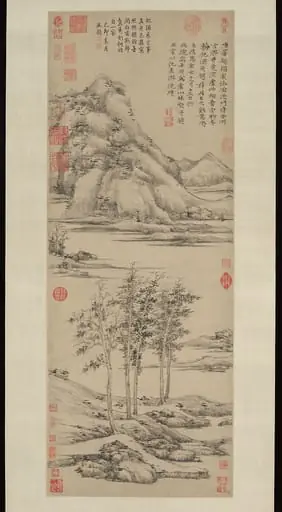
A tall scroll of ink on paper: jagged red cliffs, deep green valleys, small trees, and tinier men on a winding path. Wang Meng painted it in 1367, just before the Mongol dynasty fell. The strokes are so dense they look woven, each line crossing another to make the rocks feel solid and the mist alive.
Subject & Meaning
The painting presents a solitary figure, a man, situated within a verdant valley, accompanied by a notable tree, all rendered as part of a landscape composition. This subject matter aligns with the genre of Yuan‑period Chinese landscape painting, where human presence and natural elements such as trees are combined to evoke a harmonious relationship between humanity and the environment. The work’s iconography therefore emphasizes the figure’s integration into the surrounding terrain, reflecting traditional symbolic associations of contemplation and the transitory nature of life within the natural world.
History & Provenance
The hanging scroll painting Red Cliffs and Green Valleys, created by Wang Meng in 1367, is held in the collection of the Metropolitan Museum of Art.
The hanging scroll painting Red Cliffs and Green Valleys, created by Wang Meng in 1367, is held in the collection of the Metropolitan Museum of Art. The work is classified as a landscape painting executed in ink on paper. While the specific inventory or accession number is not provided in the available records, the museum lists the piece as part of its permanent holdings in New York.
The artwork depicts a landscape scene featuring trees and human figures. No specific exhibition history or past display dates are documented in the provided sources, limiting the record to its current institutional location and creation details.
Overview
Created in 1367, Red Cliffs and Green Valleys is a hanging scroll executed in ink on paper by the Yuan dynasty master Wang Meng. Painted on the eve of the fall of the Mongol-led Yuan dynasty, the work exemplifies the artist's mature style and his mastery of complex landscape composition. The vertical format depicts a towering mountainous structure where jagged red cliffs rise above deep green valleys, a coloristic choice that distinguishes the piece within the ink tradition.
Wang Meng employs his signature dense, textured brushwork, often described as resembling woven cloth, where short, overlapping strokes create a rhythmic, tactile surface. Tiny trees dot the slopes, and diminutive figures traverse a winding path, emphasizing the monumental scale of the natural world. This composition reflects the literati ideal of retreat and the intricate, layered spatial organization characteristic of Wang Meng's contribution to the Four Masters of the Yuan.
The painting stands as a testament to his technical virtuosity and his ability to convey a sense of secluded grandeur through intricate detail and dynamic structural balance.
Technique & Style
The artist employed a distinctive brushwork characterized by its remarkable density, which gives the surface a texture akin to woven cloth. Wang Meng utilized a technique known as cross-hatching, where numerous lines intersect. This method imbues the depicted rock formations with a sense of substantiality and weight, while simultaneously rendering the atmospheric mist with a vibrant, almost living quality.
Context
This painting was created by Wang Meng during a pivotal moment in Chinese history, just prior to the fall of the Mongol-led Yuan Dynasty. Such turbulent times often influenced the themes and artistic expressions of literati painters, who frequently sought solace or expressed subtle commentary through their landscape works. The period's political instability can sometimes be perceived in the profound depth and complexity of these natural scenes.
Artist & collection