Artwork
Statue in a Park
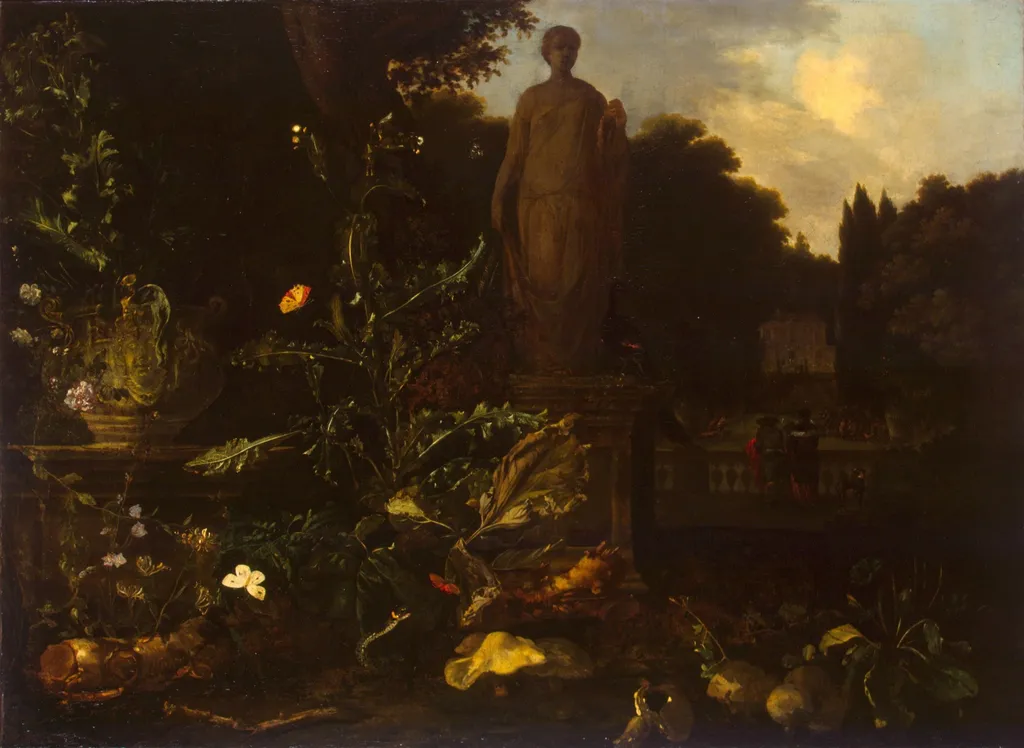
Statue in a Park is an oil painting by the Dutch Golden Age artist Nicolaes de Vree. It dates from 1689 and is held in the collection of the Hermitage Museum.
About this work
Overview
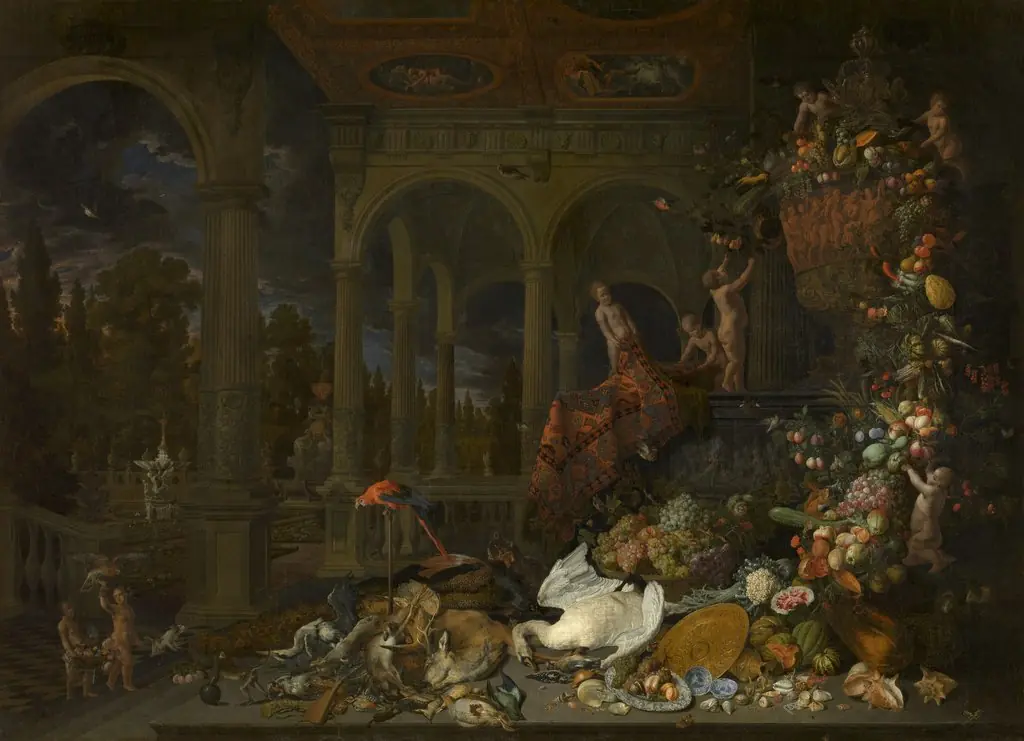
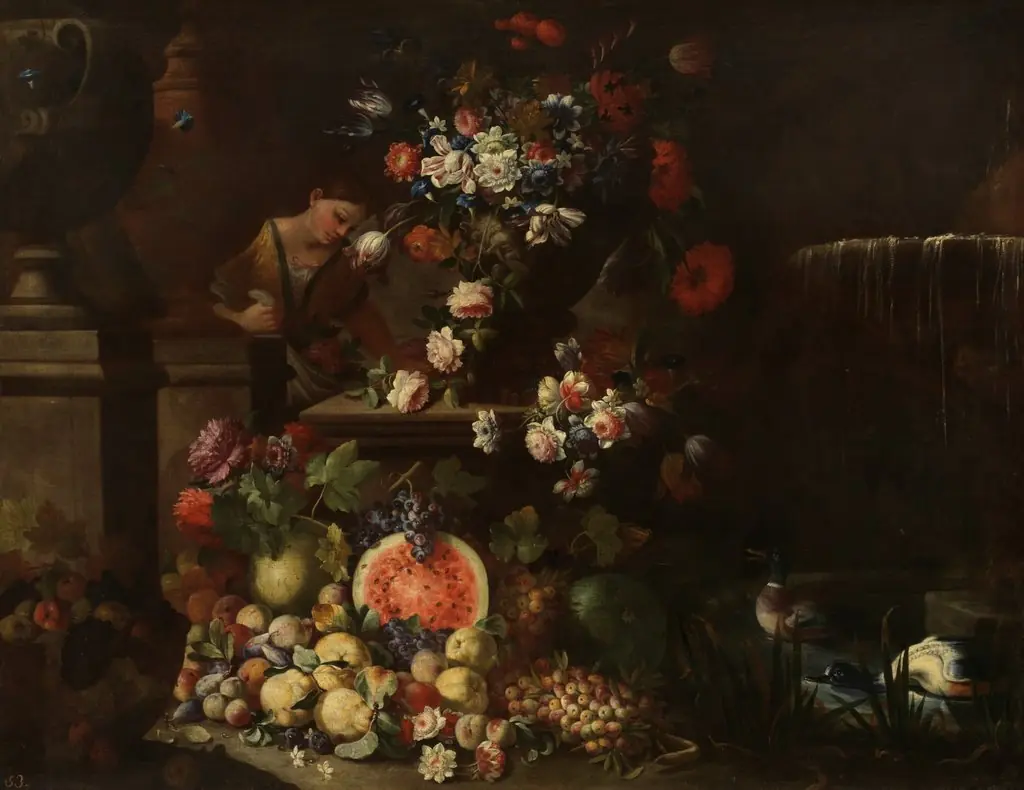
Painted in 1689 by Nicolaes de Vree, this oil work depicts a quiet garden scene centered on a classical statue.
Painted in 1689 by Nicolaes de Vree, this oil work depicts a quiet garden scene centered on a classical statue. Unlike traditional still lifes focused solely on inanimate objects, the painting integrates a human-form sculpture as its focal point, blending elements of genre and symbolic still life. The composition is restrained, with careful attention to spatial depth and the interplay of natural light.
Subject & Meaning
The statue, draped in a simple robe and standing on a pedestal, evokes classical antiquity, suggesting themes of time, memory, or idealized form. The table before it holds a golden vase, fruit, and flowers, symbols of abundance and transience. Together, the elements create a contemplative stillness, inviting reflection on the contrast between enduring art and fleeting nature.
Technique & Style
De Vree employs chiaroscuro to model form and enhance volume, particularly on the statue’s surface and the fruit’s skin. The light falls sharply from one direction, casting deep shadows across the garden background while illuminating the central objects. Brushwork is precise yet unobtrusive, prioritizing tonal harmony over decorative detail, resulting in a quiet, atmospheric realism.
History & Provenance
The painting entered the collection of the State Hermitage Museum in Saint Petersburg, likely during the 18th or early 19th century as part of broader European acquisitions of Dutch Golden Age works. Its provenance before museum ownership remains undocumented, but its preservation suggests it was valued for its technical refinement and compositional balance.
Context
Created during the late Dutch Golden Age, the work reflects a trend among Dutch painters to merge still life with allegorical or architectural elements. While most contemporaries focused on domestic interiors or market scenes, de Vree’s inclusion of a statue points to intellectual interests in classical culture, aligning with broader humanist currents in Northern European art.
Legacy
Though not widely known outside academic circles, the painting exemplifies a niche genre within Dutch painting that fused naturalism with symbolic depth. Its restrained palette and emphasis on light over narrative distinguish it from more theatrical Baroque works, offering a quiet counterpoint to the era’s dominant styles.
Own this work as a print
Artist & collection