Artwork
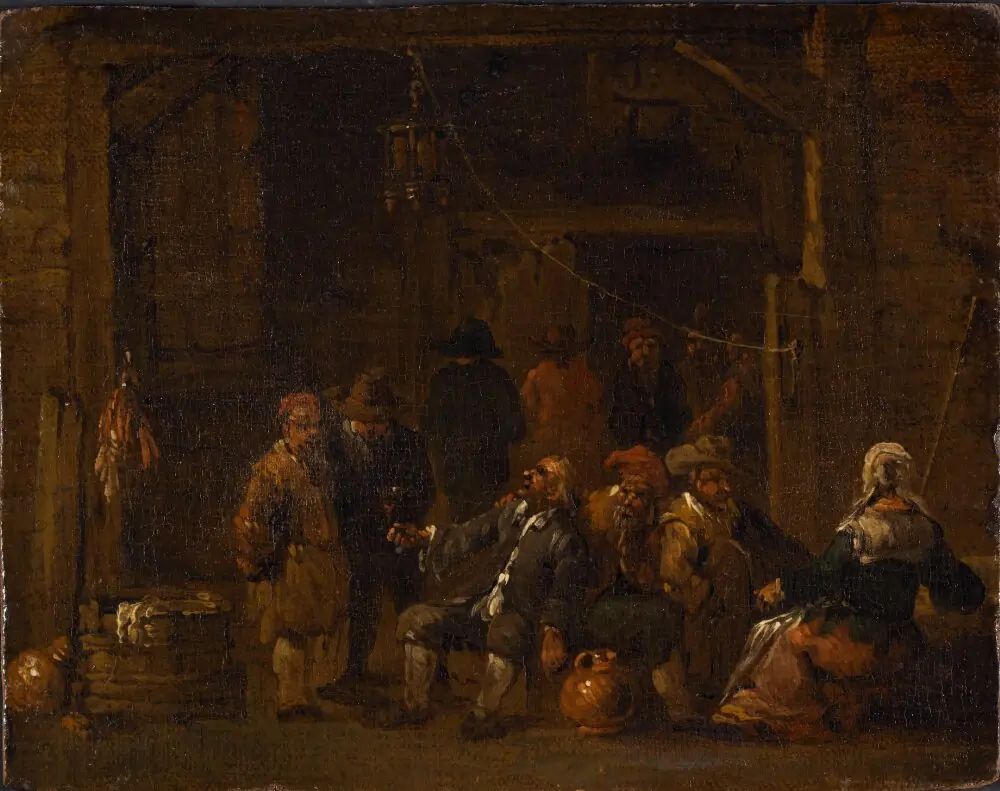
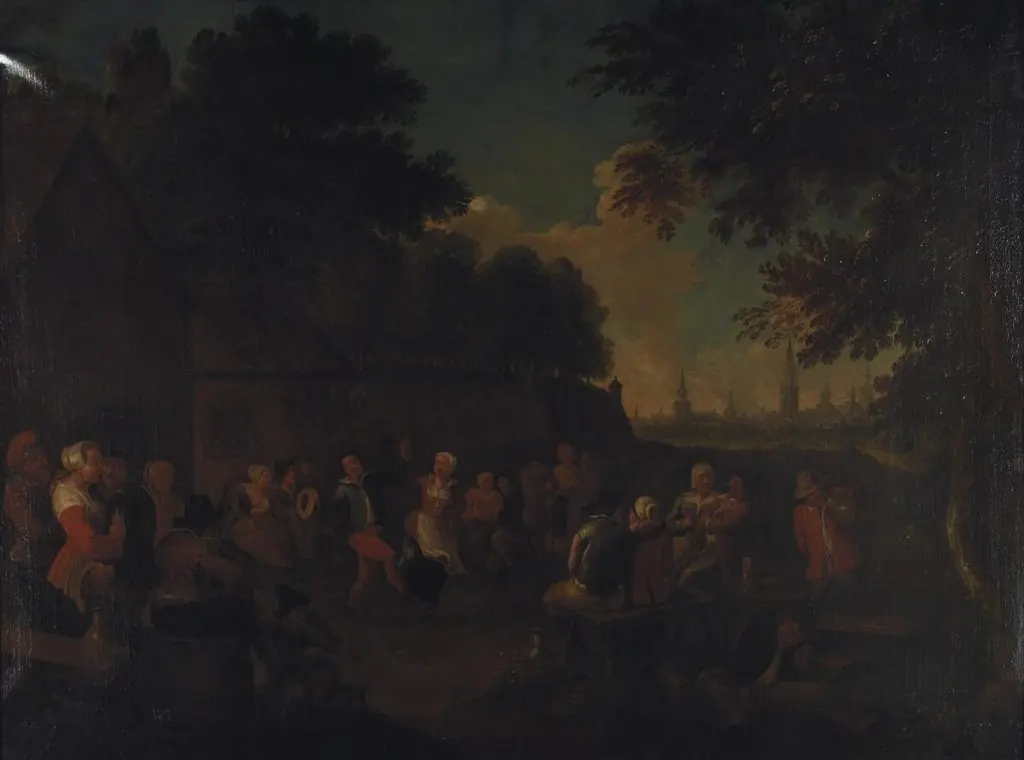
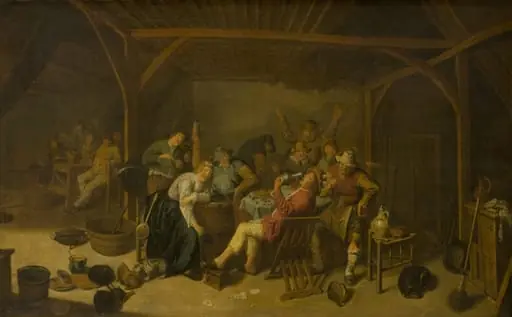
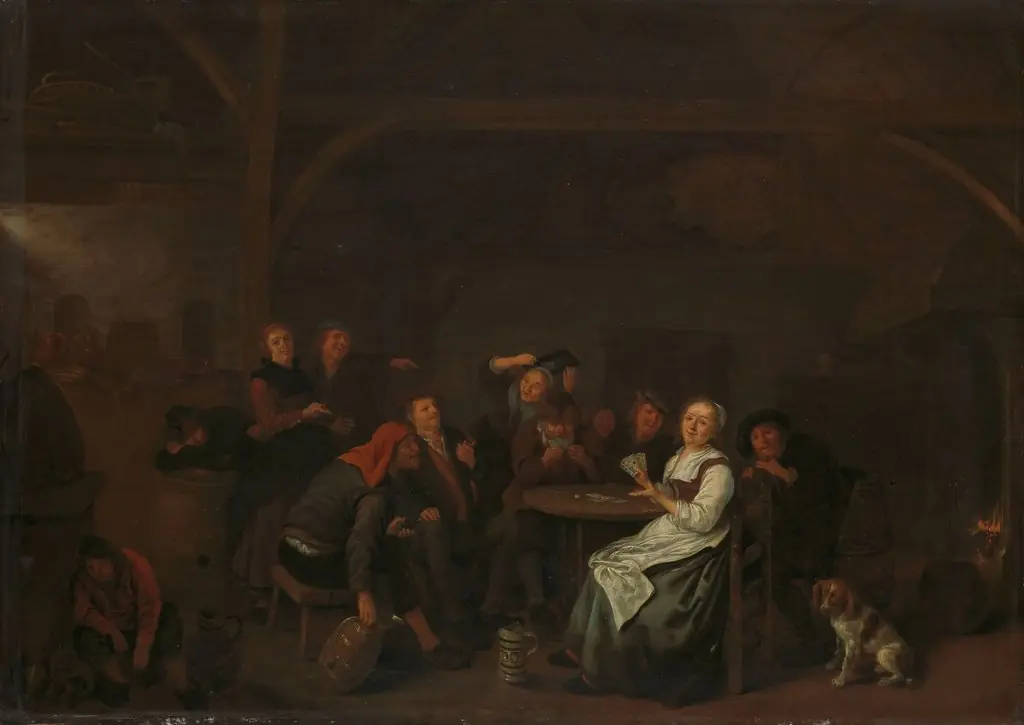
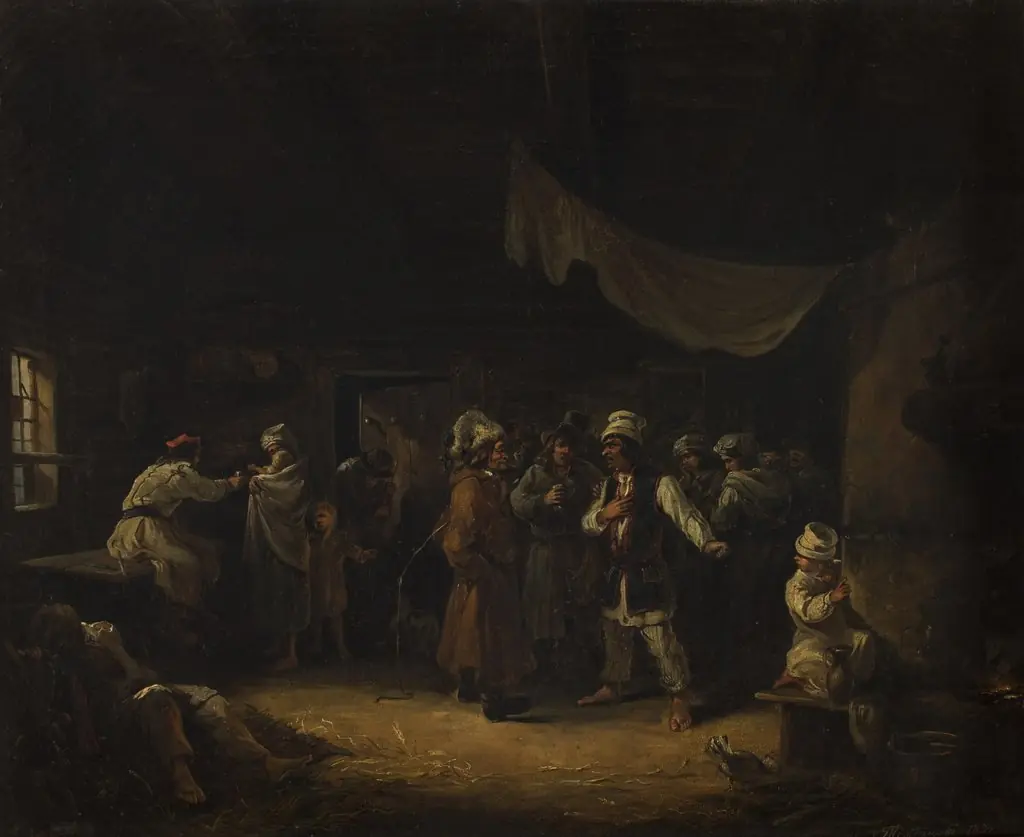
Peasants dancing in a bar
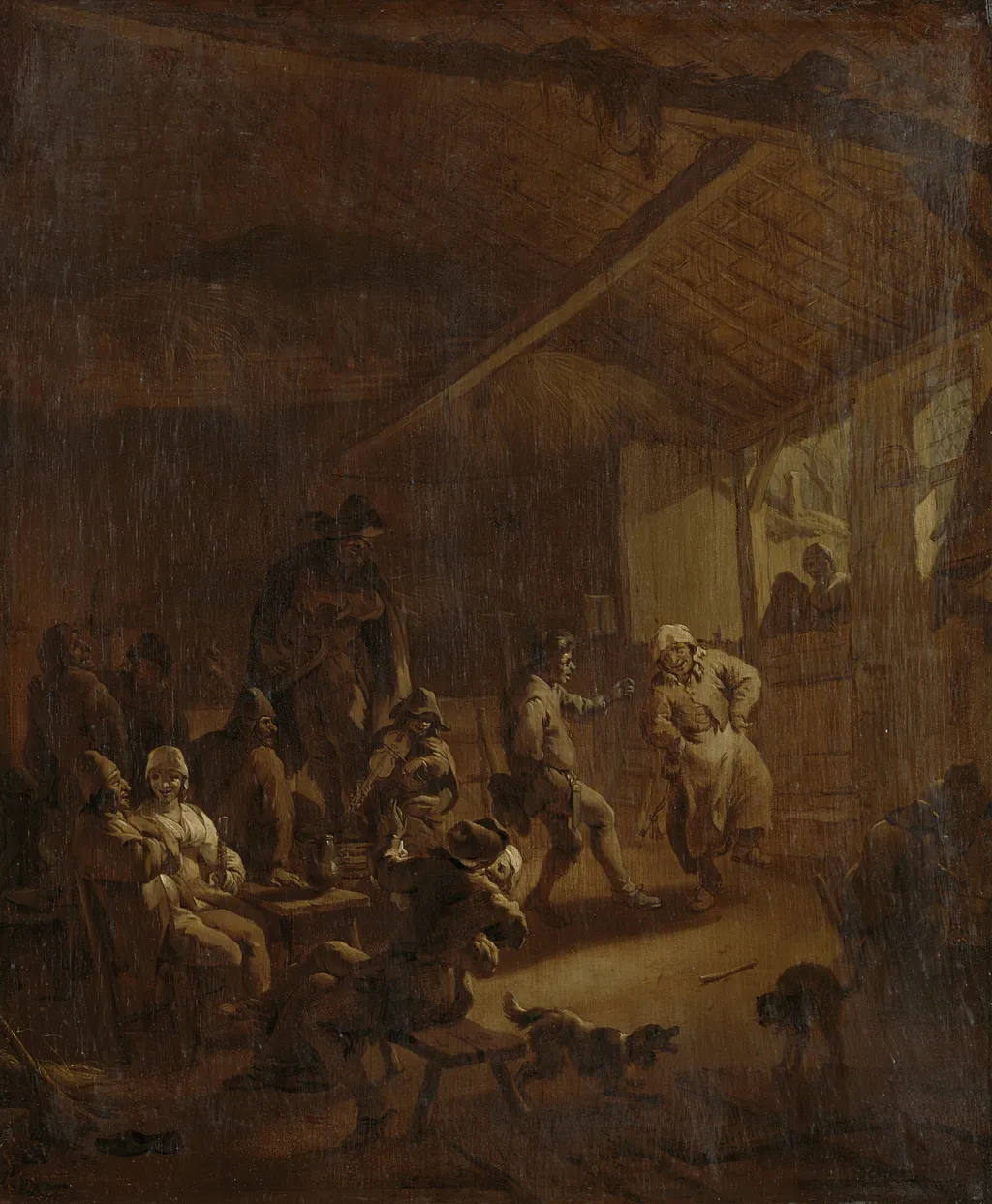
Peasants dancing in a bar is an oil painting by the Dutch Golden Age artist Nicolaes Pieterszoon Berchem. It dates from 1669 and is held in the collection of the Rijksmuseum.
About this work
Technique & Style
According to the catalogue record, the work is painted on panel rather than canvas, and the panel support measures 46 cm in height by 38 cm in width.
Peasants dancing in a bar is classified as a painting executed in oil paint, a medium consistent with Berchem's broader practice. According to the catalogue record, the work is painted on panel rather than canvas, and the panel support measures 46 cm in height by 38 cm in width. The genre is landscape painting, situating the tavern scene within Berchem's characteristic pastoral and peasant subjects.
No information is available in the provided sources regarding the handling of the brushwork, the specific condition of the panel, or detailed formal and stylistic qualities such as palette, composition, or figural treatment.
History & Provenance
The painting was created in 1669 by Nicolaes Pieterszoon Berchem. Its early ownership included Adrian John Hope, followed by Emilie Mélanie Mathilde Rapp. The work subsequently passed through the collections of Peter Burrell, 1st Baron Gwydyr, and later Peter Drummond-Burrell, 22nd Baron Willoughby de Eresby.
John Smith also appears in the ownership chain before the painting entered facets entered the collection of the Rijksmuseum, where it remains.
The painting is currently held by the Rijksmuseum. Its documented provenance includes a succession of owners, among them John Smith, Adrian John Hope, Emilie Mélanie Mathilde Rapp, Peter Burrell, 1st Baron Gwydyr, and Peter Drummond-Burrell, 22nd Baron Willoughby de Eresby. No exhibition history is provided in the available sources.
Overview
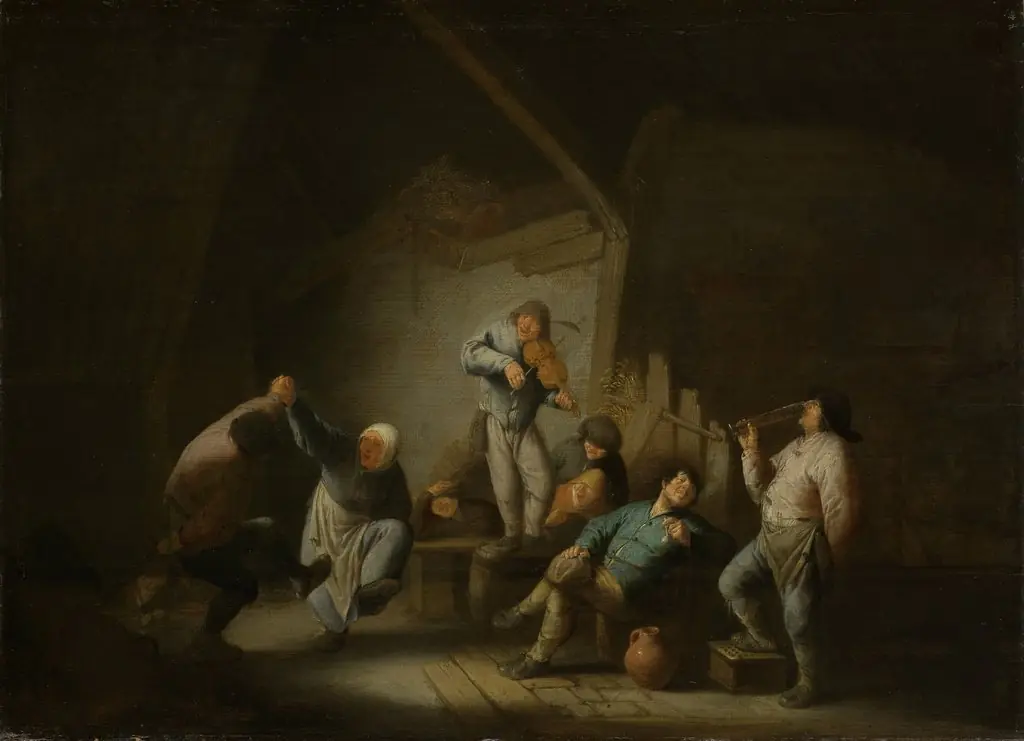
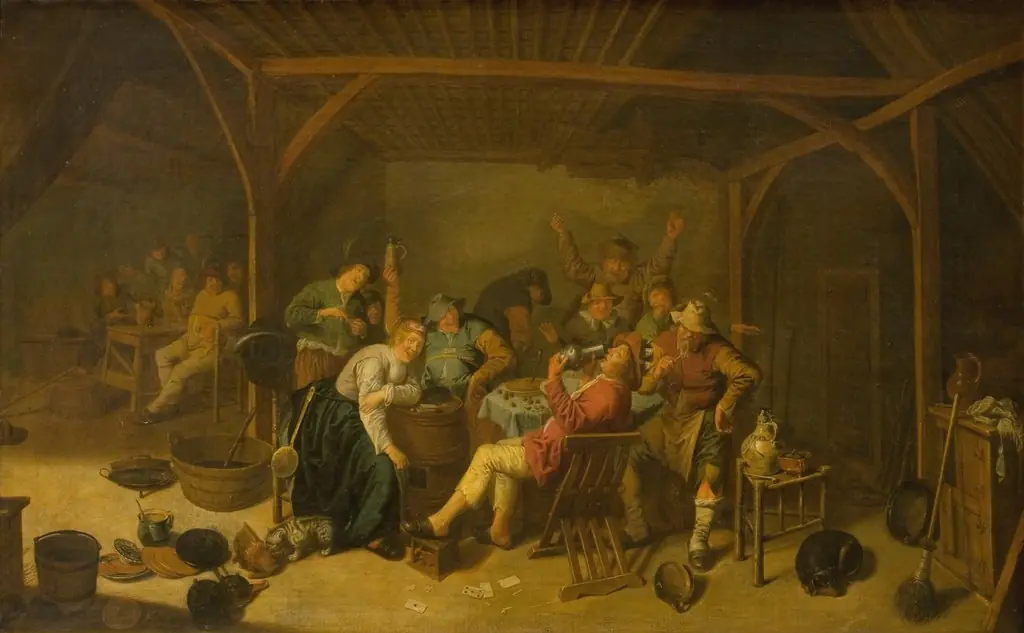
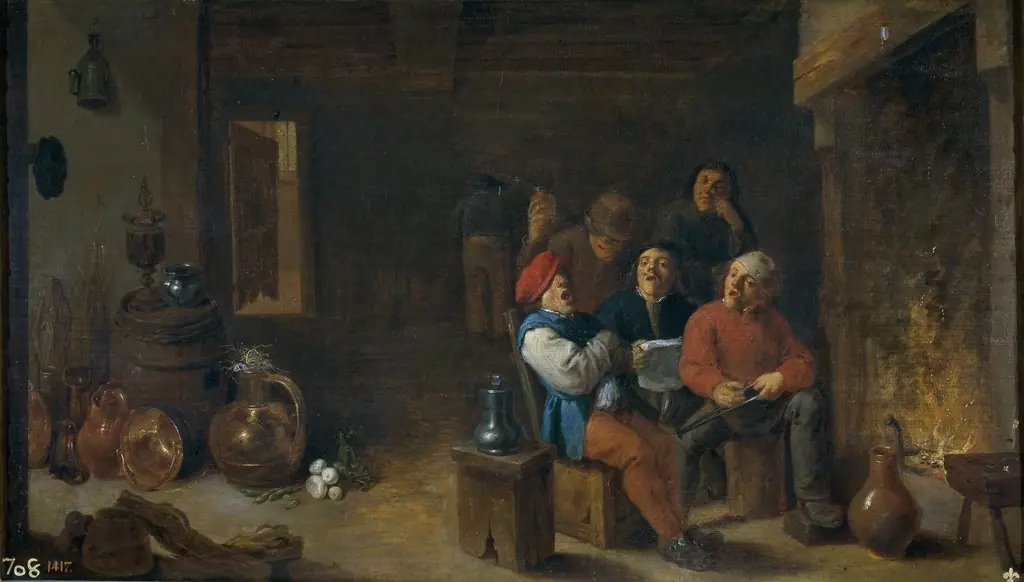
Nicolaes Pieterszoon Berchem painted Peasants dancing in a bar in 1669. The oil on canvas depicts a bustling interior where villagers in period dress gather around a table, some drinking, others dancing, while a few dogs lie on the floor. A narrow window on the right supplies the sole illumination, casting deep shadows that define the cramped space.
Subject & Meaning
The scene presents a genre moment of rural revelry, emphasizing communal enjoyment and the spontaneity of folk celebrations. By placing the figures in a dimly lit tavern rather than an open landscape, Berchem shifts focus to human interaction, using the lively gestures and varied expressions to convey a sense of conviviality and the everyday pleasures of peasant life.
Context
The painting emerges from a period when Dutch artists frequently depicted tavern interiors as sites of moralizing or celebratory narratives. Berchem’s choice of a crowded bar aligns with contemporary interests in genre painting, while his background in pastoral landscapes informs the composition’s structured yet lively arrangement, linking interior genre scenes to the broader Italianate aesthetic.
Own this work as a print
Artist & collection
Artist
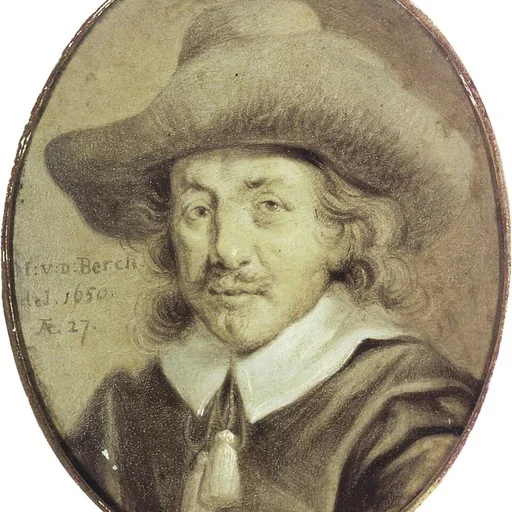
Nicolaes Pieterszoon Berchem (1 October 1620 – 18 February 1683) was a highly esteemed and prolific Dutch Golden Age painter of pastoral landscapes, populated with mythological or biblical figures, but also of a number of allegories and…