Artwork
Ruins in Italy
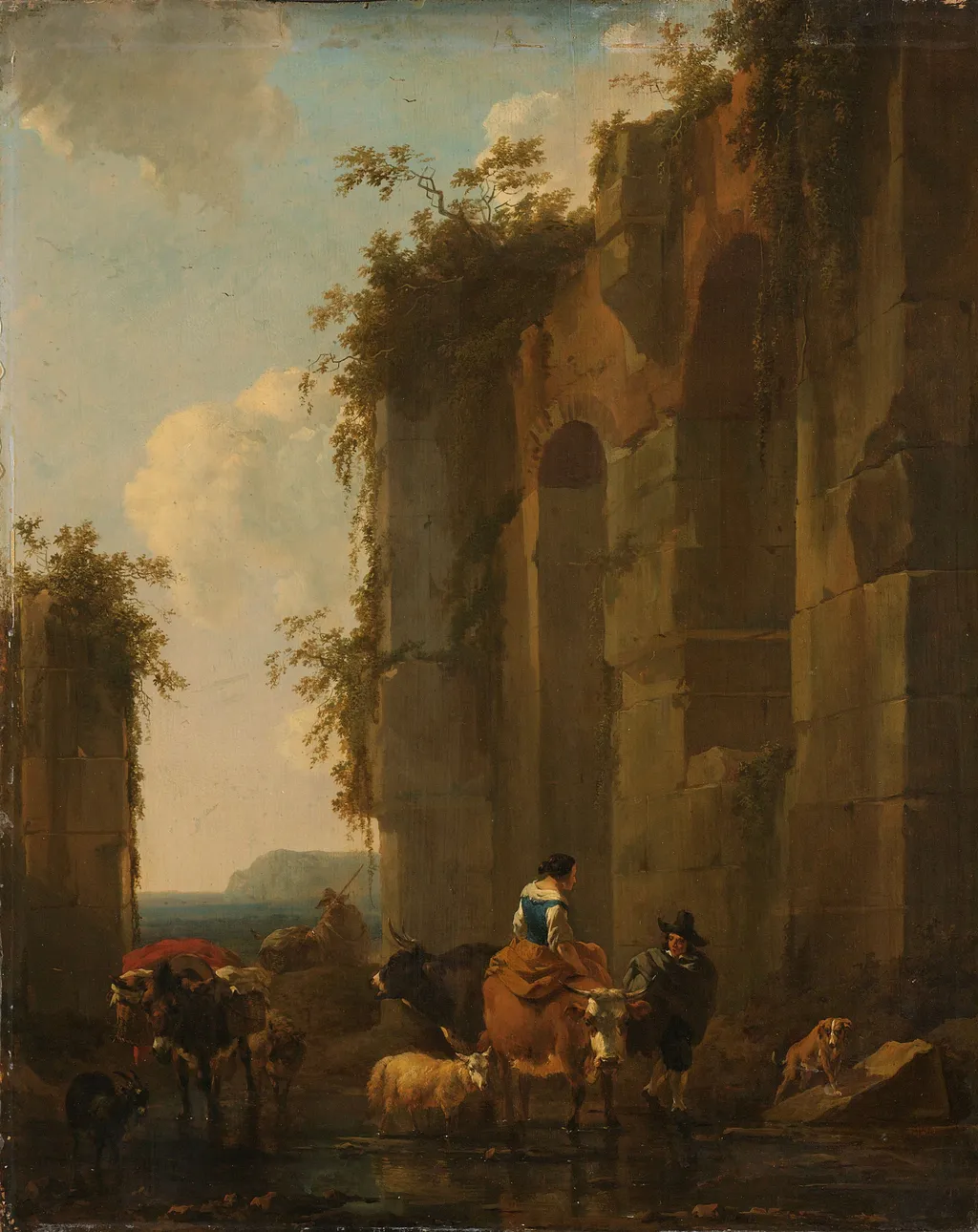
Ruins in Italy is an oil painting by the Dutch Golden Age artist Nicolaes Pieterszoon Berchem. It dates from 1658 and is held in the collection of the Rijksmuseum.
About this work
Subject & Meaning
Central to the scene, a young man in a heavy cloak guides a woman seated on an ox through the water, accompanied by a dog, cattle, and a heavily laden mule.
The painting depicts an Italianate landscape featuring a dilapidated Roman aqueduct at the foot of which lies a fordable river crossing. Central to the scene, a young man in a heavy cloak guides a woman seated on an ox through the water, accompanied by a dog, cattle, and a heavily laden mule. In the background, another man rides a loaded donkey in the opposite direction, set against a distant landscape of rock formations.
This composition exemplifies the work of the Italianisanten, artists inspired by the Italian countryside, often incorporating significant attention to human figures and livestock within the natural setting. The inclusion of classical ruins alongside pastoral activity reflects the genre's characteristic blend of antiquarian interest and rural life.
Technique & Style
Executed in 1658, this landscape is rendered in oil paint on a wooden panel. The work measures approximately 51.5 to 52 cm in height and 41.5 to 42 cm in width. It bears the artist's signature and date, '1658 / Berchem', in the lower right corner.
Stylistically, the painting exemplifies the Italianate tradition, depicting a fordable stream at the base of a dilapidated Roman aqueduct. The composition is populated by figures and livestock, including a woman riding an ox guided by a man, a heavily laden mule, and a dog, set against a backdrop of rocky formations. This focus on detailed figures and animals within an imagined Italian setting was a hallmark of the artist's oeuvre.
History & Provenance
Ruins in Italy is an oil-on-panel landscape painted in 1658 by Nicolaes Pieterszoon Berchem, showing a Roman aqueduct ruin with figures and livestock in the Italianate tradition. The work was owned by the Amsterdam banker Hendrik Muilman and descended through his family before being bequeathed to the Rijksmuseum in Amsterdam in 1880 by Jacobus Salomon Hendrik van de Poll. Since 1965 it has been on loan from the Rijksmuseum to the Centraal Museum in Utrecht, an arrangement facilitated through the Cultural Heritage Agency of the Netherlands (Rijksdienst voor het Cultureel Erfgoed).
Overview
Nicolaes Pieterszoon Berchem’s 1658 oil painting Ruins in Italy presents a tranquil Italian landscape where ancient stone fragments stand amid verdant growth. A solitary, gnarled tree dominates the foreground, while gentle hills and distant mountains recede under a lightly clouded sky, creating a balanced composition that merges natural and architectural elements.
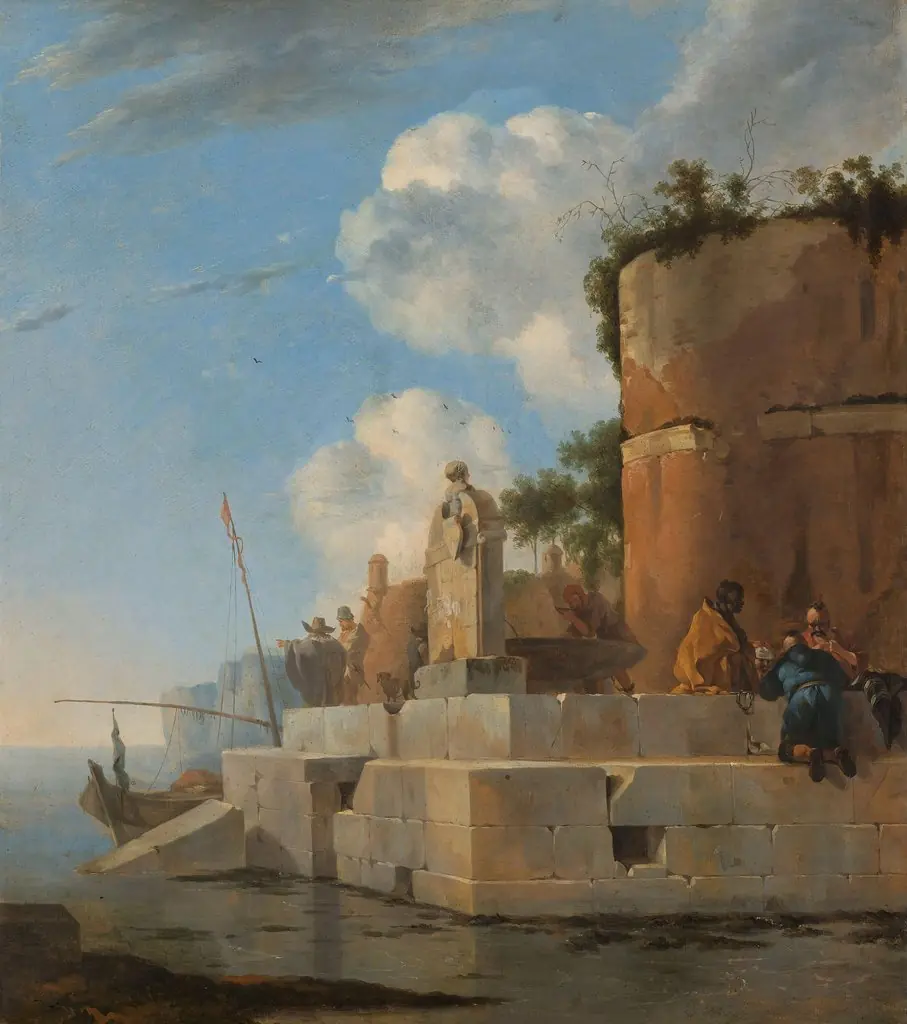
Own this work as a print
Artist & collection
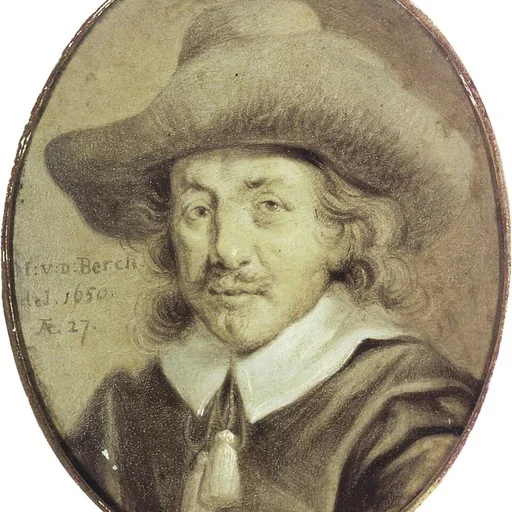
Artist
Nicolaes Pieterszoon Berchem (1 October 1620 – 18 February 1683) was a highly esteemed and prolific Dutch Golden Age painter of pastoral landscapes, populated with mythological or biblical figures, but also of a number of allegories and…

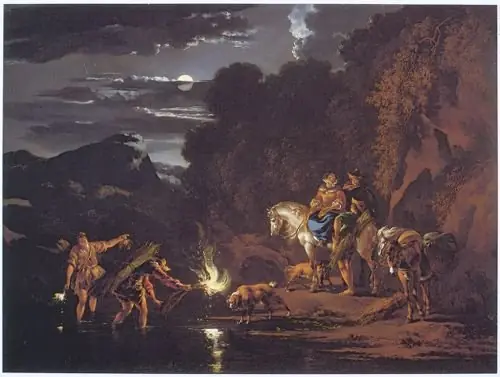
 Herdsmen Driving Cattle through a Ford
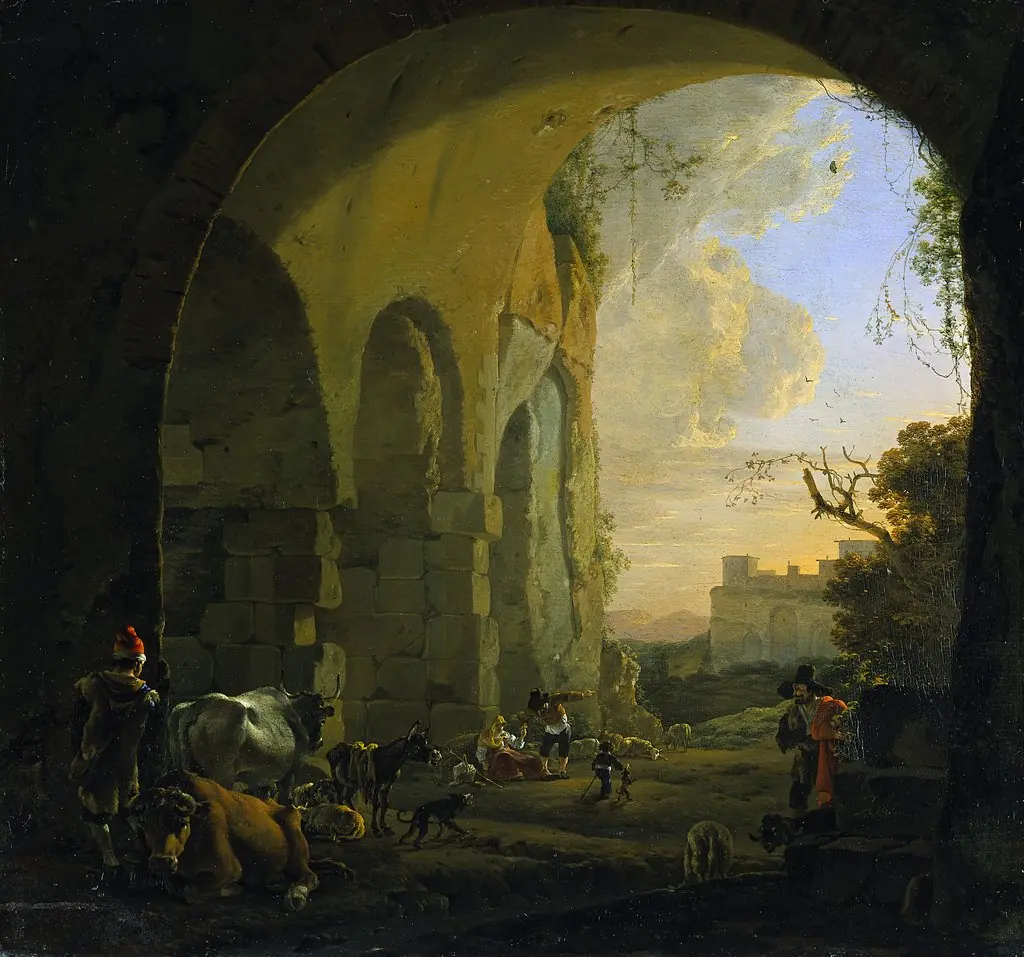 Drovers with cattle under an arch of the Colosseum in Rome
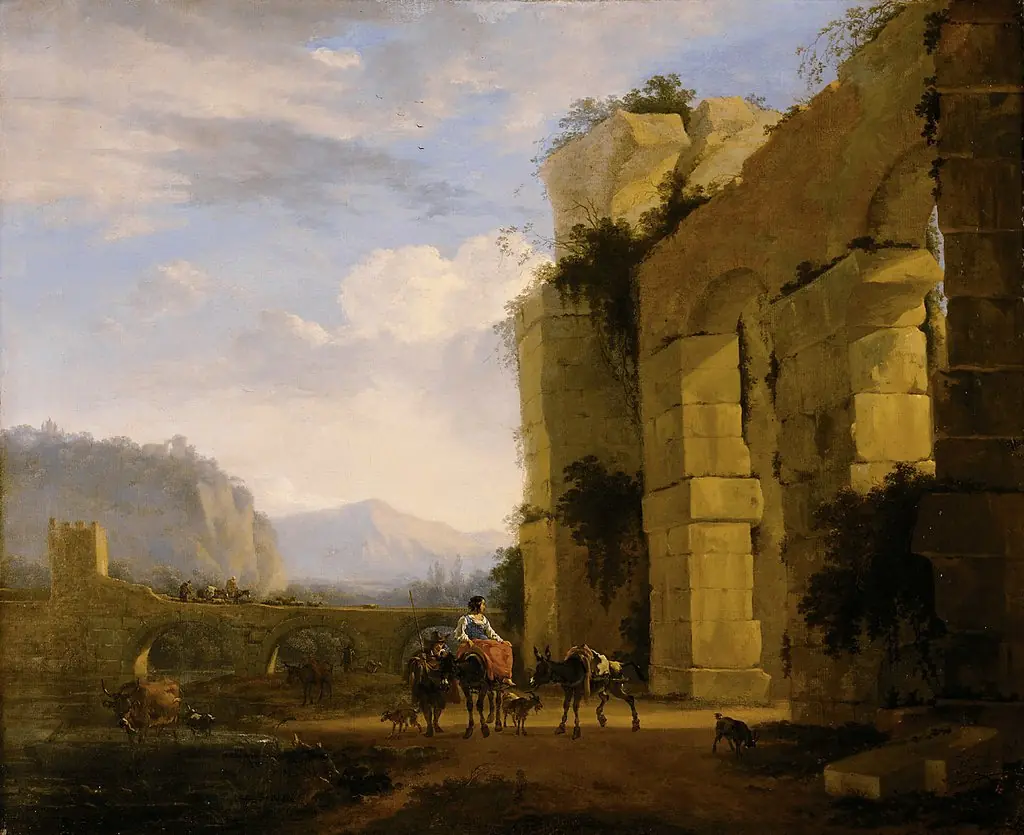 Landscape with the ruin of an aquaduct
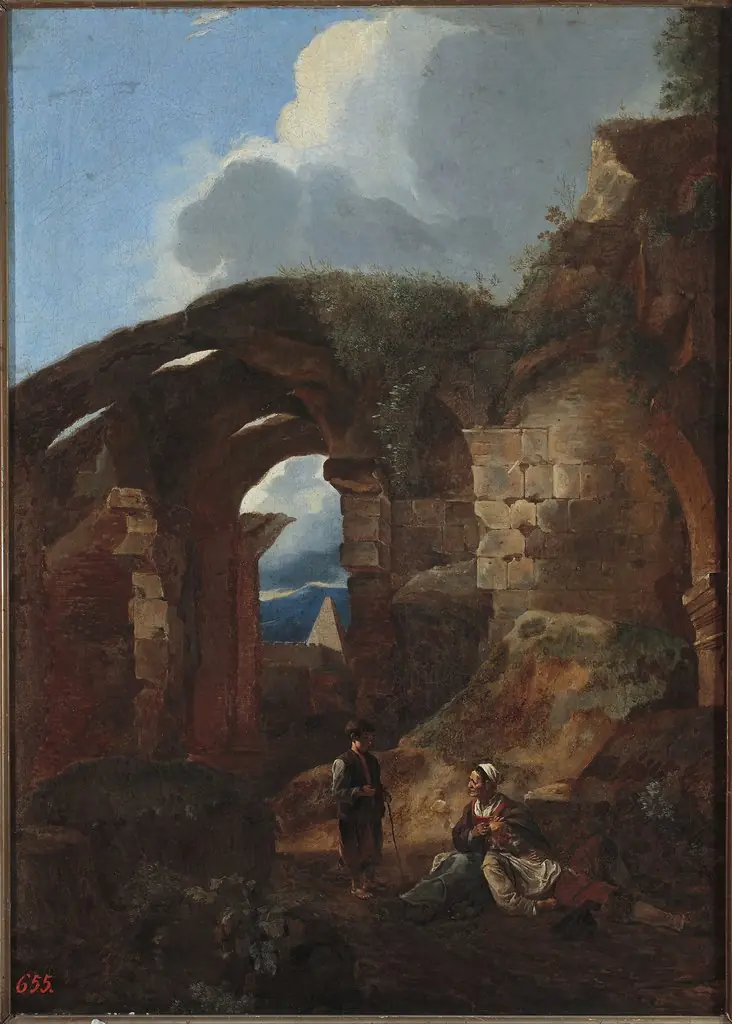 Vagabonds resting in the ruins of the Colosseum
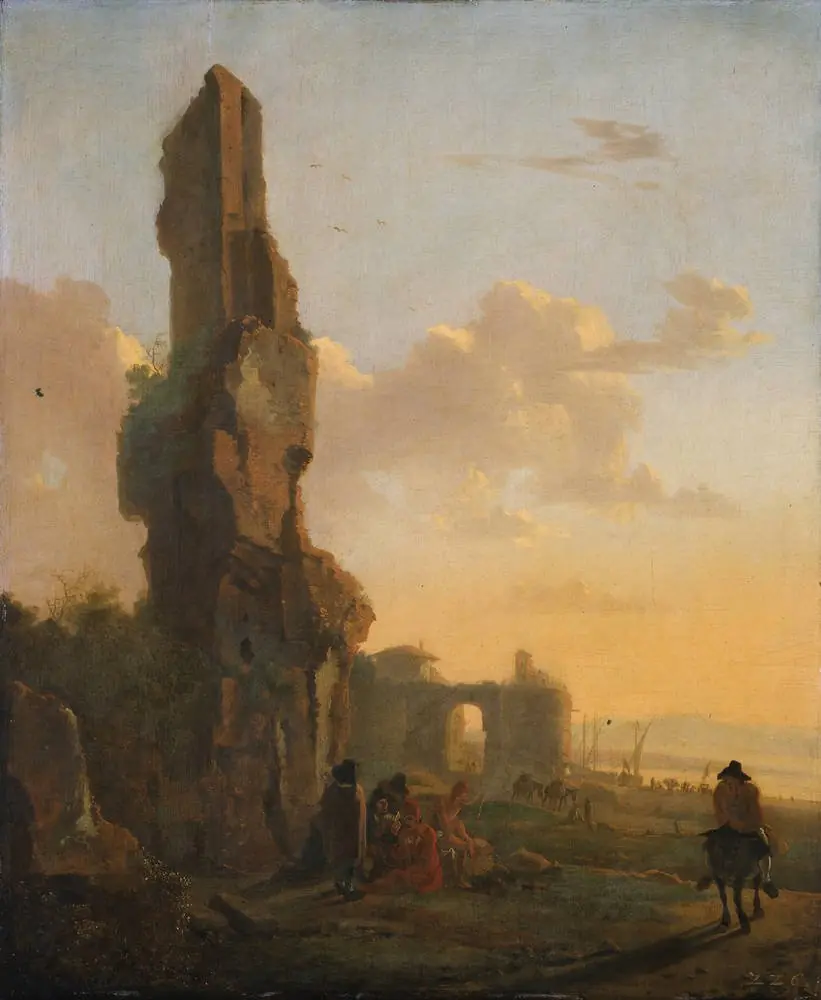 Ruins on the Edge of a Lake
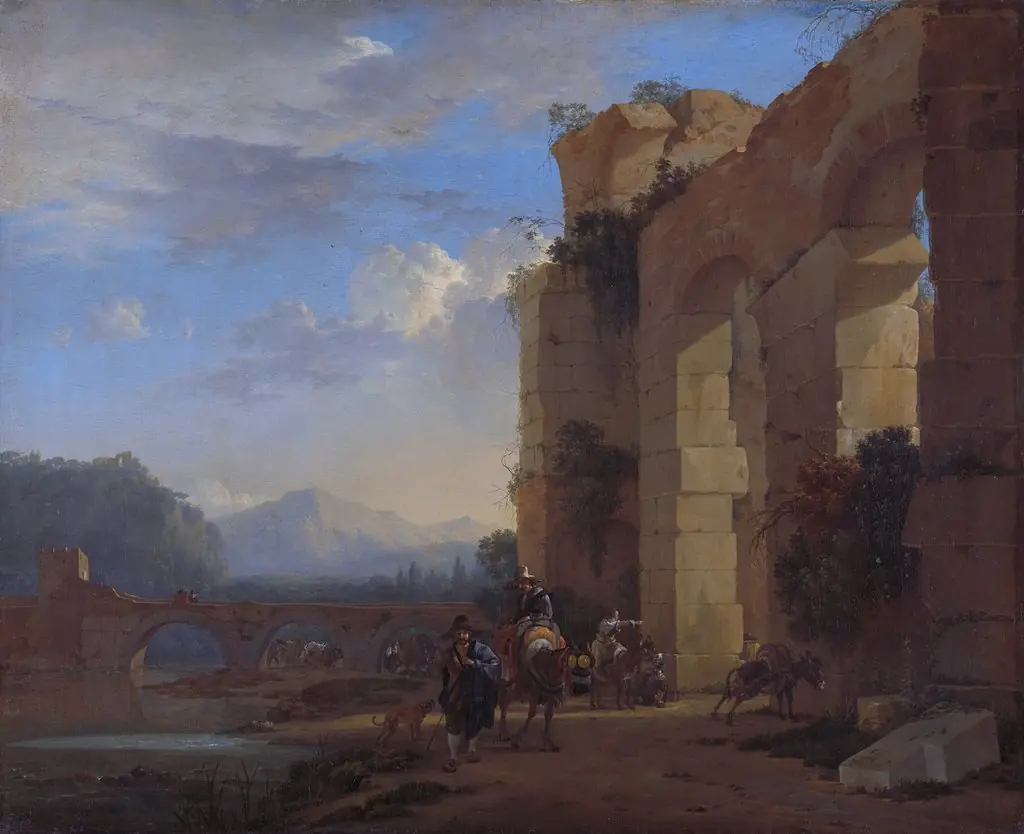 Muleteers beside an Italian Ruin
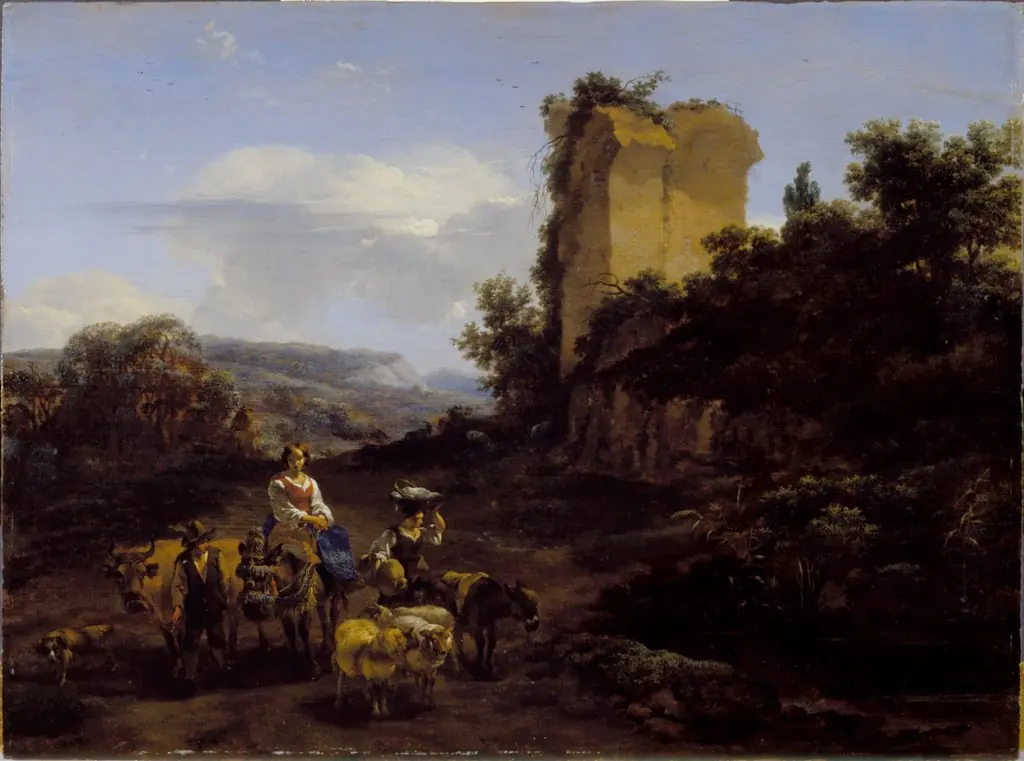 Landscape with Ruins and Travelers
 Untitled
 Italian landscape
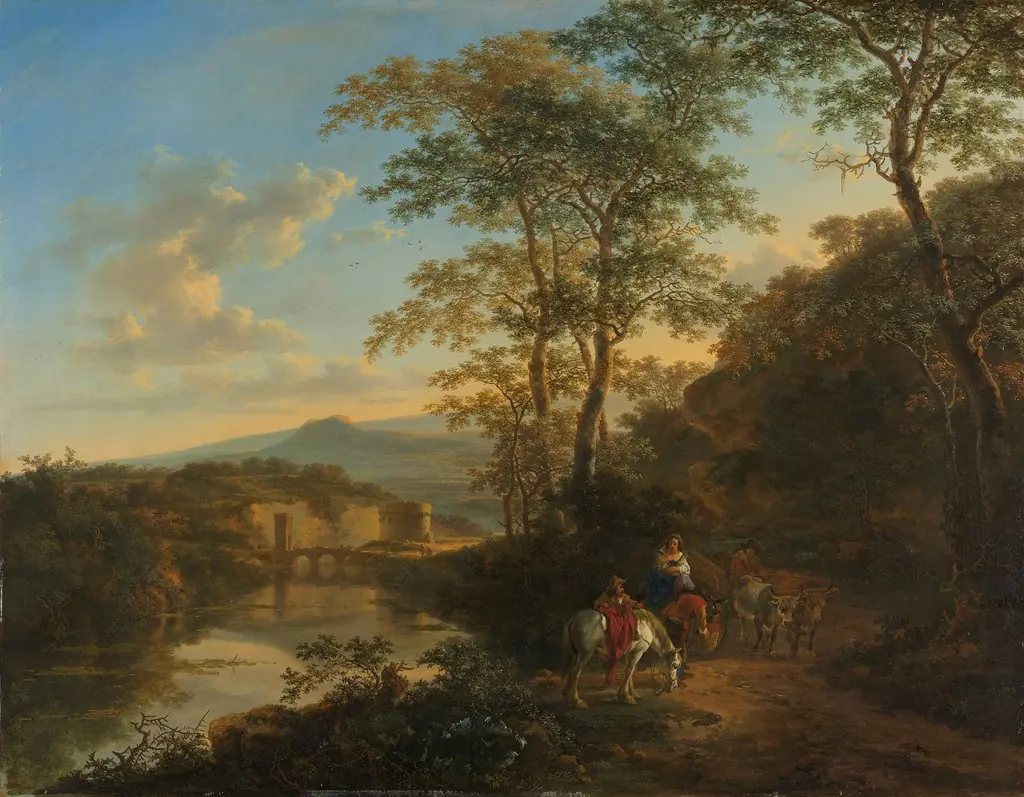 Italian landscape with the Ponte Molle