Artwork
Elderly Man Reading a Book
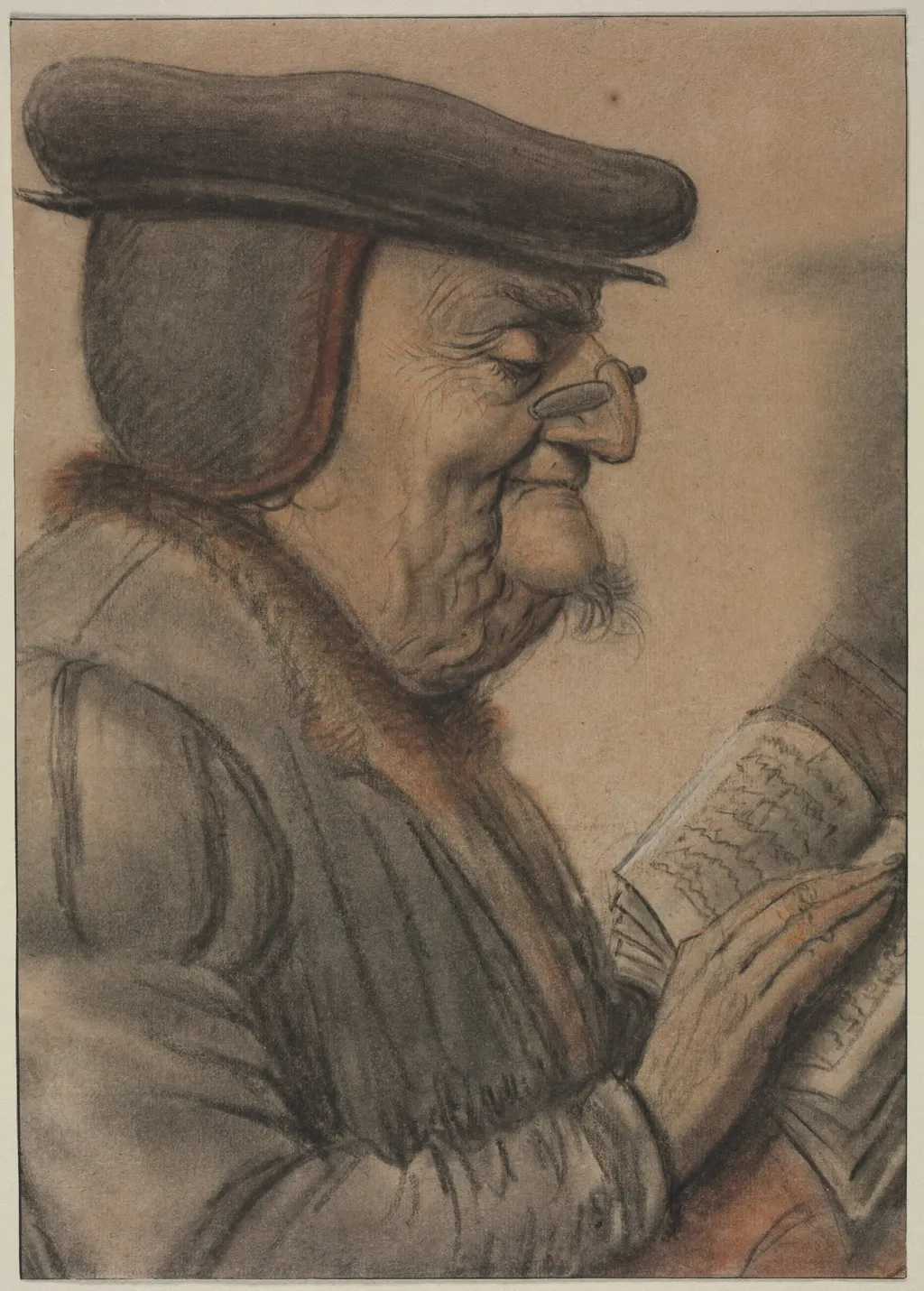
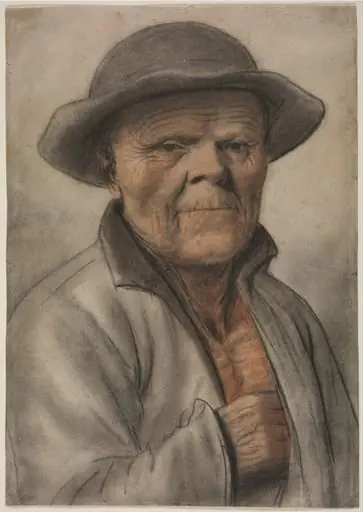
Elderly Man Reading a Book is a drawing by the Baroque artist Nicolas Lagneau. It dates from 1604 and is held in the collection of the Cleveland Museum of Art.
- Accession no.
- 1964.98
- Credit line
- Dudley P. Allen Fund
About this work
Overview
Unlike painters of his era, he worked exclusively in drawing, producing works noted for their intimate scale and psychological nuance.
Created around 1604 by the French draftsman Nicolas Lagneau, this drawing captures an elderly man in quiet concentration. Lagneau, active between 1600 and 1650, specialized in portrait studies executed in chalk and occasional gouache. Unlike painters of his era, he worked exclusively in drawing, producing works noted for their intimate scale and psychological nuance. His figures often appear isolated, emphasizing the individuality of the sitter through careful observation.
Subject & Meaning
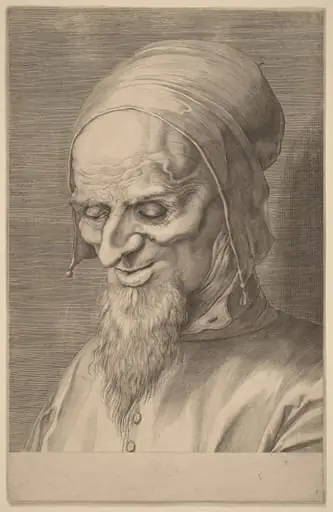
The figure is an older man, depicted in profile, wearing a broad-brimmed hat and a draped, dark garment. His furrowed brow and prominent beard suggest advanced age, while his focused gaze and grip on the open book imply deep engagement with the text. The scene conveys no narrative beyond the act of reading, inviting contemplation of solitude, intellect, and the quiet dignity of aging. Lagneau avoids idealization, presenting the man with unembellished realism.
Technique & Style
Lagneau employed black and red chalk with subtle washes to model form and texture. Soft, blended lines define the contours of the face and the heavy folds of the coat, while delicate hatching suggests the weave of fabric and the roughness of the hat. The interplay of light and shadow, though restrained, demonstrates an awareness of chiaroscuro, lending volume without theatricality. His method prioritized tactile detail over dramatic effect, reflecting a quiet, observational approach.
History & Provenance
Lagneau’s drawings were circulated widely during his lifetime, often copied by other artists and collectors. Though he did not produce paintings, his portrait studies were valued for their precision and emotional resonance. This particular work survives as one of several attributed to him, likely part of a private collection of character studies.
Its provenance traces back to French artistic circles of the early 17th century, where such drawings served as models for figural study.
Context
In early 17th-century France, drawing was increasingly valued as an independent art form, not merely preparatory. Lagneau’s focus on ordinary, non-noble subjects aligned with a broader interest in human types and expressions. While Italian and Dutch artists explored similar themes, Lagneau’s approach remained distinct, less influenced by grandeur, more attuned to the quiet presence of the individual. His work reflects a shift toward introspective portraiture in Northern European draftsmanship.
Legacy
Lagneau’s drawings, though not widely known today, were influential among contemporaries who copied his compositions for study. His emphasis on texture, aging, and psychological depth prefigured later developments in Northern European portraiture. Though he left no school or direct followers, his work contributes to the understanding of how draftsmen in early modern France cultivated realism through careful, unadorned observation of the human face and form.
Own this work as a print
Artist & collection
Artist
Nicolas Lagneau (fl c. 1600–1650) was a French draftsman noted for his portrait drawings. He was especially interested in grotesque physiognomies, which he drew in meticulous detail either from models or his…