Artwork
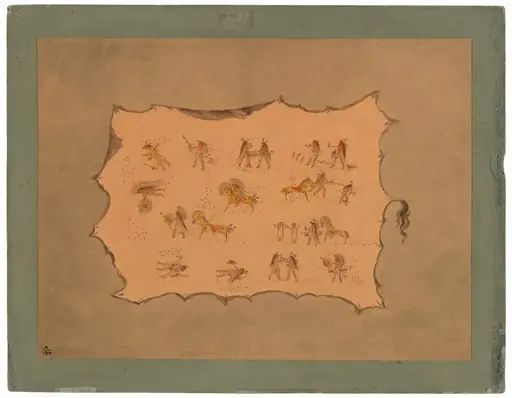
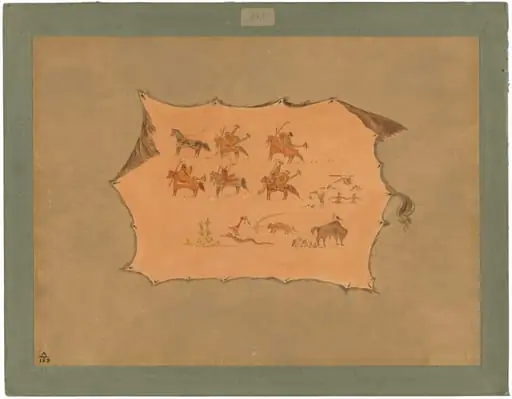
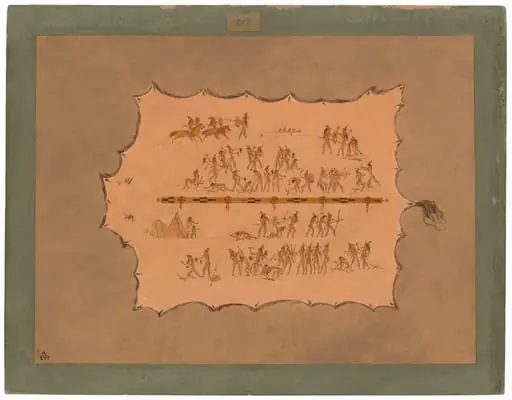
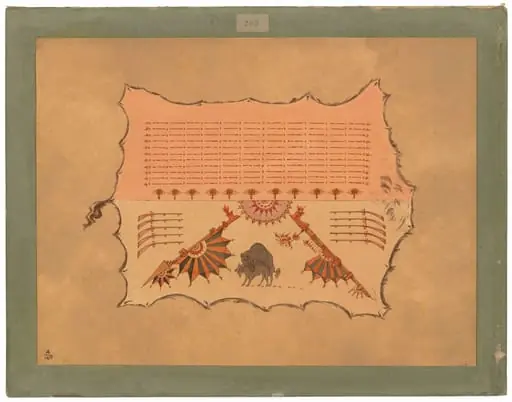
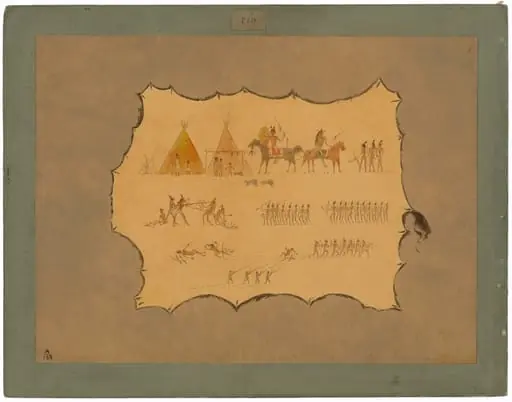
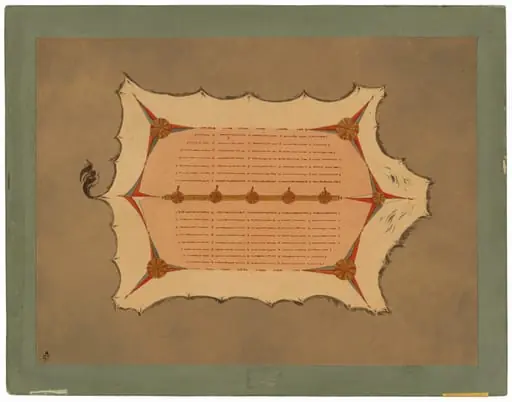
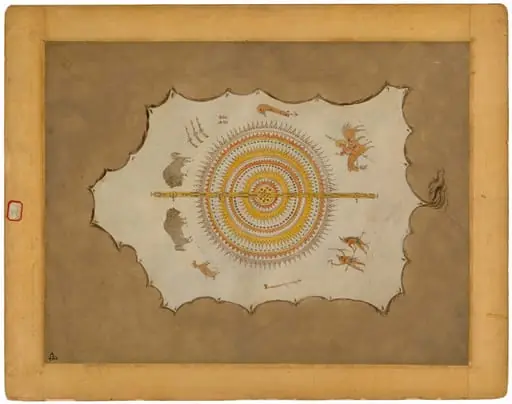
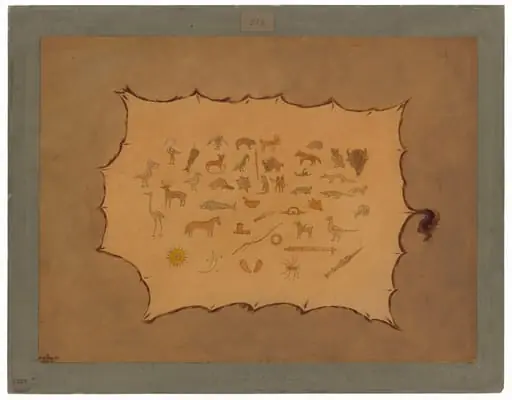
Facsimile of Chief Four Men's Robe - Mandan
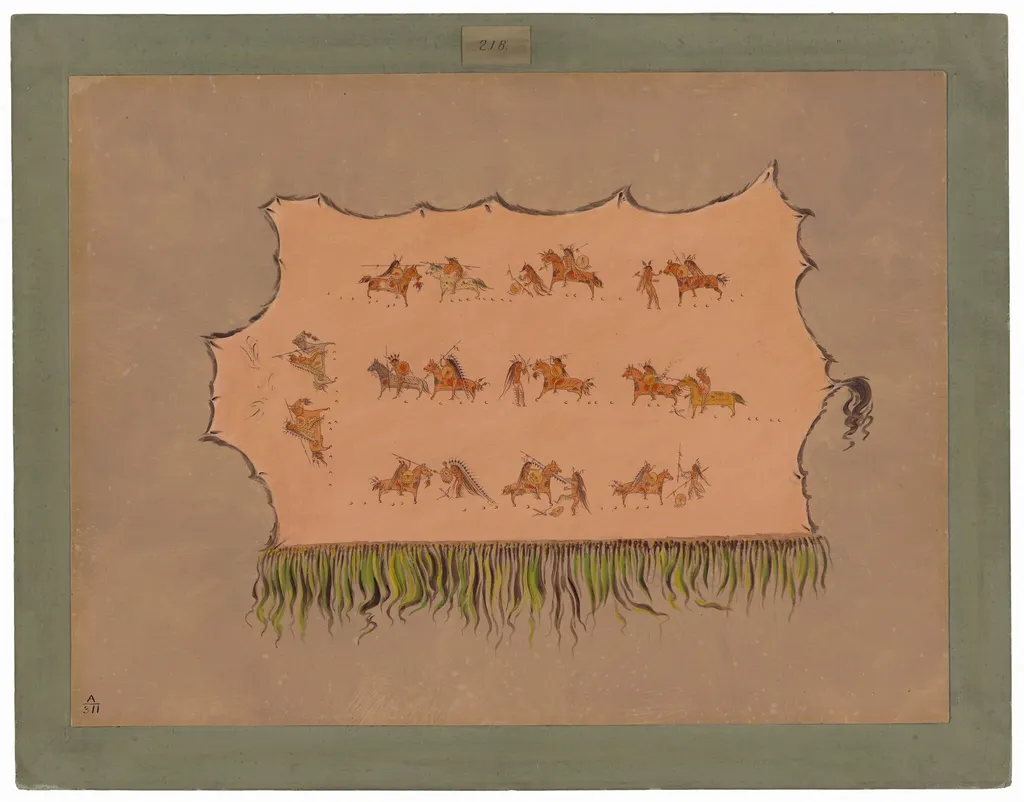
Facsimile of Chief Four Men's Robe - Mandan is an oil painting by the American Folk Art artist George Catlin. It dates from 1865 and is held in the collection of the National Gallery of Art.
About this work
Technique & Style
Created in 1865, this work is an oil painting executed on a card support that has been mounted onto paperboard.
Created in 1865, this work is an oil painting executed on a card support that has been mounted onto paperboard. The piece measures 46 cm in height and 62 cm in width. Classified as a still life within the museum's records, the object serves as a facsimile representation of a Mandan robe originally associated with Chief Four Men.
The combination of oil pigment applied to a rigid, layered paper support distinguishes its material construction from traditional textile robes or canvas paintings.
History & Provenance
The work was created in 1865 by George Catlin as an oil on card mounted on paperboard. It entered the artist's family after completion, passing by descent to his daughters Clara Gregory Catlin, Louise Catlin Kinney, and Elizabeth Wing Catlin. In 1912 Elizabeth Wing Catlin sold the piece to the American Museum of Natural History, which resold it in 1959 through Kennedy Galleries in New York to Paul Mellon of Upperville, Virginia.
In 1965 Mellon gifted the work to the National Gallery of Art in Washington, D.C., where it remains in the permanent collection.
Overview
In 1865 George Catlin created an oil painting on card, later mounted on paperboard, that reproduces a Mandan ceremonial robe belonging to Chief Four Men. The work forms part of his extensive visual record of Native American cultures, combining portraiture and ethnographic illustration.
Subject & Meaning
The image presents a procession of mounted figures moving in a line across a flat, peach‑toned background. Riders in simple attire carry spears or bows, suggesting a ceremonial or martial display linked to the robe’s original function within Mandan society.
Context
The painting aligns with Catlin’s broader mission to preserve visual and written accounts of Native cultures amid rapid change in the mid‑19th century United States. By reproducing a ceremonial garment, he aimed to capture both material culture and the associated social practices of the Mandan.
Own this work as a print
Artist & collection

Artist
George Catlin ( KAT-lin; July 26, 1796 – December 23, 1872) was an American lawyer, painter, author, and traveler, who specialized in portraits of Native Americans in the American frontier.

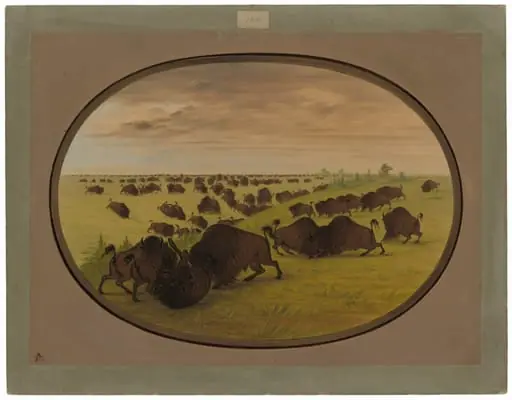 Bulls Fighting
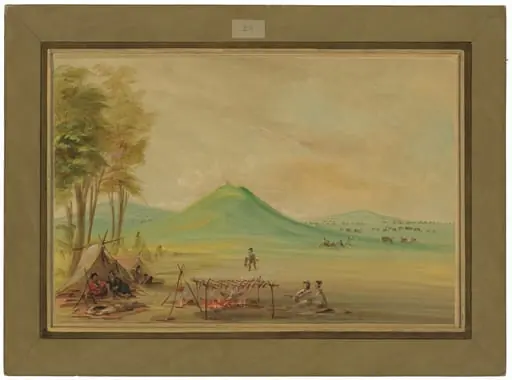 Expedition Encamped on a Texas Prairie. April 1686
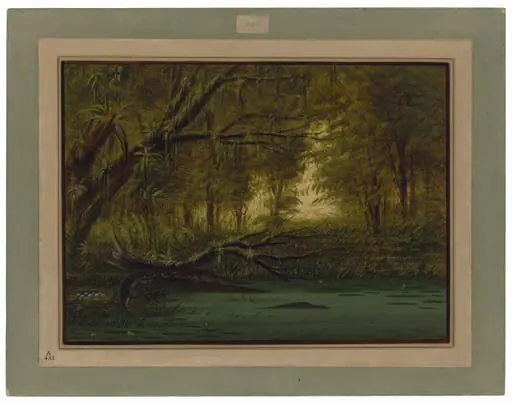 An Alligator's Nest
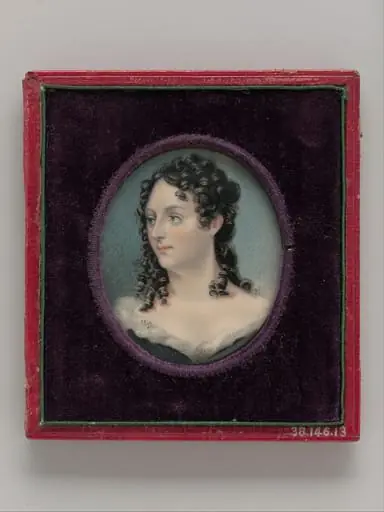 Mrs. George Catlin (Clara Bartlet Gregory)
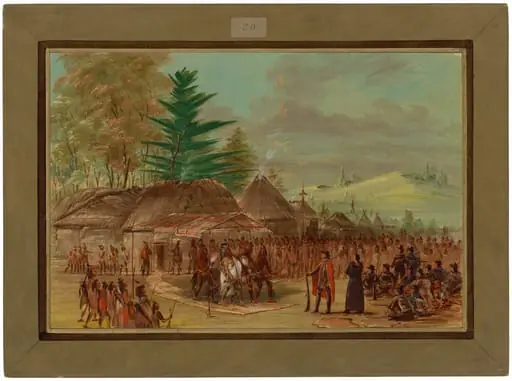 Chief of the Taensa Indians Receiving La Salle. March 20, 1682
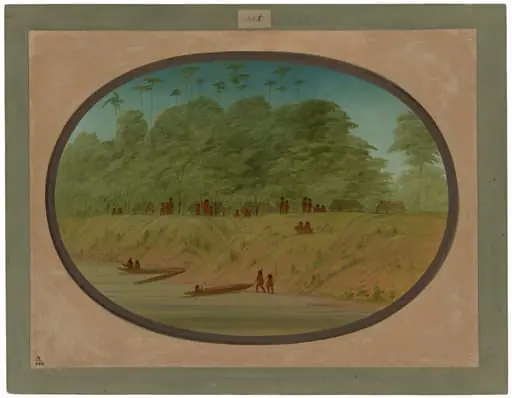 A Small Village - Payaguas Indians
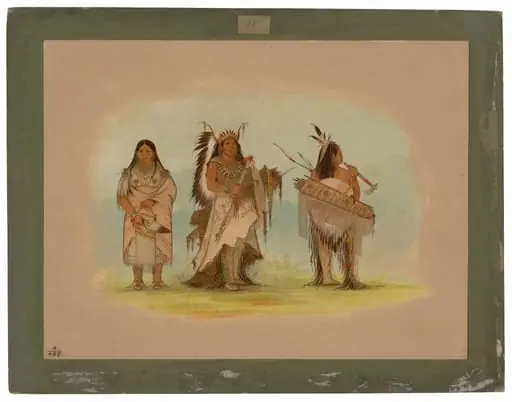 Omaha Chief, His Wife, and a Warrior
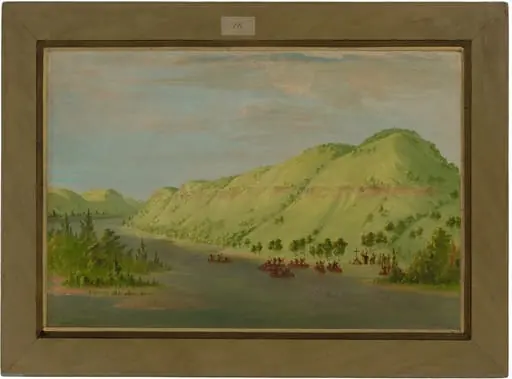 Father Hennepin Leaving the Mississippi to Join La Salle. May 8, 1680