Artwork
And I John Saw These Things, and Heard Them
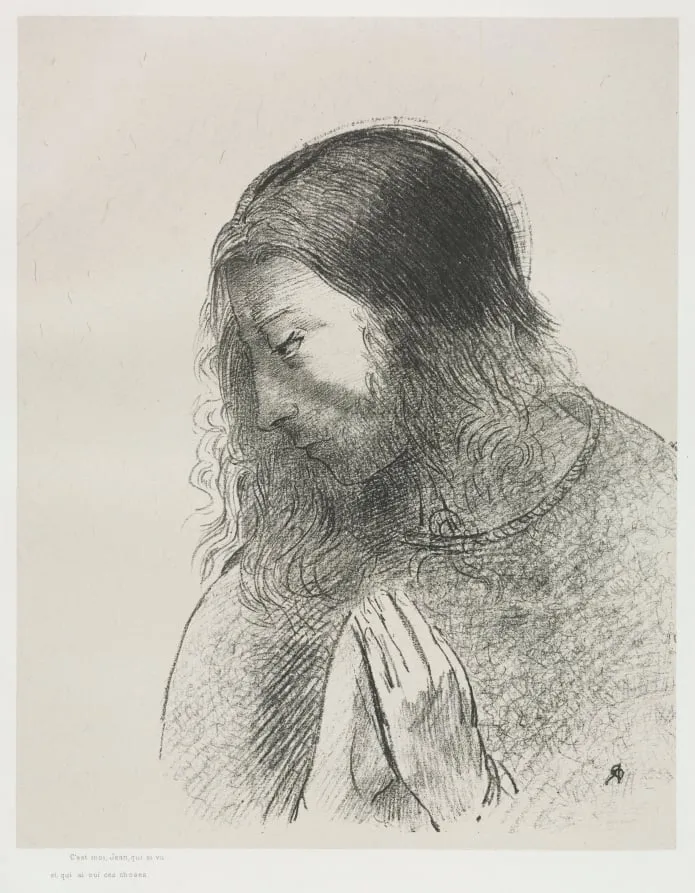
And I John Saw These Things, and Heard Them is a print by the Impressionist artist Odilon Redon. It dates from 1899 and is held in the collection of the Cleveland Museum of Art.
- Accession no.
- 1926.140.13
- Credit line
- Gift of Ralph King
About this work
Overview
This 1912 lithographic series by Odilon Redon is the final of eleven portfolios he produced, directly illustrating twelve passages from the Book of Revelation.
This 1912 lithographic series by Odilon Redon is the final of eleven portfolios he produced, directly illustrating twelve passages from the Book of Revelation. Unlike his earlier symbolic works, these prints engage explicitly with biblical text, marking a shift toward narrative clarity. Published by Ambroise Vollard, the series reflects Redon’s mature reputation and the growing international interest in his graphic work during the early 20th century.
Subject & Meaning
The twelve images correspond to specific apocalyptic scenes from Revelation, including the woman clothed with the sun and the falling star. Redon avoids literalism, instead rendering visions through ambiguous forms, floating eyes, winged creatures, and burning cities, that evoke spiritual dread rather than doctrinal precision. The work invites contemplation of divine judgment, filtered through personal symbolism rather than religious dogma.
Technique & Style
Redon employed lithography to achieve dense, smoky black tones on pale paper, using loose, fluid lines that suggest movement and dissolution. The absence of sharp detail and the soft gradations create an atmosphere of unreality, akin to a vision half-seen. While not strictly sfumato, the effect echoes its hazy transitions, reinforcing the dreamlike quality of the apocalyptic visions.
History & Provenance
Produced toward the end of Redon’s career, the portfolio was published by Ambroise Vollard, who had begun promoting Redon’s prints in Paris around 1911. Vollard’s commercial efforts helped establish a market for Redon’s graphic work beyond France, positioning these prints as significant contributions to modern printmaking. The series was among the last major projects Redon completed before his death in 1916.
Context
Redon’s engagement with Revelation placed him within a long tradition of artists interpreting biblical apocalypse, from Dürer to Blake. Yet his approach diverged from didactic illustration, favoring psychological resonance over theological exposition. In an era of scientific rationalism, these images offered a counterpoint, emphasizing mystery, intuition, and the unseen forces shaping human experience.
Legacy
The series remains a pivotal example of Symbolist printmaking, demonstrating how text can be transformed into visual poetry without losing its spiritual weight. Later artists and writers drew from its atmospheric tension and symbolic ambiguity. Though not widely exhibited in his lifetime, its influence endures in 20th-century graphic art that prioritizes inner vision over external realism.
Artist & collection

Artist
Odilon Redon (born Bertrand Redon; French: ; 20 April 1840 – 6 July 1916) was a French Symbolist draftsman, printmaker, and painter.



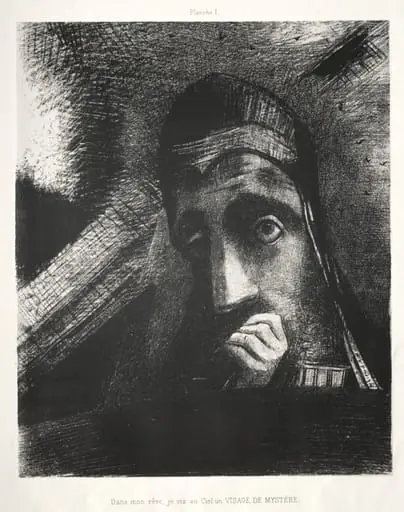
- In My Dream I Saw in the Sky a Face of Mystery
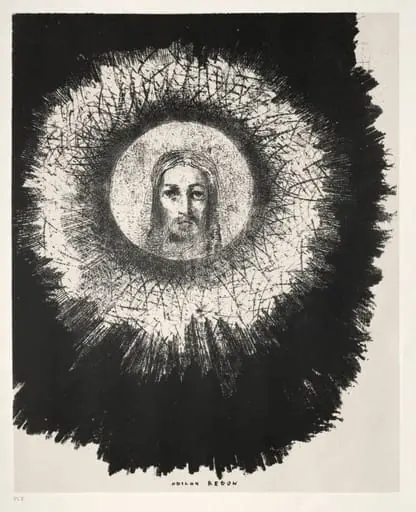 And In the Very Disk of the Sun Shines the Face of Jesus Christ
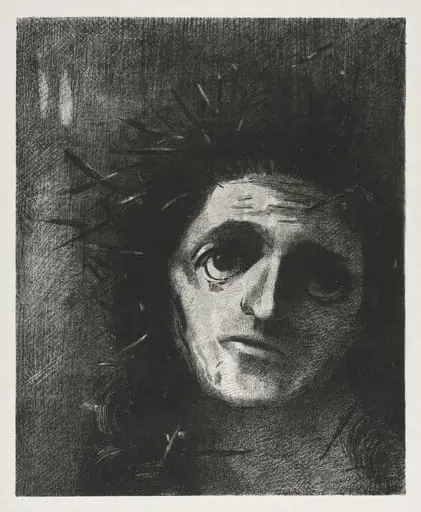 Christ
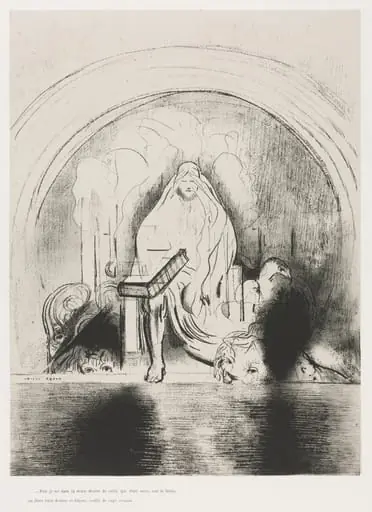 And I Saw in the Right Hand of Him that Sat on the Throne a Book Written within and on the Backside, Sealed with Seven Seals
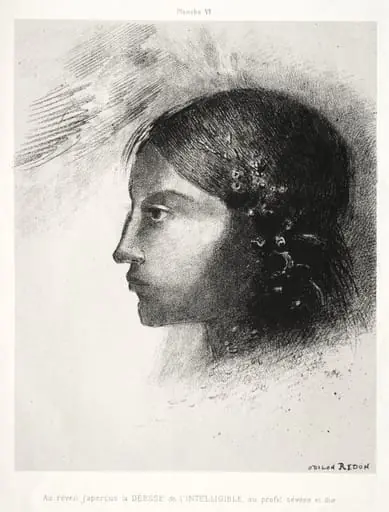 Upon Awakening I Saw the Goddess of the Intelligible with Her Severe and Hard Profile
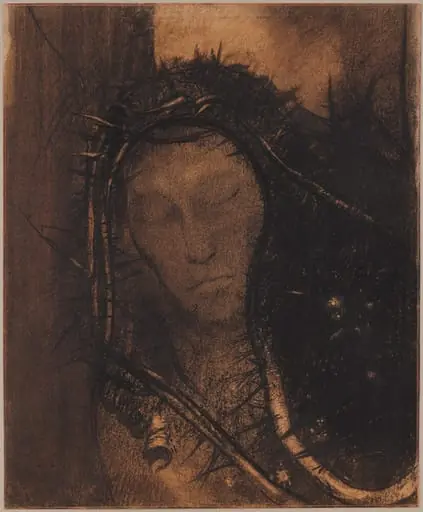 Untitled
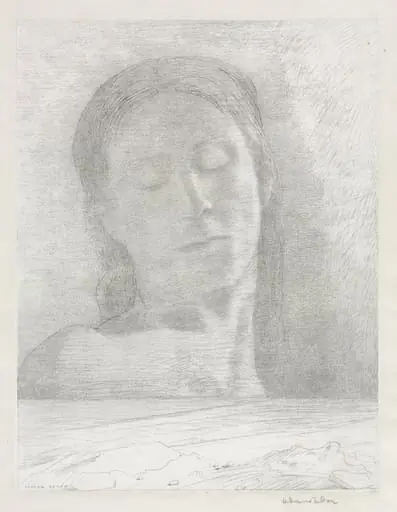 Closed Eyes