Artwork
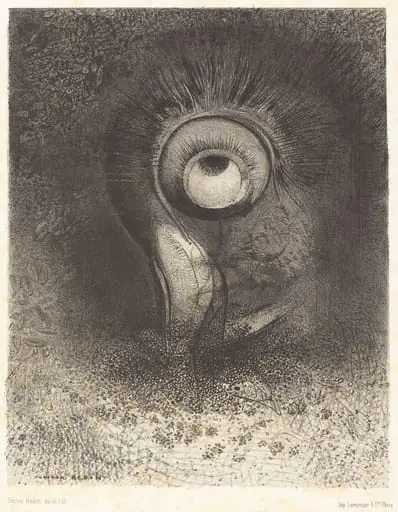
Everywhere Eyeballs are Aflame
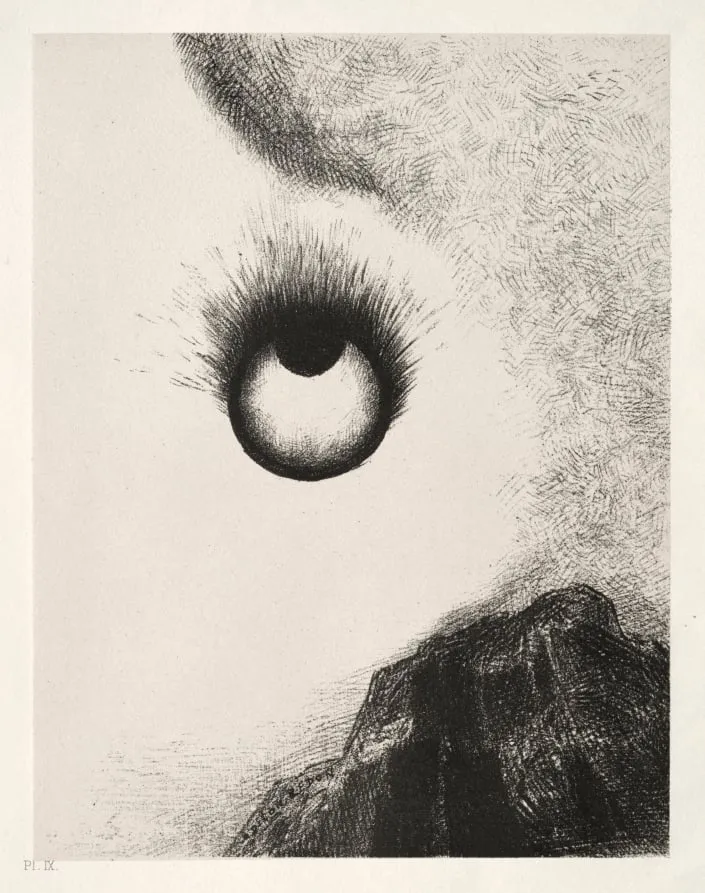
Everywhere Eyeballs are Aflame is a print by the Impressionist artist Odilon Redon. It dates from 1888 and is held in the collection of the Cleveland Museum of Art.
- Accession no.
- 1927.477.10
- Credit line
- Gift of The Print Club of Cleveland
About this work
Overview
The works are part of a trio of projects he created on this theme, all centered on evoking inner turmoil through visual means.
This print portfolio by Odilon Redon draws inspiration from Gustave Flaubert’s novel The Temptation of Saint Anthony, though it does not illustrate its narrative directly. Instead, Redon responded to the book’s hallucinatory atmosphere, producing a series of lithographs that translate its psychological intensity into abstract, dreamlike imagery. The works are part of a trio of projects he created on this theme, all centered on evoking inner turmoil through visual means.
Subject & Meaning
The imagery centers on floating, flame-ringed eyeballs suspended over a void-like landscape, suggesting surveillance, dread, or the gaze of unseen forces. These figures are not drawn from Flaubert’s text but emerge from Redon’s interpretation of its emotional weight, phantasmagoric, unsettling, and detached from literal representation. The eyes become symbols of psychological unease, embodying the inner visions of a mind under spiritual strain.
Technique & Style
Redon employed lithography to replicate the rich, velvety blacks of charcoal drawing, a medium he favored for its capacity to convey depth and mystery. Through layered ink and careful tonal control, he achieved a sense of atmospheric density, where forms seem to emerge from or dissolve into shadow. The technique allowed him to manipulate light and darkness with subtlety, enhancing the otherworldly quality of the scenes without relying on line or detail.
History & Provenance
Created in the 1880s, this portfolio was one of three Redon produced in response to Flaubert’s novel. Though he considered the prints successful in capturing the novel’s surreal essence, they received little critical recognition during his lifetime. Their abstract, non-narrative nature challenged contemporary expectations of illustration, leading to confusion among viewers unfamiliar with Symbolist aesthetics.
Context
Redon’s work emerged during a period when artists increasingly turned inward, seeking to express emotion and subconscious experience rather than depict external reality. Influenced by literary Symbolism and the rise of psychologized art, he aligned himself with writers and thinkers who valued suggestion over clarity. His prints reflect a broader cultural shift toward exploring the unseen, dreams, fears, and metaphysical states.
Legacy
Though initially overlooked, these prints later gained recognition as early examples of Surrealist sensibility, anticipating the exploration of the unconscious in 20th-century art. Redon’s use of tone and symbolic imagery influenced generations of artists seeking to convey psychological depth without literal representation. His approach to lithography expanded the medium’s expressive potential beyond traditional illustration.
Artist & collection

Artist
Odilon Redon (born Bertrand Redon; French: ; 20 April 1840 – 6 July 1916) was a French Symbolist draftsman, printmaker, and painter.

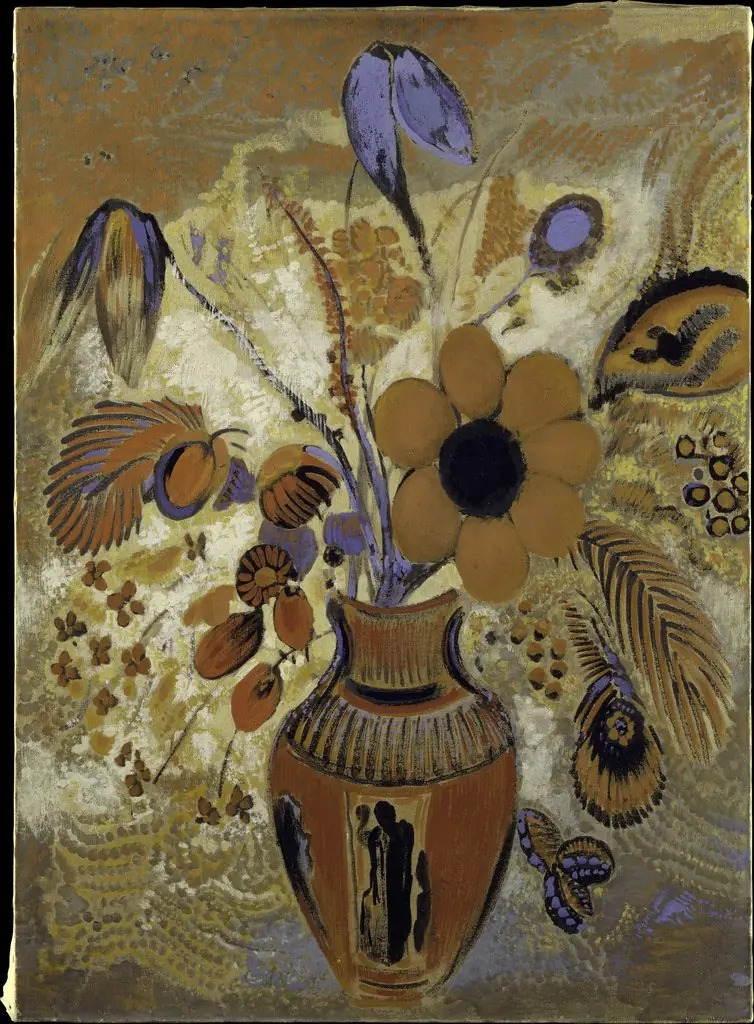
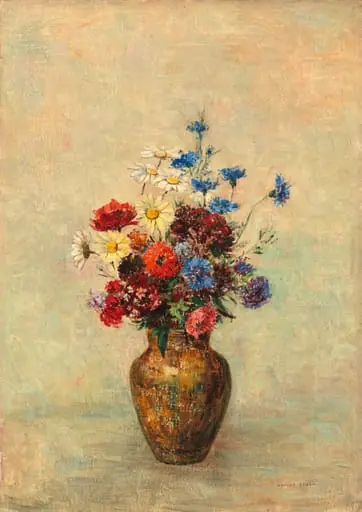
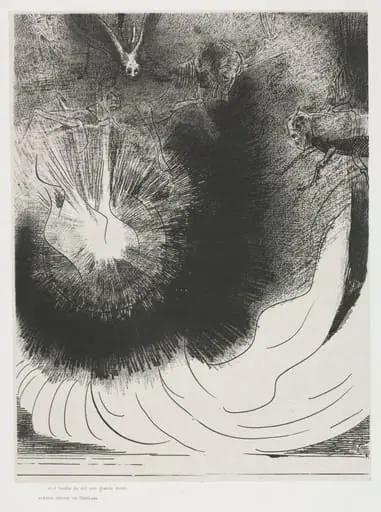
- And There Fell a Great Star from Heaven, Burning as it were a Lamp
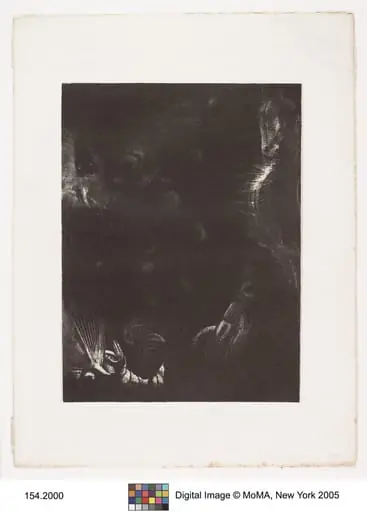 Untitled
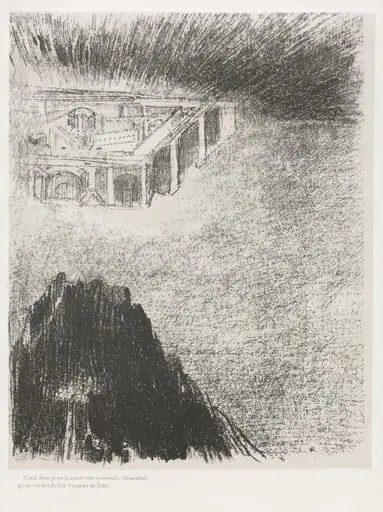 And I, John, Saw the Holy City, New Jerusalem, Coming Down from God and out of Heaven
 Untitled
 Drawing XIII
 Il y eut peut-etre une vision premiere essayee dans la fleur (There was perhaps a first vision attempted in the flower)
 Untitled
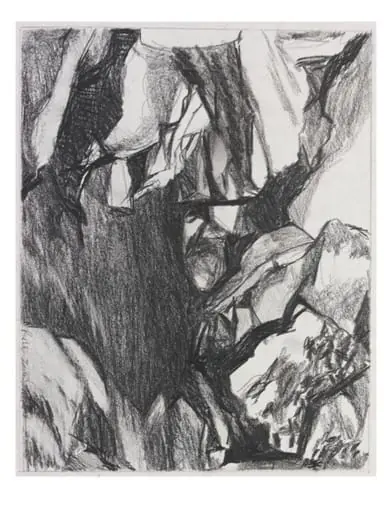 Rocks in a fountain, Rome