Artwork
Untitled
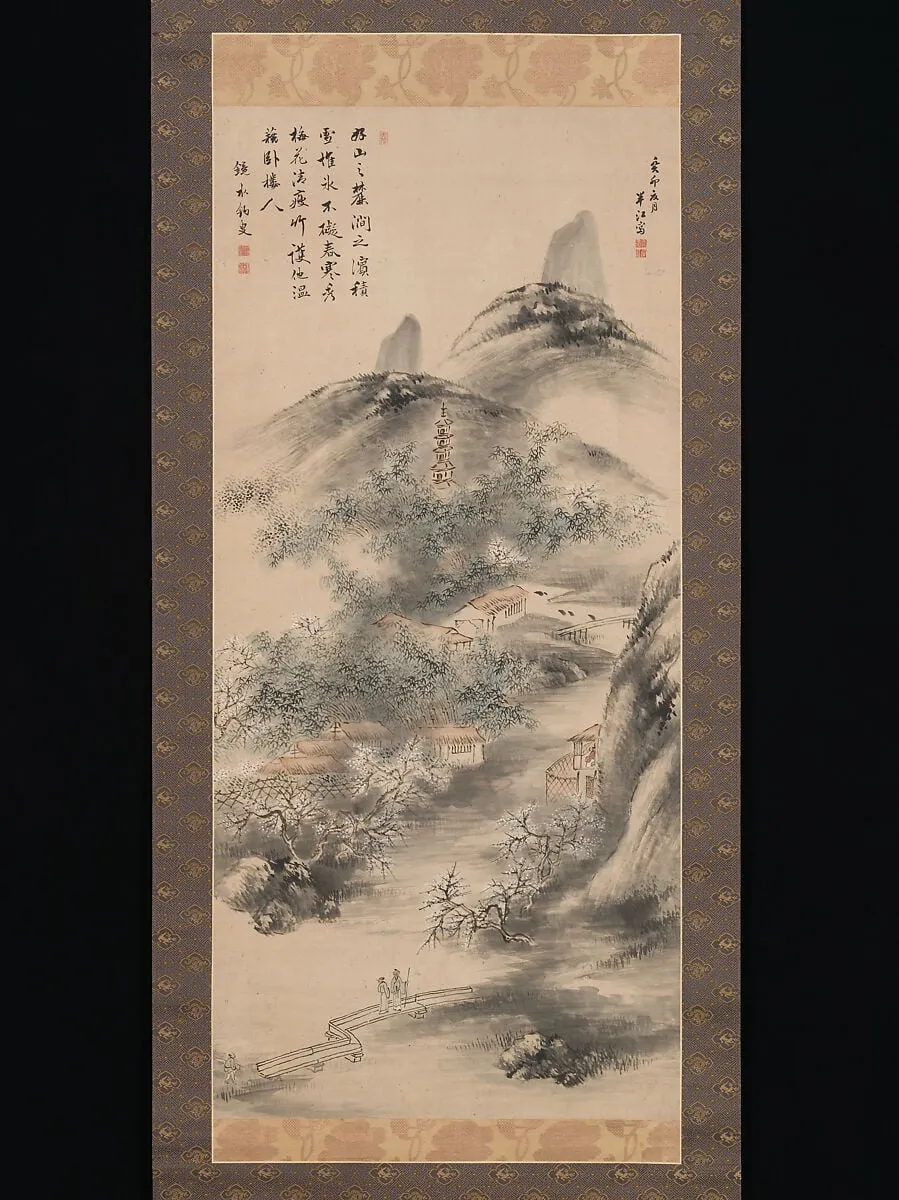
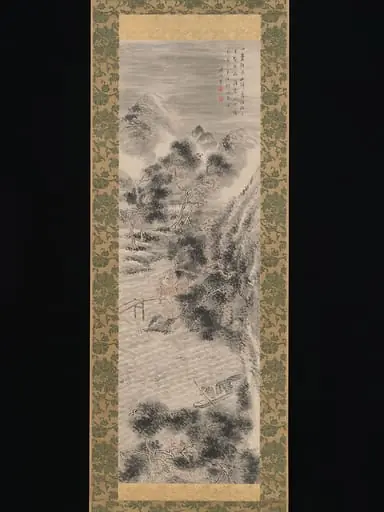
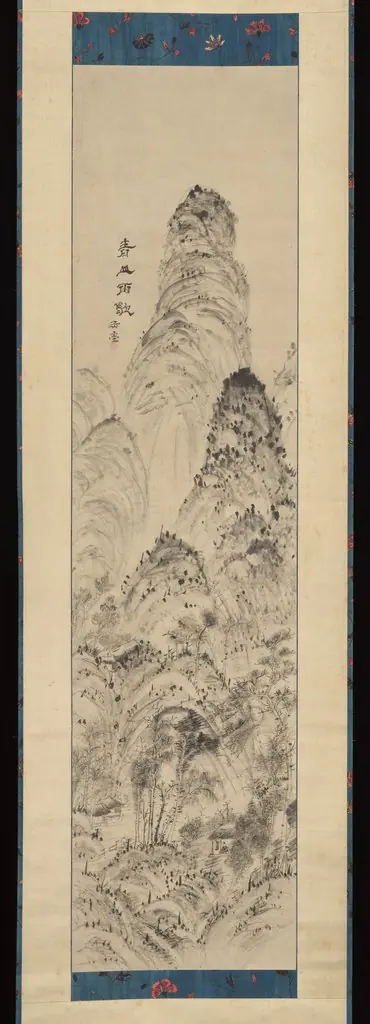
Untitled is an ink painting by the Nanga artist Okada Hankō. It dates from 1843 and is held in the collection of the Metropolitan Museum of Art.
About this work
A tall bamboo stalk rises from a misty mountain slope, ink on paper. The artist worked in black ink and soft gray washes to make the leaves look wet. Bamboo stood for flexibility, bending without breaking, an idea that carried weight in 1843 Japan, when rules were strict and change was near. For more, search landscapes.
Subject & Meaning
As a landscape genre piece created in Japan during the mid-nineteenth century, the composition presents the mountain and bamboo as the primary subjects.
Okada Hankō's 1843 hanging scroll, titled Untitled, is a landscape painting that depicts a mountain rising behind a cluster of bamboo (Bambusoideae). Executed in ink and color on paper, the work focuses on these natural elements without narrative figures or explicit allegorical figures. As a landscape genre piece created in Japan during the mid-nineteenth century, the composition presents the mountain and bamboo as the primary subjects.
While the specific symbolic intent is not detailed in the available records, the inclusion of bamboo and mountains aligns with traditional East Asian landscape conventions where such motifs often represent resilience and permanence. The painting currently resides in the collection of the Metropolitan Museum of Art.
Technique & Style
The work is executed as a hanging scroll, employing ink washes combined with subtle pigments on paper support; the medium allows delicate line work and muted color washes that render a bamboo grove against a distant mountain. The scroll’s elongated format emphasizes verticality, while the artist’s handling of brushstroke creates texture in the foliage and atmospheric depth in the landscape. Condition appears stable, with the paper support showing minimal aging, preserving the fine ink detailing and soft coloration typical of mid‑19th‑century Japanese landscape painting.
History & Provenance
The hanging scroll painting titled Untitled was created by the artist Okada Hankō in 1843. Executed in Japan, the work combines ink and color on paper to depict a landscape featuring bamboo and mountains. While the specific commission details and original ownership chain are not detailed in the provided records, the work's creation is firmly dated to the year 1843.
The piece subsequently entered the collection of the Metropolitan Museum of Art, where it is currently held. The artwork is classified within the genre of landscape painting, reflecting the artist's engagement with natural subjects during the mid-nineteenth century.
Overview
This untitled painting, rendered on a hanging scroll, depicts a solitary bamboo stalk emerging from a misty mountain landscape. Executed with ink and subtle color washes on paper, the artwork presents a tranquil scene. The composition emphasizes the verticality of the bamboo against a soft, atmospheric background, characteristic of East Asian landscape traditions.
Context
Created in Japan during 1843, this work reflects a period of societal tension and impending transformation. The strictures of the Edo period were beginning to face internal and external pressures, hinting at the profound shifts that would soon reshape the nation. Within this environment, the symbolic strength of the bamboo offered a quiet reflection on perseverance amidst an evolving world.
Artist & collection


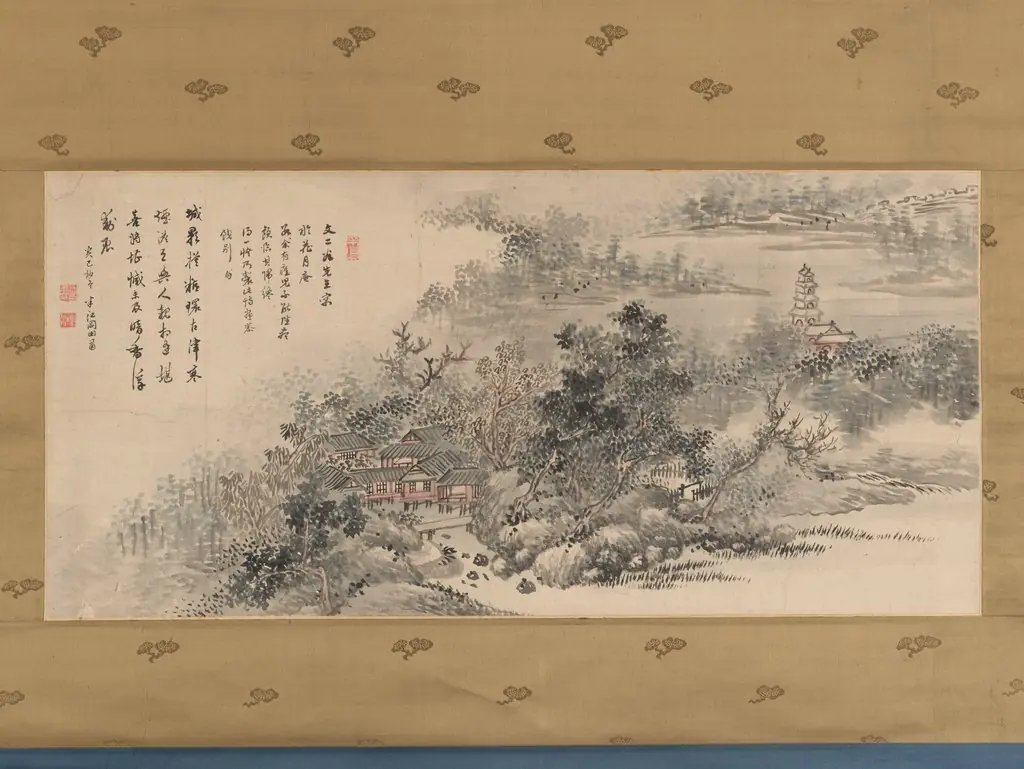
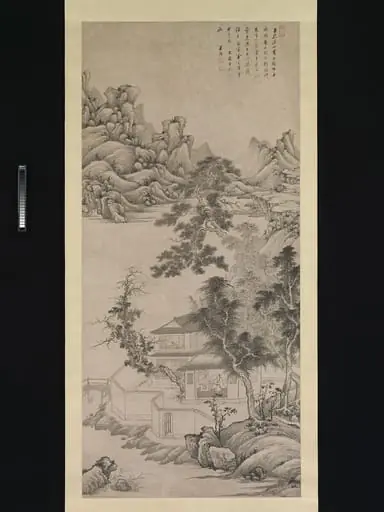
- 清 王鑑 倣巨然《溪山高士圖》 軸|Lofty Scholar among Streams and Mountains, in the manner of Juran
 Untitled
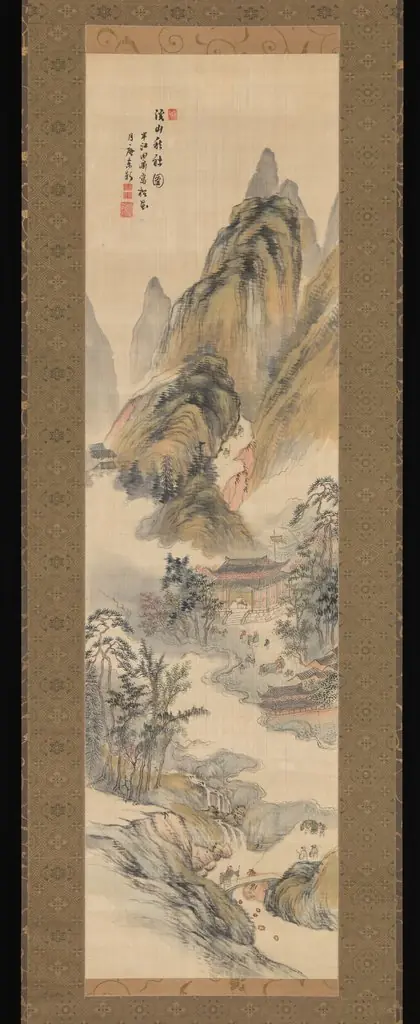 Autumn Festival on a Mountain
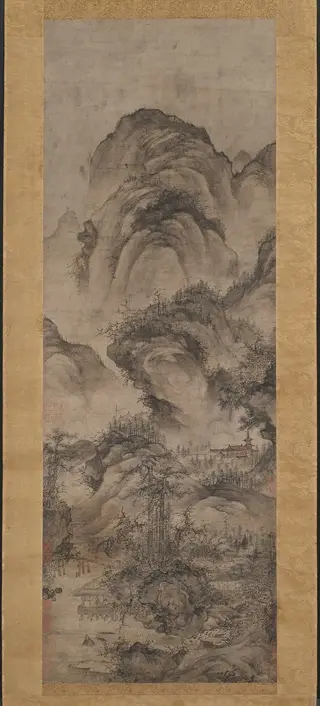 Water Pavilion by Twin Pines
 明 張瑞圖 山水圖 軸|Mountains Along Riverbanks
 Paintings after Ancient Masters: Autumn Landscape
 Untitled
 Green Mountains as the Rain Ceases
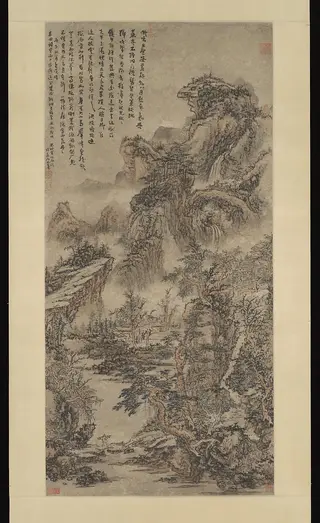 清 倣髡殘 蒸嵐昏巒圖 軸|Wooded Mountains at Dusk
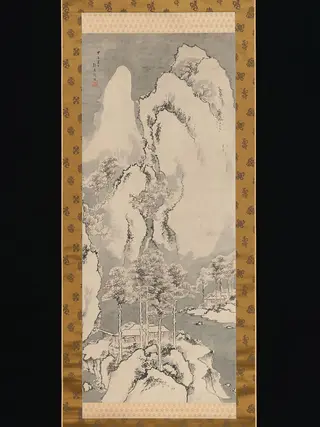 Untitled
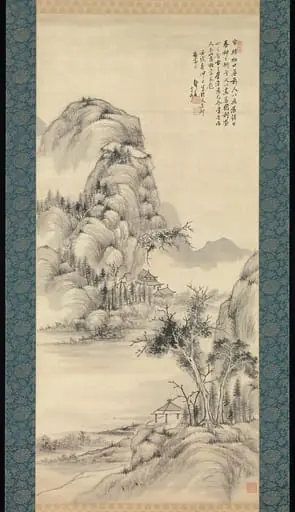 Untitled
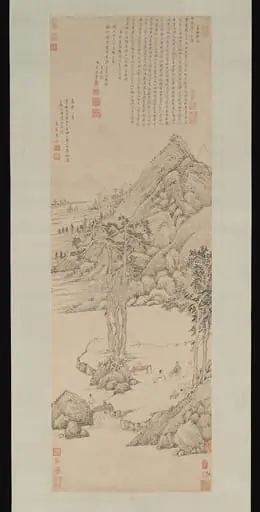 明 文嘉 為項元汴作山水圖 軸|Landscape dedicated to Xiang Yuanbian