Artwork
Untitled
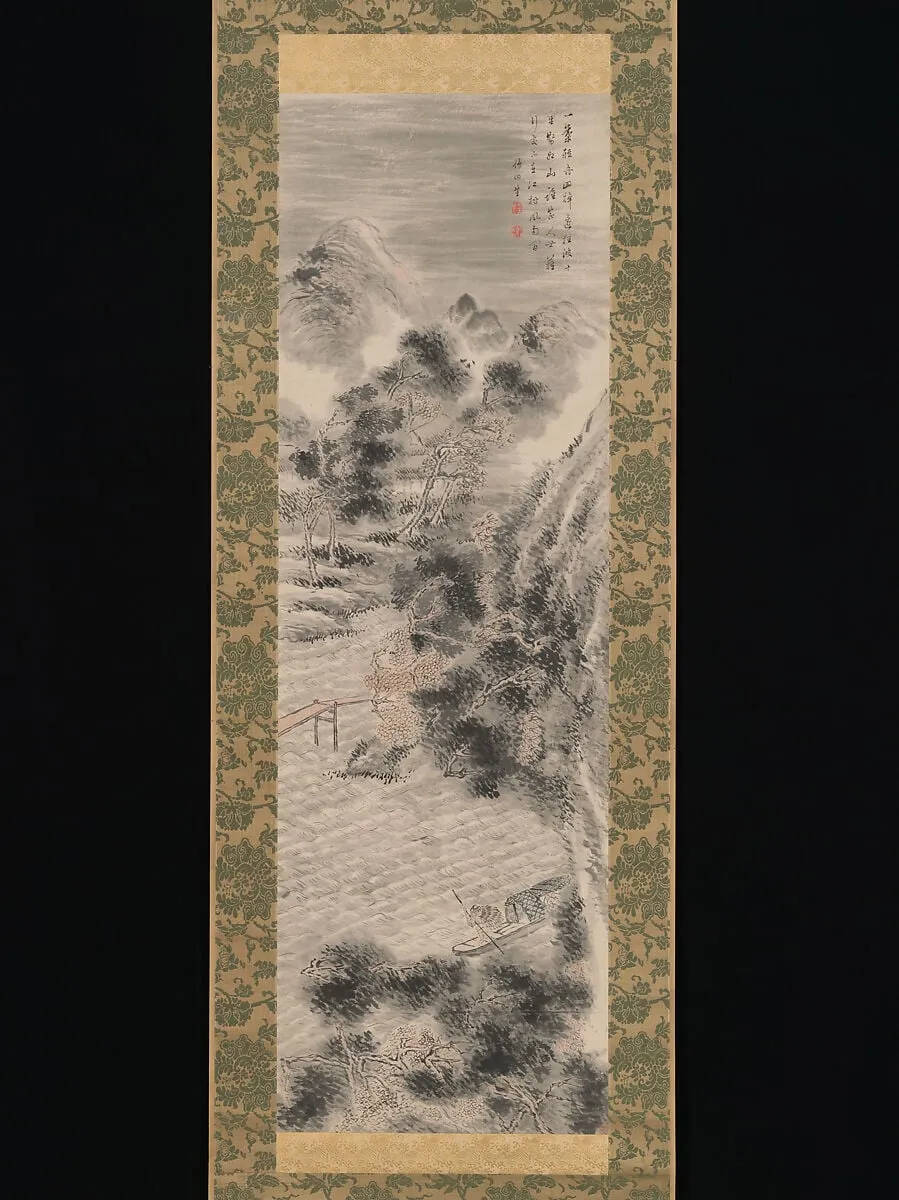
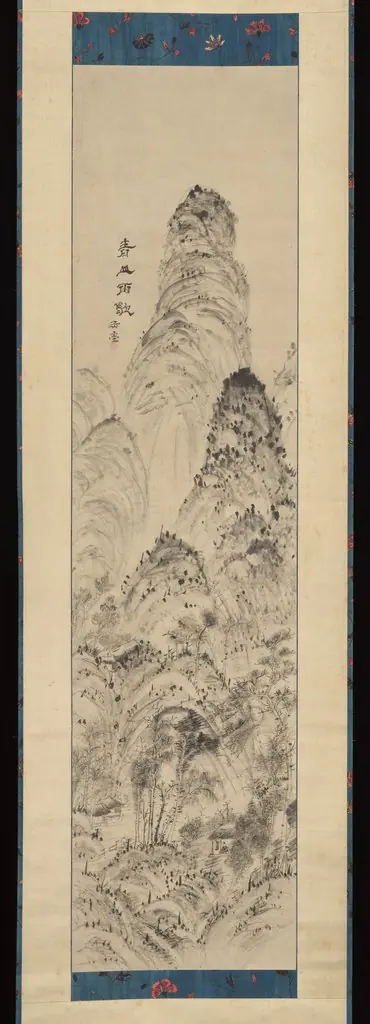
Untitled is an ink painting by the Nanga artist Tanomura Chikuden. It dates from 1806 and is held in the collection of the Metropolitan Museum of Art.
About this work
Subject & Meaning
Tanomura Chikuden's 1806 hanging scroll presents a landscape scene centered on a river, with rain as a key atmospheric element.
Tanomura Chikuden's 1806 hanging scroll presents a landscape scene centered on a river, with rain as a key atmospheric element. The pairing of flowing water and falling rain situates the work within a long East Asian tradition of depicting weather and water as expressive, contemplative subjects rather than purely descriptive motifs. Rain over a river evokes themes of transience, natural rhythm, and the quiet dynamism of the environment, qualities associated with literati-style landscape painting of the period.
By focusing on these intertwined natural phenomena, the composition invites reflection on the mutability of weather and water, recurring metaphors in Japanese landscape art for impermanence and the passage of time.
History & Provenance
The hanging scroll titled Untitled was created by the Japanese artist Tanomura Chikuden in 1806. Executed in ink and color on paper, the work depicts a landscape featuring a river and rain. While the specific commission details and the full chain of ownership leading to its current location are not detailed in the available records, the work is firmly dated to the early 19th century within Japan.
It is currently held in the collection of the Metropolitan Museum of Art in New York, where it is classified as a landscape painting. No specific accession number is provided in the available records, and the piece is not documented in any specific exhibition history within the provided sources.
Overview
Created in 1806, this hanging scroll by Tanomura Chikuden exemplifies the Japanese nanga (Southern Painting) tradition, a style adapted from Chinese literati aesthetics. The composition depicts a narrow river winding through misty hills, rendered with wet ink strokes that bleed into soft green washes to evoke atmospheric depth. A lone boatman poles his craft beneath a sky streaked with rain, emphasizing the solitude and introspection characteristic of the genre.
Chikuden, a prominent figure in the nanga movement during the late Edo period, utilized this medium to express scholarly ideals and a connection to nature rather than strict topographical accuracy. The work demonstrates his mastery of ink modulation, where the fluidity of the medium creates a sense of movement and moisture within the landscape. Painted during a period when Japanese artists actively engaged with Chinese artistic theories, this piece reflects the synthesis of foreign influence and local sensibility that defined Chikuden's career.
The use of color on paper, combined with the vertical format of the hanging scroll, directs the viewer's gaze along the river's path, reinforcing the narrative of a journey through a tranquil, rain-soaked environment.
Technique & Style
Chikuden executed this piece in the nanga style, a Japanese adaptation of Chinese literati painting, often referred to as "Southern painting." This approach prioritized suggestion over direct representation. For instance, the rain is not explicitly drawn but rather conveyed through the paper's surface visible where the artist's wet brush briefly lifted, allowing the ink to bleed and evoke falling water.
Context
The nanga movement, from which this work derives, emerged in Japan as artists looked to Chinese literati painting for inspiration. This style emphasized personal expression and a deep appreciation for nature, often employing subtle ink washes and calligraphic brushwork. Chikuden's landscape aligns with this tradition, reflecting a scholarly and introspective engagement with the natural world rather than a purely mimetic one.
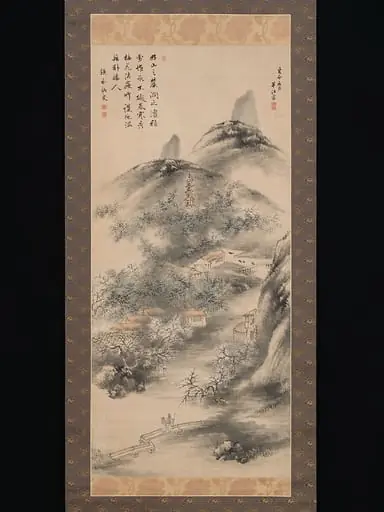
Artist & collection


- Untitled
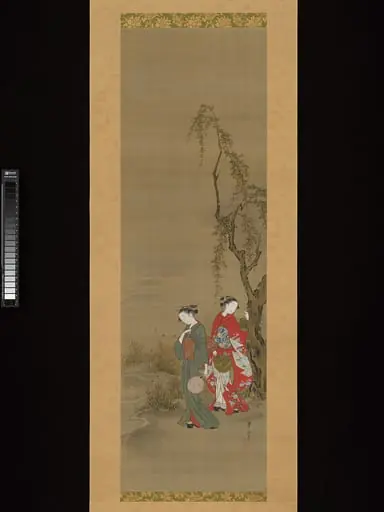 Untitled
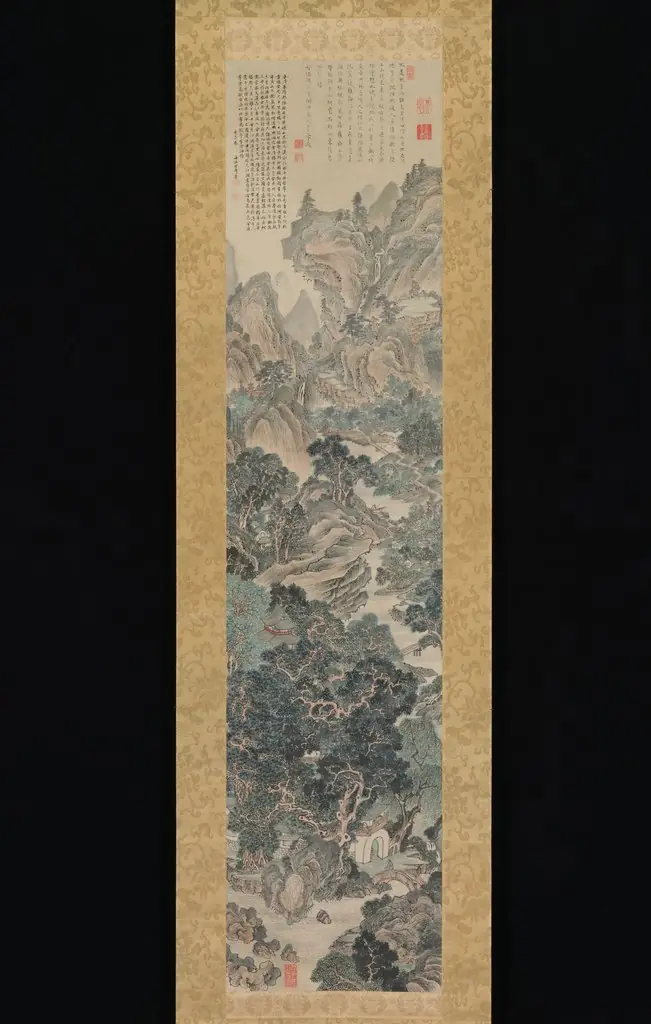 Landscape in the Blue-and-Green Manner
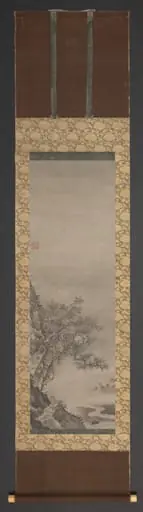 Landscapes with Figures (one of a pair)
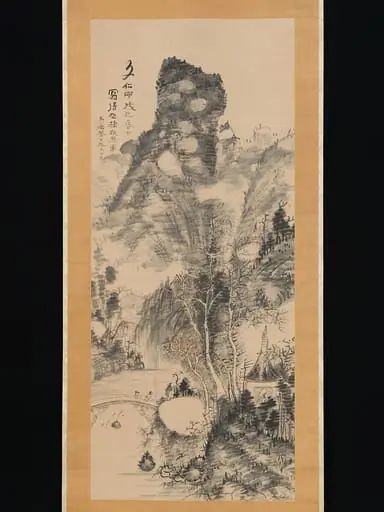 Untitled
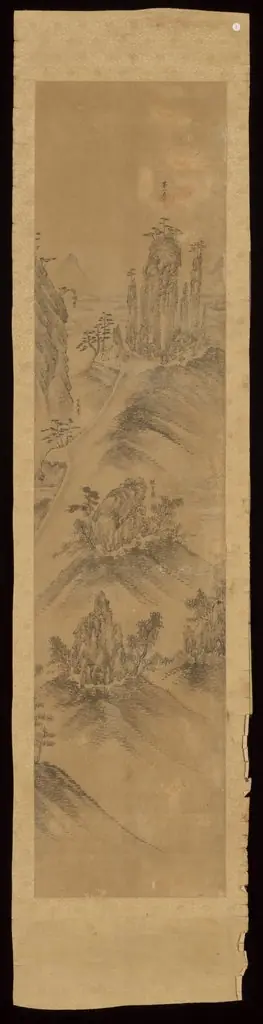 Chilbosan (Seven Jeweled Mountain)
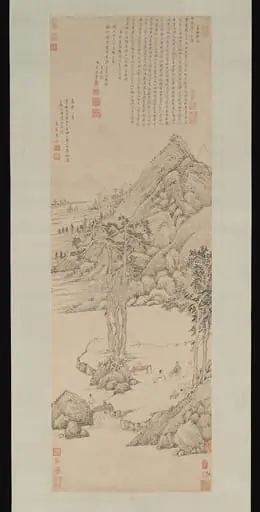 明 文嘉 為項元汴作山水圖 軸|Landscape dedicated to Xiang Yuanbian
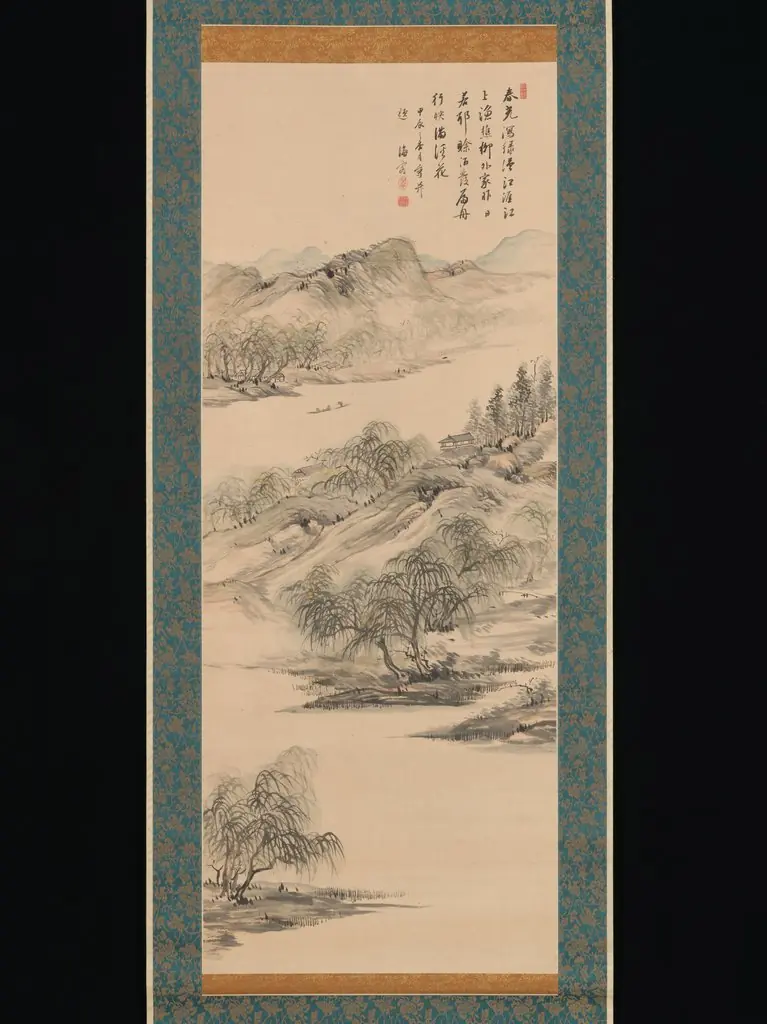 Spring Landscape
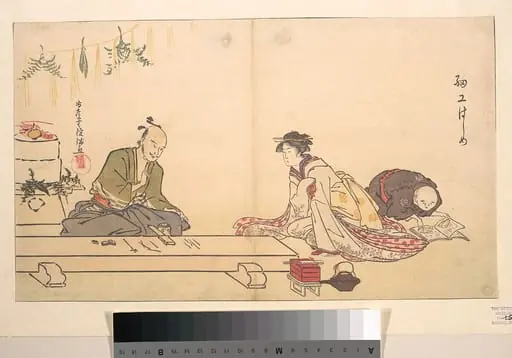 Untitled
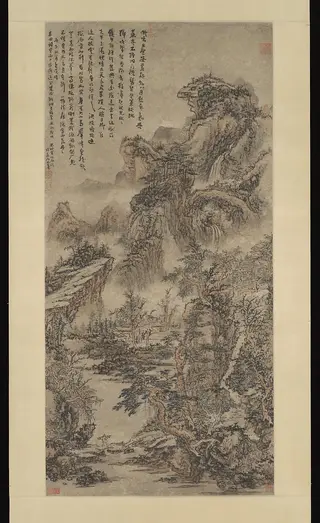 清 倣髡殘 蒸嵐昏巒圖 軸|Wooded Mountains at Dusk
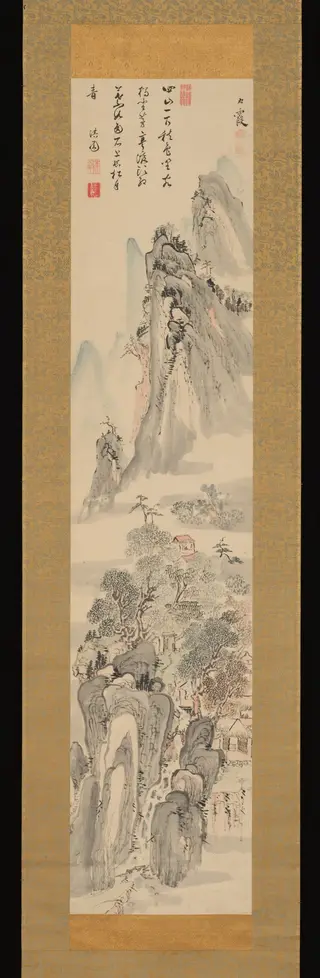 Autumn Landscape 秋景山水 図 (Shūkei sansui zu)
 Green Mountains as the Rain Ceases