Artwork
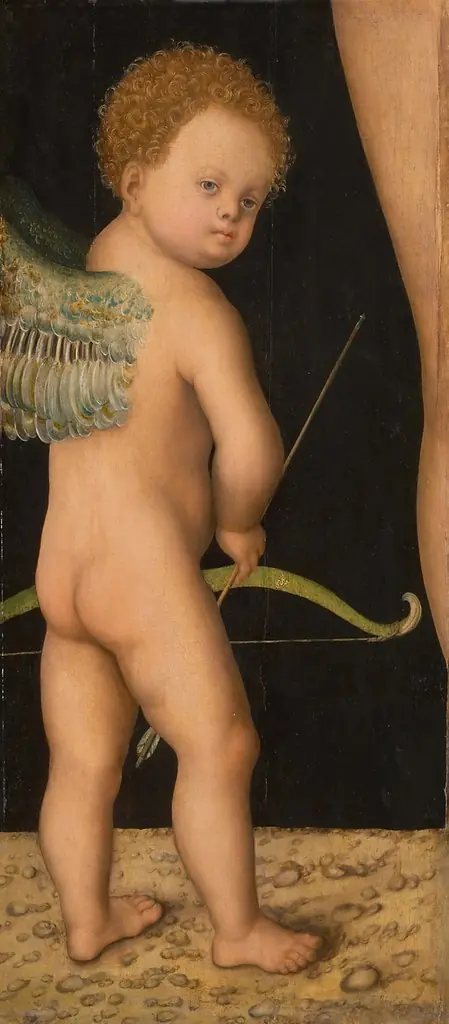
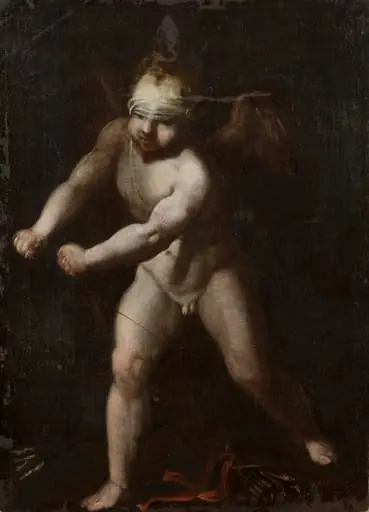
Putto with Arms of Jacques Coëne [reverse]
![Putto with Arms of Jacques Coëne [reverse], by Bernard Van Orley, oil, 1513](https://artifactworldgallery.com/img/bernard-van-orley--putto-with-arms-of-jacques-coene-reverse--841c6ba9c9e9862d-w1024.webp)
Putto with Arms of Jacques Coëne [reverse] is an oil painting by the Early Renaissance artist Bernard Van Orley. It dates from 1513 and is held in the collection of the National Gallery of Art.
About this work
Technique & Style
The formal designation as a reverse painting indicates its original role as part of a devotional object or altarpiece structure.
Executed in 1513, this work is an oil painting applied to a wooden panel support. The piece functions as the reverse side of a larger composition, originally associated with Abbot Jacques Coëne. Physically, the panel measures 54.9 cm in height and 33.3 cm in width.
As a product of the early sixteenth-century Netherlandish tradition, the use of oil on panel allowed for the detailed rendering characteristic of the period, though specific details regarding the current surface condition or handling history beyond its provenance are not explicitly detailed in the available records. The formal designation as a reverse painting indicates its original role as part of a devotional object or altarpiece structure.
History & Provenance
The panel was painted in 1513 by Bernard van Orley and remained with the original patron, Abbot Jacques Coëne of Marchiennes, until his death in 1542.
It passed through the Berlin dealer Paul Bottenwieser before entering the stock of F. Kleinberger Galleries, Inc. in New York and Paris. On 6 February 1928, Albert J. Kobler of New York acquired it; after his death it descended to his widow, Mignon (Sommers) Kobler, and then to their sons, John and Jason S. Kobler.
In 1946 the Koblers consigned the work to Duveen Brothers, which sold it to the Samuel H. Kress Foundation in 1949. The Foundation gifted the painting to the National Gallery of Art, Washington, in 1952.
The reverse of the panel painting Putto with Arms of Jacques Coëne is held in the collection of the National Gallery of Art in Washington, D.C., as part of the Samuel H. Kress Collection. The work entered the museum's holdings in 1952 as a gift by exchange from the Samuel H. Kress Foundation, which had purchased it in 1949. Prior to this acquisition, the piece was consigned to the Duveen Brothers in 1946 and sold to them in 1947 after passing through the estates of Albert J. Kobler and his heirs.
While the painting was listed in the catalogue for a 1946 exhibition at Duveen's, later research into the Duveen Brothers Records indicates that previous attributions of ownership to Mrs. Edward A. Westfall during this period were erroneous.
Overview
Around 1513 Bernard van Orley, a Brussels‑based painter of the early 16th century, created an oil on panel titled Putto with Arms of Jacques Coëne [reverse]. The small work belongs to the early Renaissance period and features a single cherubic figure holding a heraldic device.
Subject & Meaning
The central figure is a putto, a youthful, winged child often employed to convey innocence or divine favor. In this case the child clasps the coat of arms associated with Jacques Coëne, suggesting a personalized emblem or a commemorative function for the patron’s family.
Context
Van Orley belonged to the Romanist movement, a group of Northern painters who traveled to Italy or studied Italian prints and incorporated Renaissance ideals into local traditions. This painting exemplifies that cross‑cultural exchange, merging Flemish attention to surface detail with the harmonious proportions derived from Italian models.
Own this work as a print
Artist & collection
Artist
Bernard van Orley (between 1487 and 1491 – 6 January 1541), also called Barend or Barent van Orley, Bernaert van Orley or Barend van Brussel, was a versatile Flemish artist and representative of Dutch and Flemish…

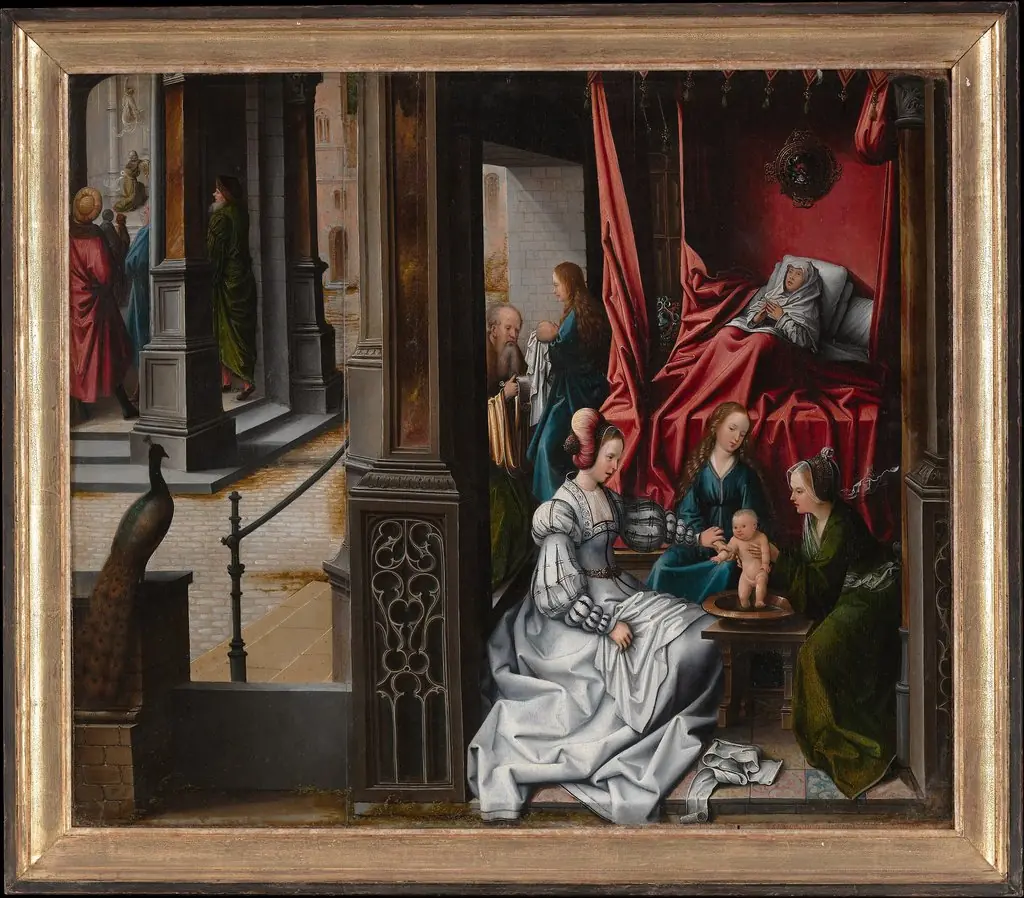 The Birth and Naming of Saint John the Baptist; (reverse) Trompe-l'oeil with Painting of The Man of Sorrows
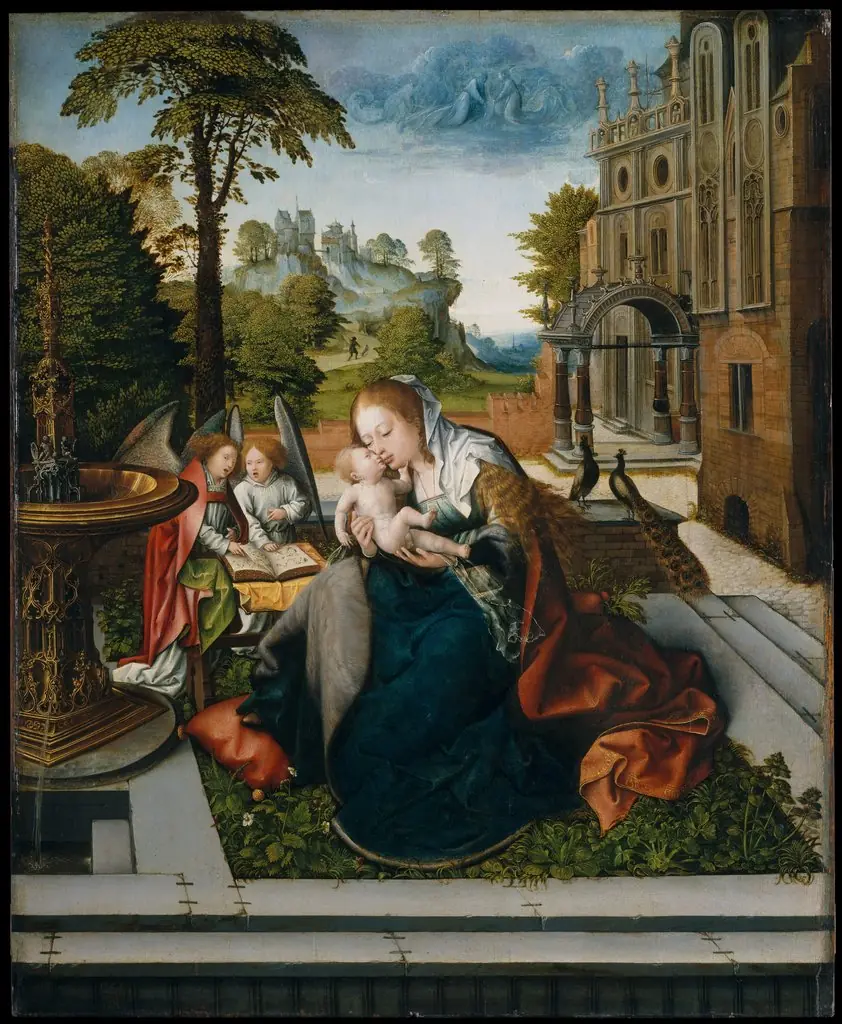 Virgin and Child with Angels
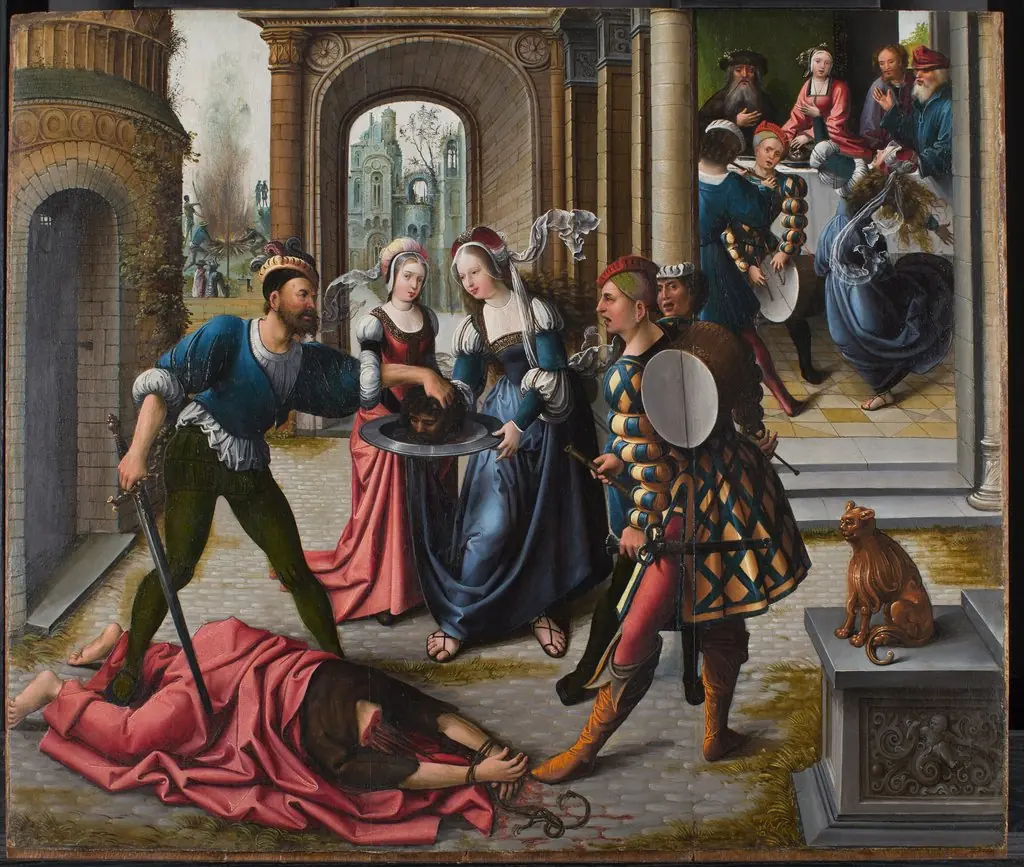 The Martyrdom of Saint John the Baptist
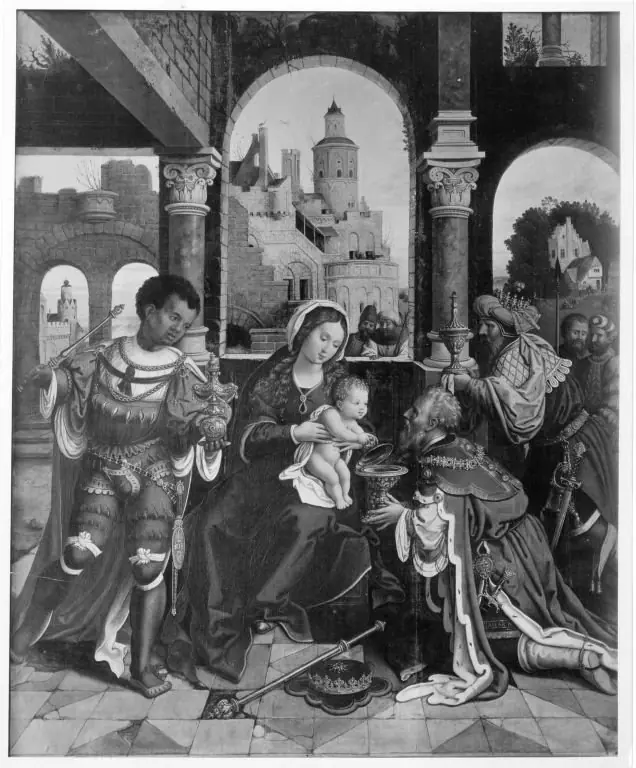 The Adoration of the Magi
![Christ among the Doctors [obverse], by Bernard Van Orley](https://artifactworldgallery.com/img/bernard-van-orley--christ-among-the-doctors-obverse--78795f311364e613-w320.webp) Christ among the Doctors [obverse]
Christ among the Doctors [obverse]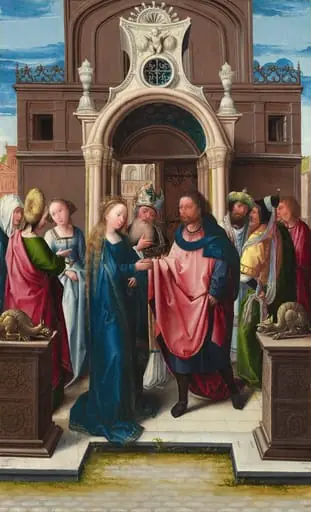 The Marriage of the Virgin
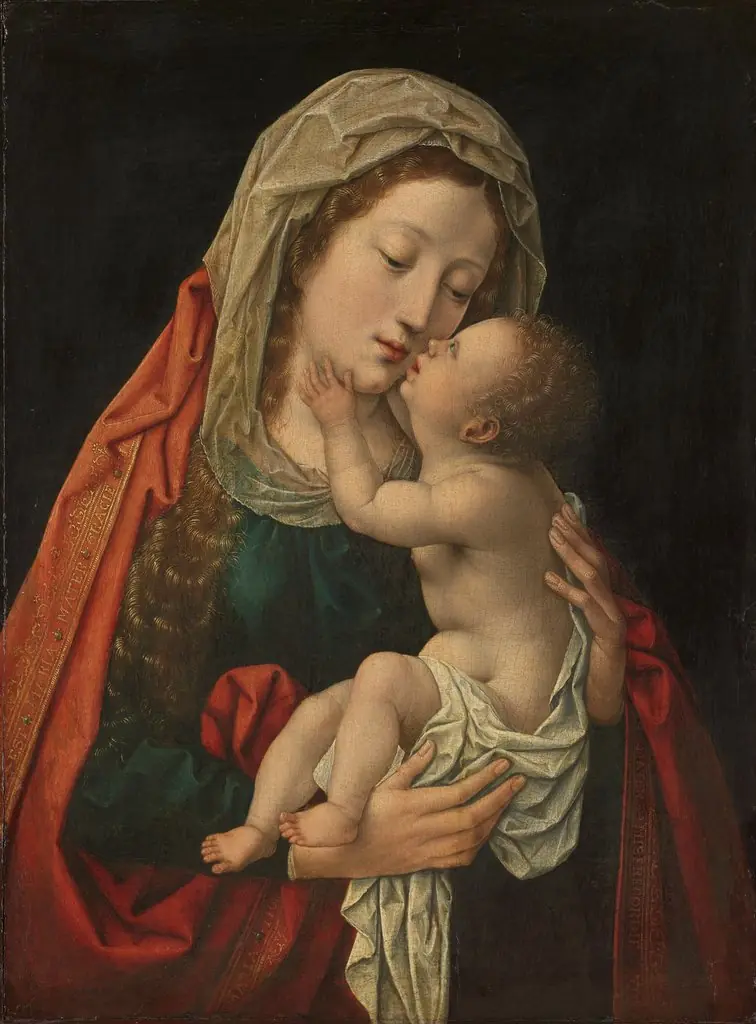 The Virgin and Child
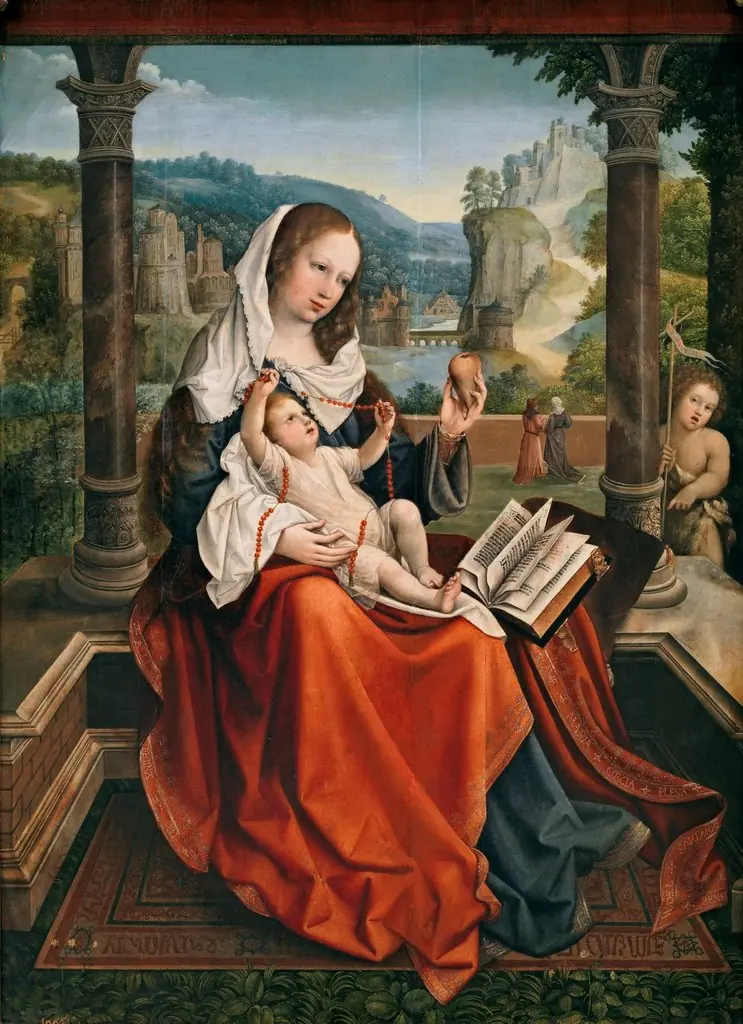 The Virgin and Child with the Infant Saint John the Baptist