Artwork
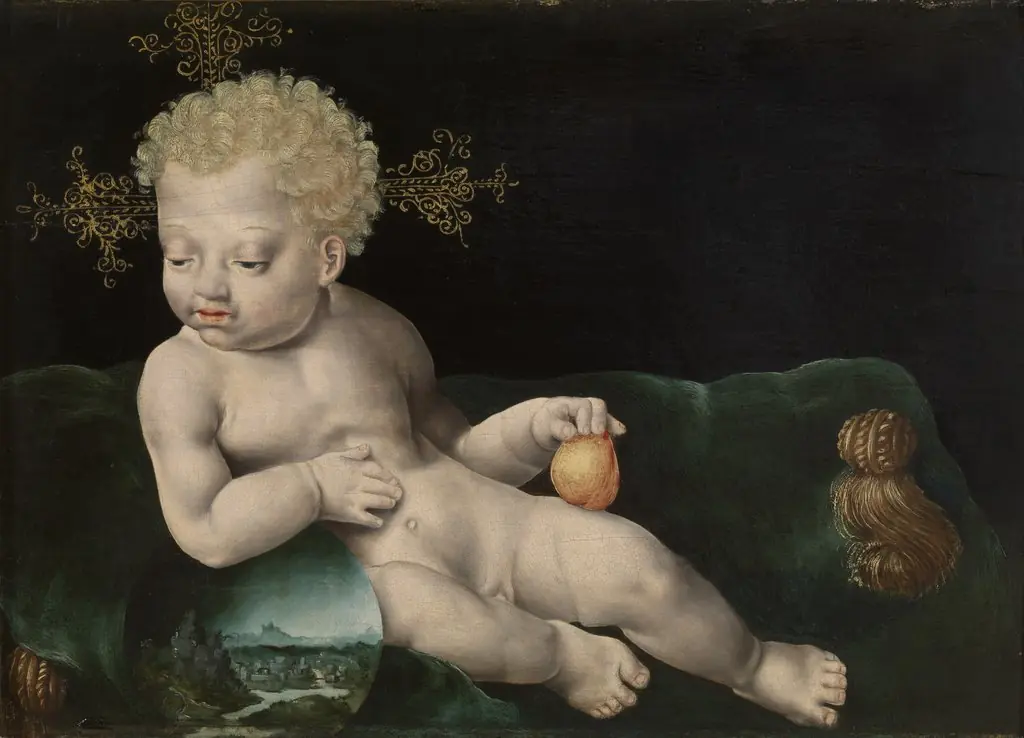
Christ Child with a Walking Frame
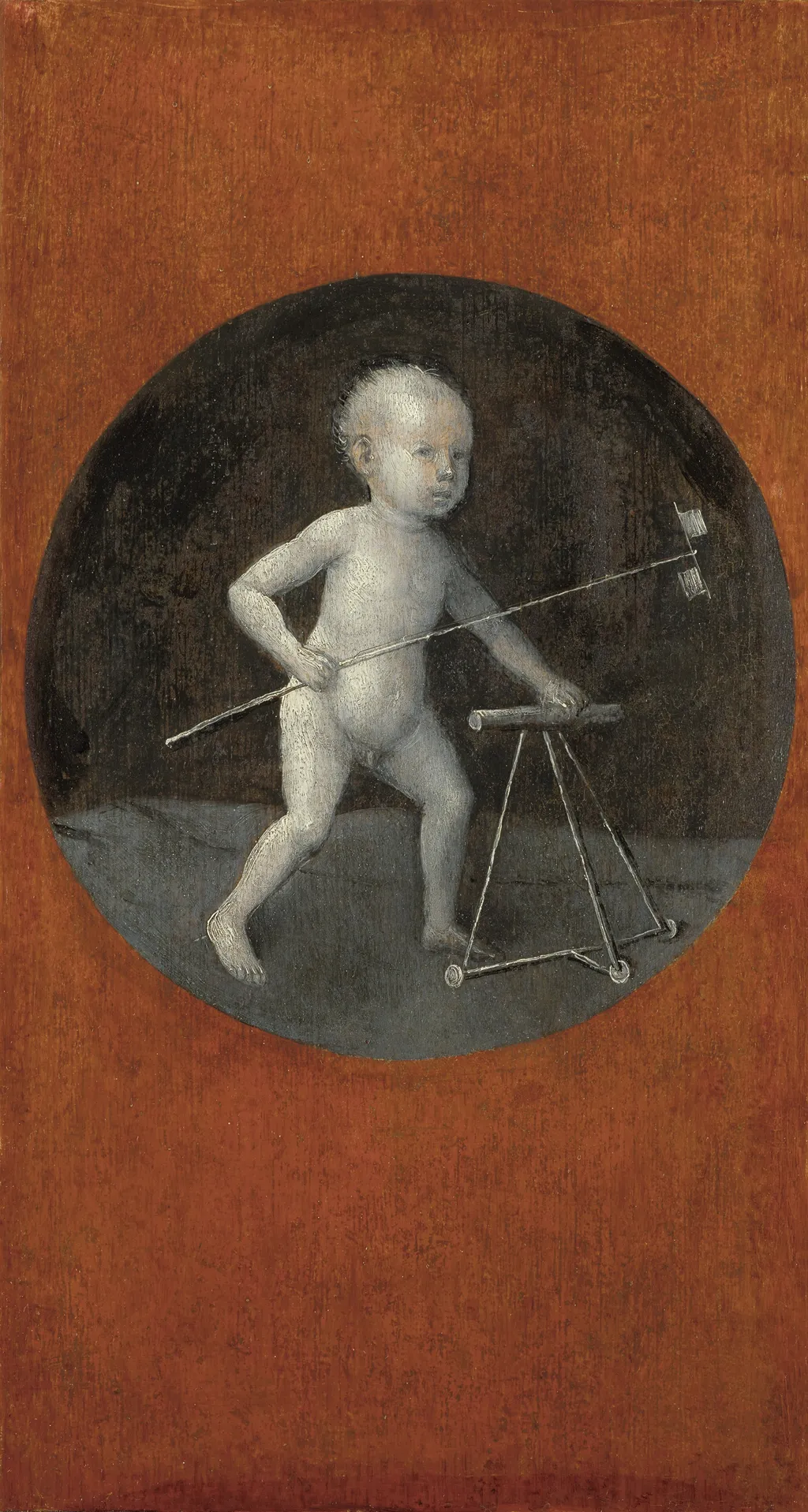
Christ Child with a Walking Frame is an oil painting by the Northern Renaissance artist Hieronymus Bosch. It dates from 1490 and is held in the collection of the Kunsthistorisches Museum.
About this work
Overview
Christ Child with a Walking Frame is a small circular oil painting on panel by the Netherlandish artist Hieronymus Bosch, dated to 1480.
Christ Child with a Walking Frame is a small circular oil painting on panel by the Netherlandish artist Hieronymus Bosch, dated to 1480. Measuring 28 centimetres in diameter, it is painted on the reverse of Bosch's Christ Carrying the Cross panel and is now housed in the Kunsthistorisches Museum in Vienna, Austria. The work is notable for its unusual domestic subject within religious art, depicting the infant Jesus in a moment of ordinary childhood development, and for the poignant parallel it establishes between the Christ Child's tentative first steps and the adult Christ's Passion on the obverse side.
Subject & Meaning
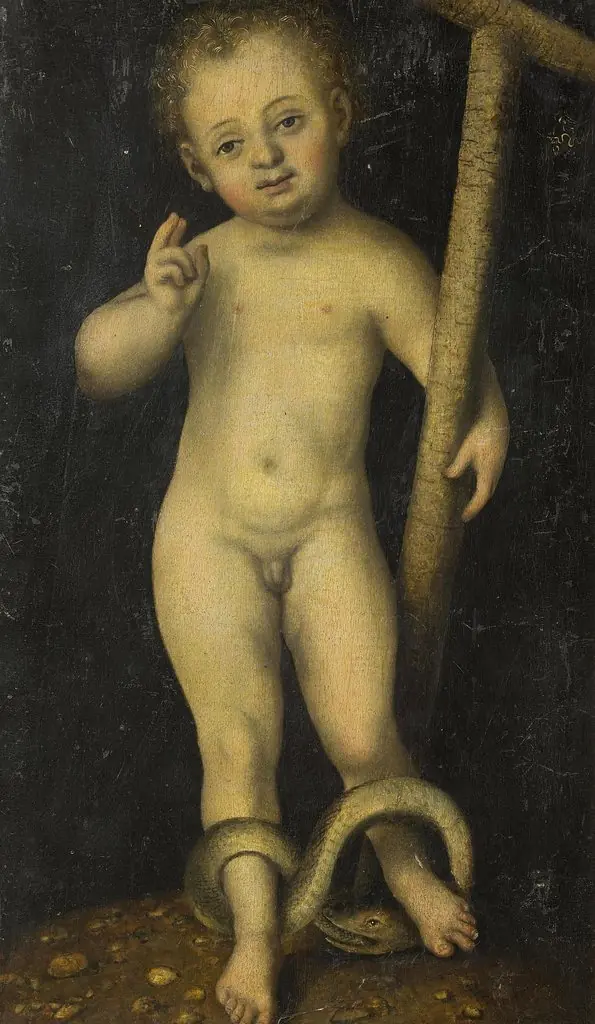
The painting depicts the nude infant Jesus standing in profile, grasping a wooden walking frame with both hands while clutching a toy windmill or whirligig. This domestic subject is rare in religious art, showing the Christ Child in a moment of ordinary human development rather than in traditional iconic poses. The iconography carries layered symbolic meaning: the child's first halting steps parallel Christ struggling with the Cross on the obverse of the panel, while the whirligig in his hand serves as an allusion to the Cross itself, foreshadowing the Passion. Bosch thus presents Christ in all his human frailty, beginning the road to his ultimate sacrifice. The walking frame suggests an analogy between Jesus's physical development and his spiritual guidance of humanity, while the dark, indistinct background focuses attention entirely on the vulnerable child figure.
Technique & Style
The work is executed in oil paint on an oak panel, forming a tondo format set within a rectangular wooden panel of warm reddish-brown tone. The circular composition presents the figure and interior scene in muted grisaille tones that create stark contrast against the dark background within the roundel. The infant's pale flesh is modelled with fine, delicate brushwork that defines soft bodily contours and subtle shadows, with light falling from the upper left to illuminate the child's head, torso, and limbs while casting gentle shadows beneath the feet and around the walking frame. Bosch employs chiaroscuro to model the child's form, giving it volume and dimension against the somber, serious tone of the work. The overall finish is smooth and precise, with careful attention to the textures of skin, wood, and fabric. Technical examinations including infrared reflectography and X-ray radiography have revealed detailed underdrawing with fluid, confident lines typical of Bosch's preparatory methods, along with multilayered paint application involving glazes and undermodelling for depth and colour intensity. The work exhibits minor craquelure consistent with age, and ultraviolet light reveals scattered retouchings primarily in areas of wear around the edges and the child's figure.
History & Provenance
The painting was created in 1480, early in Bosch's career, likely in his workshop in 's-Hertogenbosch. It served as the reverse side of a panel whose obverse bears Christ Carrying the Cross, with the full panel measuring 57 by 32 centimetres; the oak support was likely shaped in a quarter-circle form for its role in a triptych, though the upper edge has been slightly cut. The early provenance is not well documented, but by the early twentieth century it appeared in the English art trade. In January 1923, it was handled by Frederik Muller and Cie in Amsterdam, and later that year was acquired by the Kunsthistorisches Museum in Vienna from the dealer J. Goudstikker, where it remains with inventory number GG 6429. The work has been featured in notable exhibitions including the Hieronymus Bosch anniversary shows in 2016, such as at the Museo del Prado under the title Jheronimus Bosch - Visions of genius.
Context
The painting belongs to the Early Netherlandish tradition and exemplifies Bosch's characteristic blend of tender realism with moral and allegorical depth. While Bosch is better known for his fantastic visionary compositions, this work reveals another dimension of his imagination, one capable of intimate, domestic devotional imagery. The double-sided panel format was common for portable Christian devotional panels in the late fifteenth century, and the pairing of Christ Child with a Walking Frame with Christ Carrying the Cross creates a powerful theological continuum from incarnation to Passion. Early debates regarding whether the painting was executed by Bosch personally or by a workshop assistant were resolved through infrared reflectography, which revealed underdrawings matching Bosch's distinctive linear style and corrections indicative of his direct involvement. Scholarly consensus on attribution has been articulated by experts including Jos Koldeweij and Paul Vandenbroeck in their analyses of Bosch's oeuvre.
Legacy
Christ Child with a Walking Frame stands as one of Bosch's most unusual and affecting devotional images, demonstrating that his artistic range extended far beyond the fantastical nightmares for which he is most famous. The painting has contributed to scholarly understanding of Bosch's early career and workshop practices, with technical analysis providing important evidence of his preparatory methods and direct involvement in works sometimes questioned by earlier critics. Its acquisition by the Kunsthistorisches Museum in 1923 secured its place among the significant holdings of Northern Renaissance painting in Vienna. The work's appearance in major anniversary exhibitions, including the 2016 Prado show, continues to introduce audiences to this tender counterpoint to Bosch's more celebrated apocalyptic visions, reinforcing his reputation as an artist of remarkable range and psychological penetration.
Artist & collection
Artist
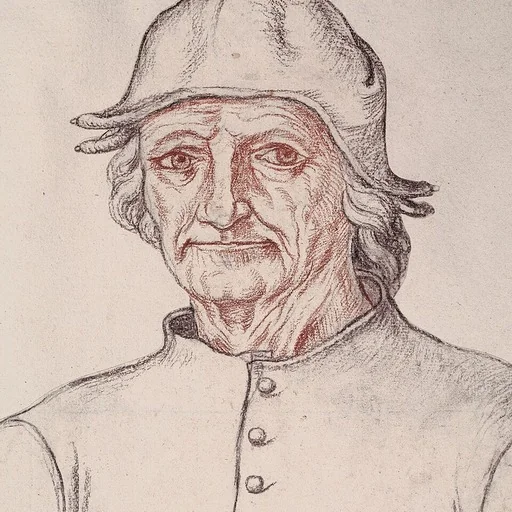
Hieronymus Bosch (; Dutch:; born Jheronimus van Aken; c. 1450 – 9 August 1516) was a Dutch painter from Brabant. He is one of the most notable representatives of the Early Netherlandish painting school. His work,…

![Putto with Arms of Jacques Coëne [reverse], by Bernard Van Orley](https://artifactworldgallery.com/img/bernard-van-orley--putto-with-arms-of-jacques-coene-reverse--841c6ba9c9e9862d-w320.webp)