Artwork
A peasant cottage
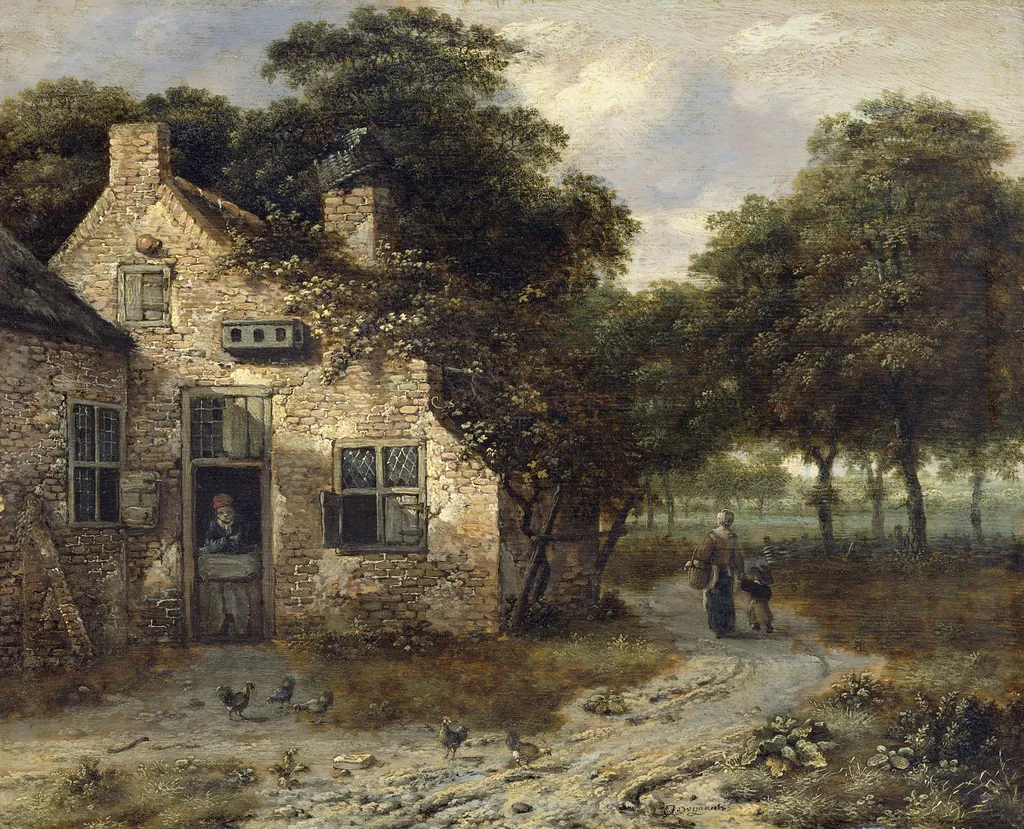
A peasant cottage is an oil painting by the Dutch Golden Age artist Jan Wijnants. It dates from 1650 and is held in the collection of the Rijksmuseum.
About this work
Subject & Meaning
The cottage serves as a symbol of the peasant's modest existence, reflecting themes of agrarian stability and the harmony between humanity and nature.
The painting depicts a humble thatched cottage set within a wooded landscape, a subject that evokes the simplicity and quiet dignity of rural life. The cottage serves as a symbol of the peasant's modest existence, reflecting themes of agrarian stability and the harmony between humanity and nature. The surrounding trees and natural elements reinforce a sense of pastoral order, aligning with 17th‑century Dutch landscape ideals that celebrate everyday countryside scenes.
Technique & Style
The work is executed in oil paint on a panel support, a common pairing for Dutch landscape painting of the mid-seventeenth century. Handling emphasizes smooth, blended passages for skies and foliage, with finer brushwork reserved for the definition of figures and architectural details. Composition balances a low horizon and a diagonal rise in the terrain, guiding the eye toward the central cottage whose modest form is rendered with careful attention to light and shadow. The palette is muted, relying on earth tones and greens to evoke a quiet, rural atmosphere.
The painting’s small scale and refined finish suggest it was intended for close viewing, typical of cabinet pictures produced for private collectors in the Dutch Republic.
History & Provenance
The work titled A peasant cottage was created by Jan Wijnants in 1650 using oil paint on panel, measuring 30 cm in height and 37 cm in width. It was initially owned by Jan Bernd Bicker and is now part of the Rijksmuseum's collection, where it remains on display. The painting exemplifies the Dutch landscape genre and was produced during the mid-17th century.
The work was commissioned as a genre scene reflecting rural life, though specific commissioning details are not documented. Its dating is confirmed by the artist's active period and stylistic analysis, aligning with the 1650 date recorded in archival records. The painting's material and dimensions match the specifications listed in the Rijksmuseum's catalog entry.
A peasant cottage is held in the collection of the Rijksmuseum, where it is catalogued as a painting by Jan Wijnants executed in oil on panel. Prior to entering the museum's holdings, the work was owned by Jan Bernd Bicker. No accession number or further inventory details are recorded in the available sources, and no exhibition history is documented.
Context
The painting is housed in the Rijksmuseum collection and was owned by Jan Bernd Bicker, situating Wijnants' work within the institutional frameworks of Dutch Golden Age art patronage. Scholarship situates this landscape within Wijnants' broader oeuvre of topographical scenes, reflecting 17th-century Dutch engagement with rural life and naturalistic representation. Its depiction of a tree aligns with compositional conventions of the period while demonstrating technical mastery of oil paint on panel.
Contemporary critical reception emphasizes its significance within the evolution of Dutch landscape painting, bridging early genre traditions and later specialized approaches to natural observation.
Overview
Jan Wijnants’ oil painting, dated around 1650, presents a modest rural dwelling set within a quiet landscape. The composition centers on a stone cottage with a low doorway, flanked by a few trees whose foliage reaches toward the roof. The work is part of the Rijksmuseum’s collection, illustrating the artist’s interest in everyday Dutch scenery.
Own this work as a print
Artist & collection

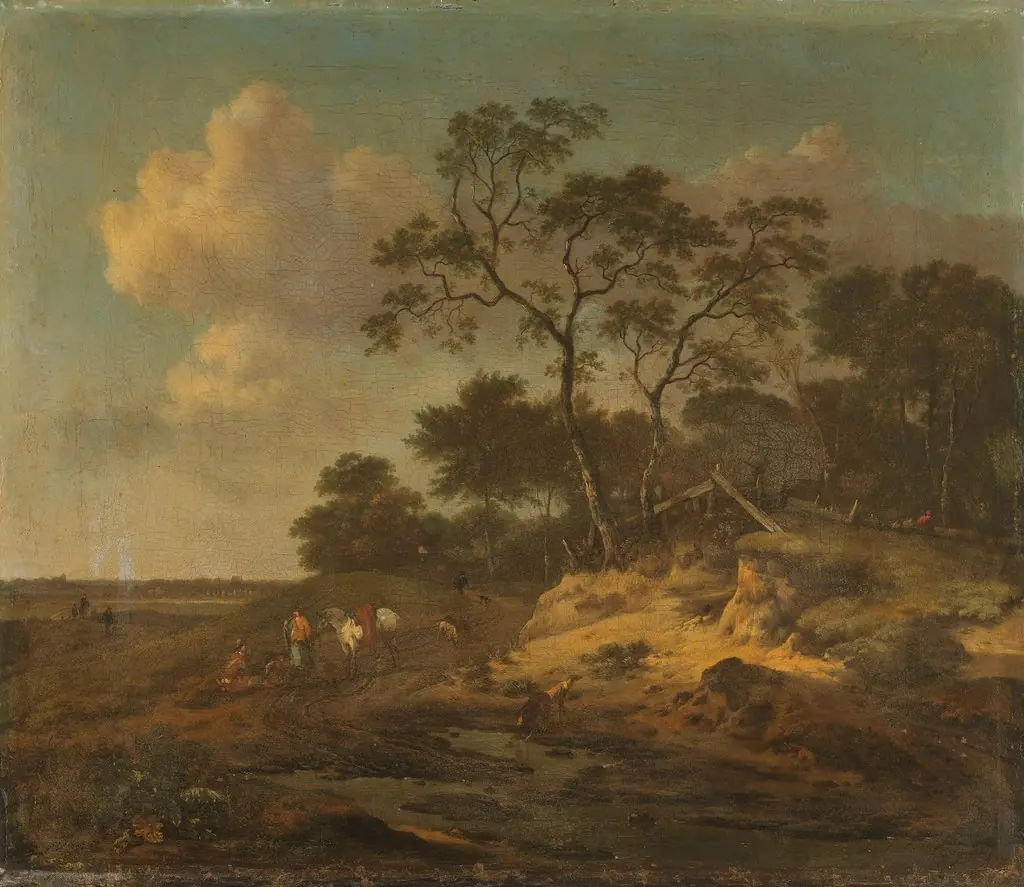
- Cottage Scenery
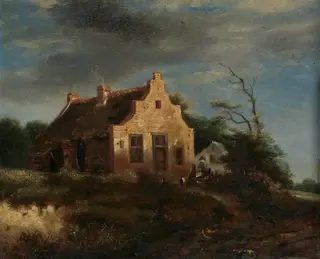 Farm in a wooded dune landscape
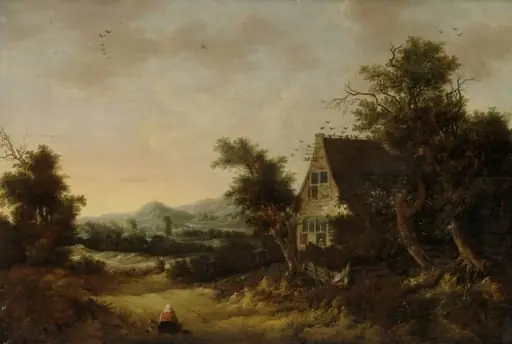 Hilly Landscape with Peasant Cottage
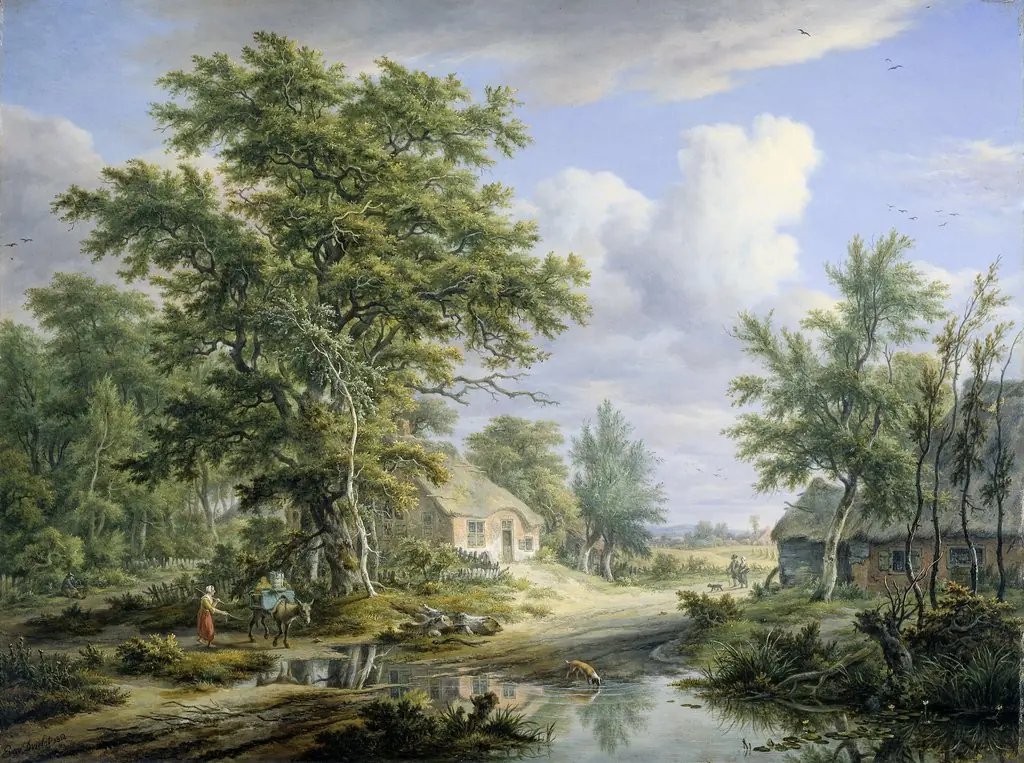 Farms on the Fringe of a Wood
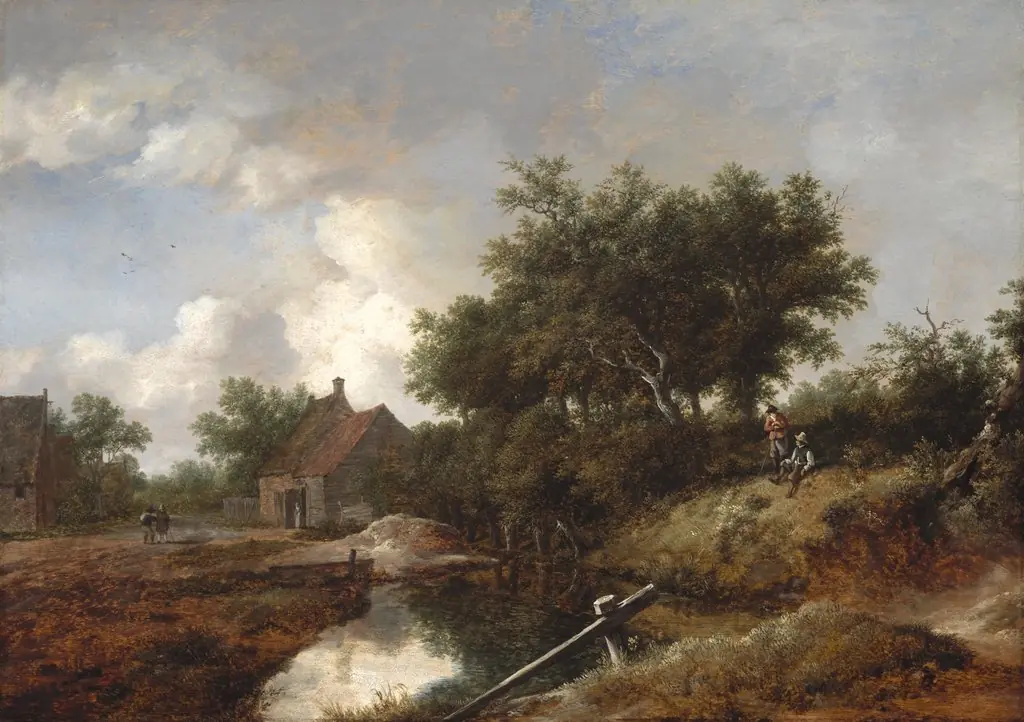 Path Leading to Farms by a Wooded Brook, ca. 1645
 A Village among Trees
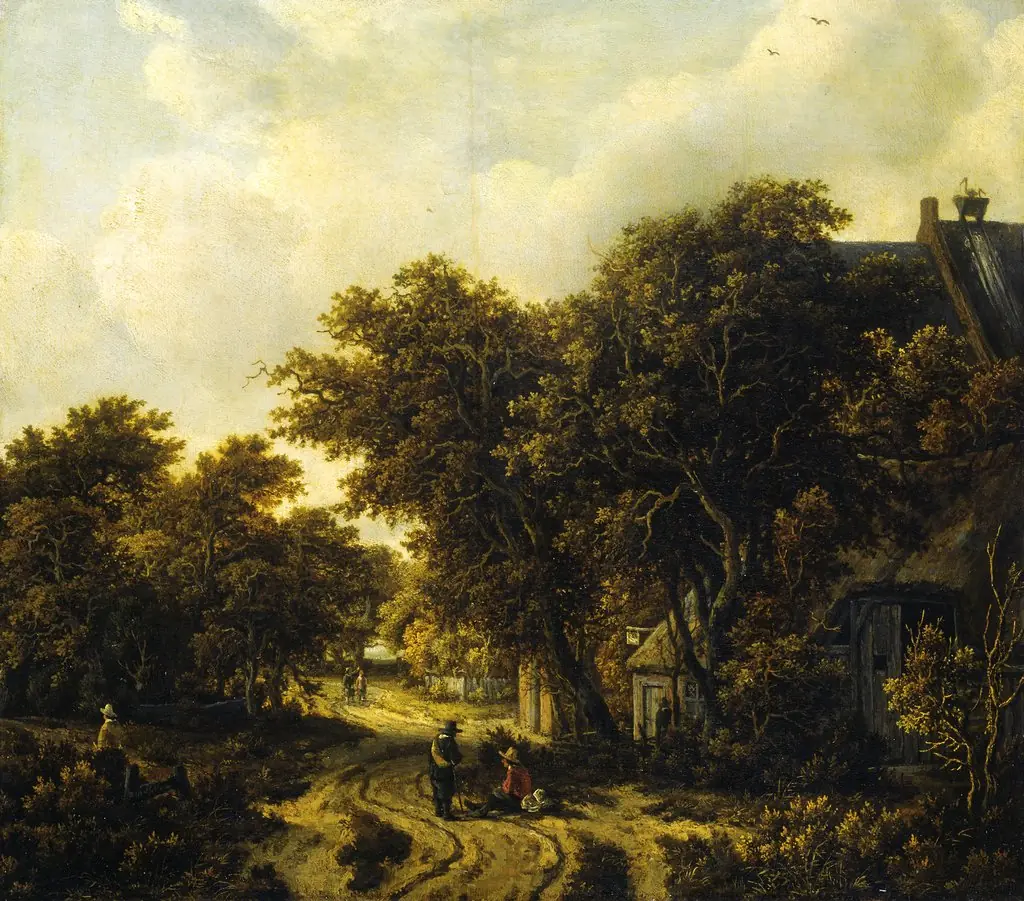 Landscape with an Inn
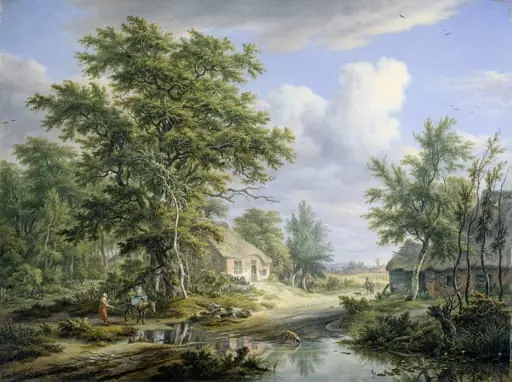 Farms on the Fringe of a Wood
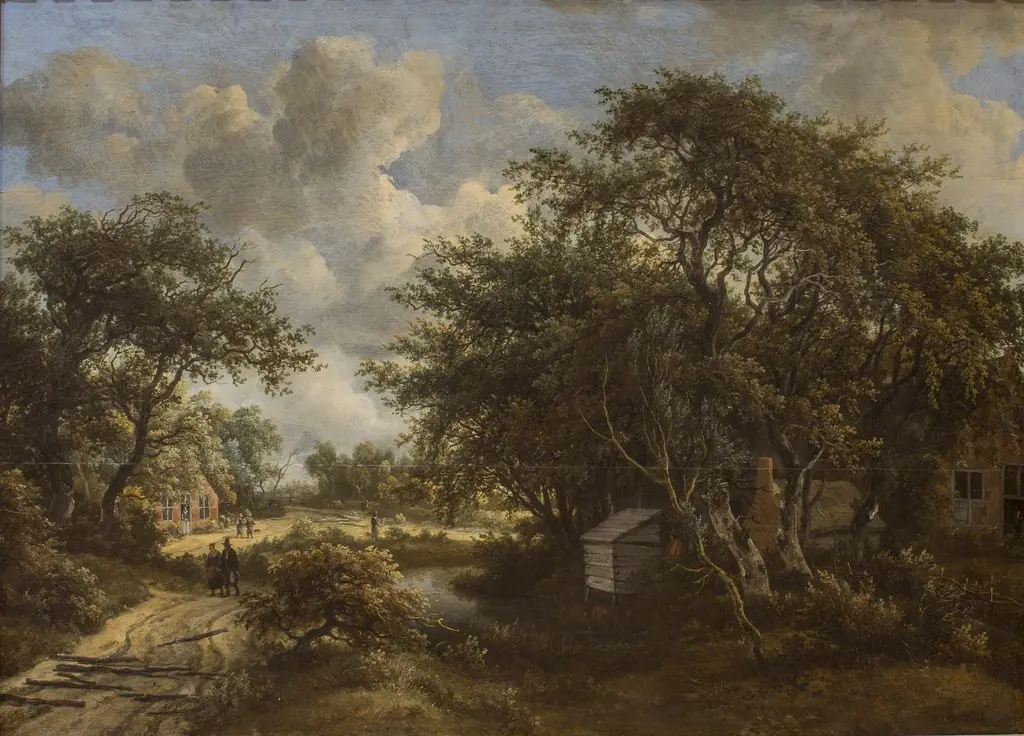 A Village among Trees
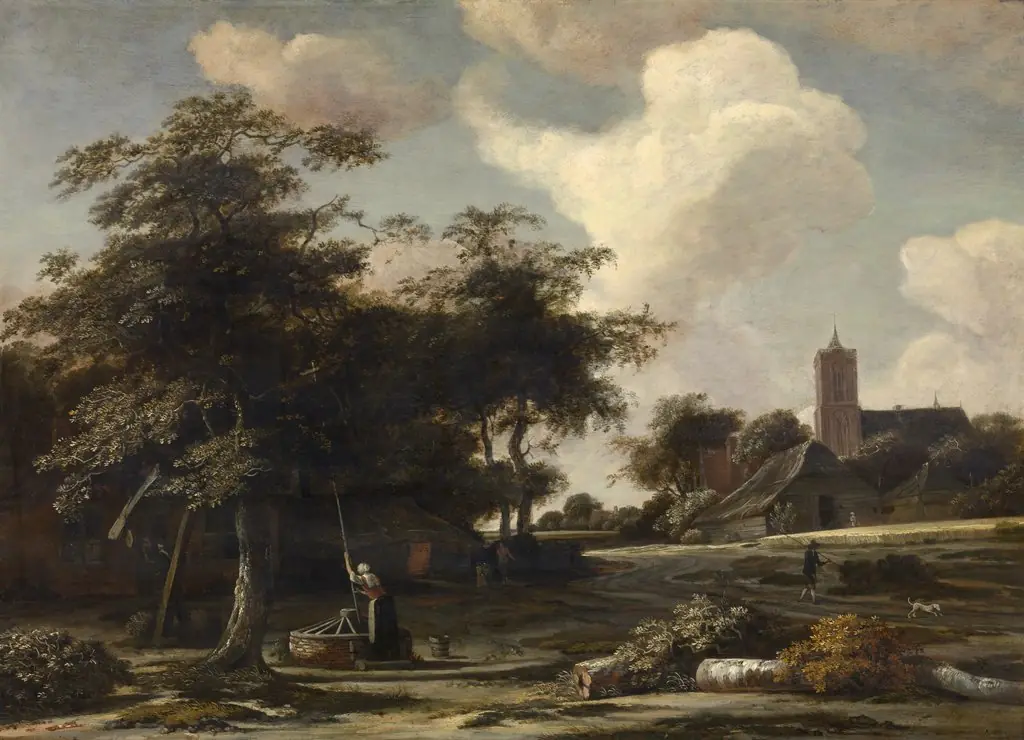 Landscape
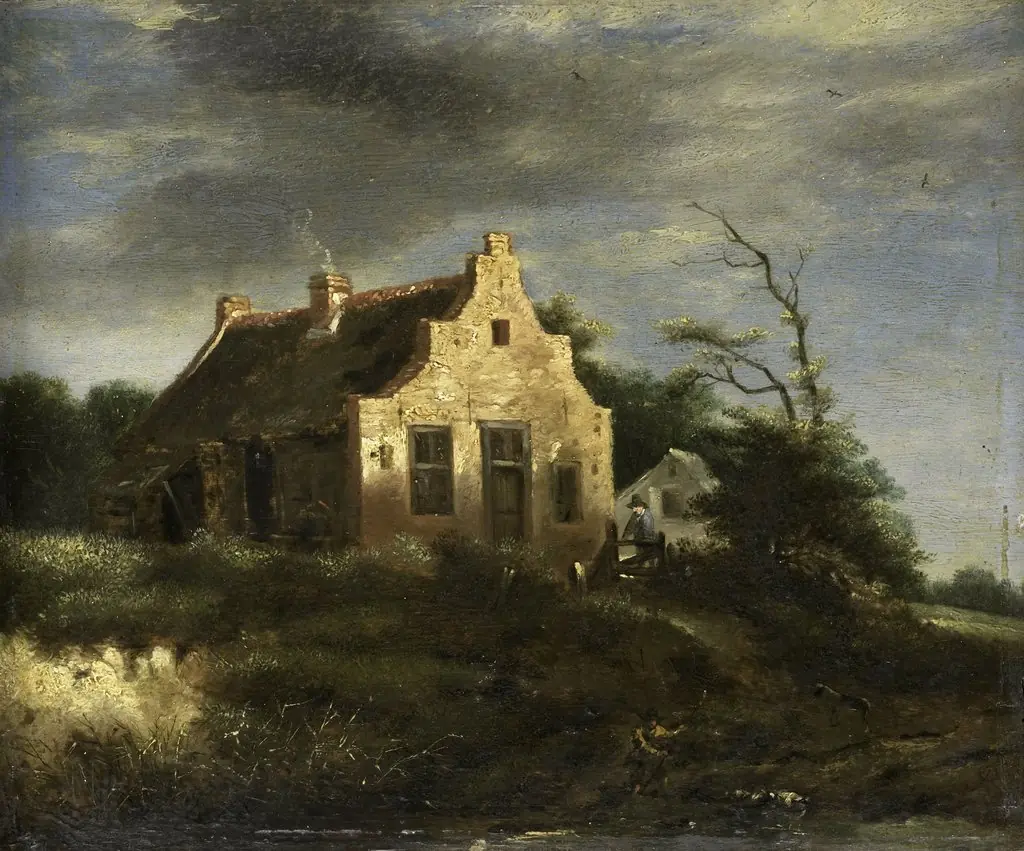 Farm in a wooded dune landscape
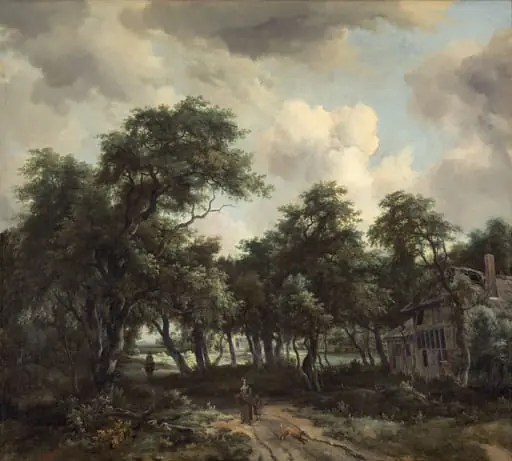 Hut among Trees