Artwork
Ponte Tolentine
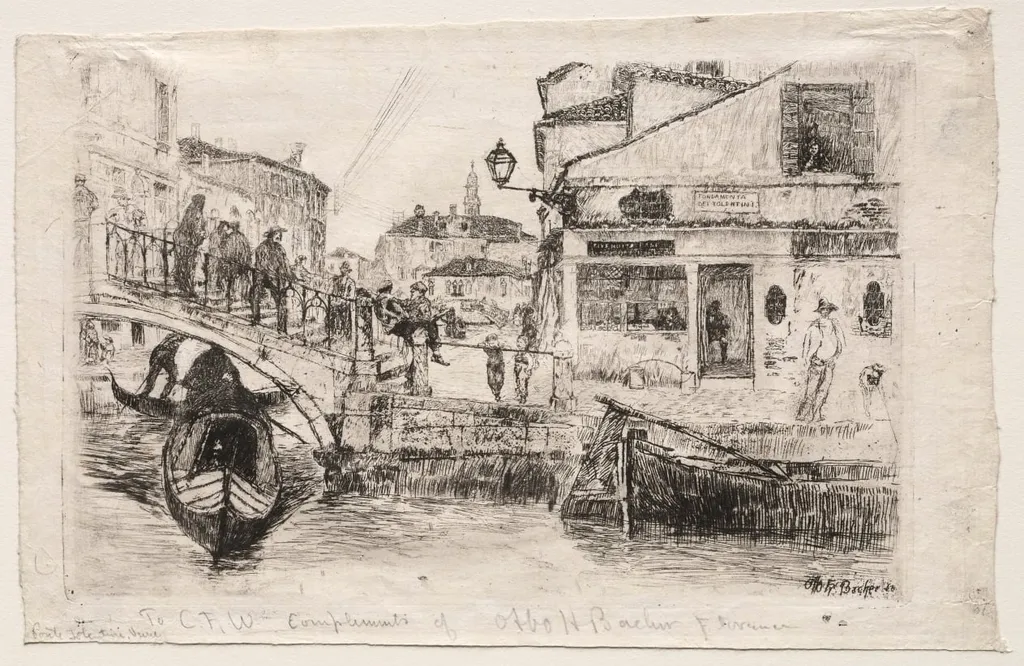
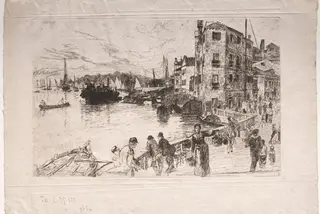
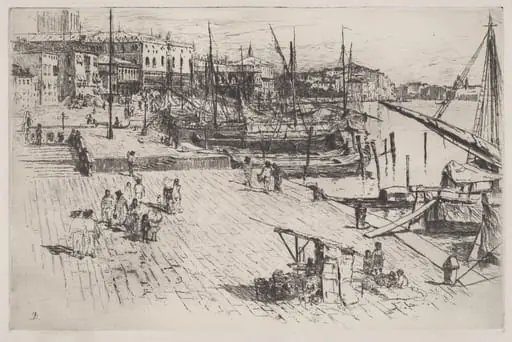
Ponte Tolentine is a print by the Impressionist artist Otto H. Bacher. It dates from 1880 and is held in the collection of the Cleveland Museum of Art.
- Accession no.
- 1921.219
About this work
Overview
Though trained in oil painting, Bacher gained recognition for his printmaking, particularly etchings that captured European urban scenes.
Ponte Tolentine is an 1880 etching by Otto H. Bacher, an American artist born in Cleveland in 1856. Though trained in oil painting, Bacher gained recognition for his printmaking, particularly etchings that captured European urban scenes. This work reflects his time abroad and his interest in documenting everyday life through direct, observational techniques. The piece resides in the collection of The Cleveland Museum of Art.
Subject & Meaning
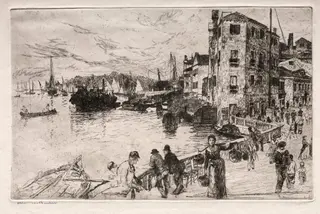
The scene portrays a bustling bridge over a canal in Italy, with pedestrians crossing, a gondola passing beneath, and lampposts and buildings lining the water’s edge. Signs and windows suggest commercial activity. Bacher avoids idealization, instead emphasizing the rhythm of daily routines. The composition conveys a quiet sense of place, rooted in the ordinary rather than the monumental.
Technique & Style
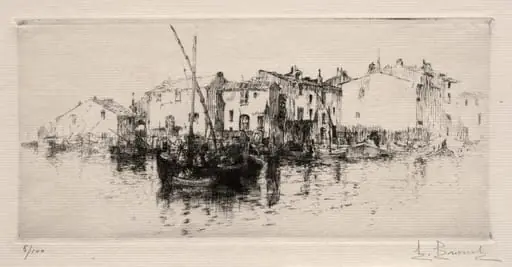
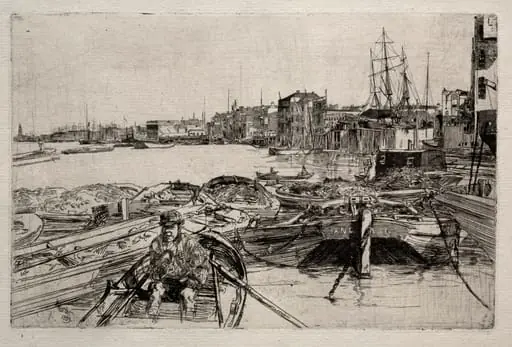
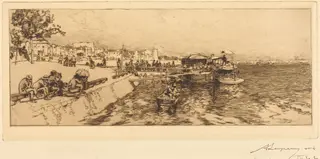
Executed in etching, the work employs loose, fluid lines to suggest movement and atmosphere rather than precise detail. The artist uses varying line weight and sparse hatching to imply light, texture, and depth. Buildings and figures are rendered with economy, prioritizing gesture over finish. This approach aligns with a sketch-like immediacy, capturing fleeting moments with minimal intervention.
History & Provenance
Bacher created this print during a period of travel in Europe, where he studied and worked alongside other American artists drawn to Italian subjects. The etching was likely made for private circulation or publication, common for printmakers of the time. It entered the Cleveland Museum of Art’s collection through documented acquisition, reflecting the institution’s early interest in American graphic arts.
Context
In the late 19th century, American artists increasingly turned to European cities for subject matter, often embracing Realist ideals that valued everyday scenes over historical or mythological themes. Bacher’s work fits within this trend, aligning with contemporaries who sought authenticity through direct observation. Etching, as a medium, offered a middle ground between painting’s permanence and the spontaneity of sketching.
Legacy
Ponte Tolentine exemplifies Bacher’s contribution to American printmaking, highlighting the medium’s capacity for intimate, observational storytelling. While not widely known today, his work represents a broader movement of artists who elevated the etching as a vehicle for modern life. The piece remains a quiet testament to the value of unembellished urban observation in late 19th-century art.
Artist & collection

Artist
Otto Henry Bacher (May 31, 1856, Cleveland - August 16, 1909, Bronxville, New York) was an American artist; primarily known for his etchings and illustrations. He also painted oils in a variety of genres.