Artwork
Frontispiece
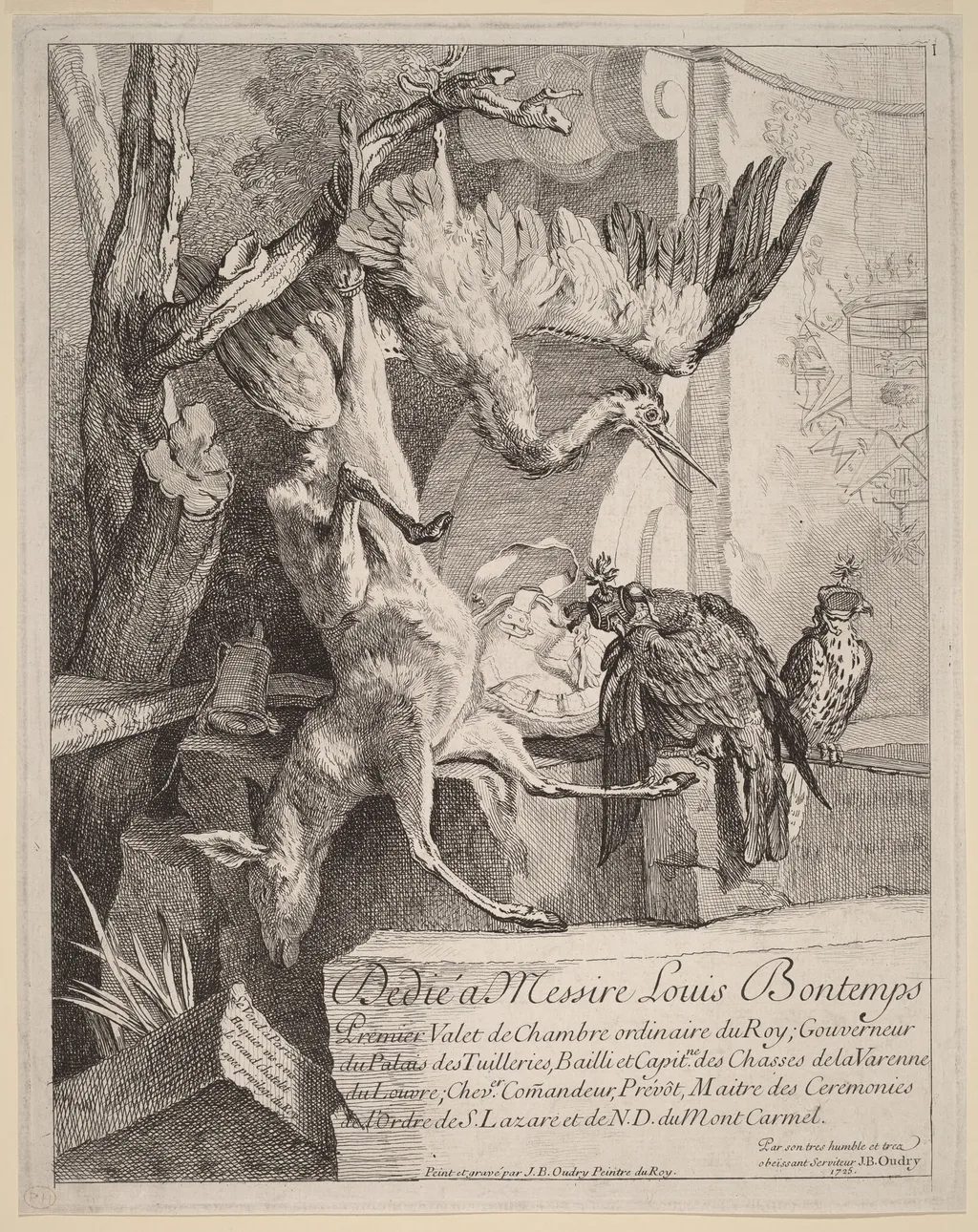
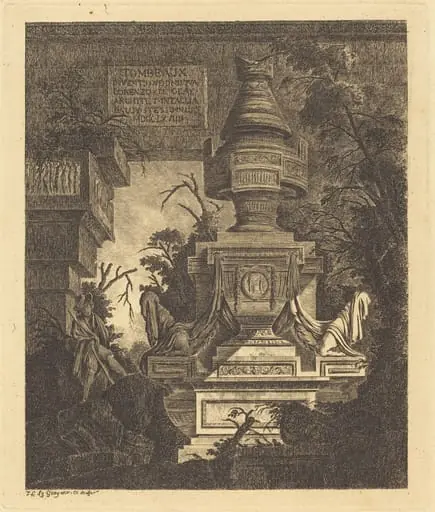
Frontispiece is an ink print by the Baroque artist Jean-Baptiste Oudry. It dates from 1725 and is held in the collection of the National Gallery of Art.
- Inscription
- Inscribed:lower right in plate: Dedié a Messire Louis Bontemps / Premier Valet de Chambre ordinaire du Roy; Gouverneur du Palais des Tuilleries, Baille et Capitlne des Chasses de la Varenne / du Louvre; Chev. et Comandeur, Prévôt, Maitre des Ceremonies / de l'Ordre des S. Lazare et de N. D. du Mont Carmel / Par sur tres humble et tres / obeissant serviteur J. B. Oudry 1725.; lower center in plate: Peint et gravé par J. B. Oudry Peintre du roy; on rock in image: Se vend à Paris chez / Huquier... / avec privilege du Roi
About this work
Overview
Frontispiece is an etching on laid paper created by Jean-Baptiste Oudry in 1725, exemplifying the Rococo movement's decorative sensibilities combined with detailed naturalism.
Subject & Meaning
The etching depicts a woman holding a small bird, flanked by two large birds amidst swirling trees and clouds, conveying a sense of wildness and dreaminess, with a dedicatory text to Louis Bontemps at the bottom.
Technique & Style
Executed in etching, the work features dark, detailed lines with pronounced texture, particularly in the rendering of feathers and foliage, characteristic of Oudry's meticulous approach to capturing wildlife.
History & Provenance
Signed by Jean-Baptiste Oudry, the etching is part of his body of work in multiple mediums. Notably, his son Jacques-Charles Oudry also pursued a career in painting.
Context
Created during the Rococo period, Frontispiece reflects the era's emphasis on decorative elements and naturalistic depictions, aligning with Oudry's known expertise in animal and hunting themes.
Legacy
As a print by a prominent Rococo artist, Frontispiece contributes to the understanding of 18th-century French artistic practices and the Oudry family's contributions to art.
Own this work as a print
Artist & collection

Artist
Jean-Baptiste Oudry was a French Rococo painter, engraver, and tapestry designer. He is particularly well known for his naturalistic pictures of animals and his hunt pieces depicting game. His son, Jacques-Charles Oudry, was also a painter.

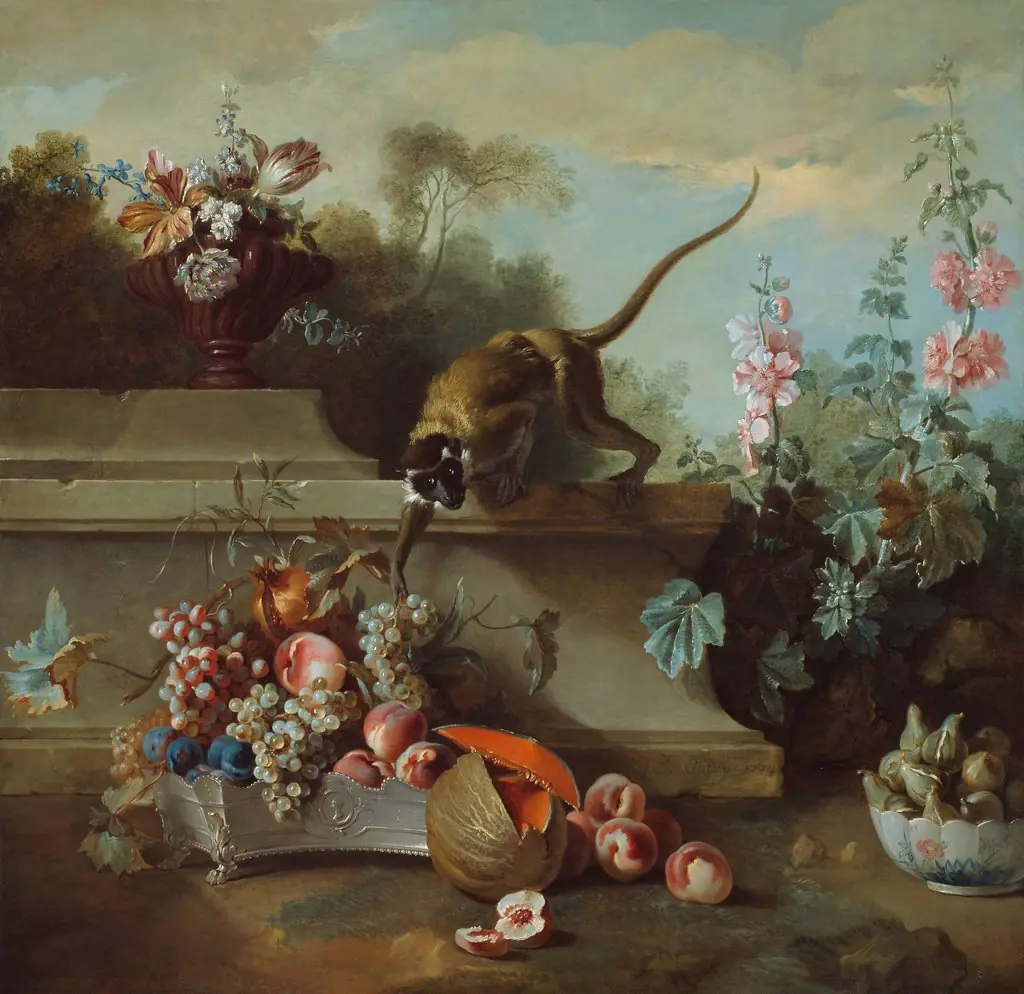
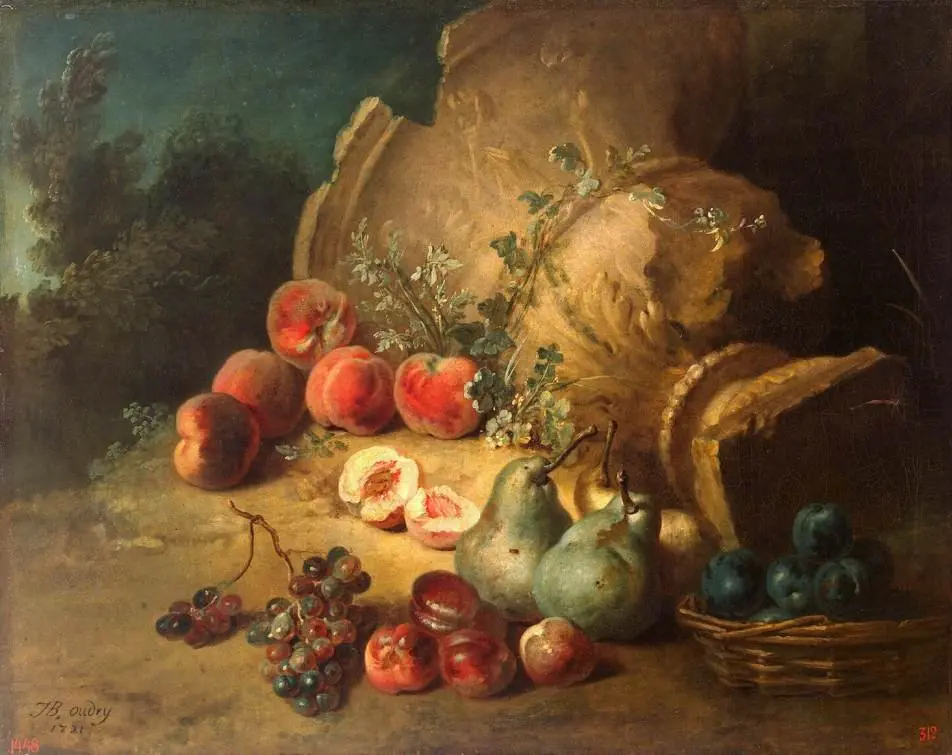
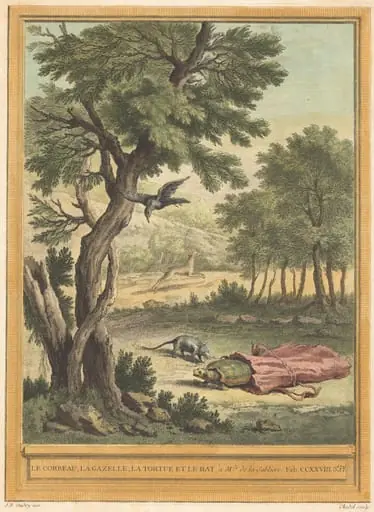 Le corbeau, la gazelle, la tortue et le rat (The Crow, the Gazelle, the Tortoise, and
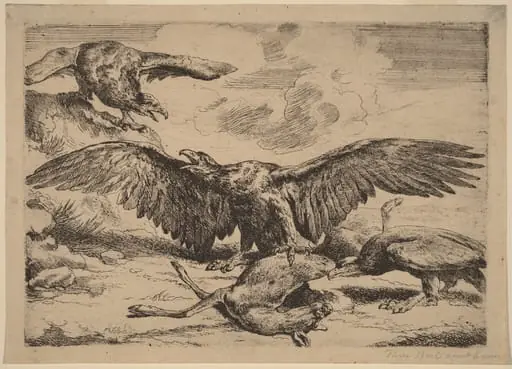 Eagles
 A Concert of Birds
 A Wolf Attacked by Dogs
 Le loup et le renard (The Wolf and the Fox)
 Le loup et le chasseur (The Wolf and the Hunter)
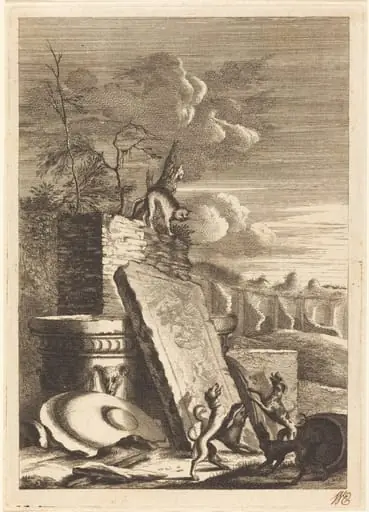 Dogs Pursuing a Cat
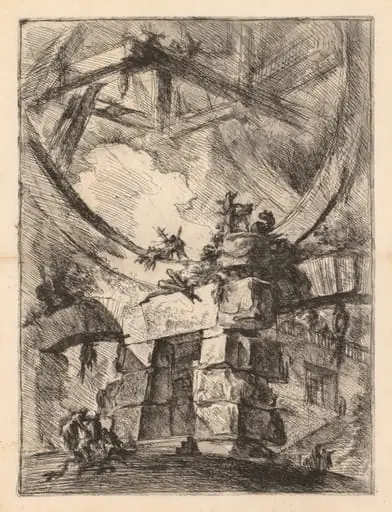 The Prisons: A Prison Door
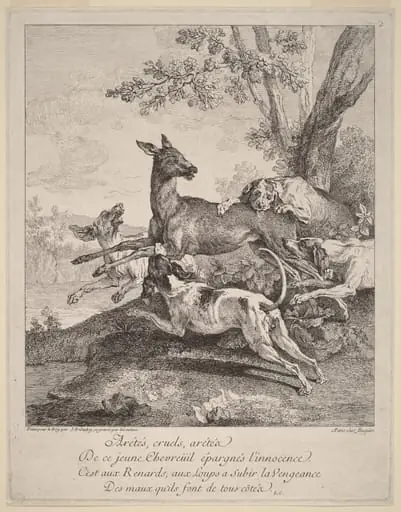 A Deer Attacked by Dogs
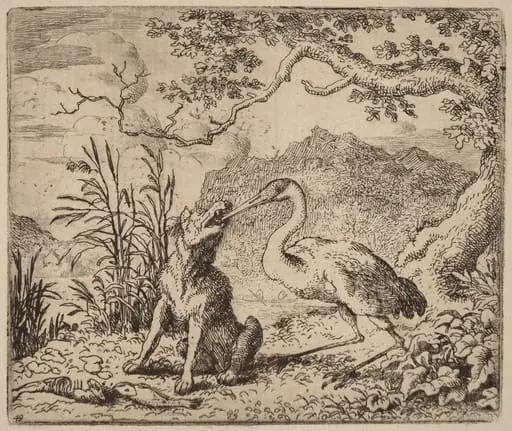 The Wolf and the Crane
 Frontispiece for "Views of Tombs"
- A Fox Attacked by Dogs