Artwork
St. Amelia, Queen of Hungary
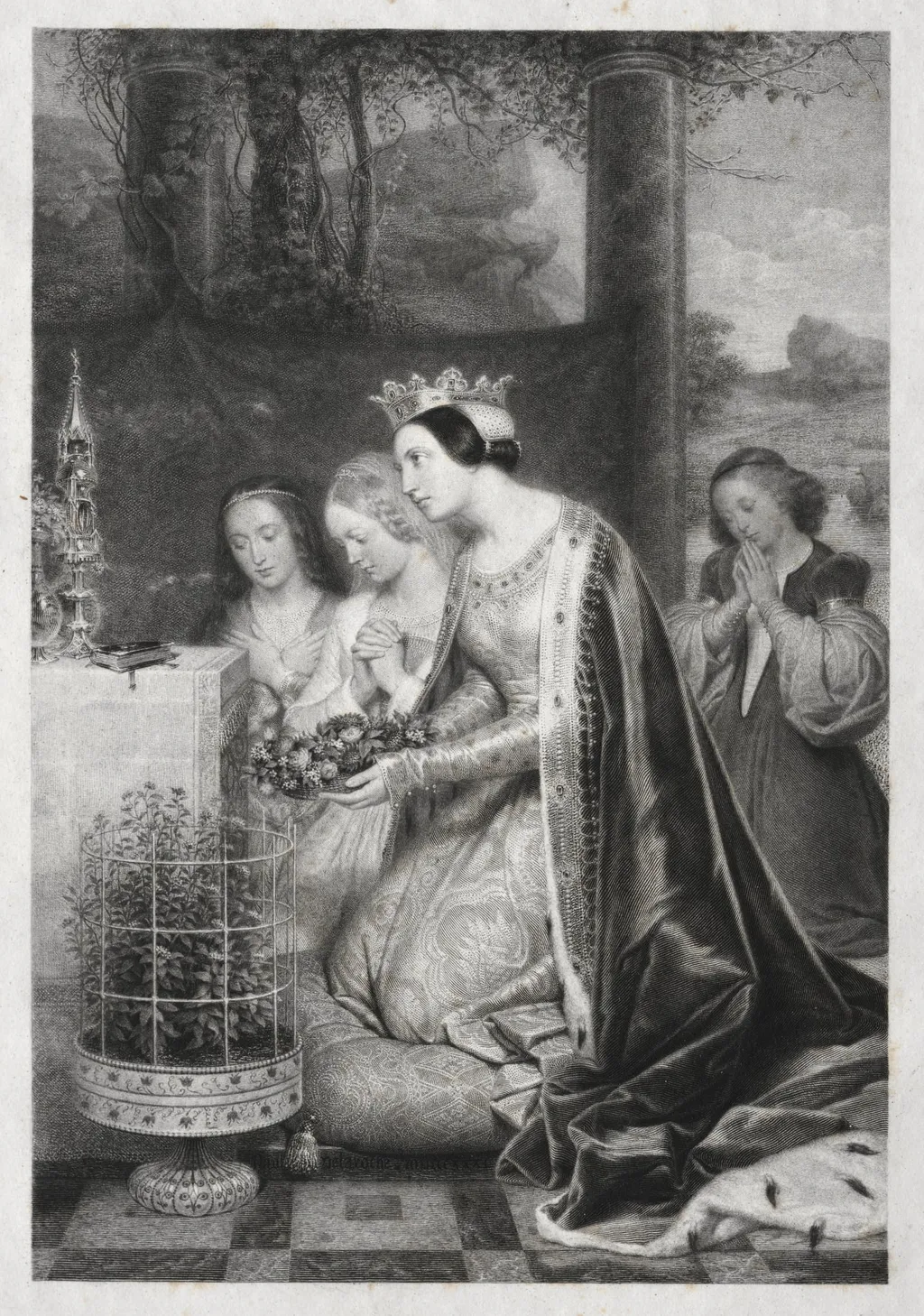
St. Amelia, Queen of Hungary is a print by the Romanticist artist Paolo Mercuri. It dates from 1841 and is held in the collection of the Cleveland Museum of Art. St.
- Accession no.
- 1949.110
About this work
Overview
Based in Bucharest at the time, Mercuri produced this work as part of a broader 19th-century interest in religious and historical narratives.
St. Amelia, Queen of Hungary is a black-and-white engraving created in 1841 by Paolo Mercuri, an Italian artist trained in printmaking. Based in Bucharest at the time, Mercuri produced this work as part of a broader 19th-century interest in religious and historical narratives. The piece exemplifies his technical precision and sustained engagement with illustrated print media throughout his career, which spanned over four decades until his death in 1884.
Subject & Meaning
The scene portrays three women in a quiet, intimate interior, suggesting a moment of spiritual reflection. The central figure, identified as Queen Amelia, wears a crown and touches her forehead in gesture of devotion. To her left, a woman kneels with a wreath, symbolizing honor or sacrifice; to her right, another prays with clasped hands.
The dim lighting and distant church steeple reinforce a tone of solemn piety, linking royal identity with religious humility.
Technique & Style
Mercuri employed fine-line engraving to render subtle gradations of light and shadow, emphasizing texture and emotional nuance. The figures are rendered with soft, controlled shading that models their forms without harsh contours. Facial expressions and hand gestures are delicately detailed to convey inner states.
The background, with its faint outline of a church and trees, recedes into darkness, enhancing the focus on the trio’s quiet ritual.
History & Provenance
Created during Mercuri’s time in Bucharest, the print likely served a devotional or educational purpose, circulating among collectors and religious institutions interested in hagiographic imagery. Though specific early ownership records are not documented, its production aligns with mid-19th-century European trends in printed religious art, where historical saints were reimagined for contemporary audiences through refined graphic techniques.
Context
In the 1840s, European art saw renewed interest in medieval saints and royal figures as symbols of moral order amid political upheaval. Mercuri’s engraving fits within this revival, drawing on historical legend rather than documented fact. The emphasis on quiet devotion, rather than grandeur, reflects a broader shift toward intimate, emotionally resonant religious imagery in print culture during the early Victorian era.
Legacy
Though not widely exhibited today, St. Amelia exemplifies the quiet persistence of religious engraving in the age of mechanical reproduction. Mercuri’s work contributed to a generation of illustrators who preserved sacred narratives through accessible graphic media. His technical discipline and narrative restraint influenced later printmakers who sought dignity in modest, contemplative subjects.
Own this work as a print
Artist & collection

Artist
Paolo Baldassarre Mercuri (20 December 1804, in Rome – 30 April 1884, in Bucharest) was an Italian engraver and illustrator.

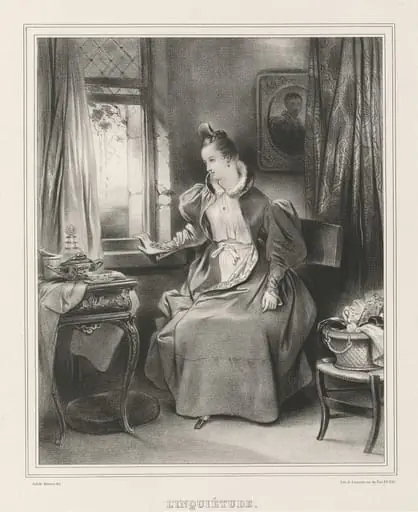
- L'Inquietude
 H Beard Print Collection
 Untitled
 H Beard Print Collection
 Bonaparte Women
 The Topaz
 Mrs. Siddons as Matilda in the 'Carmelite'
 Faust Seeing Marguerite for the First Time
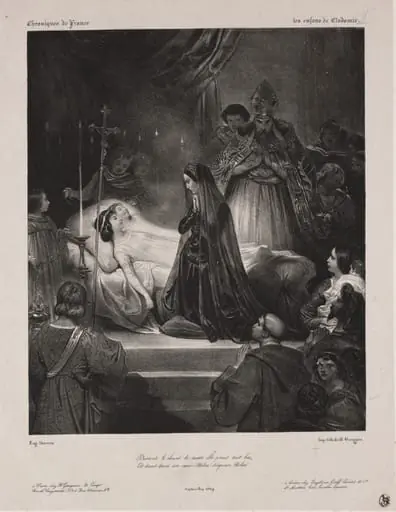 Chronicles of France: The Children of Clodomir
 La Belle Hamilton
 H Beard Print Collection
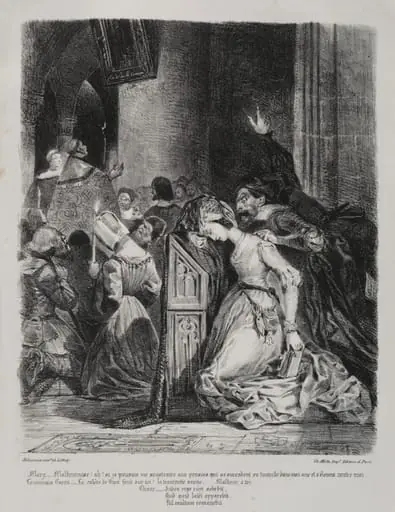 Illustrations for Faust: Marguerite at church