Artwork
Cristo in trono con la Madonna e Santa Caterina da Siena
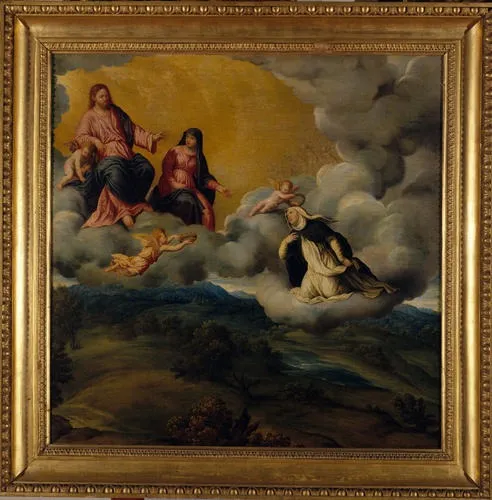
Cristo in trono con la Madonna e Santa Caterina da Siena is an oil painting by the Mannerist artist Paris Bordone. It dates from 1560 and is held in the collection of the Accademia Carrara.
About this work
Overview
Painted in 1560 by Paris Bordone, this oil-on-canvas work presents a celestial assembly of Christ, the Virgin Mary, and Saint Catherine of Siena.
Painted in 1560 by Paris Bordone, this oil-on-canvas work presents a celestial assembly of Christ, the Virgin Mary, and Saint Catherine of Siena. Bordone, a Venetian artist trained in Titian’s studio, fused the coloristic traditions of the Venetian school with the elongated forms and spatial ambiguity characteristic of Mannerism. The painting resides in the Accademia Carrara in Bergamo, where it exemplifies mid-16th-century religious imagery shaped by both regional technique and evolving stylistic trends.
Subject & Meaning
The composition centers on Christ seated in majesty, flanked by Mary and Saint Catherine, who kneel in reverence. Their elevated position above swirling clouds signifies divine transcendence. The inclusion of Catherine, a Dominican mystic and patron saint of Italy, underscores the devotional purpose of the work.
Two cherubs below, one reaching toward Catherine, suggest divine favor and spiritual connection, reinforcing the saint’s intercessory role within the sacred hierarchy.
Technique & Style
Bordone employed chiaroscuro to model the figures with subtle gradations of light and shadow, lending them volume and presence against a luminous, hazy sky. The drapery of Christ’s pink robe and the saints’ garments reveals a refined handling of fabric texture, inherited from Venetian painting. Mannerist tendencies appear in the elongated proportions and the compressed, dreamlike space, where earthly and heavenly realms merge without clear spatial boundaries.
History & Provenance
Commissioned during the height of Bordone’s career, the painting entered the Accademia Carrara’s collection in the 19th century after passing through private Venetian and Lombard holdings. Its survival through centuries of religious upheaval and political change reflects its enduring value as a devotional object. Documentation from the 1500s confirms its completion date and original placement in a religious context, likely a chapel or convent.
Context
Created during the Counter-Reformation, the painting aligns with Catholic efforts to reinforce doctrinal clarity through visual piety. Saint Catherine of Siena, canonized in 1461, was increasingly venerated as a model of spiritual authority for women. Bordone’s synthesis of Venetian color and Mannerist structure responded to both local tastes and broader ecclesiastical demands for imagery that conveyed divine order and mystical devotion.
Legacy
Though less celebrated than Titian or Tintoretto, Bordone’s work contributed to the transition from High Renaissance harmony to Mannerist complexity in Venetian art. This painting remains a key example of how regional workshops adapted to new aesthetic currents while maintaining devotional integrity. Its preservation in the Accademia Carrara ensures continued study of late Renaissance religious painting beyond the most famous names of the era.
Artist & collection

Artist
Paris Bordone (Paris Paschalinus Bordone; 5 July 1500 – 19 January 1571) was an Italian painter of the Venetian Renaissance who, despite training with Titian, maintained a strand of Mannerist complexity and provincial vigor.

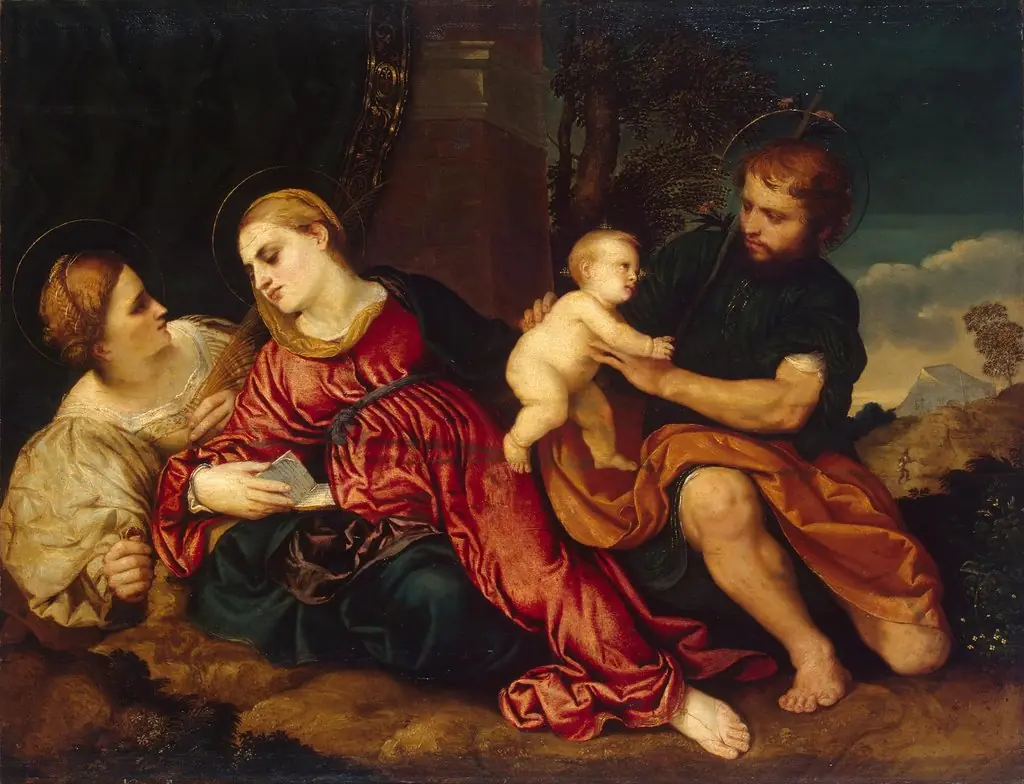
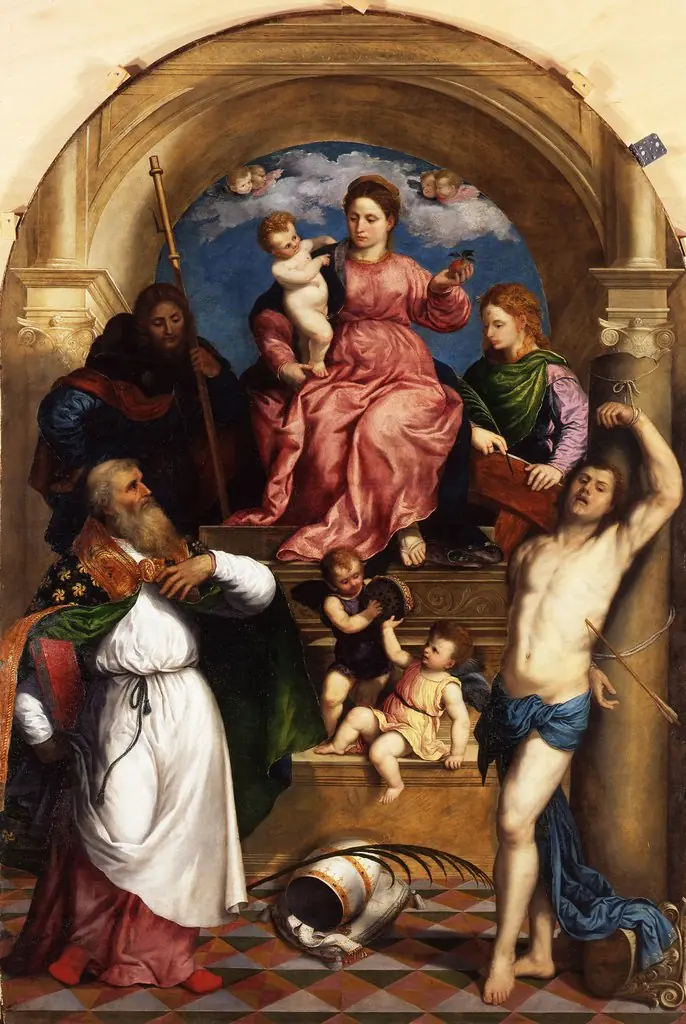
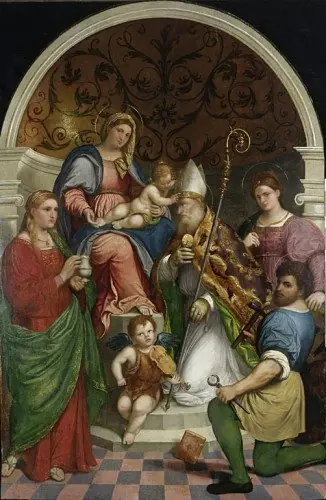
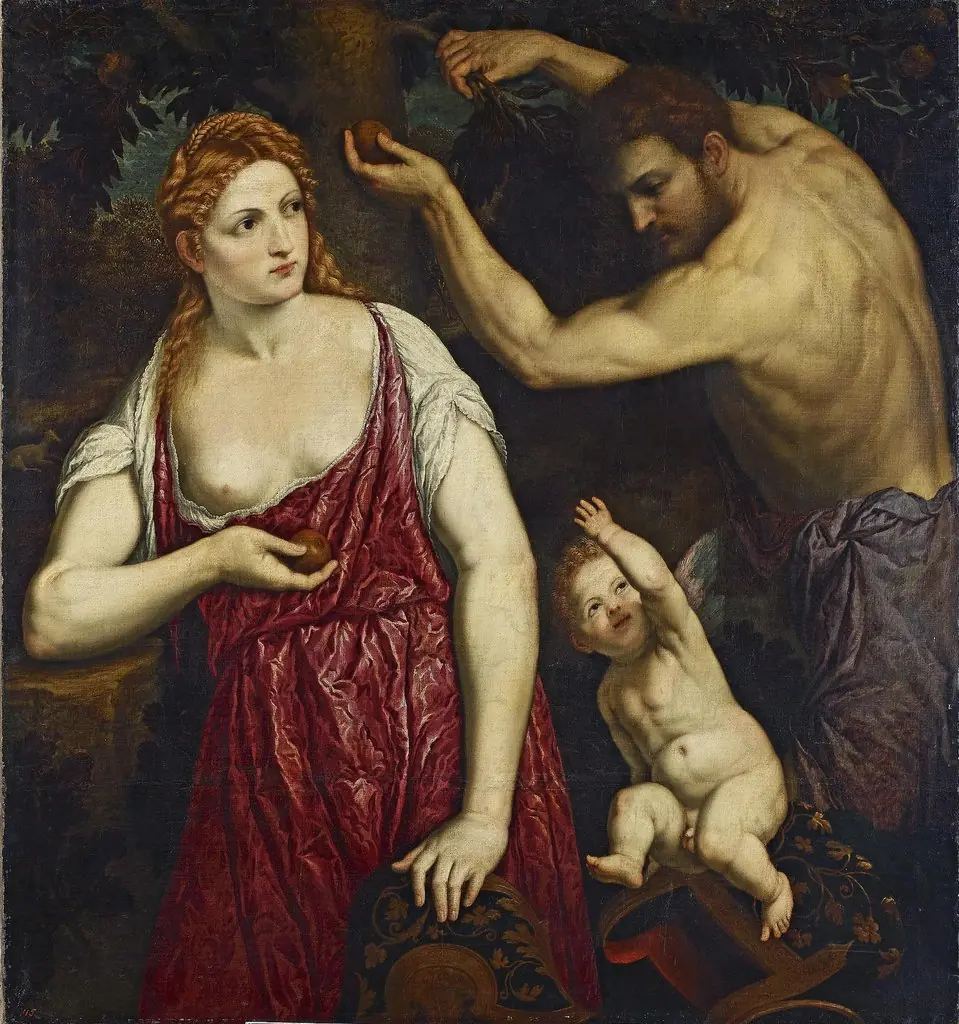
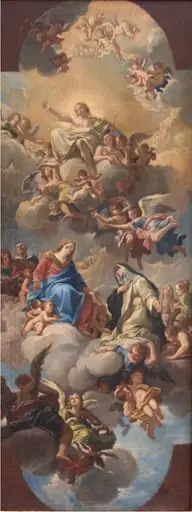
- Mary Introducing St Catherine of Siena to Christ
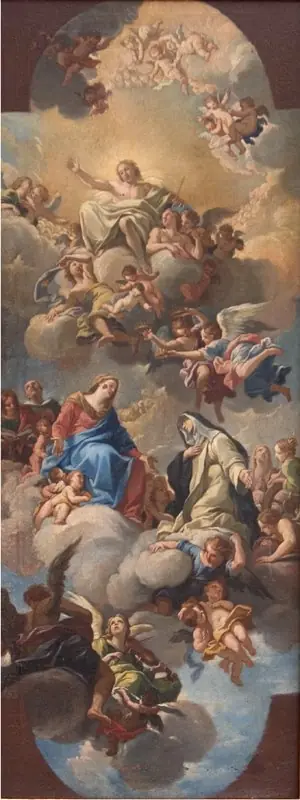 Mary Introducing St Catherine of Siena to Christ
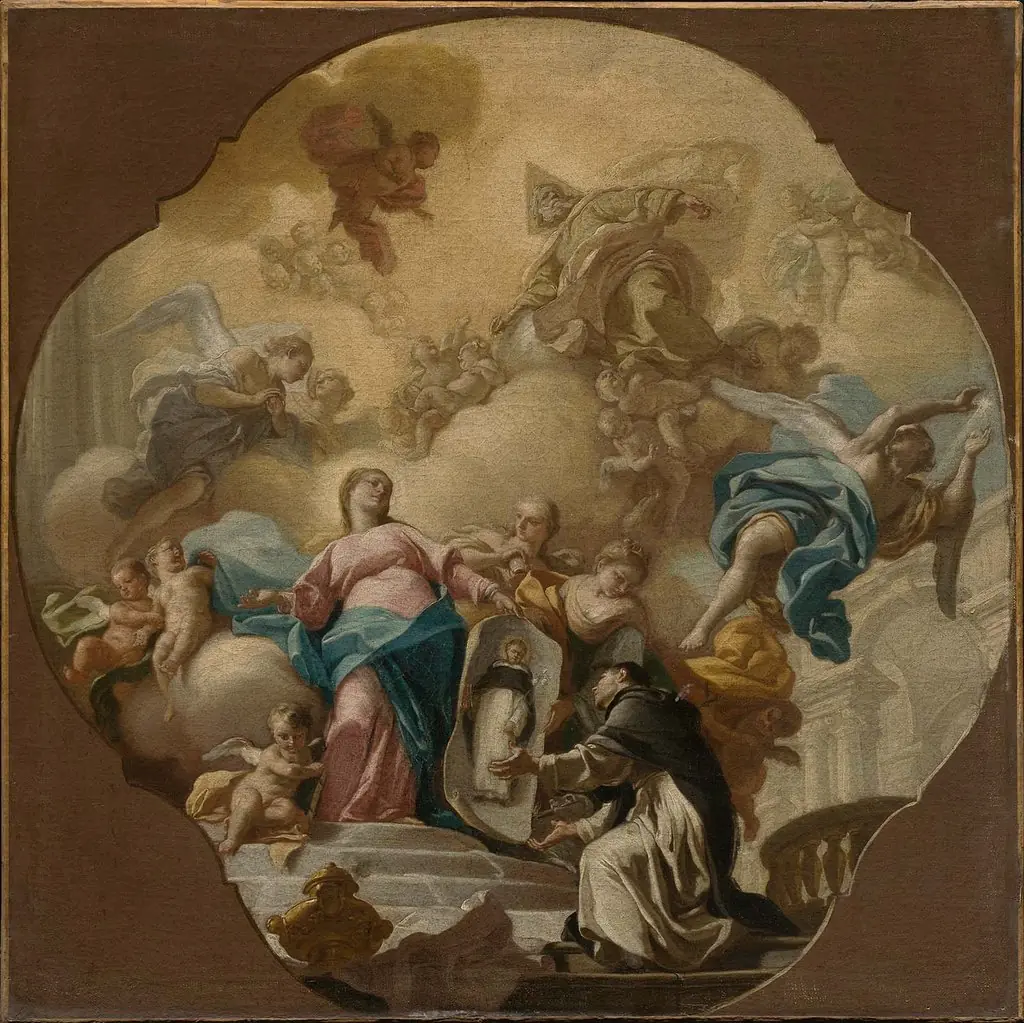 The Virgin Presenting the Portrait of Saint Dominic to the Friar of Soriano
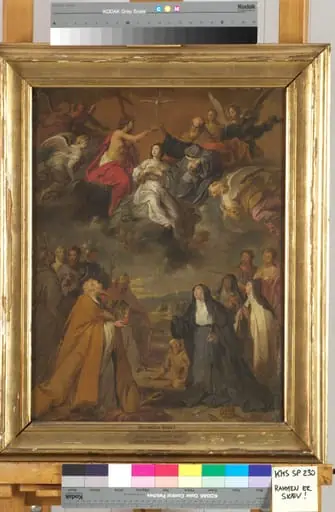 The Coronation of the Virgin
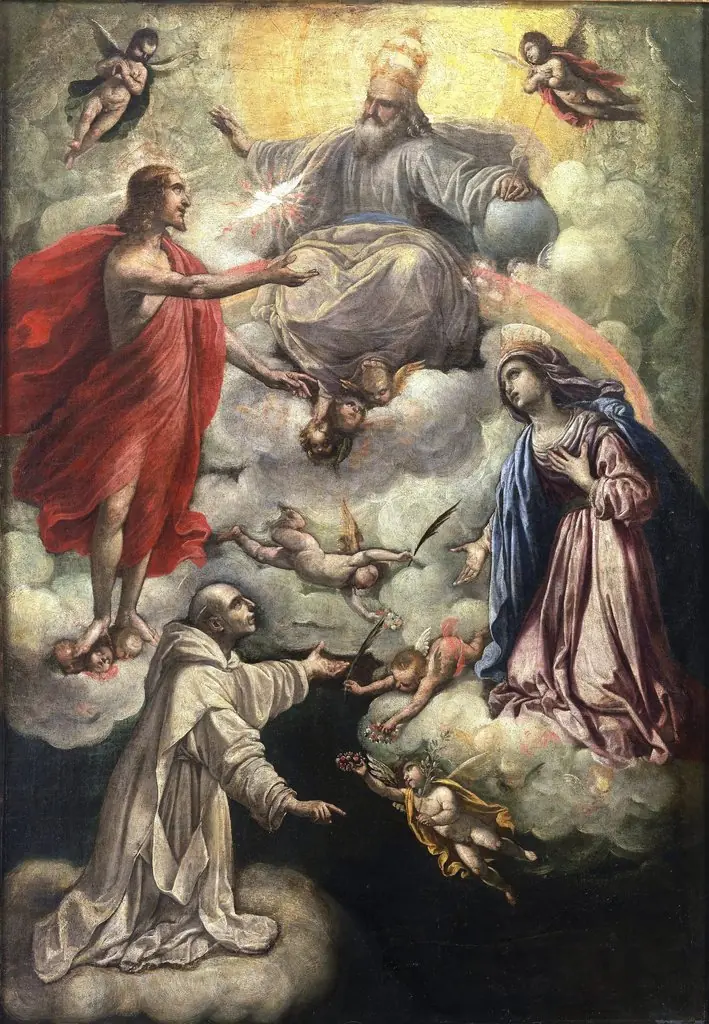 Visión de San Bruno
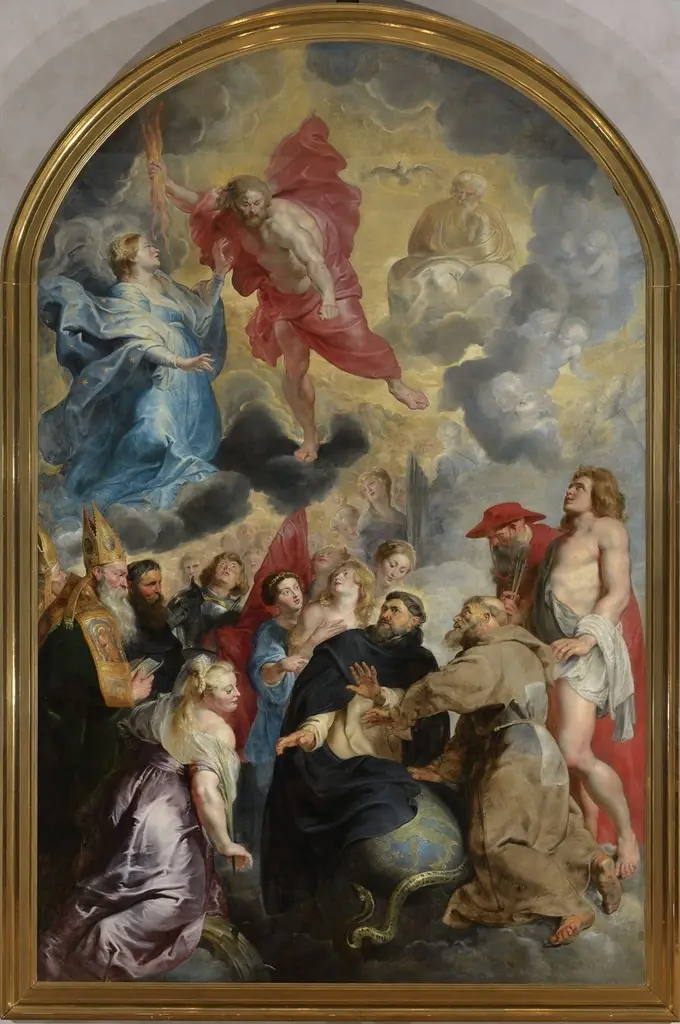 Saint Dominic and Saint Francis Protecting the World from the Wrath of Christ
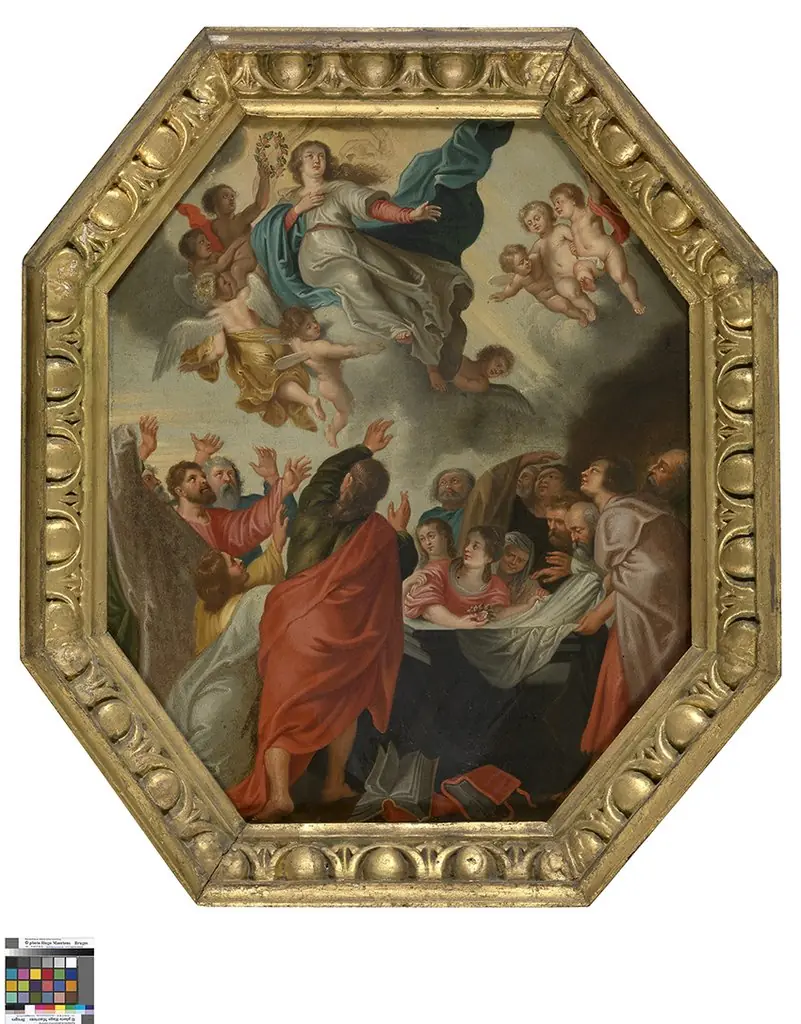 Assumption of the Virgin
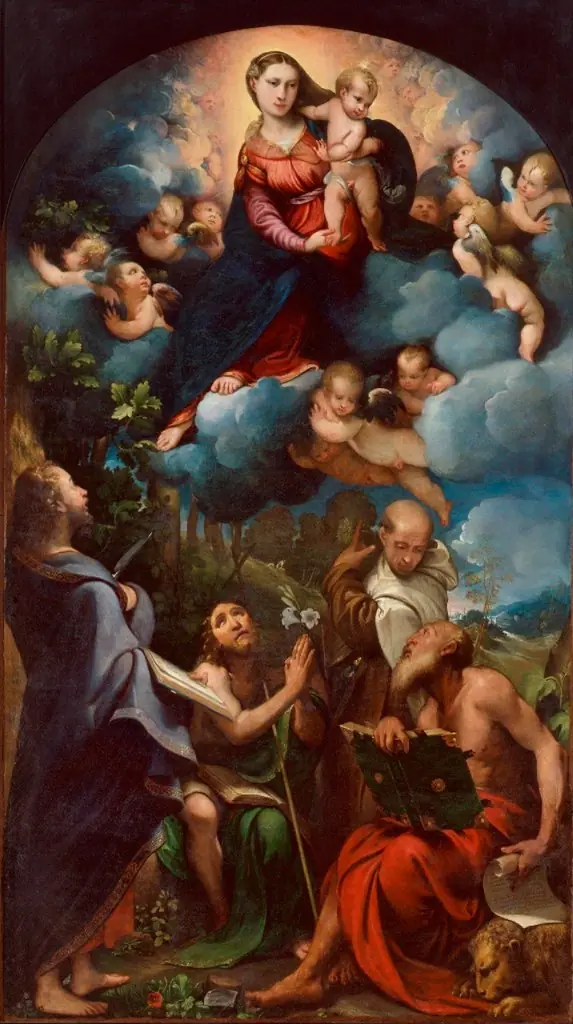 Virgin and Child in Glory with St. Bartholomew, St. John the Baptist, St. Albert and St. Jerome
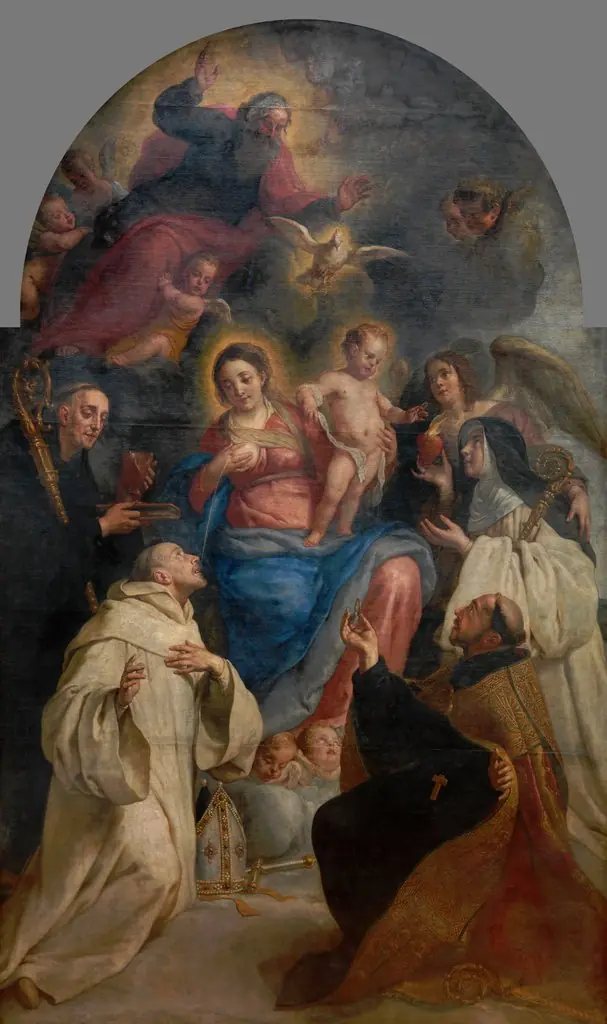 Lactatio of Saint Bernard of Clairvaux
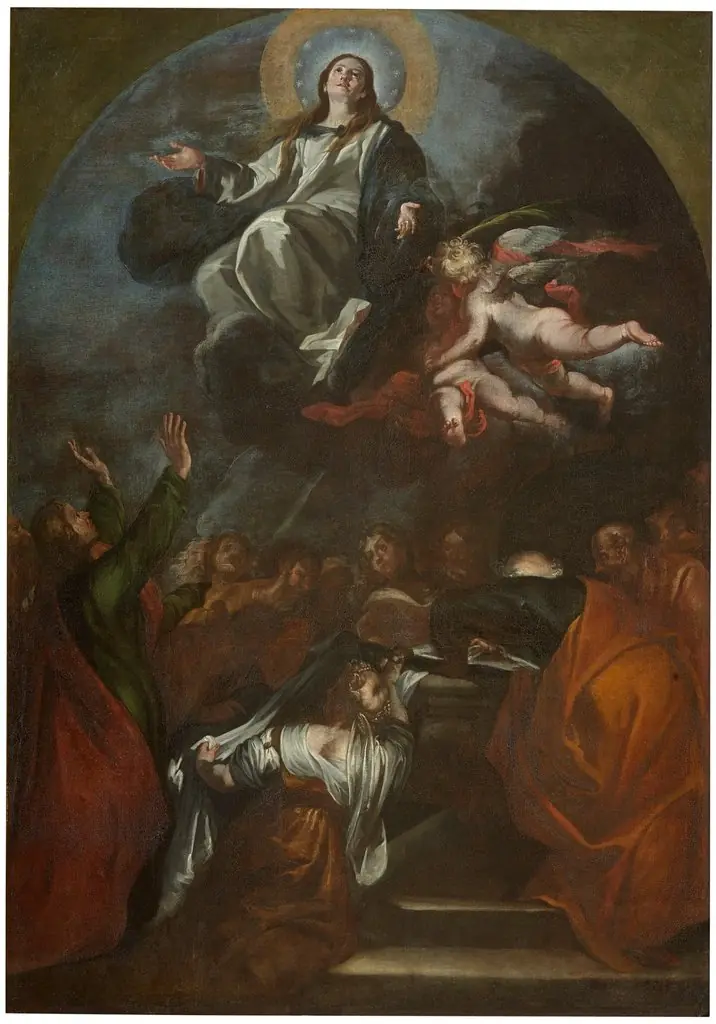 The Assumption of the Virgin
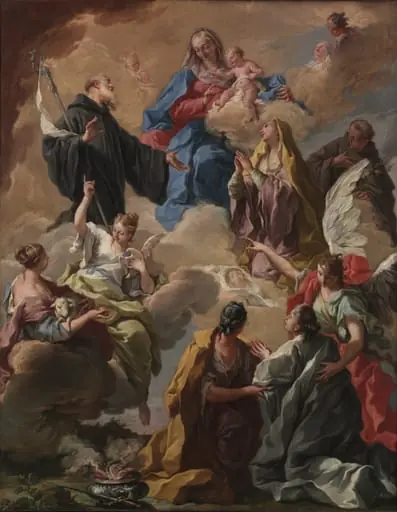 Saints Presenting a Devout Woman to the Virgin and Child
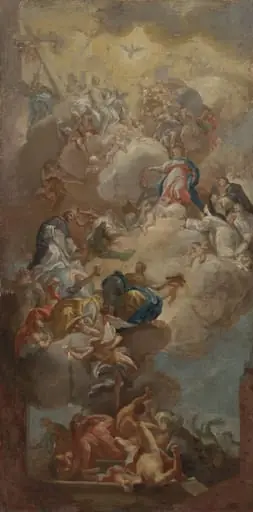 The Glorification of Saint Dominic