Artwork
The Baptism of Christ
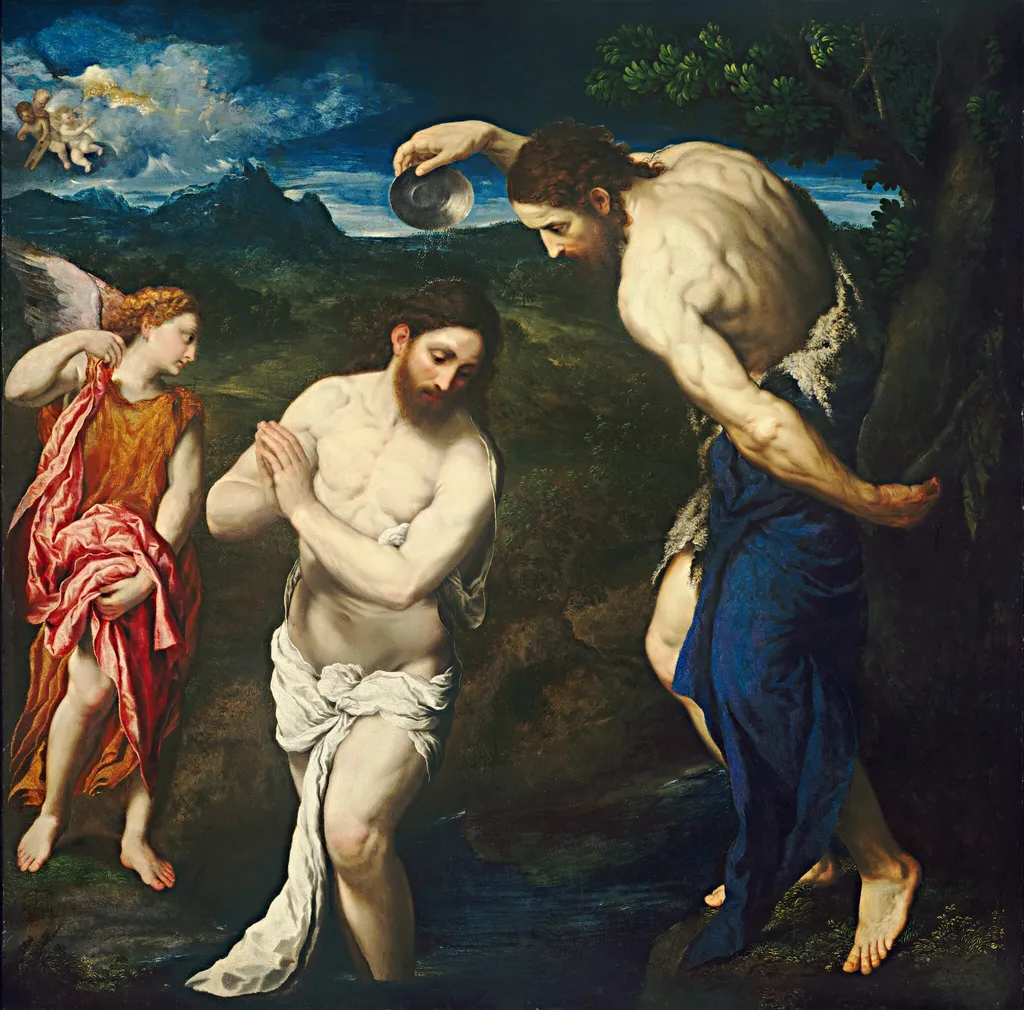
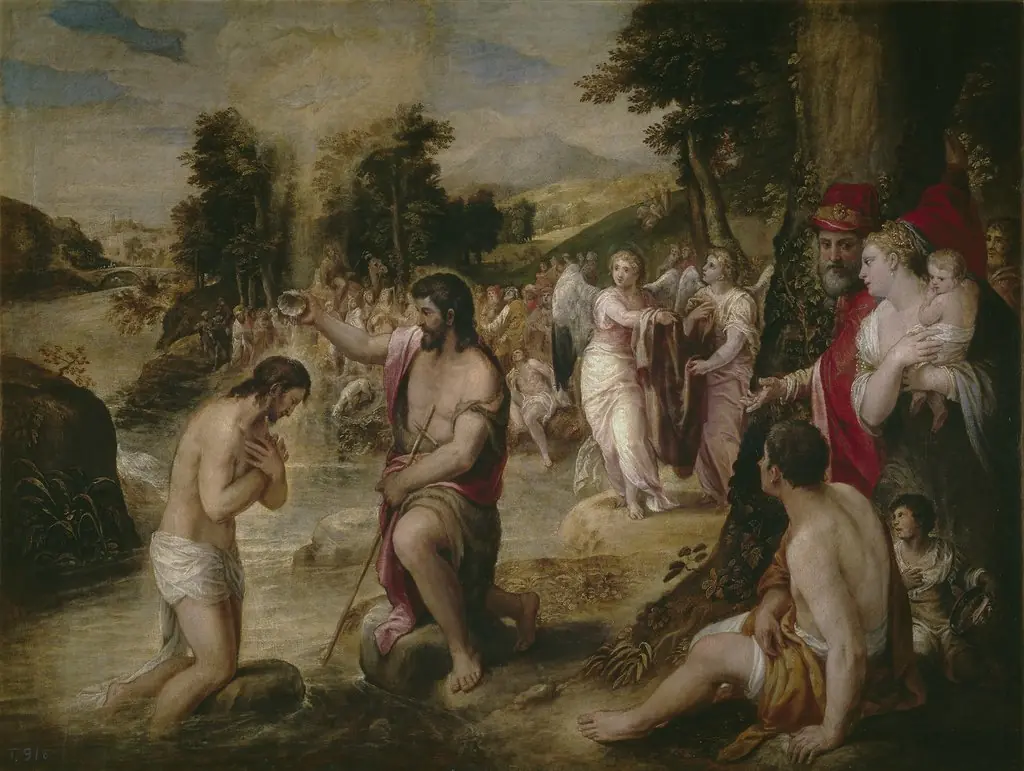
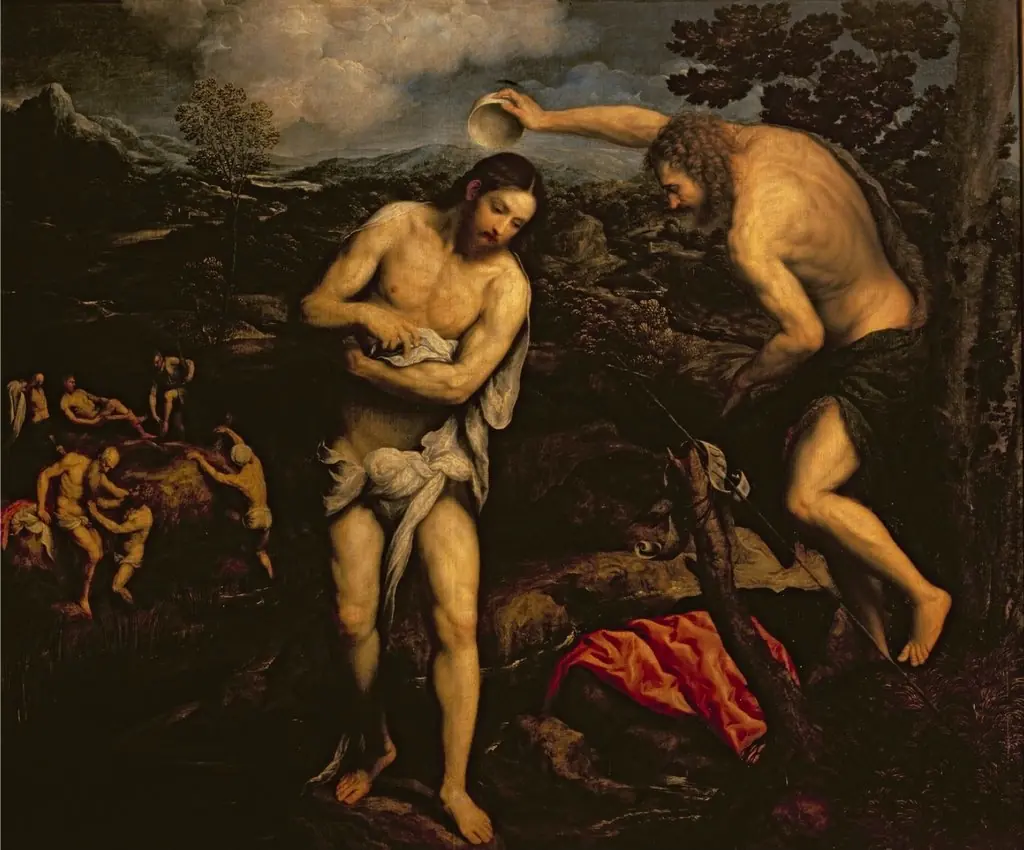
The Baptism of Christ is an oil painting by the Mannerist artist Paris Bordone. It dates from 1538 and is held in the collection of the National Gallery of Art.
About this work
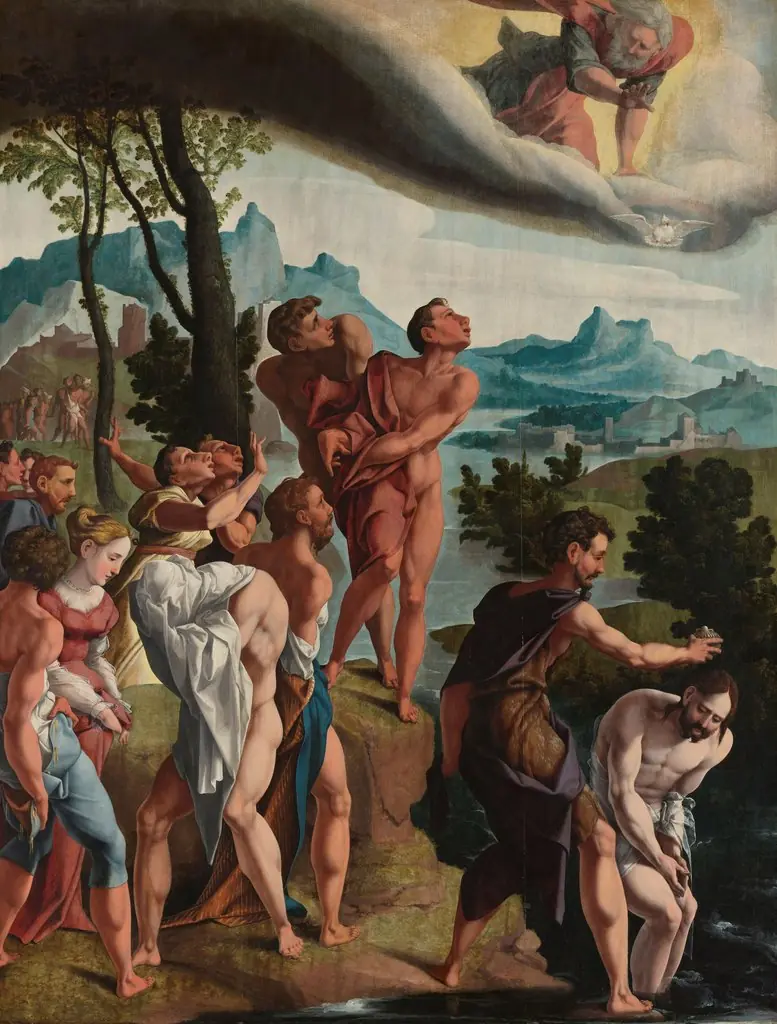
Jesus is baptized by John the Baptist in this oil on canvas from around 1535 to 1540. The two stand at the center as onlookers watch from the sides, and a plain background keeps the focus on the moment. To learn more about the method, look up glazing.
History & Provenance
It was sold at Winstanley's auction in Liverpool on 17 April 1839, and subsequently acquired by Charles Meigh of Shelton, Staffordshire, by 1845.
Created in 1538 by Paris Bordone, this oil-on-canvas painting depicts the Baptism of Jesus. Its documented ownership begins with Ambrogio Doria in Rome before passing to William Earle of Liverpool. It was sold at Winstanley's auction in Liverpool on 17 April 1839, and subsequently acquired by Charles Meigh of Shelton, Staffordshire, by 1845.
Following Meigh's death, the piece was sold at Christie, Manson & Woods in London on 9 June 1855, to Bates. It later entered the collection of John Heugh, London, before being sold again at Christie's on 11 May 1878. The painting was purchased by Thomas Agnew & Sons, sold to H. Higgins, and eventually inherited by Mrs. Higgins of Thing Hill, Hereford.
After a sale at Christie's on 22 April 1899, it was acquired by Colnaghi and sold to Peter A. B. Widener of Elkins Park, Pennsylvania. It remained in the Widener estate until Joseph E. Widener gifted it to the National Gallery of Art in 1942, where it is now held.
Legacy
The Baptism of Christ by Paris Bordone entered public collections through a well-documented chain of ownership culminating in its acquisition by the National Gallery of Art, underscoring its recognized place within European art history. Its provenance, traced from Ambrogio Doria to Peter A. B. Widener and finally to the NGA, reflects its enduring appeal to collectors and institutions. The work remains a notable example of sixteenth-century Venetian religious painting and continues to inform scholarship on Bordone's oeuvre.
Overview
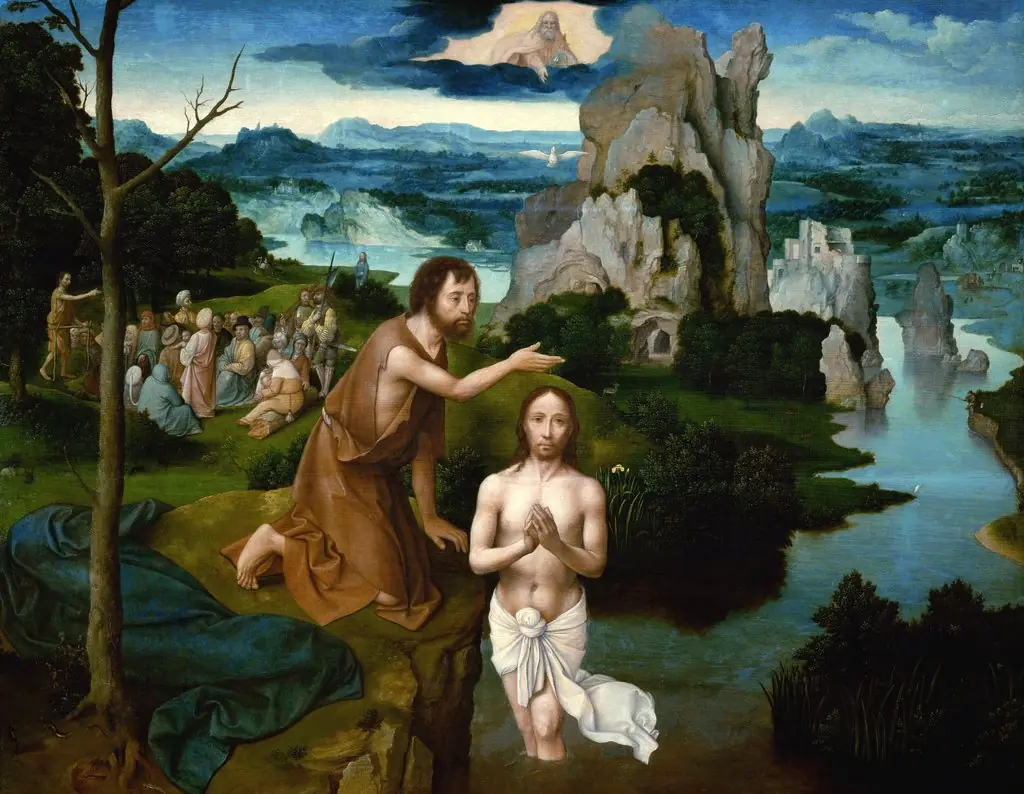
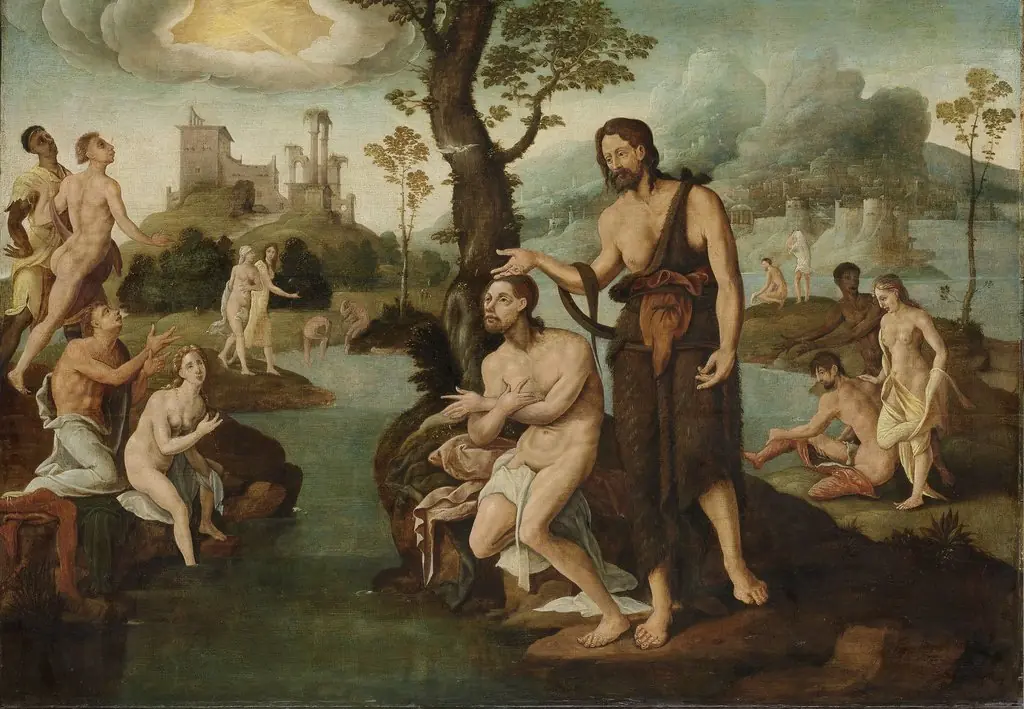
Paris Bordone's The Baptism of Christ, executed in 1538, is a significant religious work from the artist's mature period during the Italian Renaissance. The painting depicts the biblical moment where John the Baptist pours water over Jesus Christ in the River Jordan. Bordone arranges the composition with the two central figures standing in shallow water, framed by a group of onlookers on the riverbanks to the left and right.
The artist employs a calm, balanced arrangement that emphasizes the solemnity of the sacrament while showcasing his characteristic Venetian colorism and attention to texture. The background remains relatively simple, directing the viewer's focus to the interaction between the figures and the divine light that often accompanies such scenes in Venetian tradition. Created during a time when Bordone was establishing his reputation in Venice and beyond, the work demonstrates his ability to synthesize the monumental forms of Titian with a refined, elegant style.
The use of oil on canvas allows for rich tonal transitions and a luminous quality typical of mid-16th-century Venetian painting. This piece stands as a representative example of Bordone's religious output, reflecting the devotional needs and aesthetic preferences of the period.
Subject & Meaning
The artwork illustrates the biblical account of Christ's baptism in the Jordan River, a foundational event marking the beginning of his public ministry. John the Baptist, positioned centrally, performs the sacrament, while Christ humbly receives it. Attendant figures observe the sacred act from the periphery, contributing to the solemnity of the occasion without distracting from the primary narrative.
Technique & Style
Executed in oil on canvas, the painting employs a focused composition to emphasize its central subject. The artist utilizes a relatively unadorned background, ensuring that the figures of Christ and John the Baptist remain the primary visual anchors. This deliberate simplicity contributes to the overall serene atmosphere, allowing the viewer to contemplate the spiritual weight of the depicted event without extraneous details.
Own this work as a print
Artist & collection

Artist
Paris Bordone (Paris Paschalinus Bordone; 5 July 1500 – 19 January 1571) was an Italian painter of the Venetian Renaissance who, despite training with Titian, maintained a strand of Mannerist complexity and provincial vigor.