Artwork
Tiburtine Sibyl and the Emperor Augustus
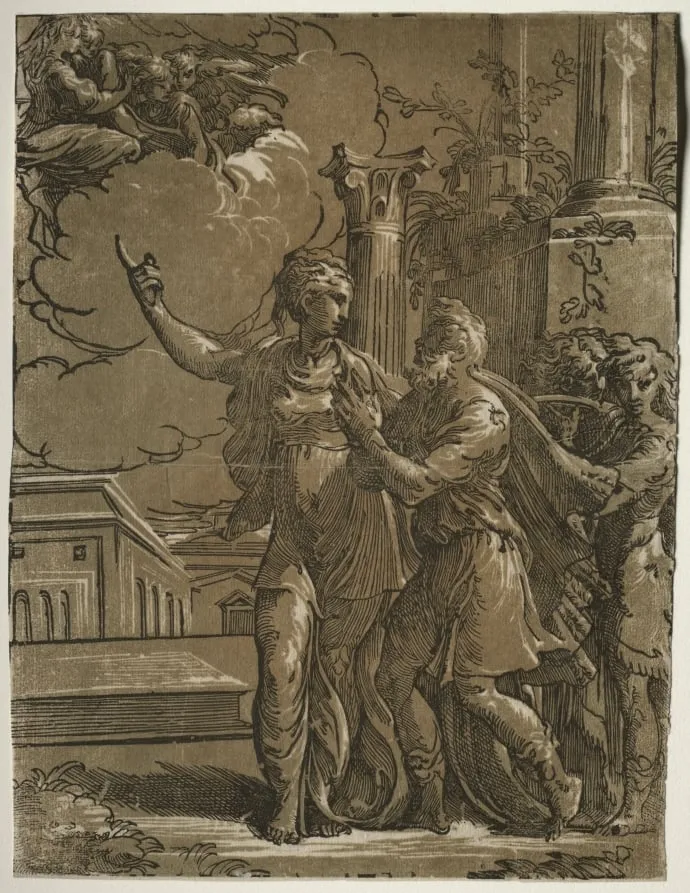
Tiburtine Sibyl and the Emperor Augustus is a print by the Renaissance artist Parmigianino. It dates from 1528 and is held in the collection of the Cleveland Museum of Art.
- Accession no.
- 1923.115
- Credit line
- Dudley P. Allen Fund
About this work
Overview
Tiburtine Sibyl and the Emperor Augustus is a print depicting a legendary encounter between the Roman Emperor Augustus and the Tiburtine Sybil, interrupted by a vision of the Virgin and Child.
Subject & Meaning
The scene shows Augustus seeking the Sybil's advice on apotheosis, when a divine vision appears, foreshadowing a new spiritual era and a ruler who would surpass Augustus.
Technique & Style
The print combines dramatic and intimate elements, with a blend of grand and personal details. The composition features a Roman emperor and the Sybil, with the Virgin and Child appearing in a golden-lit sky.
History & Provenance
The print was likely made by Antonio da Trento under Parmigianino's supervision. The Cleveland Museum of Art holds an example of the print, representing the second state, with added hatching to the attendant's cheek.
Artist & collection

Artist
Girolamo Francesco Maria Mazzola (11 January 1503 – 24 August 1540), also known as Francesco Mazzola or, more commonly, as Parmigianino (UK: US: Italian:; "the little one from Parma"), was an Italian Mannerist painter…

- Adoration of the Shepherds
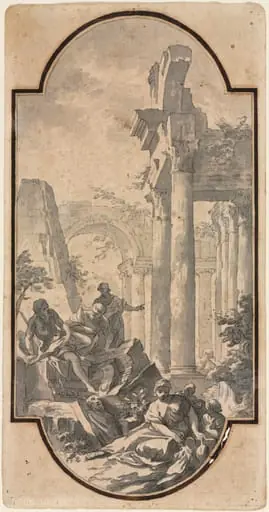 Figures Near the Ruins of a Corinthian Temple (recto)
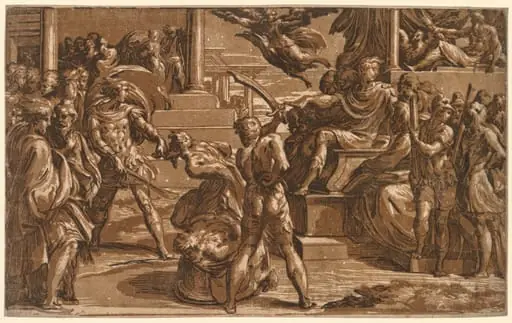 The Martyrdom of St. Peter and St. Paul
![The Martyrdom of Saints Peter and Paul [recto], by Antonio da Trento](https://artifactworldgallery.com/img/antonio-da-trento--the-martyrdom-of-saints-peter-and-paul-recto--a51e90060085a207-w320.webp) The Martyrdom of Saints Peter and Paul [recto]
The Martyrdom of Saints Peter and Paul [recto]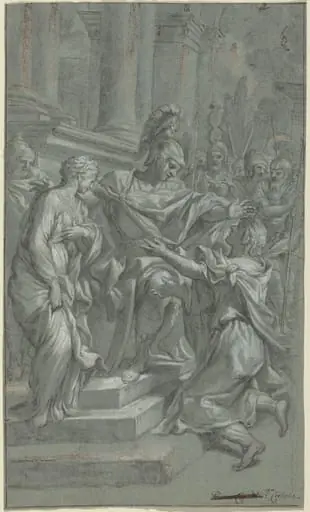 Scipio Restoring His Captive to Her Lover
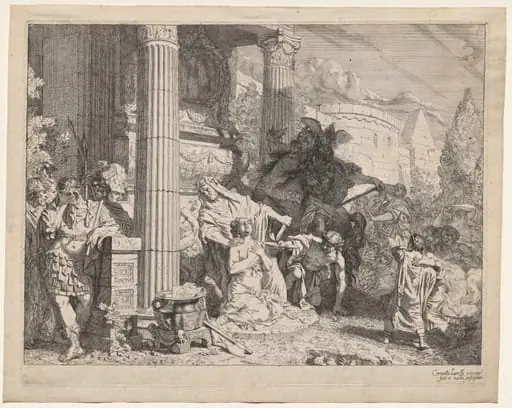 The Sacrifice of Polyxena
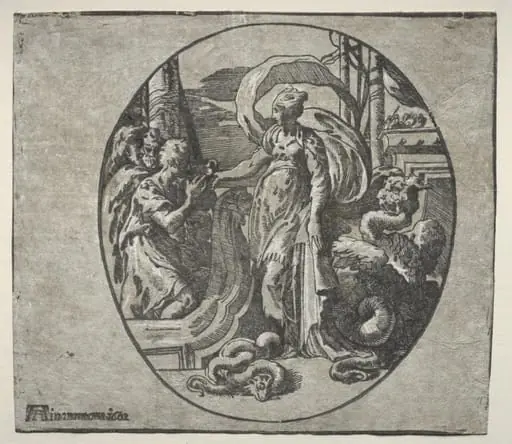 Circe Giving Drink to the Companions of Ulysses
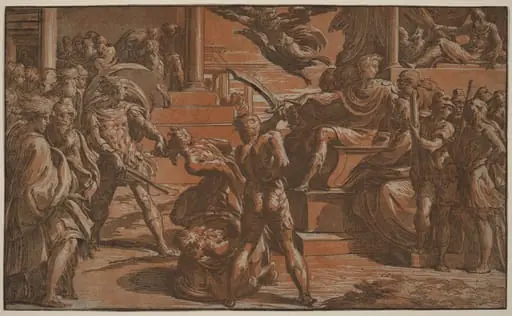 The Martyrdom of Two Saints
 Sacrifice to Love
 Rape of Europa
 A Satyr with a Staff and Seven Other Figures
 Masinissa and Sophonisba