Artwork
Portrait of Camilla Gonzaga and Her Three Sons
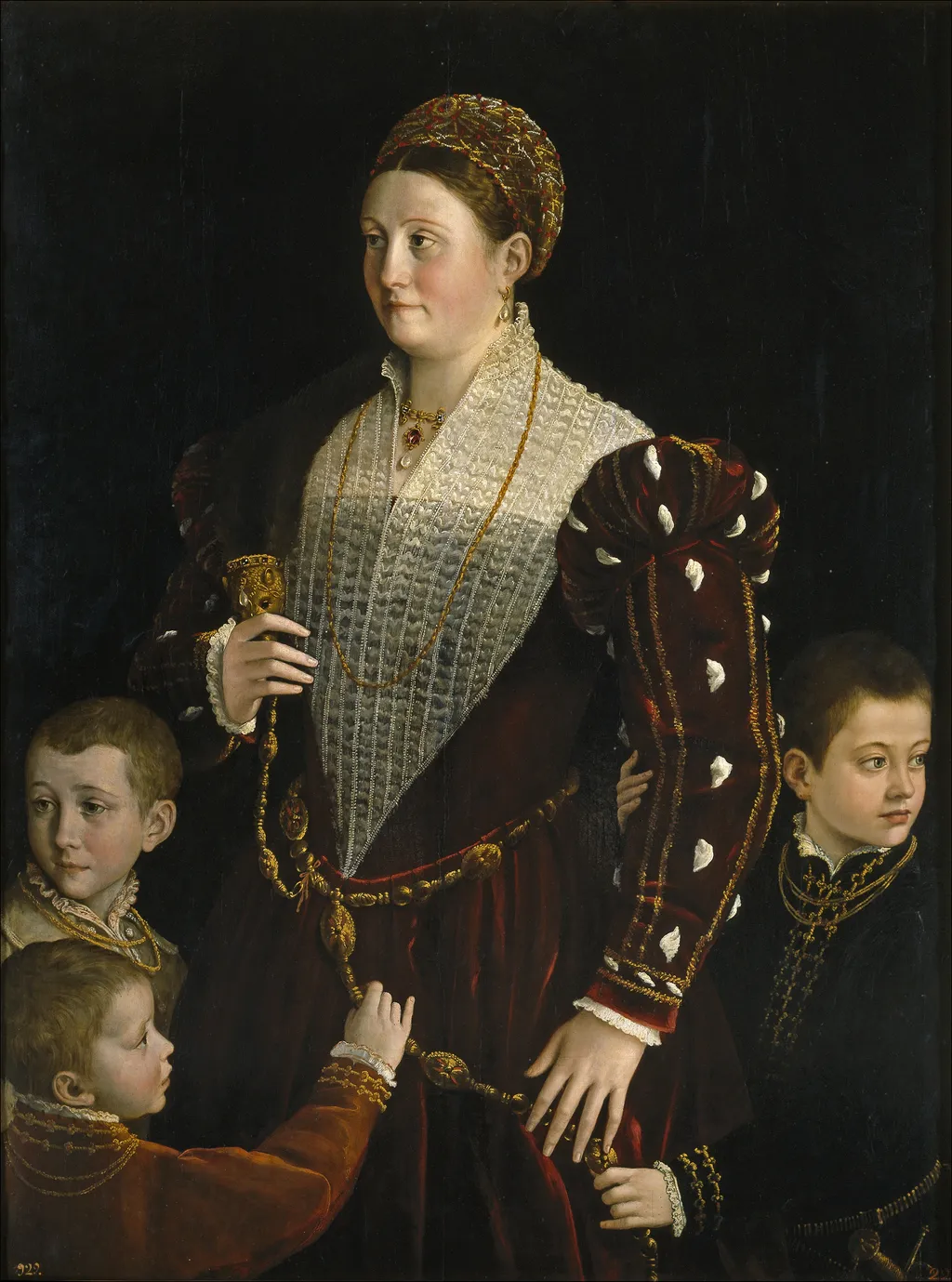
Portrait of Camilla Gonzaga and Her Three Sons is an oil painting by the Mannerist artist Parmigianino. It dates from 1535 and is held in the collection of the Museo del Prado.
About this work
The painting is linked to a matching portrait of her husband, Pier Maria Rossi di San Secondo, which is also in the Prado.
Portrait of Camilla Gonzaga and Her Three Sons is a work attributed to Parmigianino and his workshop. It was painted around 1539‑1540 on wood. The piece is a family portrait, showing Camilla Gonzaga with her three children.
The painting is linked to a matching portrait of her husband, Pier Maria Rossi di San Secondo, which is also in the Prado. Both works are generally considered products of the same workshop and time.
If you’re curious to see more, check out the Museo del Prado.
Subject & Meaning
The painting shows Camilla Gonzaga, wife of Pier Maria III de' Rossi, Count of San Segundo, with her three sons Troilo, Federico and Ippolito. This iconographic arrangement of a mother surrounded by her children was first used in Italian art, drawing on allegorical figures of Charity. The work pairs with Portrait of Pier Maria Rossi di San Segundo, also in the Prado, forming a pendant pair.
The subject is identified through archival records from the 1686 inventory of the Royal Alcazar of Madrid, which mentions 'the woman of the Count of San Segundo', and later scholarship in 1896. Stylistically, Camilla is depicted on a black background in a scarlet velvet dress with intricate lace and jewelry, gazing toward the right, ideally toward her husband's portrait. The three sons are rendered in varied hands, likely added at different times, with the youngest child echoing infant Jesus motifs from Parmigianino's works and another reflecting Bronzino's stylized elegance.
Technique & Style
The work is an oil painting on wood panel measuring 128 cm by 97 cm. It was created around 1539–1540 and shows the countess Camilla Gonzaga in a scarlet velvet dress with a frilled muslin collar, surrounded by her three sons. The figure is set against a dark background and looks toward the right, where a pendant portrait of her husband Pier Maria Rossi di San Secondo would be placed. The children are rendered in a manner suggesting different hands, some linked to Parmigianino’s style and others to the more refined elegance associated with Bronzino’s circle.
History & Provenance
The painting is traditionally dated to about 1539–1540, the final years of Parmigianino’s life, and is believed to have been commissioned to commemorate Camilla Gonzaga with her sons Troilo, Federico, and Ippolito. After Parmigianino’s death in 1540, the work may have been completed by another hand, possibly from his workshop or the circle of Bronzino.
The canvas entered Spain in 1664 when an agent acting for Philip IV purchased it from the Serra collection. An earlier mention appears in the 1686 inventory of the Royal Alcázar of Madrid as the wife of the Count of San Segundo, later identified as Camilla Gonzaga. The work has been housed at the Museo del Prado in Madrid since its modern collections were formed.
The Portrait of Camilla Gonzaga and Her Three Sons is held in the Museo del Prado in Madrid, where it is displayed alongside its pendant, the Portrait of Pier Maria Rossi di San Secondo. The work entered the Spanish royal collections in 1664, when an intermediary purchased it from the Serra collection on behalf of King Philip IV following diplomatic negotiations between the Rossi and Farnese families. It was recorded in the 1686 inventory of the Royal Alcazar of Madrid in the Sala de la Aurora, listed as the wife of the Count of San Secondo. The painting was subsequently moved to the Prado, where it remains part of the permanent collection.
Context
Scholarship on the portrait has long treated the attribution to Parmigianino as unsettled. Early twentieth-century critics such as Sidney Freedberg rejected the attribution outright, and Roberto Longhi and Mario Di Giampaolo later proposed that parts of the picture, especially the three children, may reflect Bronzino’s circle, possibly executed from a lost modello after Parmigianino’s death in 1540. The countess’s likeness and costume, however, remain close to Parmigianino’s manner, and the pairing with the Portrait of Pier Maria Rossi di San Secondo in the Prado has sustained the traditional association with his name.
The work’s iconography is notable for introducing an Italian precedent in which a noblewoman appears with multiple children in a single effigy, a scheme previously rare north of the Alps. The composition’s allegorical resonance with Charity has drawn comparison to Holbein, yet its psychological distance and refined elegance align it more closely with Mannerist ideals of court portraiture. The Prado’s pairing underscores its function as dynastic image-making within the Rossi family’s broader cultural ambitions.
Legacy
The painting holds a significant place in art history as the first instance in Italian art of a portrait iconography depicting a mother surrounded by her children, an arrangement inspired by allegorical figures of Charity and preceded only by a similar work by Holbein. Its attribution to Parmigianino has been controversial, with scholars such as Freedberg, Longhi, and Di Giampaolo denying the master's hand; Di Giampaolo instead proposed an artist from Bronzino's circle, suggesting Parmigianino may have only provided an initial sketch before his 1540 death. The work and its pendant generated numerous early copies, two of which were donated by the Rossi count to Moreau de Saint Mery in 1810 after being mistaken for originals.
Overview
The work known as Portrait of Camilla Gonzaga and Her Three Sons is a late‑Mannerist family portrait executed on a wooden panel around 1539–1540. It is part of the collection of the Museo del Prado in Madrid and is traditionally linked with a companion portrait of her husband, Pier Maria Rossi di San Secondo, also in the Prado.
Own this work as a print
Artist & collection

Artist
Girolamo Francesco Maria Mazzola (11 January 1503 – 24 August 1540), also known as Francesco Mazzola or, more commonly, as Parmigianino (UK: US: Italian:; "the little one from Parma"), was an Italian Mannerist painter…

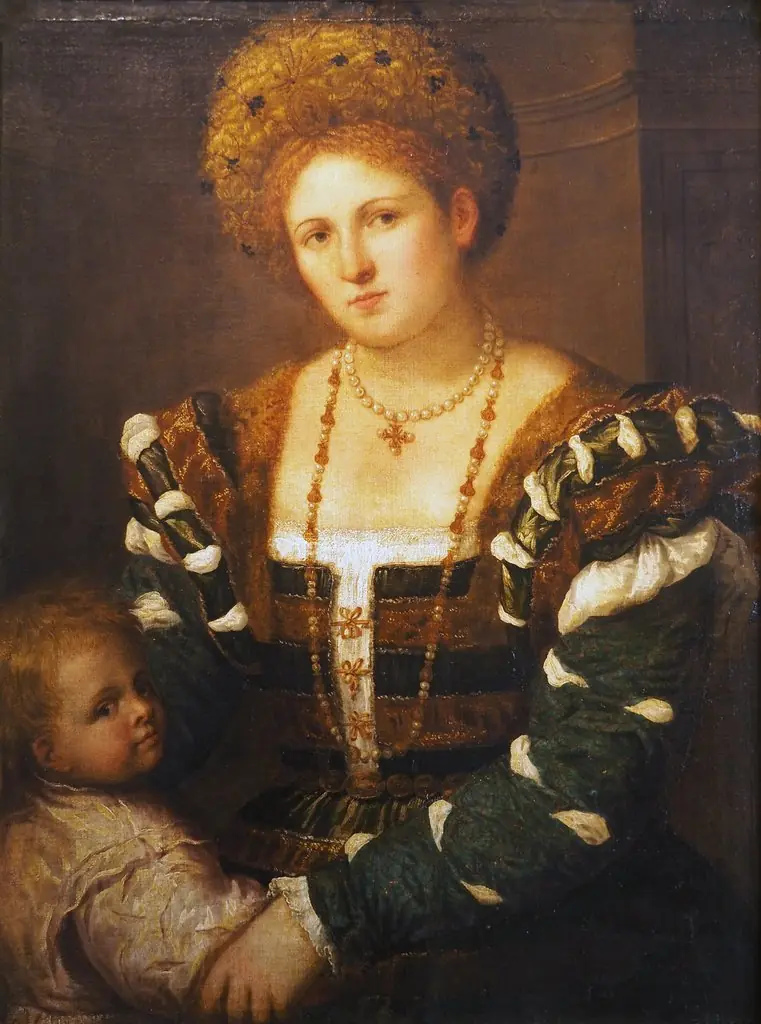 Portrait of a Lady with a Boy
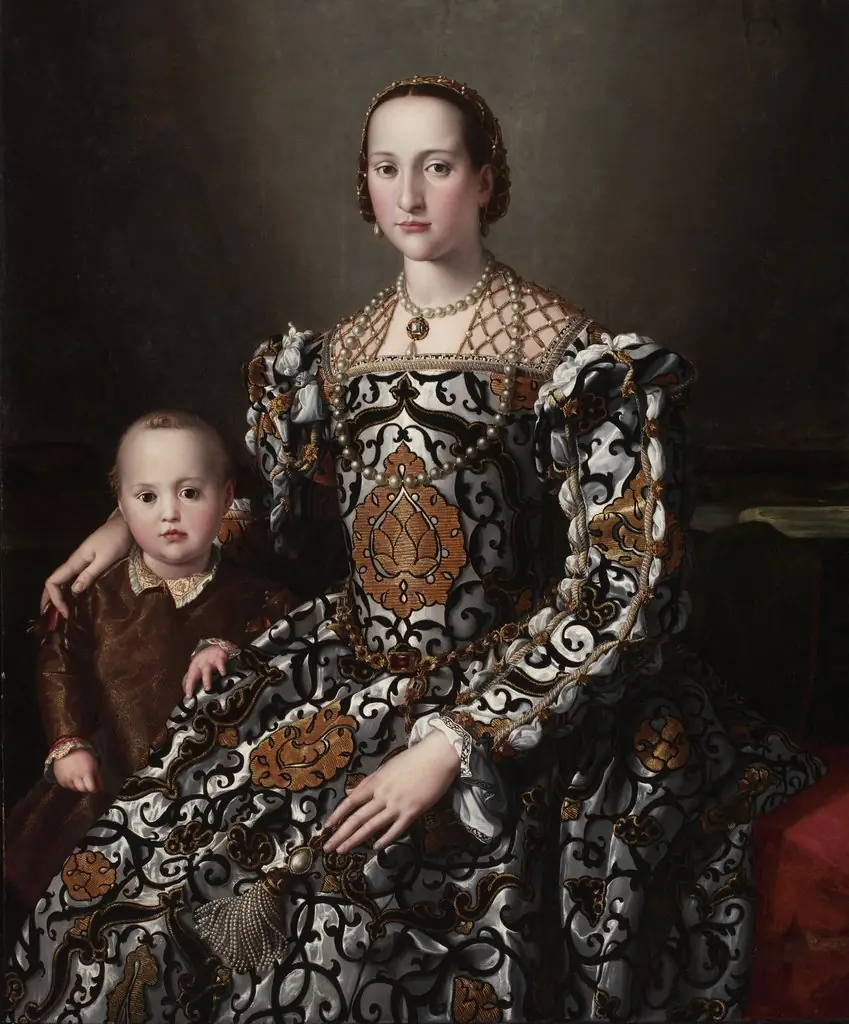 Eleonora of Toledo and Her Son
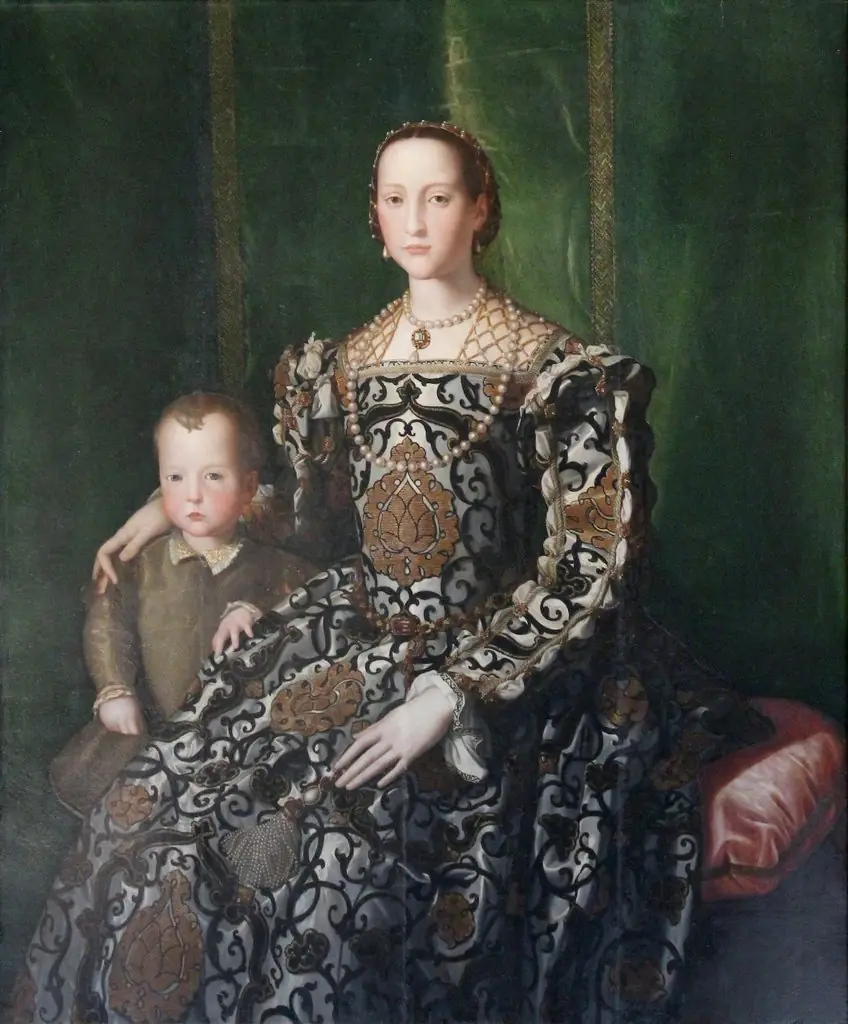 Portrait of Eleanor of Toledo and her son Garzia de' Medici
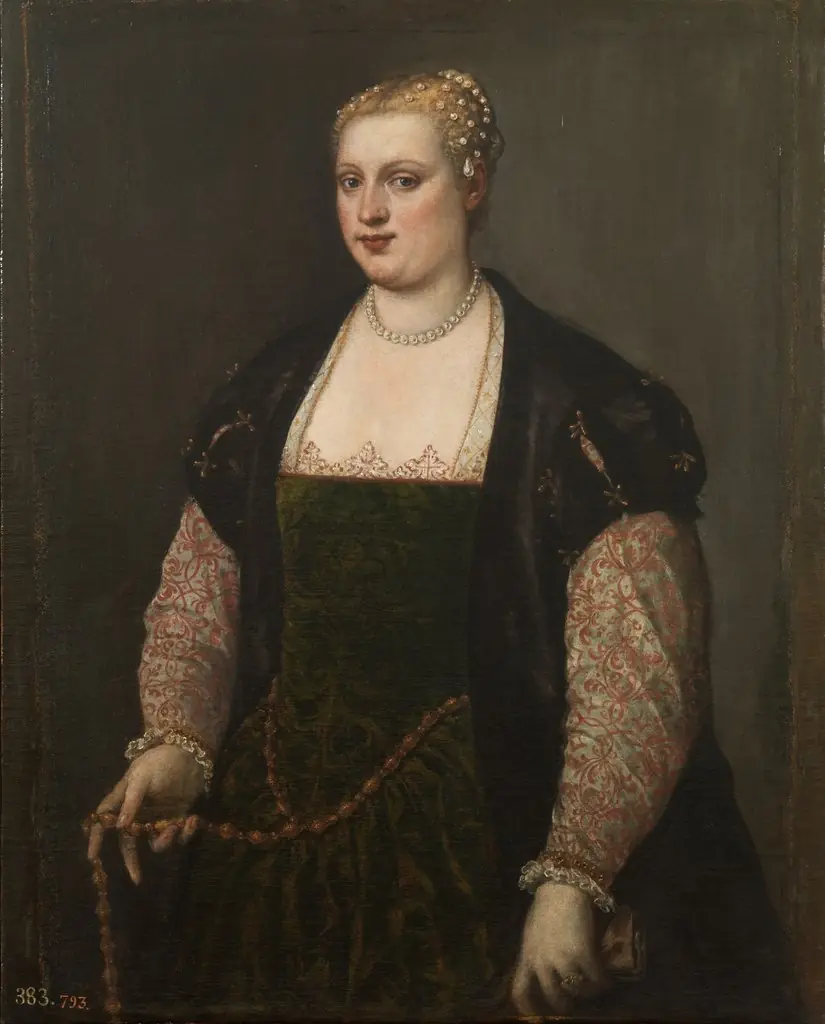 Portrait of a Woman
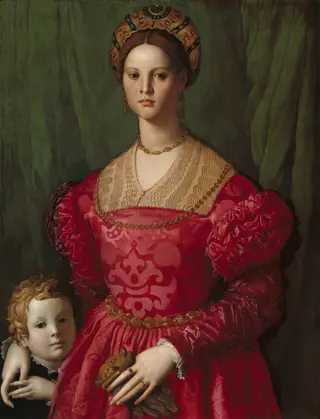 A Young Woman and Her Little Boy
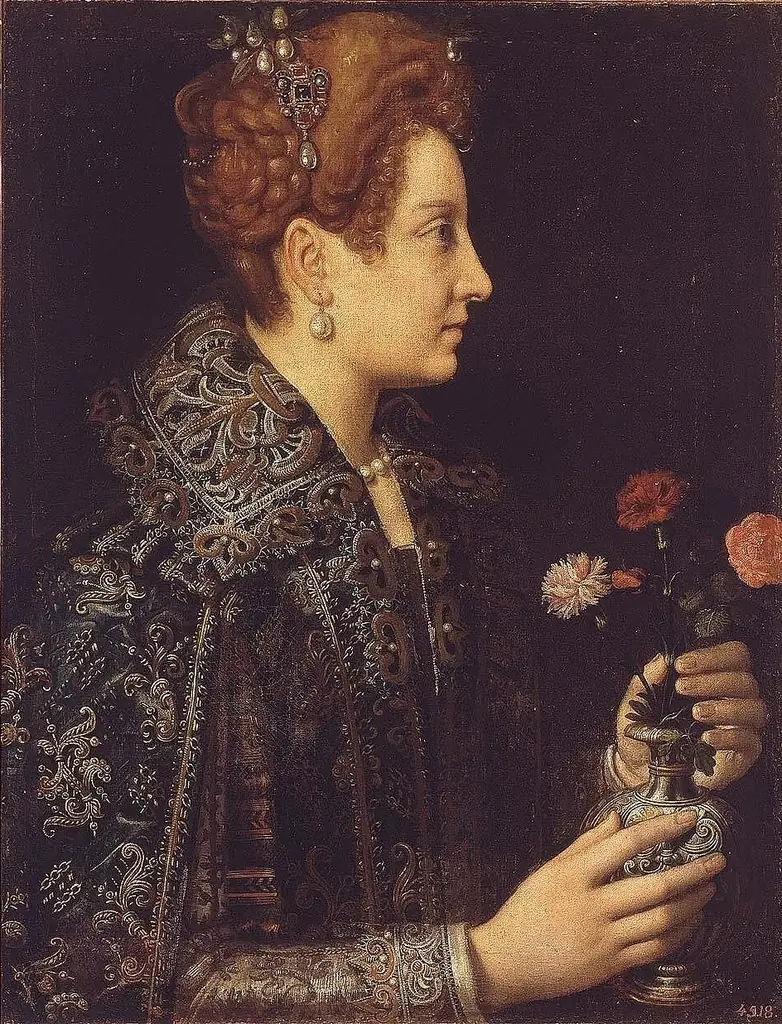 Portrait of a Young Woman in Profile
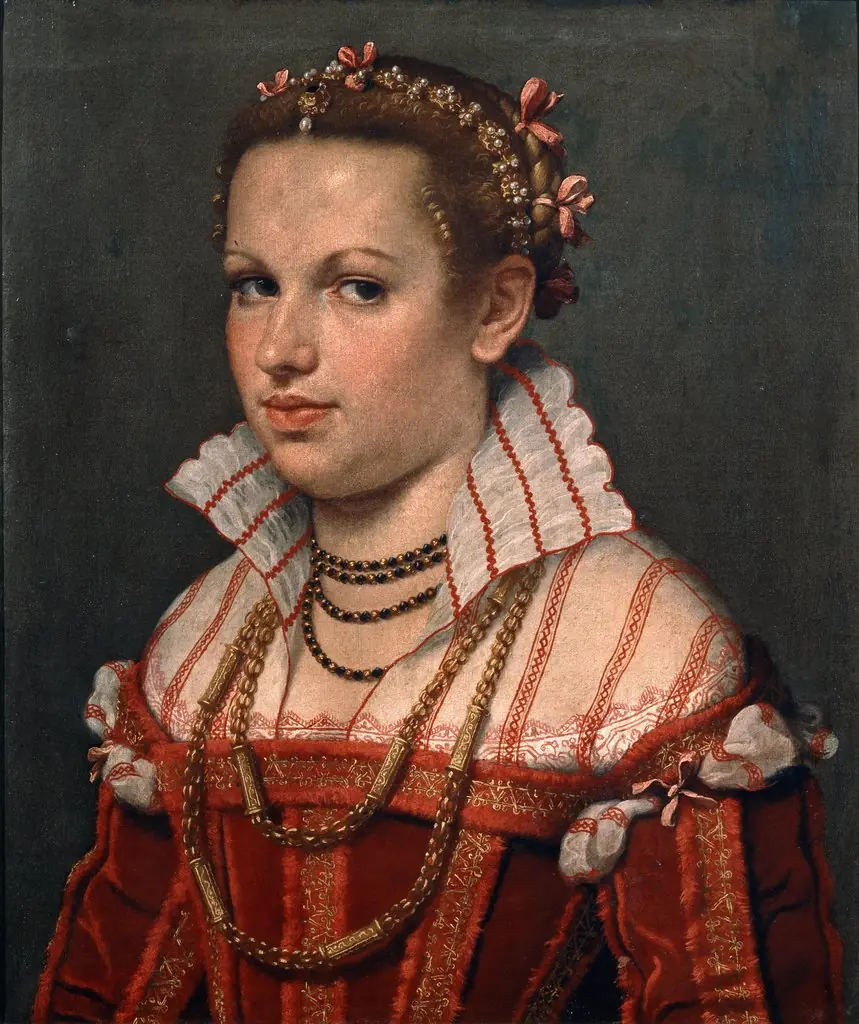 Isotta Brembati
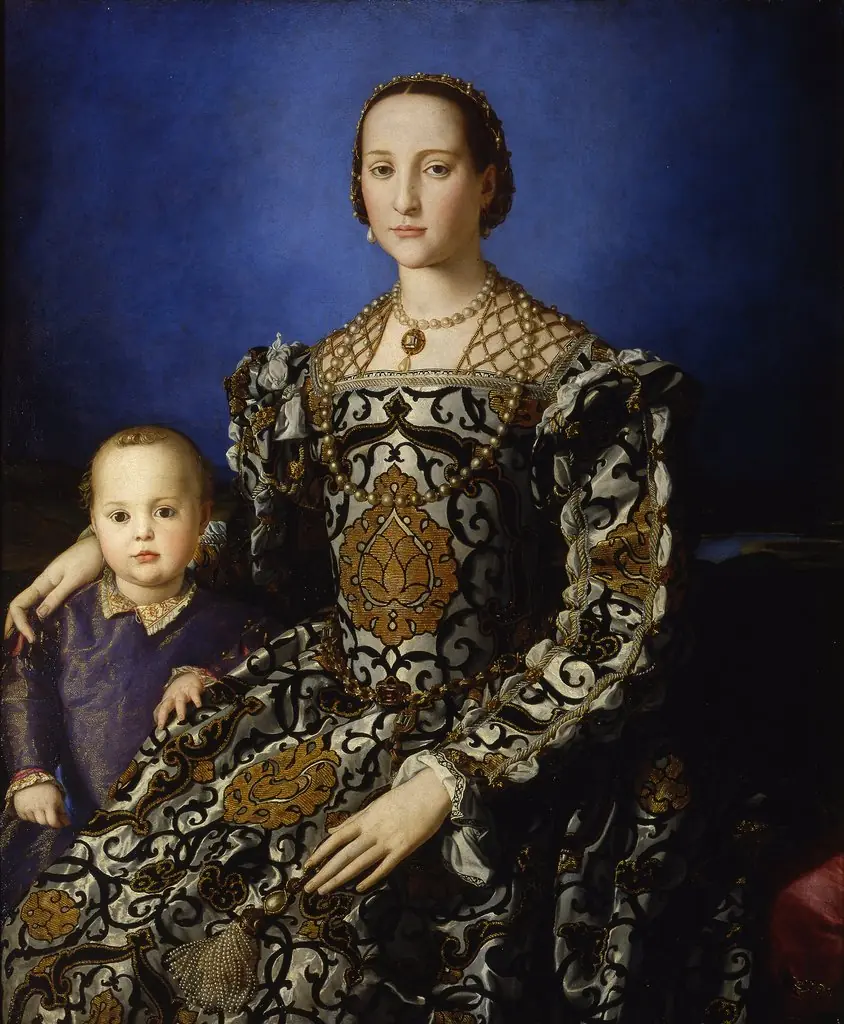 Portrait of Eleanor of Toledo and her son Giovanni de' Medici
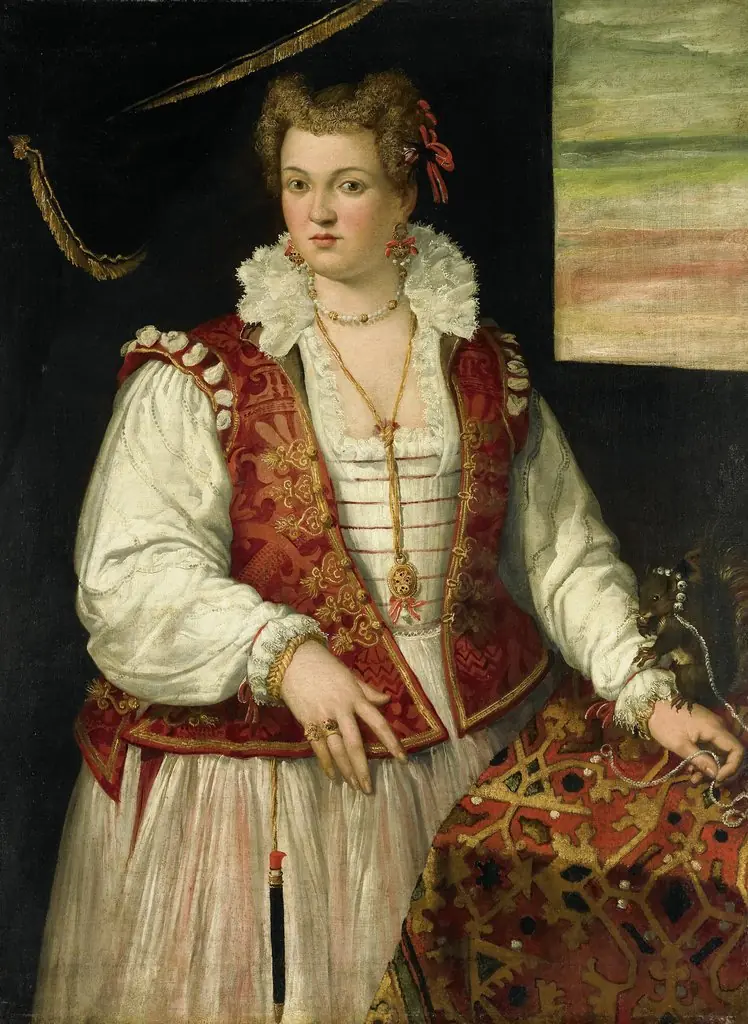 Portrait of a Woman with a Squirrel
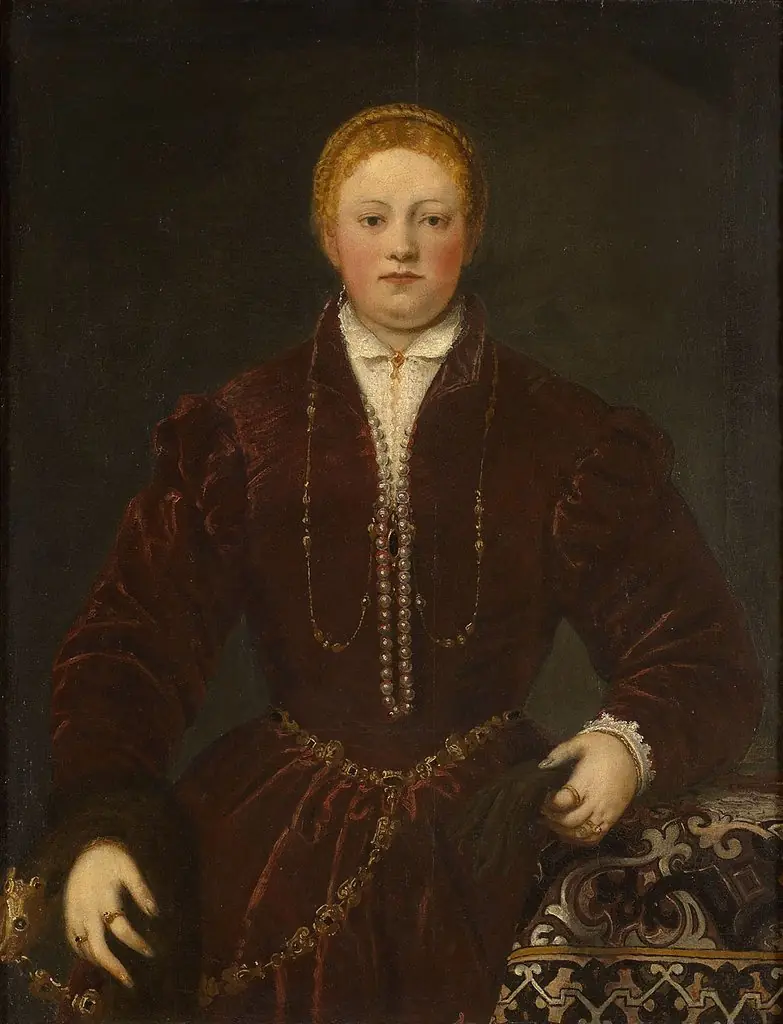 Portrait of a Young Lady
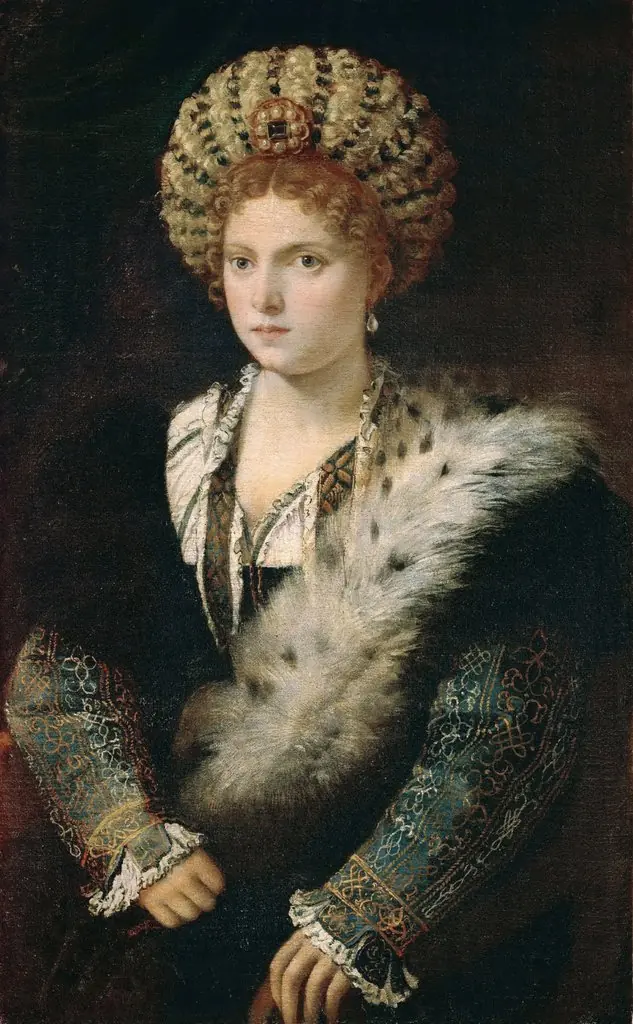 Portrait of Isabella d'Este
- Portrait of Joanna of Austria with her son Philip