Artwork
Frances, Countess of Somerset
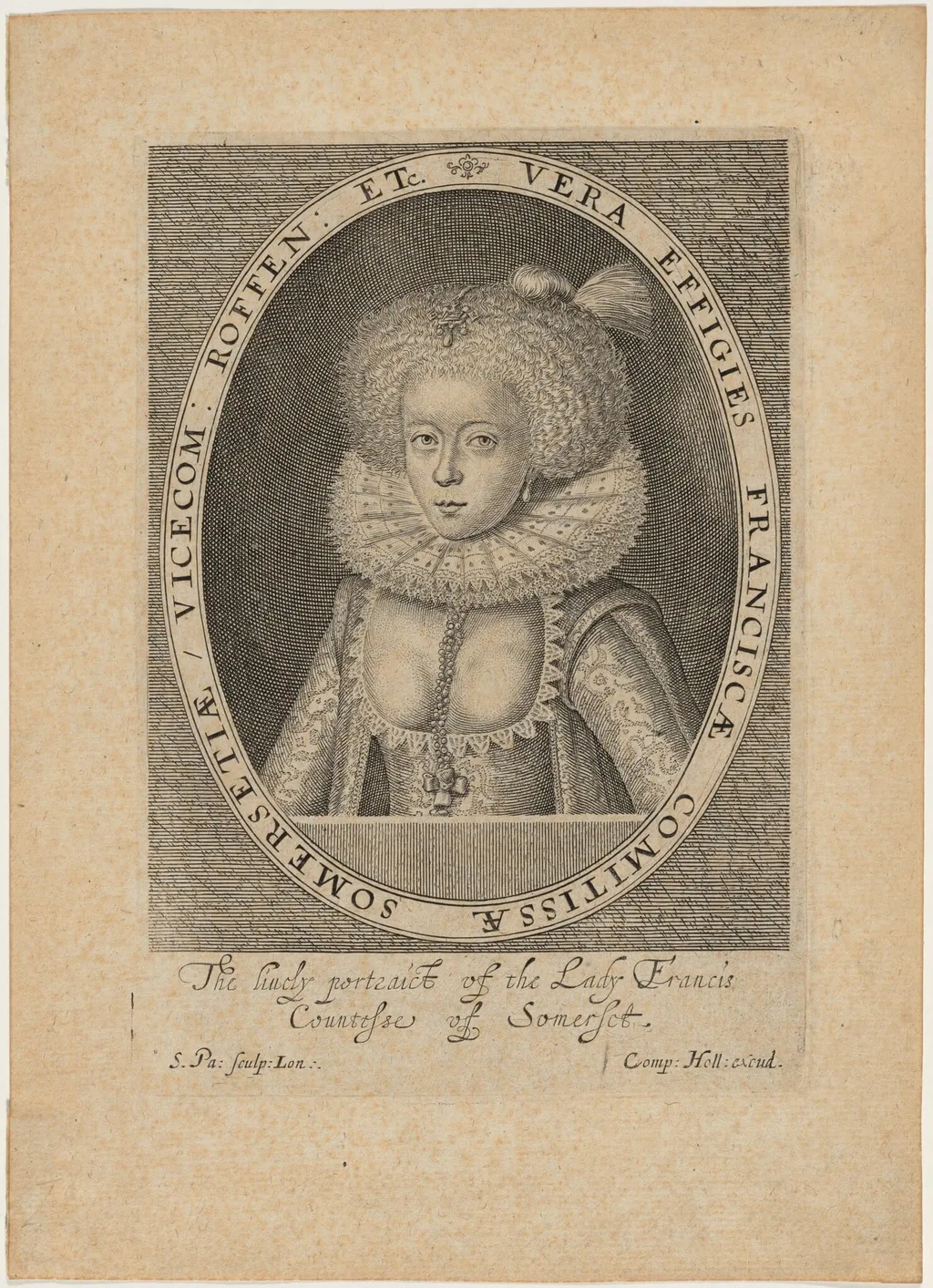
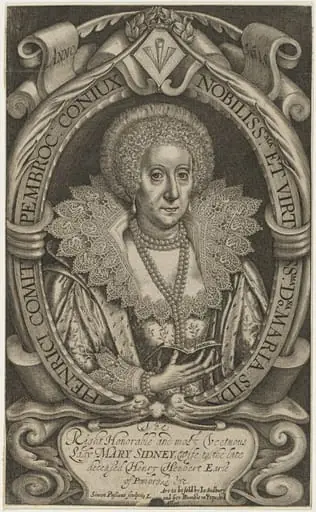
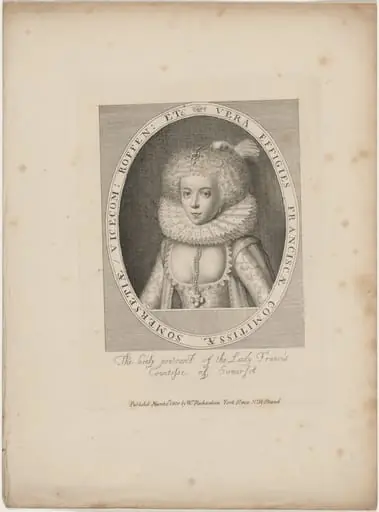
Frances, Countess of Somerset is an ink print by the Renaissance artist Simon van de Passe. It dates from 1621 and is held in the collection of the National Gallery of Art.
About this work
Overview
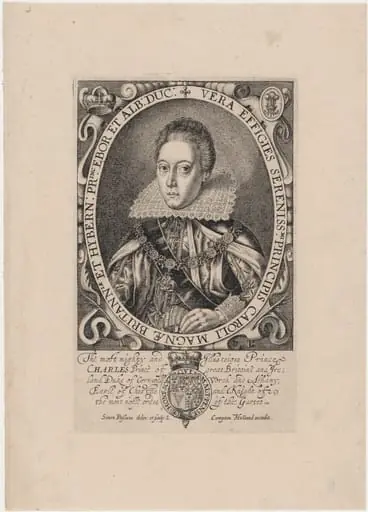
Simon van de Passe’s 1621 engraving presents Frances, Countess of Somerset, in a half‑length portrait. The figure is set against a dark backdrop, framed by a circular cartouche that bears her name. Her hair is styled in curls pulled back, and she is attired in a lace‑trimmed gown with a prominent ruffled collar and a substantial necklace.
Subject & Meaning
The work identifies the sitter as Frances, a noblewoman holding the title Countess of Somerset, reflecting her social rank through sumptuous dress and jewelry. The solemn expression and restrained pose convey the dignified bearing expected of aristocratic portraiture in early‑17th‑century England.
Technique & Style
Van de Passe employs fine line work and dense cross‑hatching to render texture, from the delicate folds of the silk sleeves to the subtle modeling of the face. The engraving’s chiaroscuro effect, achieved through varying line density, creates a sense of depth within the limited tonal range of the medium.
History & Provenance
Created in 1621, the print was likely issued shortly after the Countess’s death, serving as a commemorative image for her family and associates. Copies circulated among collectors of portrait prints, and the engraving has been documented in several early modern print catalogues.
Context
The portrait belongs to the broader tradition of English aristocratic portraiture that flourished during the late Renaissance, when engravers such as van de Passe reproduced painted likenesses for wider distribution. It reflects contemporary fashions in dress and ornamentation, as well as the period’s interest in preserving elite identities through print.
Legacy
As a representative work of van de Passe’s output, the engraving illustrates the role of printmaking in disseminating portraiture beyond the confines of painted commissions. It remains a valuable visual record of early‑17th‑century English nobility and of the technical skill of Dutch‑born engravers working in England.
Own this work as a print
Artist & collection