Artwork
Masques et Visages
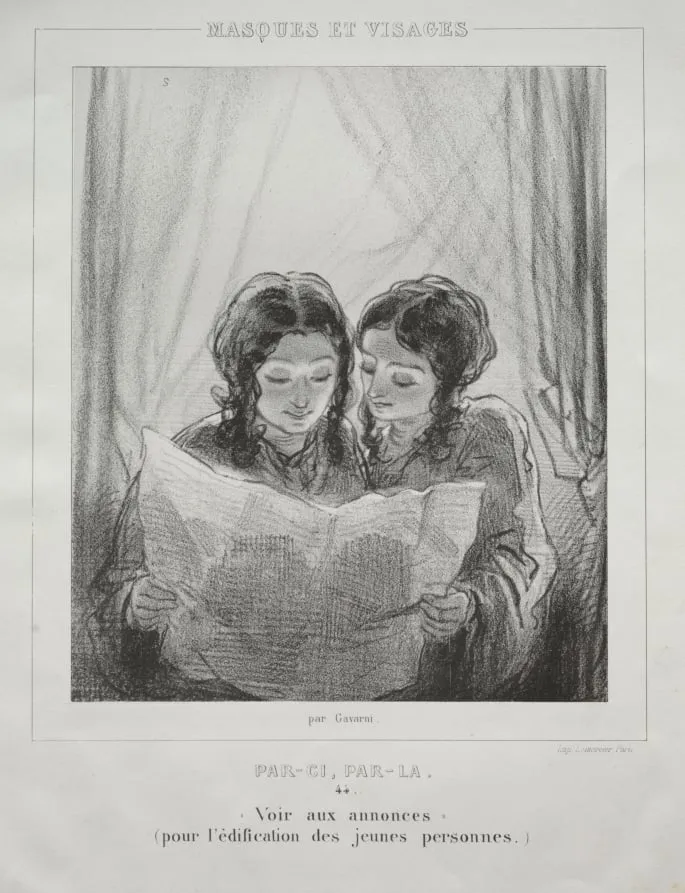
Masques et Visages is a print by the Romanticist artist Paul Gavarni. It dates from 1853 and is held in the collection of the Cleveland Museum of Art.
- Accession no.
- 1925.1031
- Credit line
- Dudley P. Allen Fund
About this work
Overview
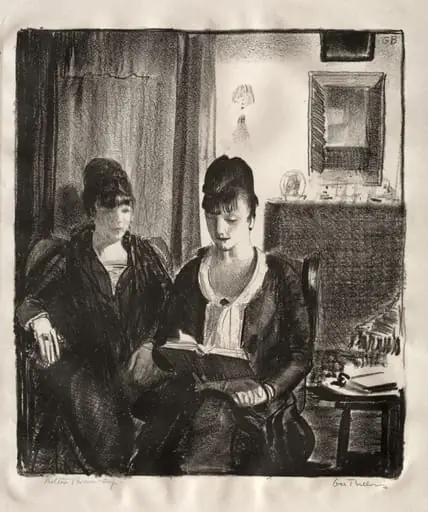
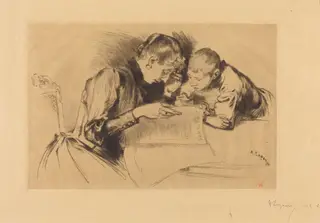
It depicts two women seated together in a modest interior, absorbed in reading a newspaper.
Masques et Visages is a lithograph by Paul Gavarni, dated around 1853. It depicts two women seated together in a modest interior, absorbed in reading a newspaper. The work belongs to the collection of The Cleveland Museum of Art.
Though often associated with Romanticism, its quiet realism and attention to everyday life reflect a transitional moment in 19th-century French printmaking, bridging social observation with emerging modern sensibilities.
Subject & Meaning
The two women, both dressed in dark clothing and sharing a quiet moment, are engaged with the newspaper as a conduit to the outside world. Their focused expressions suggest intimacy and shared attention, contrasting with the anonymity of public news. The scene subtly critiques or observes the private consumption of public information, framing domestic life as a space where societal currents are quietly absorbed and interpreted.
Technique & Style
Gavarni employed lithography to achieve fine tonal gradations and delicate line work, capturing texture in fabric and the softness of light filtering through a curtained window. The composition is restrained, with minimal detail in the background, directing focus to the figures' posture and interaction. The chiaroscuro effect enhances the intimacy of the moment, aligning with contemporary print traditions that valued nuance over dramatic flair.
History & Provenance
Created in the early 1850s, the print was likely produced for a periodical or as part of Gavarni’s series on Parisian social types. It entered The Cleveland Museum of Art’s collection through established acquisition channels in the 20th century. Its preservation reflects growing institutional interest in 19th-century French graphic arts, particularly works that document civilian life with observational precision.
Context
During the 1850s, France experienced rapid urbanization and the rise of mass media, including illustrated newspapers. Gavarni’s work responded to this shift, portraying how private spaces became sites for engaging with public discourse. His images often captured middle-class routines, offering a counterpoint to grand historical or mythological subjects favored by academic art at the time.
Legacy
Masques et Visages exemplifies Gavarni’s role in elevating printmaking as a medium for social commentary. Though less celebrated than his caricatures, this quiet scene influenced later artists interested in domestic realism, including Degas and Vuillard. Its enduring presence in museum collections underscores its value as a document of everyday life in mid-19th-century France.
Artist & collection
Artist
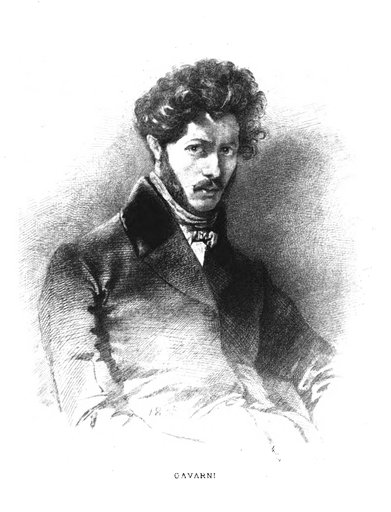
Paul Gavarni was the pen name of Sulpice Guillaume Chevalier, a French illustrator, born in Paris.

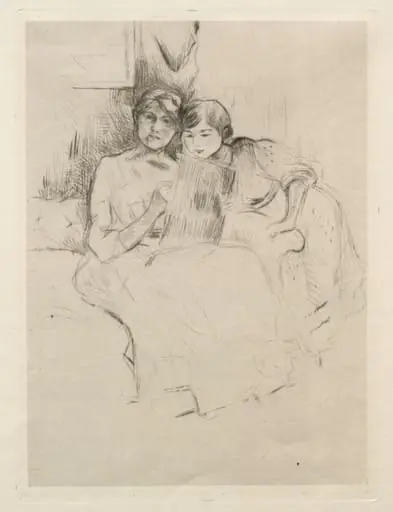
- The Drawing Lesson (Berthe Morisot Drawing with Her Daughter)
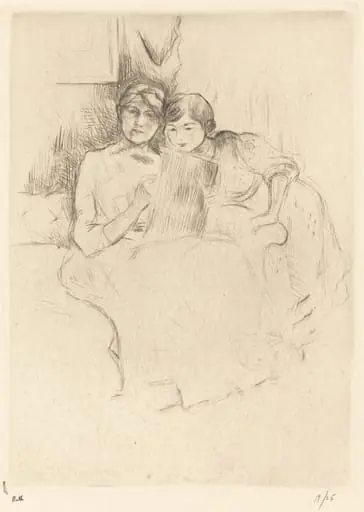 The Drawing Lesson (Berthe Morisot and her Daughter Julie Manet)
 Elsie Reading to Emma, Second Stone
 A Family (Une Famille)
 Study of Heads
 A Family (Une famille)
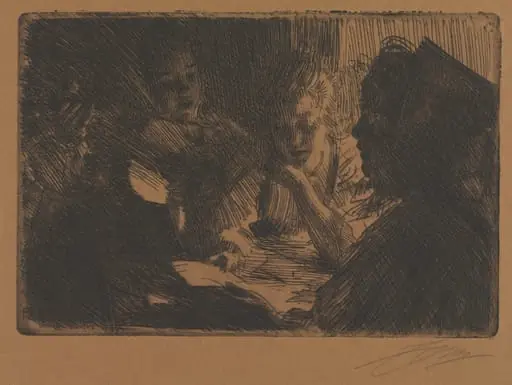 The New Ballad
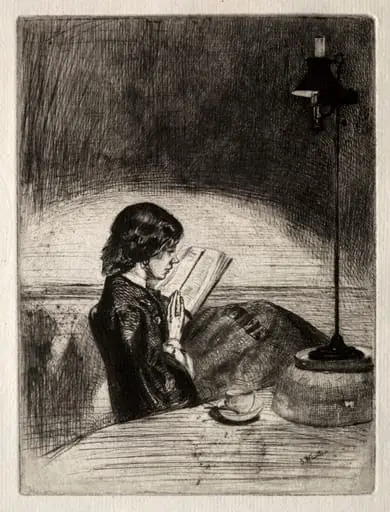 Reading by Lamplight
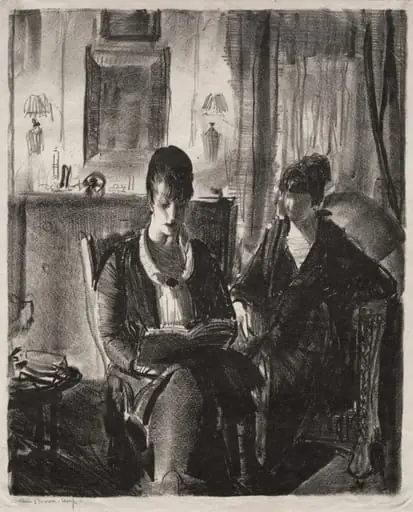 Elsie Reading to Emma, First Stone
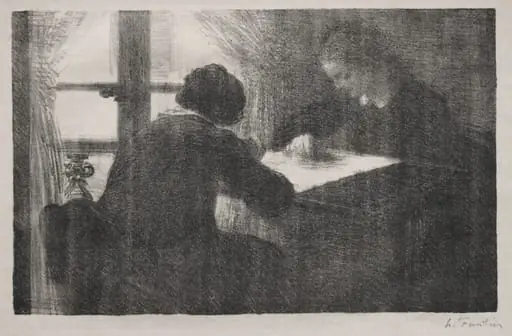 The Embroiderers
 Images (Les images)
 Mrs. Bellows Reading to Her Daughter Anne