Artwork
Windmill on a pond
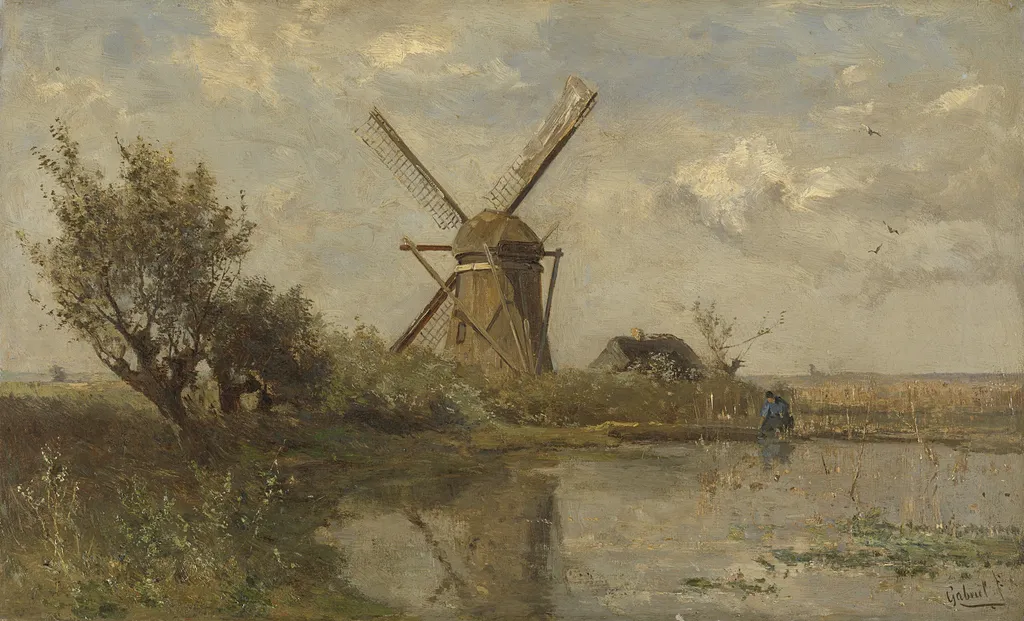
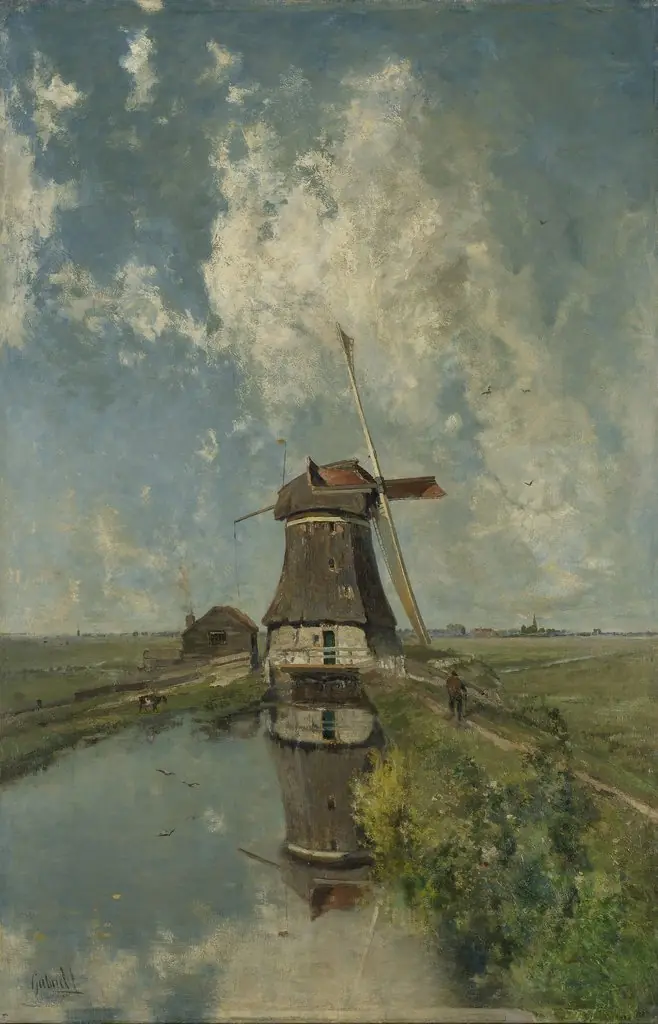
Windmill on a pond is an oil painting by the Impressionist artist Paul Joseph Constantin Gabriël. It dates from 1896 and is held in the collection of the Rijksmuseum.
About this work
Subject & Meaning
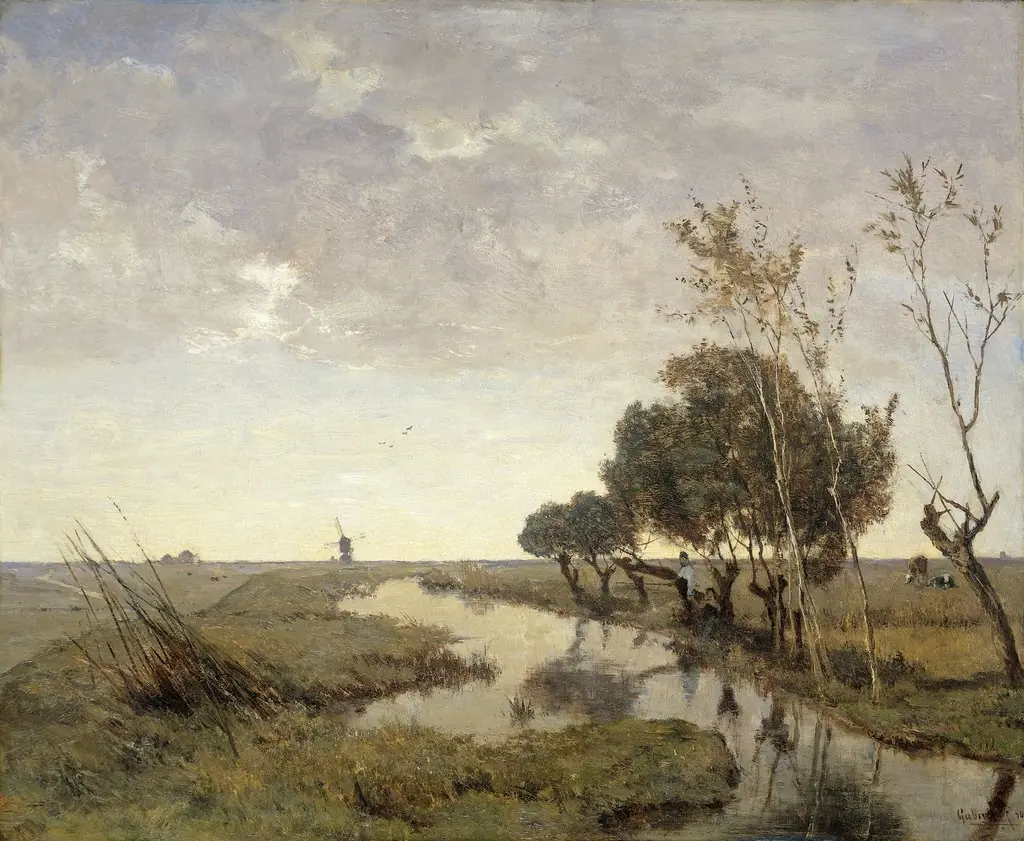
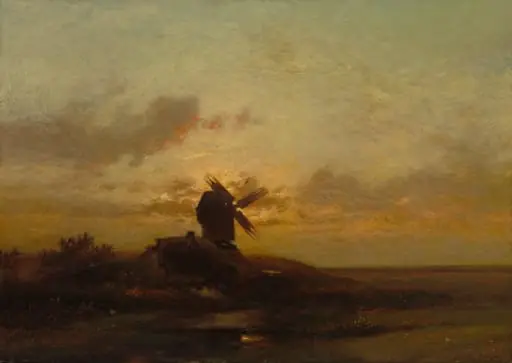
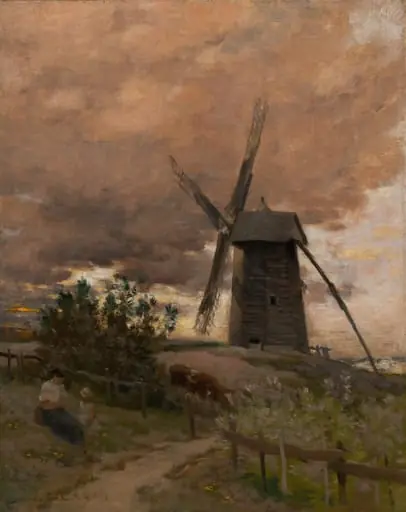
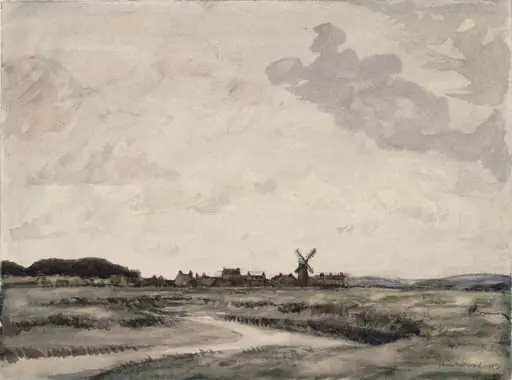
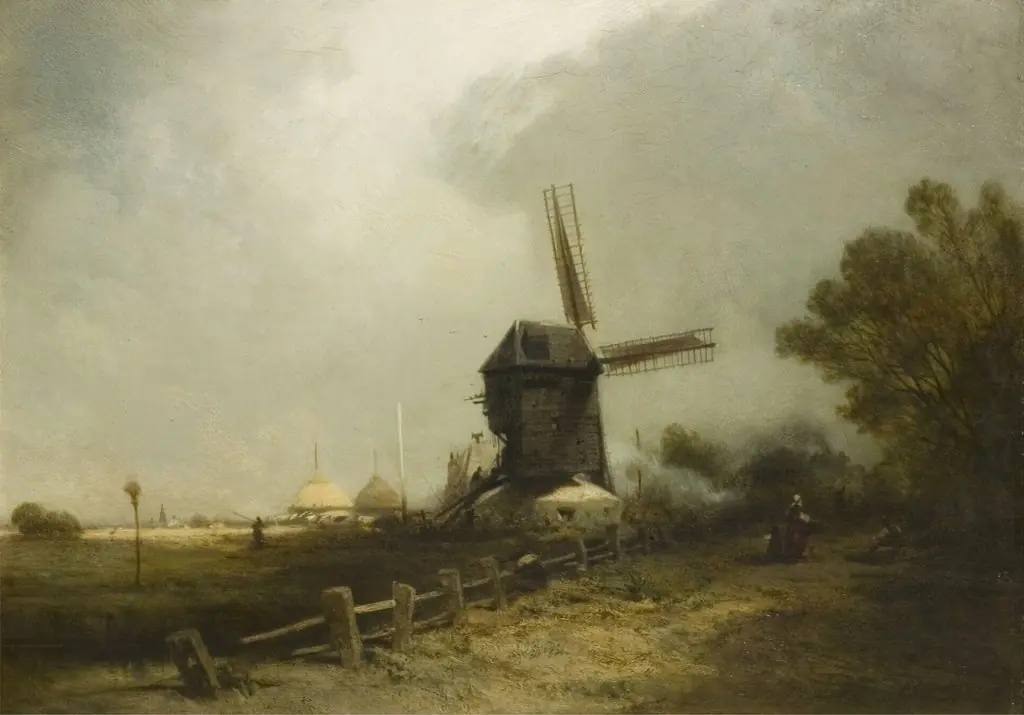
The work presents a classic Dutch polder vista centered on a windmill standing at the edge of an artificial pond; additional details include a thatched cottage, willow, meadow, a figure in a boat and a cloud‑filled sky. The windmill, a recurrent motif in such landscapes, functions as an icon of the Netherlands’ engineered water management and rural character, situating the scene within the traditional representation of Dutch countryside. By emphasizing atmospheric light and the stillness of water, the composition conveys a sense of tranquil national identity, reflecting the symbolic association of windmills with the nation’s historic relationship to water and land.
History & Provenance
The work entered the collection of Joannes Barnardus Antonius Maria Westerwoudt before being acquired by the Rijksmuseum, where it is now housed.
Windmill on a pond is an oil-on-canvas landscape painted by Paul Joseph Constantin Gabriël in 1890. The work entered the collection of Joannes Barnardus Antonius Maria Westerwoudt before being acquired by the Rijksmuseum, where it is now housed. No record of a commission survives in the sources, and the painting’s creation is limited to Gabriël’s execution of the scene in the year indicated by its inception date.
The painting’s dimensions are 28.5 cm high by 46.5 cm wide, and it depicts a polder landscape with a windmill, pond, willow, meadow, thatched cottage, and sky.
Overview
Painted in 1896, Windmill on a pond is a late landscape by the Dutch artist Paul Joseph Constantin Gabriël. The work depicts a tranquil rural scene featuring a traditional windmill situated beside a calm body of water. A solitary figure rests on the bank, adding a sense of scale and quiet human presence to the composition.
Gabriël, a key figure in the Hague School, is renowned for his meticulous attention to atmospheric light and the specific qualities of the Dutch sky, both of which are evident here. The artist employs a restrained palette of earth tones and soft greys to render the overcast sky and the reflective surface of the pond. The composition is framed by dense foliage, with a thatched roof visible behind the mill, grounding the structure within its pastoral setting.
Executed in oil paint, the work demonstrates Gabriël's mature style, characterized by a realistic yet poetic observation of the Dutch countryside. This piece reflects his lifelong dedication to capturing the subtle variations of light and weather in the Netherlands, solidifying his reputation as a master of the genre during the late 19th century.
Technique & Style
The artist's application of oil paint is characterized by loose, almost sketchy brushstrokes, which lend the composition an ethereal quality. A restricted color scheme dominates the canvas, primarily consisting of earthy browns, subtle grays, and pale blues. This deliberate choice of palette and painterly approach contributes to the overall impression of a peaceful, contemplative rural environment.
Own this work as a print
Artist & collection
Artist
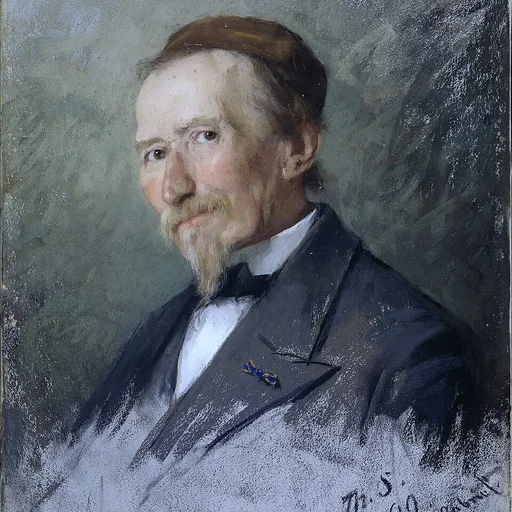
Paul Joseph Constantin Gabriël
Paul Joseph Constantin Gabriël or Paul Gabriël (5 July 1828 – 23 August 1903) was a painter, draftsman, watercolorist, and etcher who belonged to the Hague School.