Artwork
The Death of Saint Peter Martyr
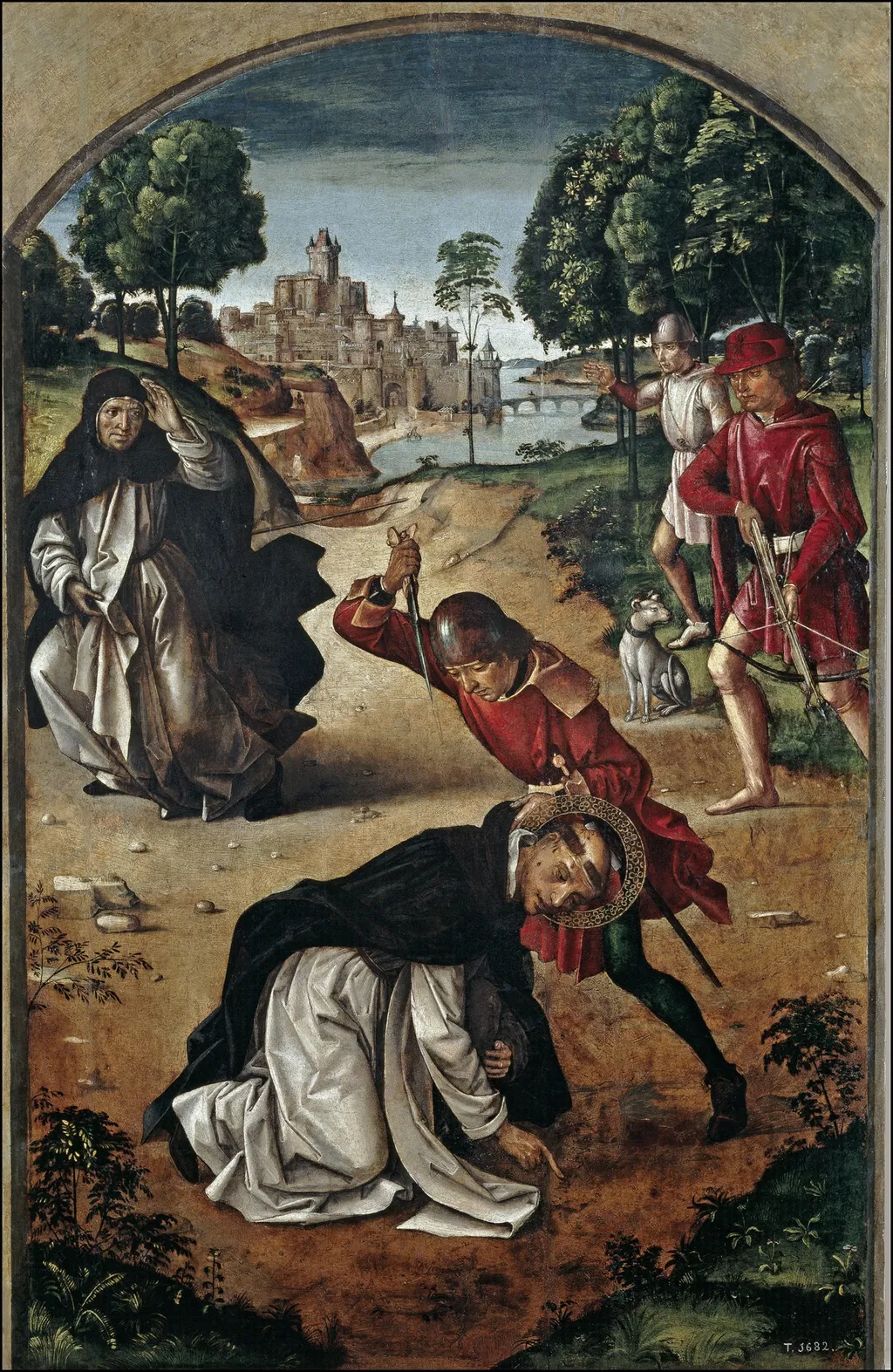
The Death of Saint Peter Martyr is an oil painting by the Early Renaissance artist Pedro Berruguete. It dates from 1497 and is held in the collection of the Museo del Prado.
About this work
Subject & Meaning
Pedro Berruguete's 1493 oil painting depicts the martyrdom of Peter of Verona, a religious subject centered on the saint's violent death.
Pedro Berruguete's 1493 oil painting depicts the martyrdom of Peter of Verona, a religious subject centered on the saint's violent death. The iconography specifically features Peter of Verona alongside a crossbow and a combat helmet, elements that allude to the weapons and armor associated with his assassination. These visual components serve to narrate the historical event of his killing, representing the moment of his sacrifice as a martyr within the Christian tradition.
The work functions as a devotional image that commemorates the saint's endurance and faith in the face of fatal aggression.
Technique & Style
Pedro Berruguete’s The Death of Saint Peter Martyr (1493) is executed in oil paint on a wooden panel, measuring 128 by 82 centimeters. The medium’s slow drying time allowed Berruguete to build up translucent glazes, lending luminosity to the saint’s robes and the surrounding landscape. Brushwork ranges from fine, almost invisible strokes in the faces and drapery folds to broader, more summary handling in the foliage and sky, reflecting a transition between late Gothic linearity and early Renaissance spatial coherence.
The composition is structured around a strong diagonal created by the assassin’s descending dagger, counterbalanced by the vertical figure of the martyr. Dramatic chiaroscuro heightens the violence, while meticulous detail, such as the gleaming crossbow and combat helmet, anchors the scene in naturalistic observation. The panel remains in stable condition, with only minor craquelure typical of fifteenth-century oil paintings on wood supports.
History & Provenance
The painting was created in 1493 as an oil on panel work commissioned for the church of San Giovanni in Busto Arsizio, where it remained until its acquisition by the Spanish Crown in the 16th century. It entered the collection of the Museo del Prado in the early 19th century and has been part of that museum's permanent display since its acquisition.
The work depicts the martyrdom of Saint Peter of Verona and is attributed to Pedro Berruguete, who signed and dated it 1493. Its dimensions are 128 cm in height and 82 cm in width.
The painting is held at the Museo del Prado. According to the available record, it is also associated with the Museo de la Trinidad collection, a repository historically used by the Prado for works transferred from dissolved Spanish institutions.
No specific inventory or accession number is documented in the consulted sources, and no exhibition history is recorded.
Overview
Created in 1497 by the Spanish painter Pedro Berruguete, this oil on canvas portrays the violent death of Peter of Verona, a 13th‑century Dominican preacher. The work is part of the early Renaissance corpus and is currently displayed in Madrid’s Museo del Prado.
Context
The work reflects the Hispano‑Flemish synthesis characteristic of late 15th‑century Spanish art, merging Northern attention to detail with Italianate compositional balance. Its subject, Saint Peter Martyr’s martyrdom, was a popular devotional theme in the period, reinforcing the order’s ideals of sacrifice.
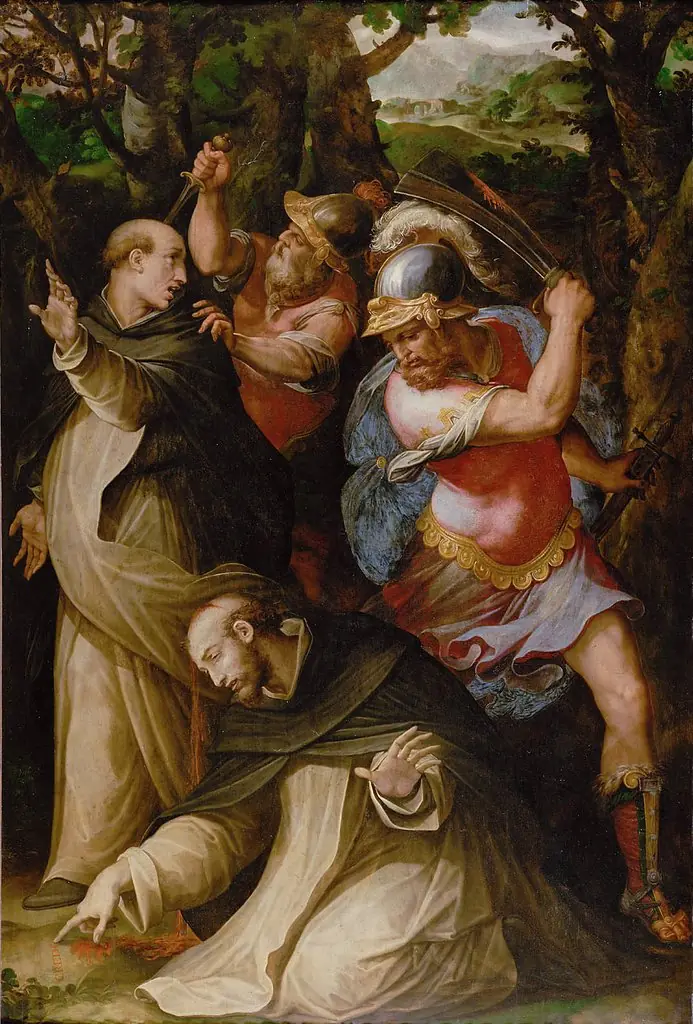
Own this work as a print
Artist & collection
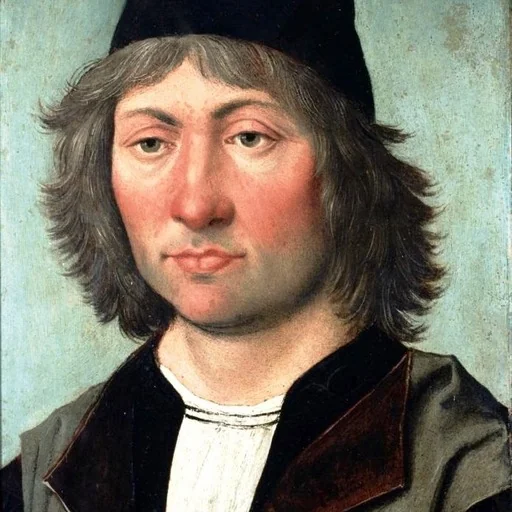
Artist
Pedro Berruguete (c. 1450 – 1504) was a Spanish painter who adopted Flemish techniques and conventions and so is part of the Hispano-Flemish style. Berruguete most famously created paintings of the first few years of…

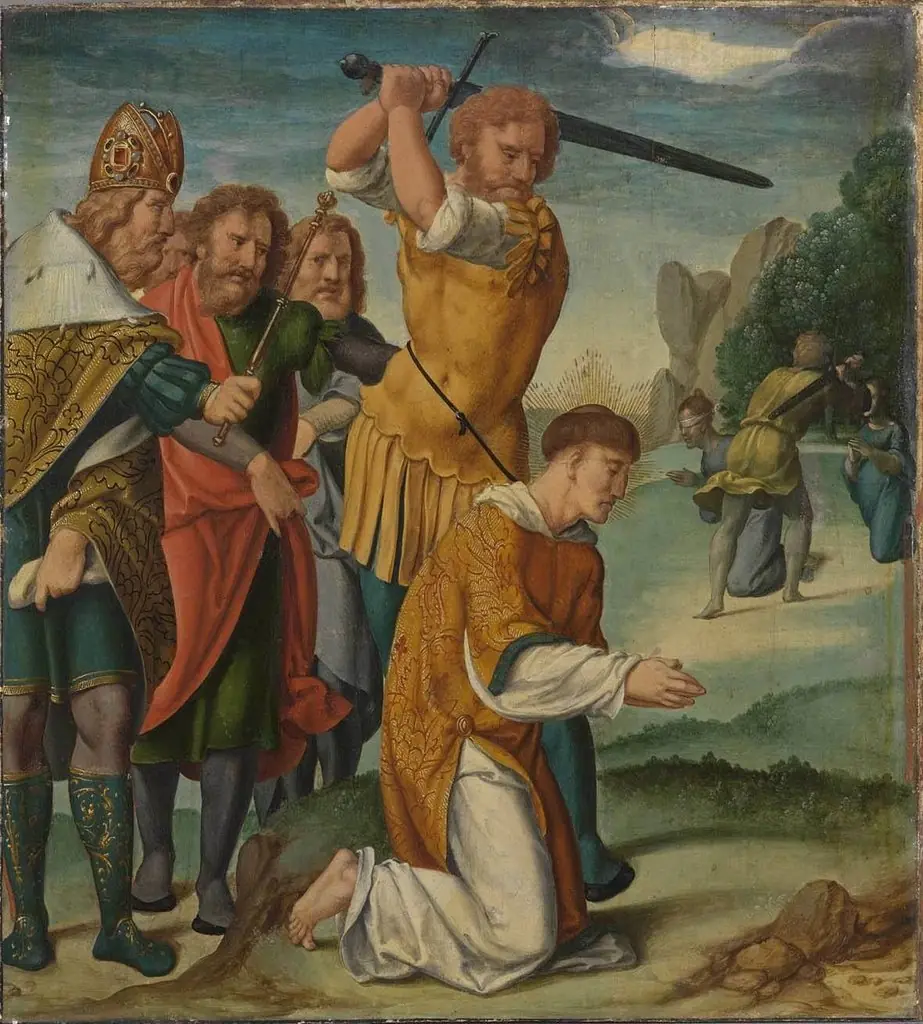 Cyriakus-Folge: Tod des hl. Cyriakus
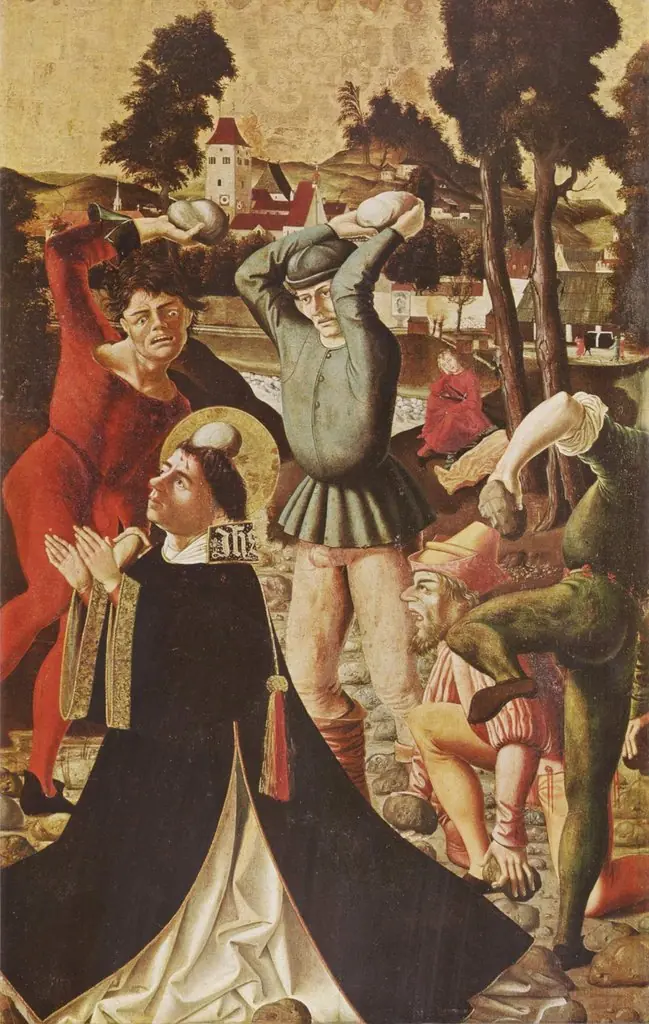 Jakobus-Stephanus-Altar: Steinigung des hl. Stephanus
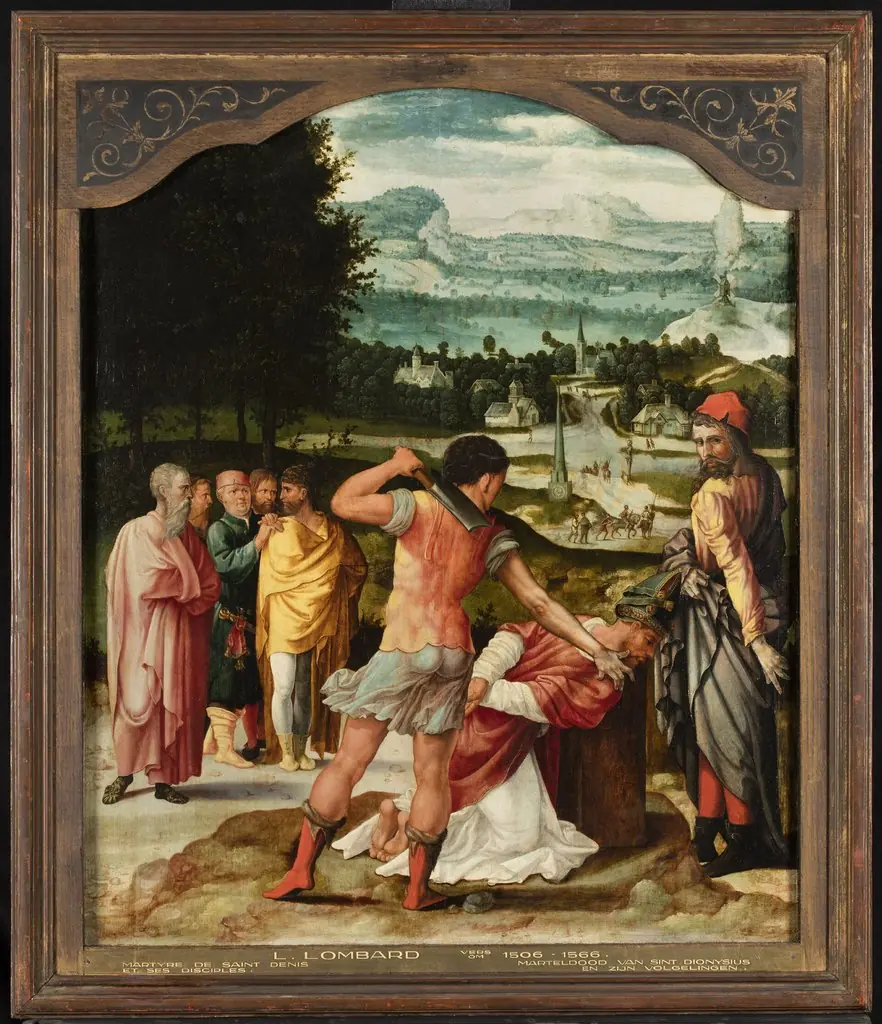 The Decapitation of Saint Denis
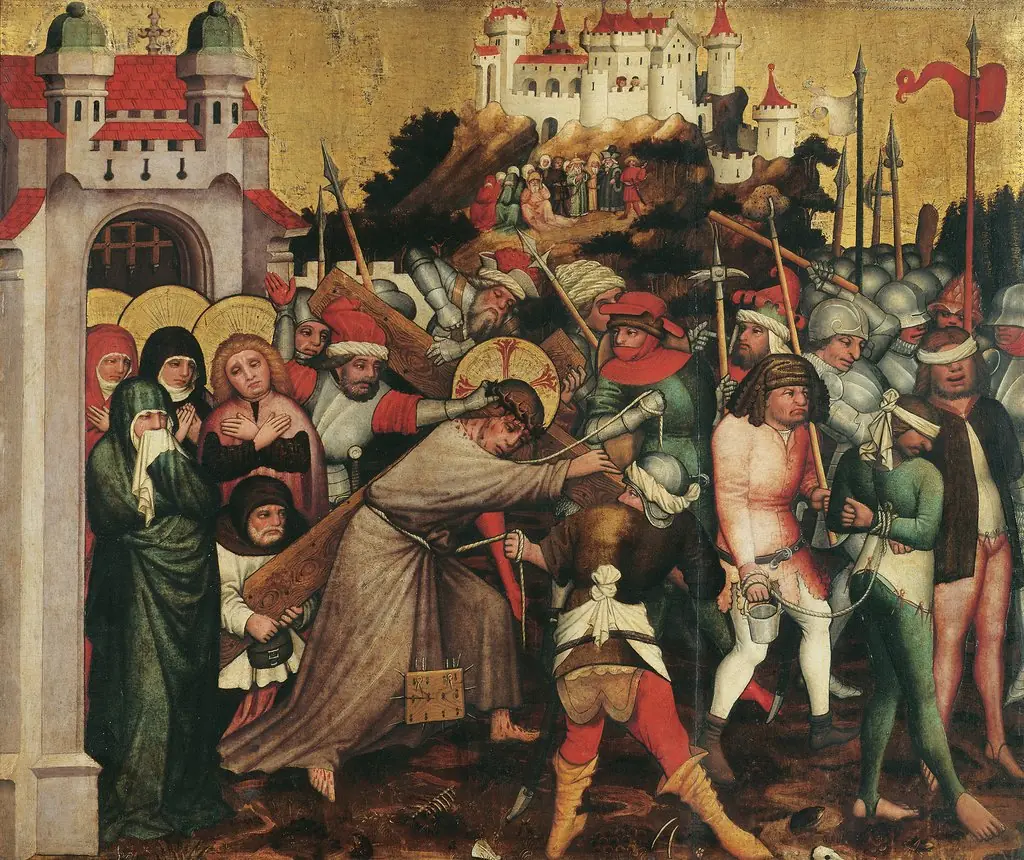 Christ carrying the cross
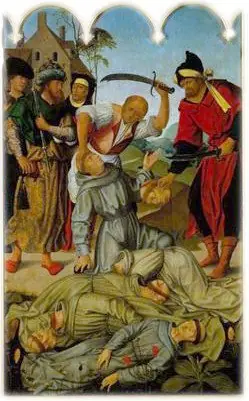 Degolação dos Cinco Mártires de Marrocos
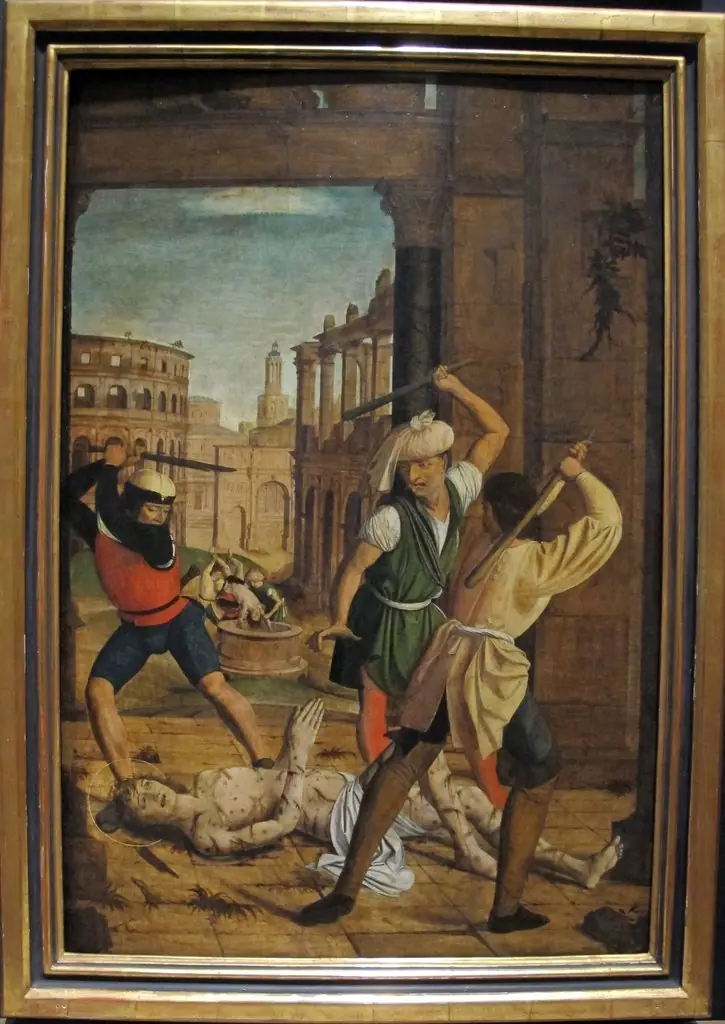 The Martyrdom of Saint Sebastian
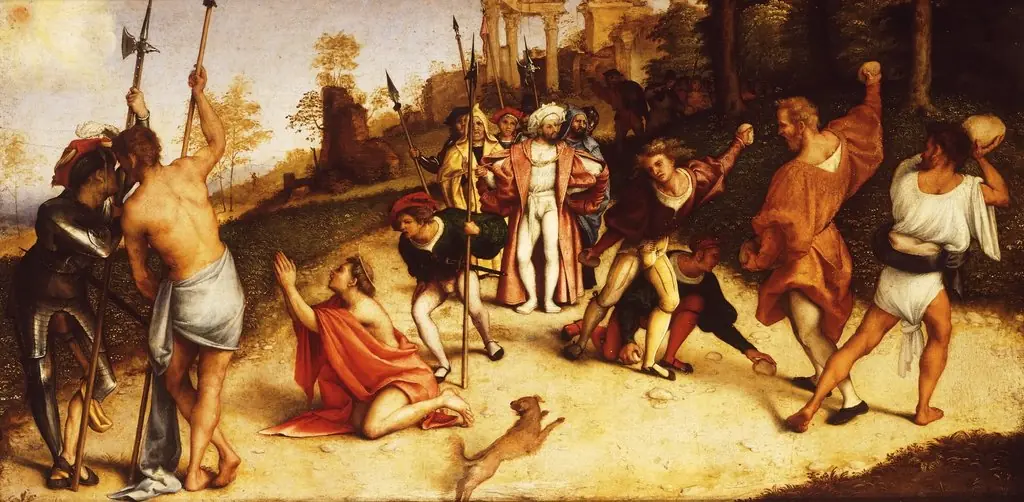 Martyrdom of St Stephen, division of Martinengo Altarpiece
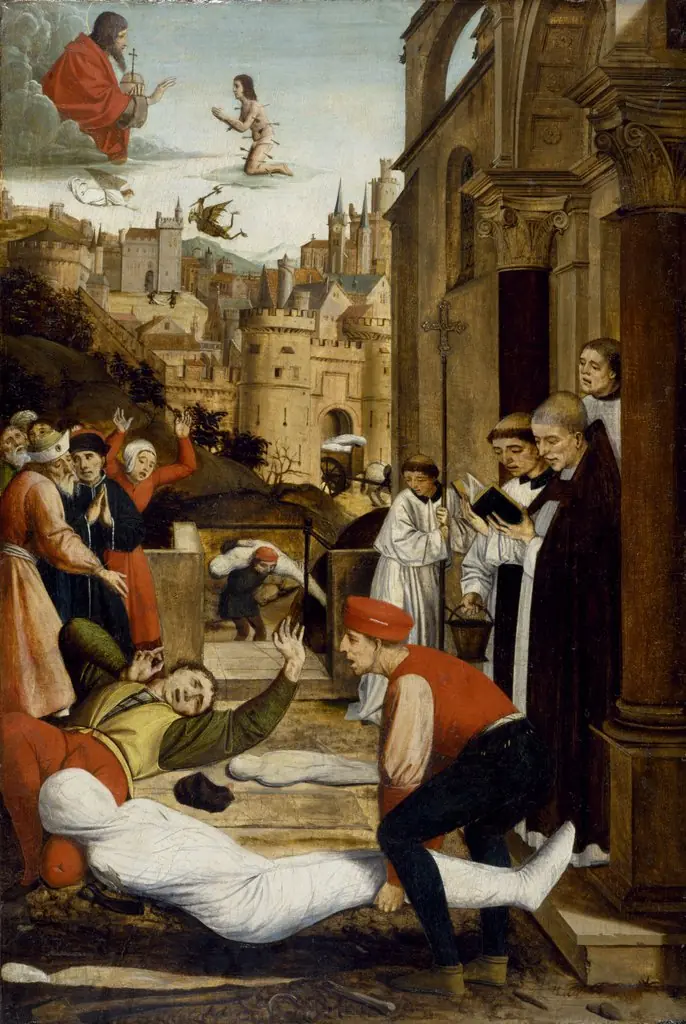 Saint Sebastian Interceding for the Plague Stricken
 Marter des Apostels Matthias
 Saint Sebastian Cured by Irene
 Jakobus-Stephanus-Altar: Dornenkrönung Christi
- Death of Saint Peter martyr