Artwork
The Virgin and Child
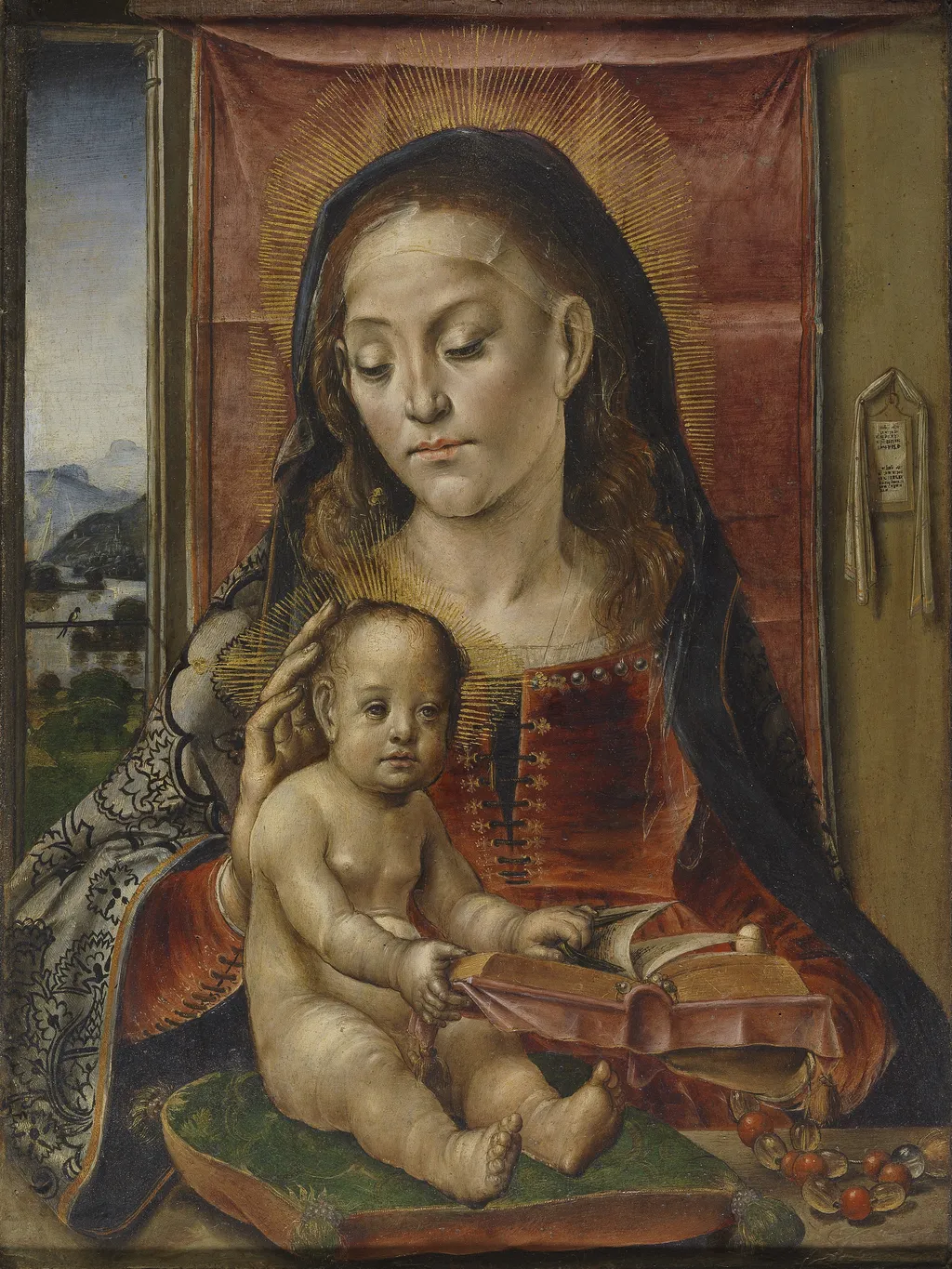
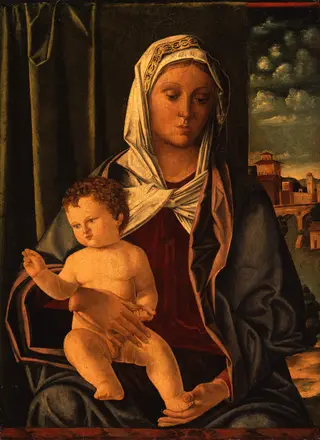
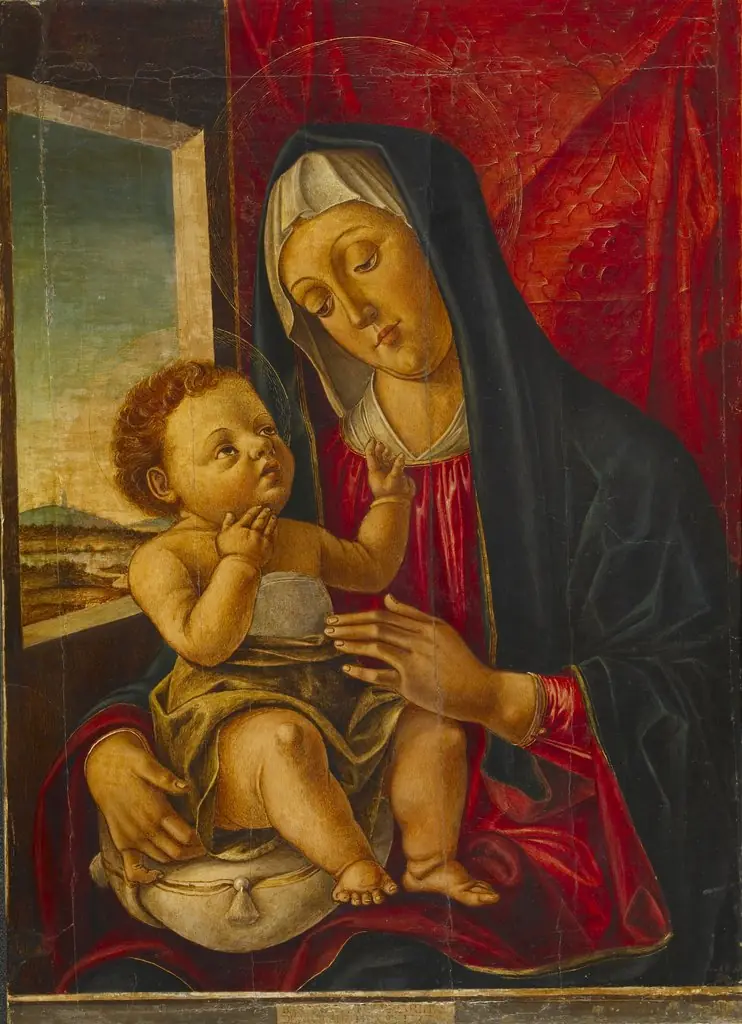
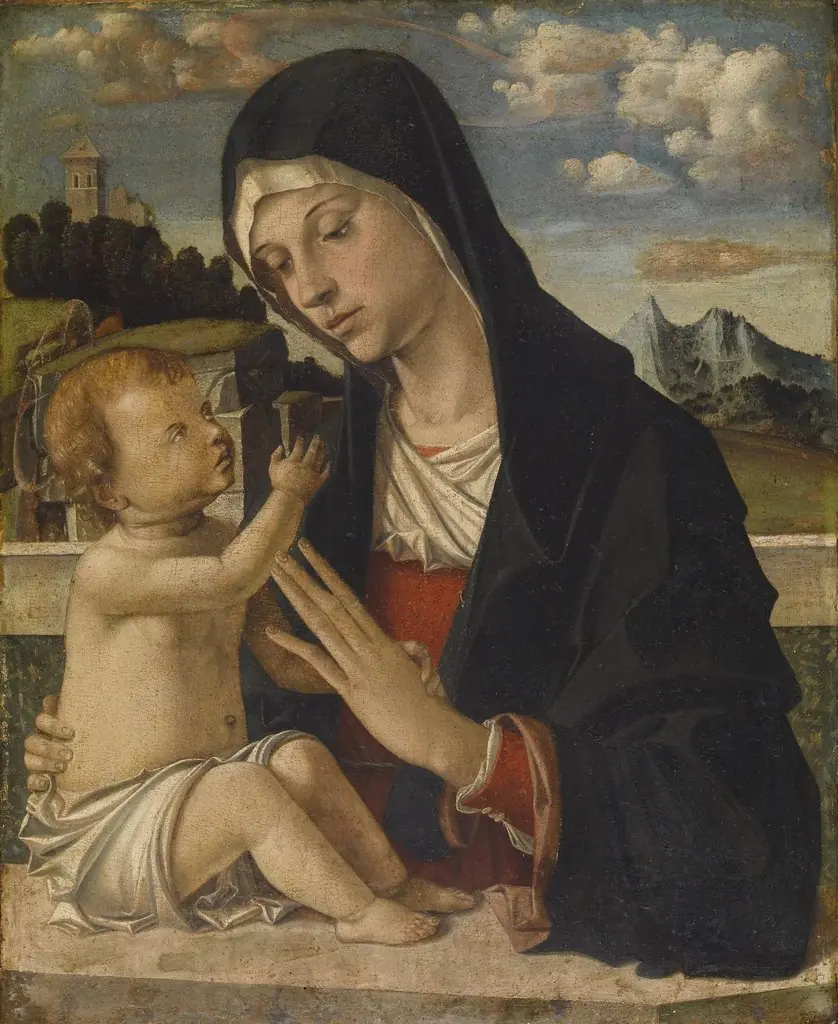
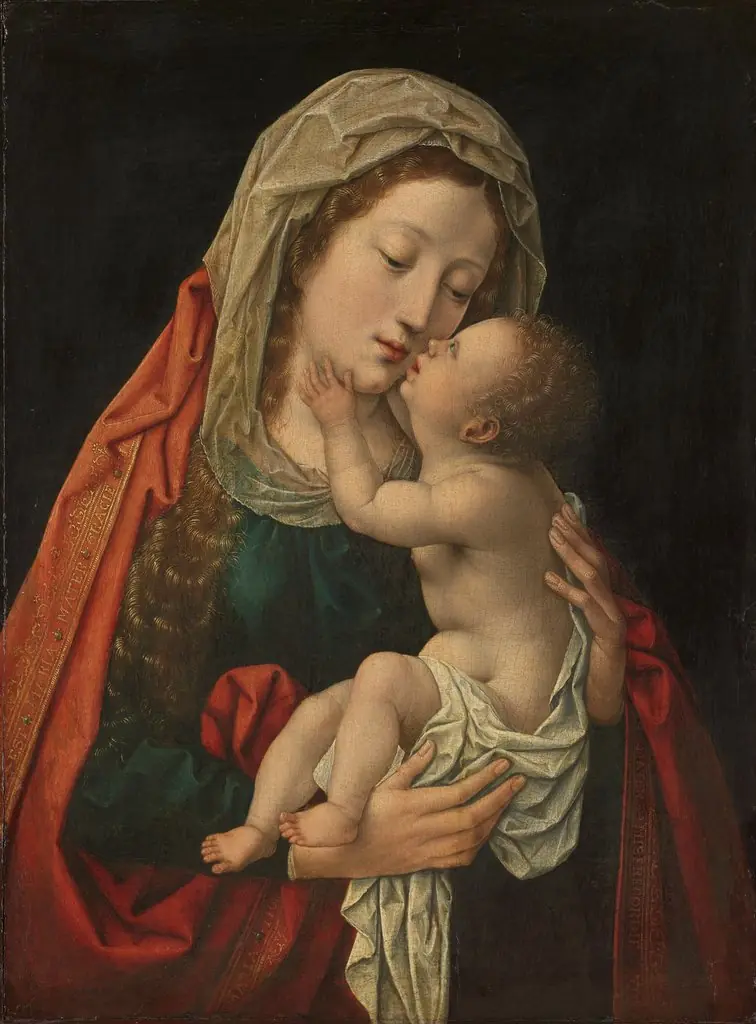
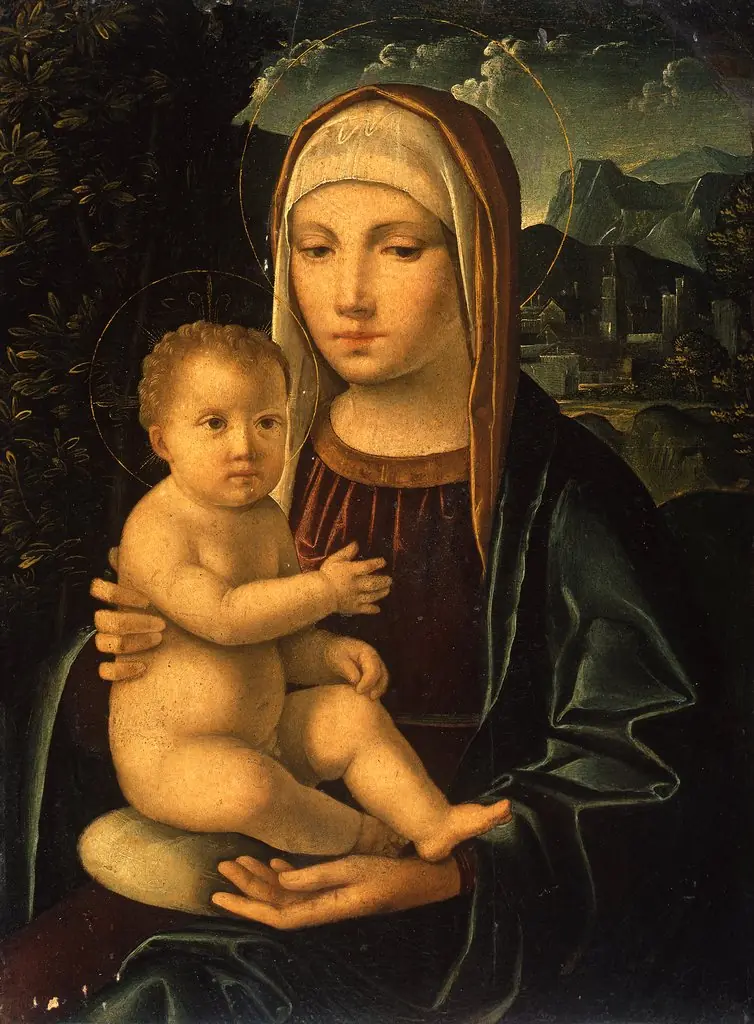
The Virgin and Child is a mixed painting by the Early Renaissance artist Pedro Berruguete. It dates from 1490 and is held in the collection of the Museo del Prado.
About this work
Subject & Meaning
The composition depicts the Virgin Mary holding the Christ Child, a standard iconographic arrangement in Christian art signifying the Incarnation.
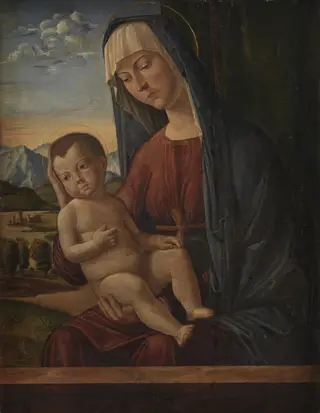
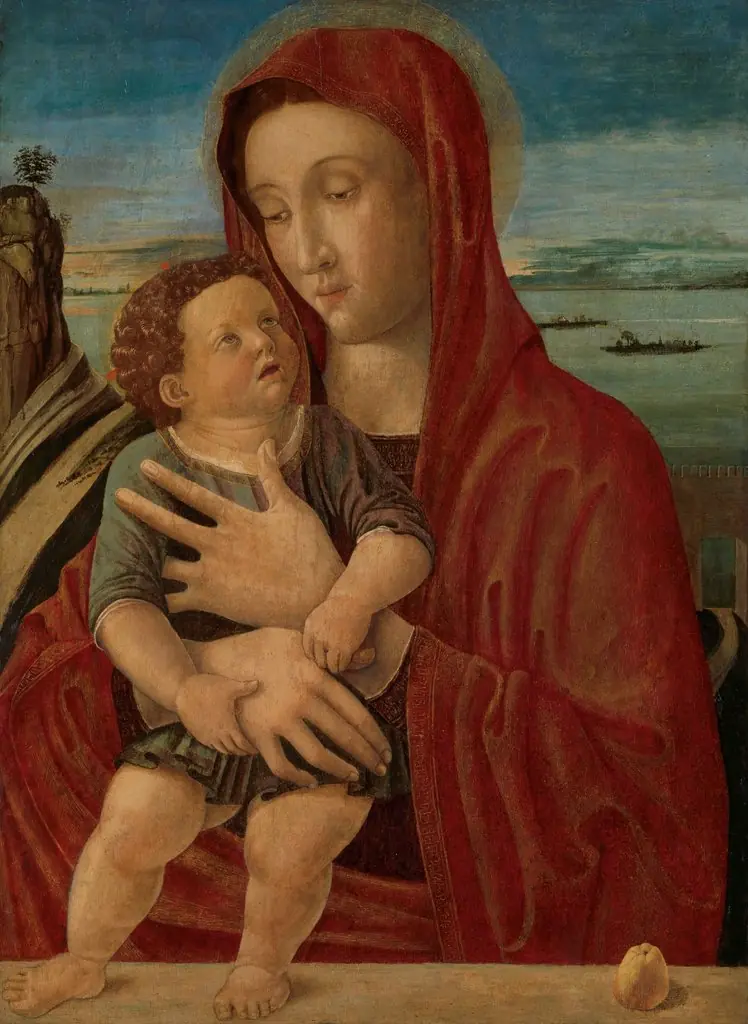
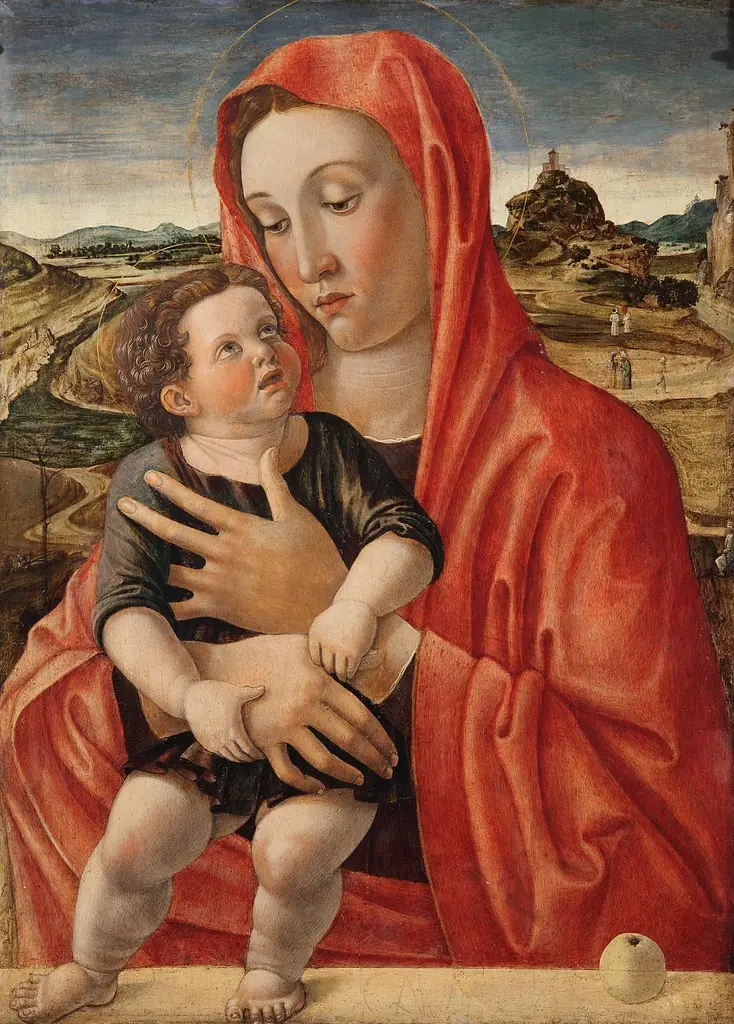
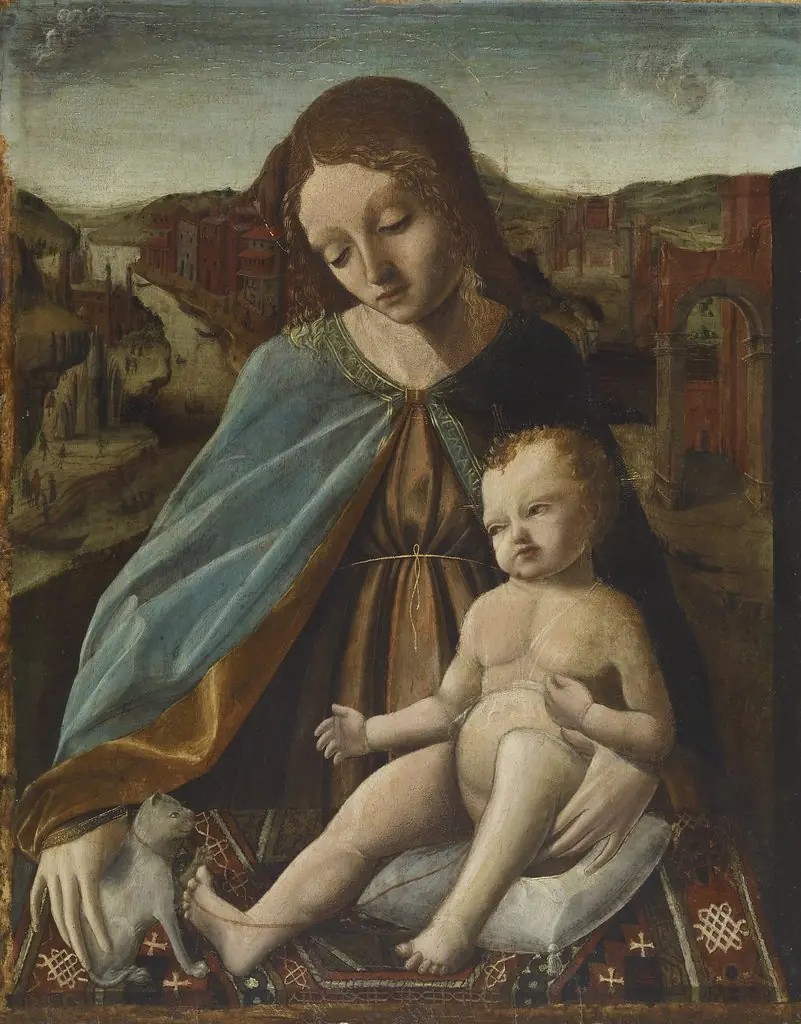
Pedro Berruguete's The Virgin and Child, created in 1490, is a religious painting centered on the Madonna and Child motif. The composition depicts the Virgin Mary holding the Christ Child, a standard iconographic arrangement in Christian art signifying the Incarnation. Distinctive elements within the scene include a book and a rosary, objects that underscore themes of piety, scripture, and devotion.
As a work of religious art housed in the Museo del Prado, the piece functions as a devotional image, emphasizing the spiritual relationship between the mother and the divine child through these specific symbolic attributes.
Technique & Style
The work is executed in mixed technique on wooden panel, measuring 58 centimetres in height and 43 centimetres in width. The surface shows careful handling typical of 15th-century Spanish religious painting, with fine detail in the depiction of Mary and the infant Christ, a book and rosary in the composition, and a restrained palette that emphasizes soft modeling of the figures against a flat background. The stylistic qualities reflect Berruguete's early Renaissance approach, combining linear precision with gentle chiaroscuro to convey intimacy.
History & Provenance
The Virgin and Child is a religious painting created by Pedro Berruguete in 1490. Executed in a mixed technique on panel, the work measures 58 cm in height and 43 cm in width and depicts the Madonna and Child alongside a book and a rosary. It is held in the collection of the Museo del Prado, Madrid.
It has been exhibited at the Museo del Prado in the exhibition "Pedro Berruguete" held from 27 June to 14 September 2008.
Context
Pedro Berruguete painted The Virgin and Child in 1490 as a mixed technique work on panel, now housed in the Museo del Prado. The painting depicts the Madonna and Child alongside symbolic attributes including a book and rosary, reflecting devotional practices of the period. Its composition and iconography align with late 15th-century Spanish religious art, situating Berruguete within the broader context of Castilian court painting and the transition from Hispano-Flemish to Renaissance naturalism.
Art historians have noted the work's refined modeling and emotional restraint as characteristic of the artist's mature style, contributing to discussions on late medieval devotional imagery in Iberian contexts.
Scholarly analysis emphasizes the painting's significance within Berruguete's oeuvre as a pivotal figure bridging Gothic traditions and emerging Renaissance aesthetics in Spain. The work's presence in the Museo del Prado's collection underscores its recognized importance in the narrative of Spanish Renaissance art, serving as a key example for understanding artistic exchange and religious expression in late medieval Iberia.
Overview
Created circa 1490, The Virgin and Child is a mixed‑media panel by Spanish painter Pedro Berruguete. Executed during the early Renaissance, the work presents the Virgin Mary seated with the infant Christ, who reaches toward a small book while a rosary and fruit lie at their feet. The composition is framed by a dark curtain and a muted landscape in the distance, and it now belongs to the Museo del Prado in Madrid.
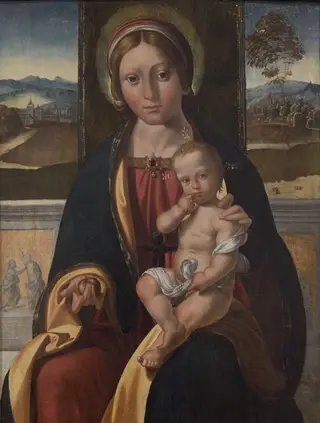
Own this work as a print
Artist & collection
Artist
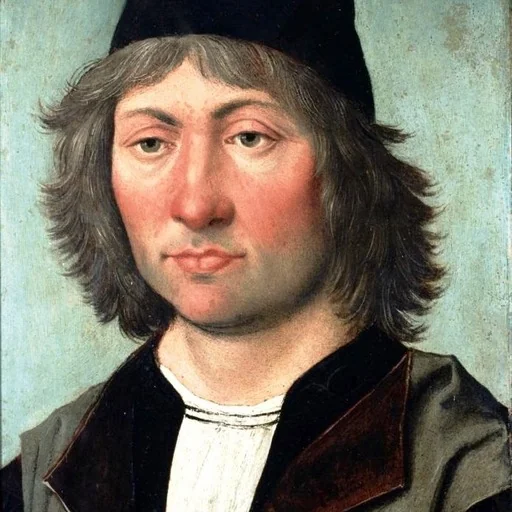
Pedro Berruguete (c. 1450 – 1504) was a Spanish painter who adopted Flemish techniques and conventions and so is part of the Hispano-Flemish style. Berruguete most famously created paintings of the first few years of…