Artwork
Saint Dominic and the Albigensians
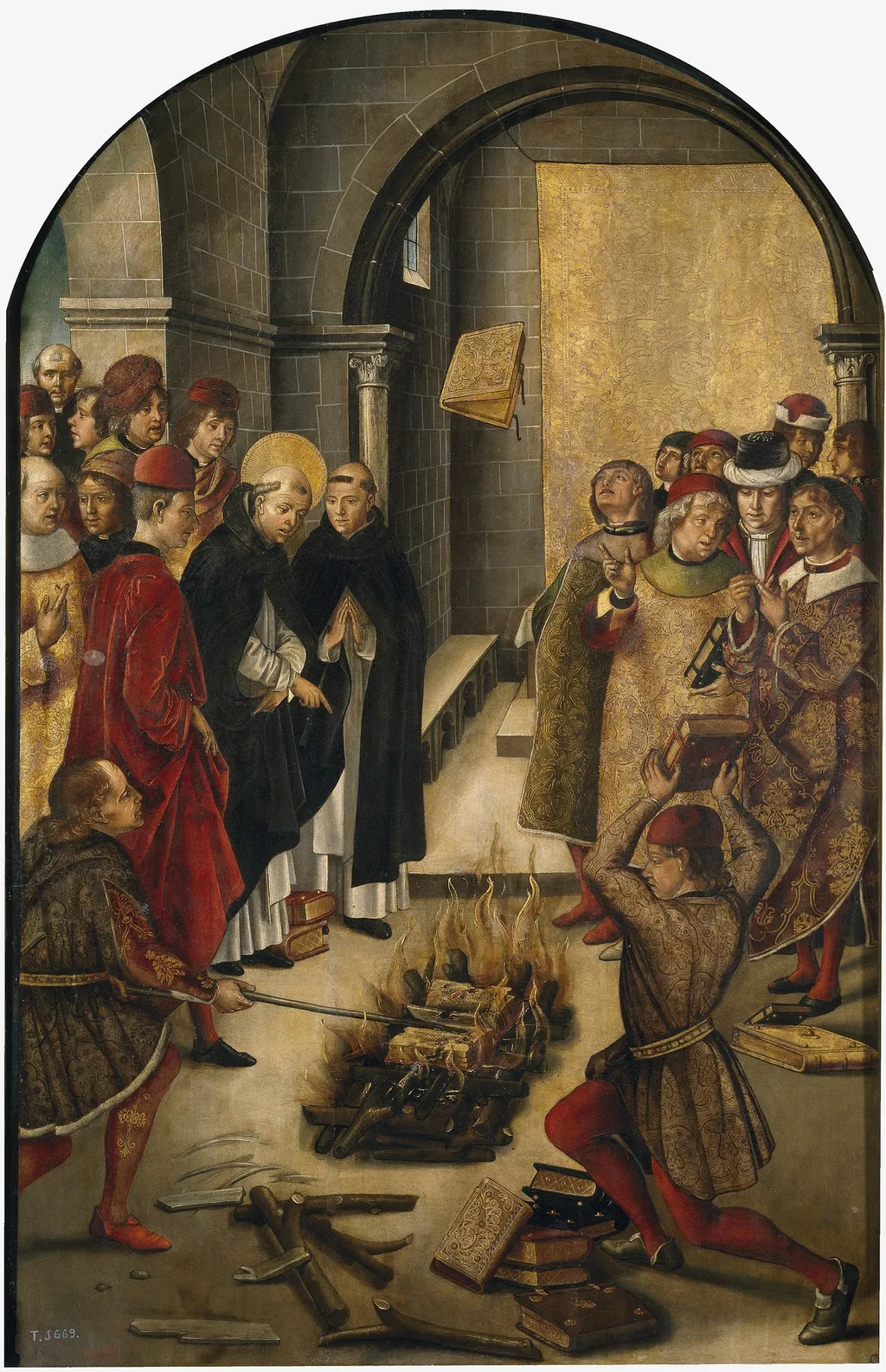
Saint Dominic and the Albigensians is an oil painting by the Early Renaissance artist Pedro Berruguete. It dates from 1498 and is held in the collection of the Museo del Prado.
About this work
Subject & Meaning
The scene also evokes the broader persecution of the Cathars, including the burning of sect documents and the execution of condemned heretics at the stake.
The painting depicts an episode from the Catholic Church's struggle against the Albigensian heresy, also known as the Cathars. Saint Dominic, founder of the Order of Preachers (Dominicans), presides over a trial by fire in which the books of the heretical sect are thrown into flames before assembled members of the community.
According to the hagiographic tradition, the event took place around 1216 during Dominic's mission to convert the Cathars of Languedoc. Local authorities, unable to adjudicate the dispute between Dominic and the heretics, ordered both parties to cast their books into a brazier, believing the volume containing truth would be spared. The heretics watched in disbelief as Dominic's book miraculously survived the flames, surviving further attempts to consign it to the fire, thereby demonstrating both the truth of the Catholic faith and the sanctity of its author.
The work affirms Catholic orthodoxy over heresy through the symbolic triumph of the surviving book, which hovers miraculously in the air to demonstrate its divine origin. The scene also evokes the broader persecution of the Cathars, including the burning of sect documents and the execution of condemned heretics at the stake.
Technique & Style
The work is executed in oil paint on a wooden panel, measuring 122 cm in height by 83 cm in width. It depicts Saint Dominic presiding over the destruction of Albigensian texts, with one manuscript hovering above the flames, a motif that illustrates the triumph of orthodox doctrine. The composition reflects the Spanish late‑Gothic style while incorporating Italian influences observed during Berruguete’s stay in Italy, resulting in a balanced arrangement of figures and a vivid narrative emphasis on the miraculous survival of the Catholic book.
History & Provenance
The painting was created in 1496 by Pedro Berruguete after his stay in Italy, originally destined for the Monastery of San Tommaso in Ávila and later housed in the Museo de la Trinidad before entering the Museo del Prado collection. It formed part of a series of four panels, three of which are now lost. The work depicts Saint Dominic confronting the Albigensian heretics in a scene of the 'trial by fire' where a heretical book is miraculously spared from flames, reflecting a legendary event from around 1216.
The painting is executed in oil on panel and is currently displayed at the Museo del Prado in Madrid. Its creation aligns with the broader context of Catholic efforts against Albigensian heresy through the Inquisition in late 15th-century Spain.
The painting is held at the Museo del Prado in Madrid, Spain. Its documented provenance traces a path from the Monasterio de Santo Tomás in Ávila, to the Museo de la Trinidad, and ultimately to the Prado. It originally belonged to a series of four panels, of which the other three are now lost. The work is catalogued in the Prado's collection as Santo Domingo y los albigenses.
No specific exhibition loans or temporary display history beyond its transfer through these institutions is recorded in the available sources.
Context
Critical reception of Saint Dominic and the Albigensians has emphasized its dramatic narrative and devotional intensity, with scholars highlighting the painting’s vivid portrayal of the legendary fire miracle as emblematic of Counter-Reformation concerns about heresy. The work is situated within Pedro Berruguete’s broader synthesis of Netherlandish naturalism and Italian Renaissance composition, reflecting his formative years in Italy and his role in introducing oil painting techniques to Spain. Art historians view the canvas as a pivotal example of early Spanish Renaissance religious art, bridging late Gothic traditions and emerging naturalistic styles.
Its place in art history is reinforced by its provenance from the Monastery of San Tommaso in Ávila to the Museo del Prado, where it remains a key piece in the museum’s collection of Iberian religious paintings.
Overview
Created in 1498 by the Spanish painter Pedro Berruguete, Saint Dominic and the Albigensians is an oil on panel that measures roughly a modest size for a devotional work. The composition places Saint Dominic at the center of a heated encounter inside a stone interior, surrounded by two groups of figures whose gestures convey tension and conflict. The painting is part of the permanent collection of the Museo del Prado in Madrid.
Own this work as a print
Artist & collection
Artist
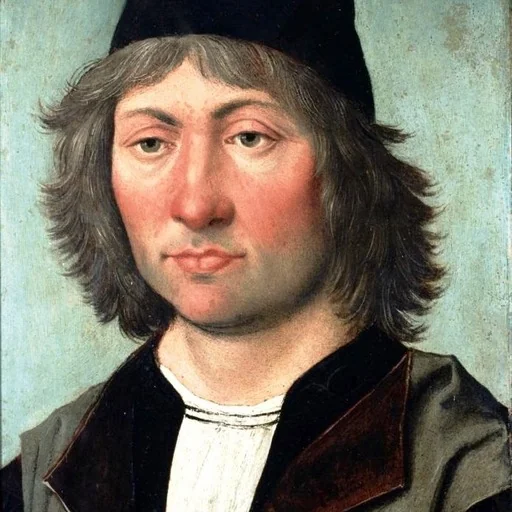
Pedro Berruguete (c. 1450 – 1504) was a Spanish painter who adopted Flemish techniques and conventions and so is part of the Hispano-Flemish style. Berruguete most famously created paintings of the first few years of…

 Legend of the Relics of St. John the Baptist
 The Enthronement of Saint Romold as Bishop of Dublin
 Saint Vincent on the Gridiron
 The Miracle of the Cloud
 Saint Sebastian Cured by Irene
 Jakobus-Stephanus-Altar: Disputation des hl. Stephanus
 Christ before Pilate
 Saint Nicholas Saving a Hang
 Weihenstephaner Altar: Der hl. Benedikt als Vater des abendländischen Mönchtums Rückseite: Kreuzannagelung Christi
 The Adoration of the Tomb of Saint Peter Martyr