Artwork
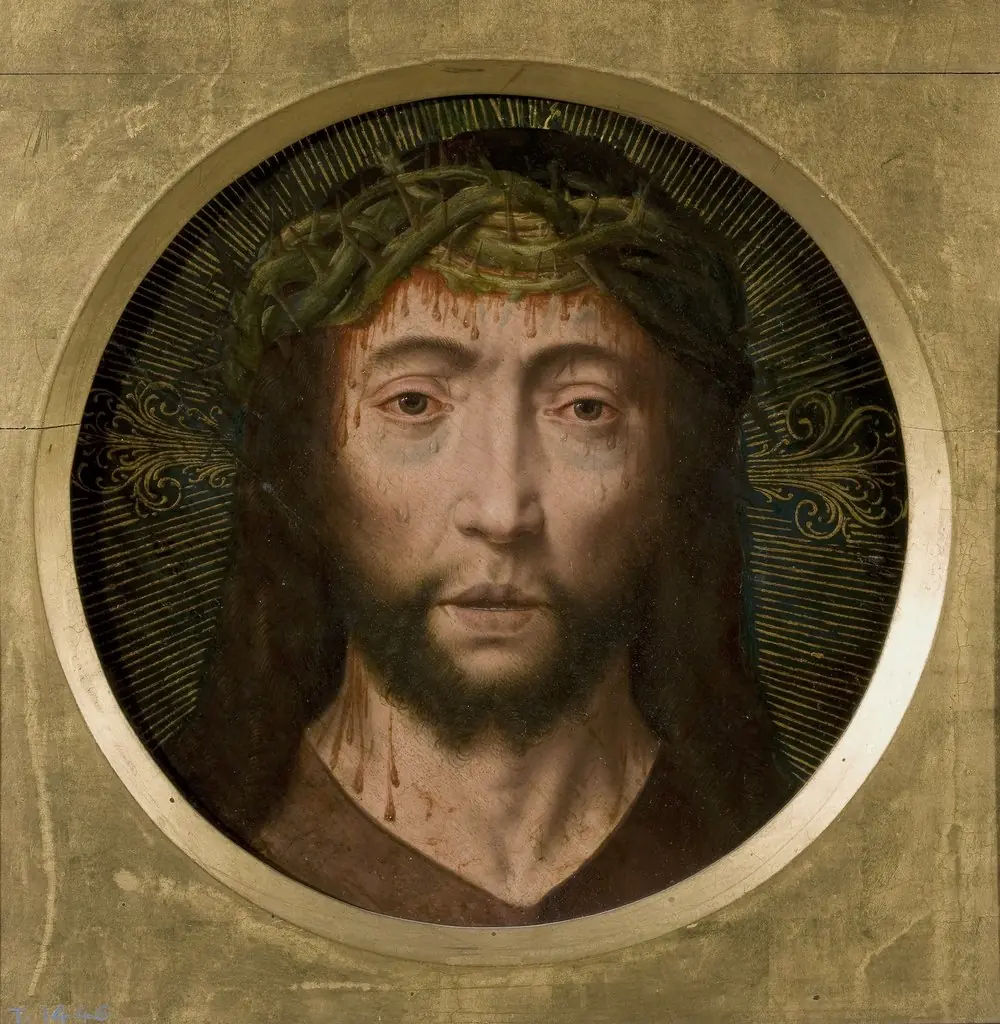
Head of Christ
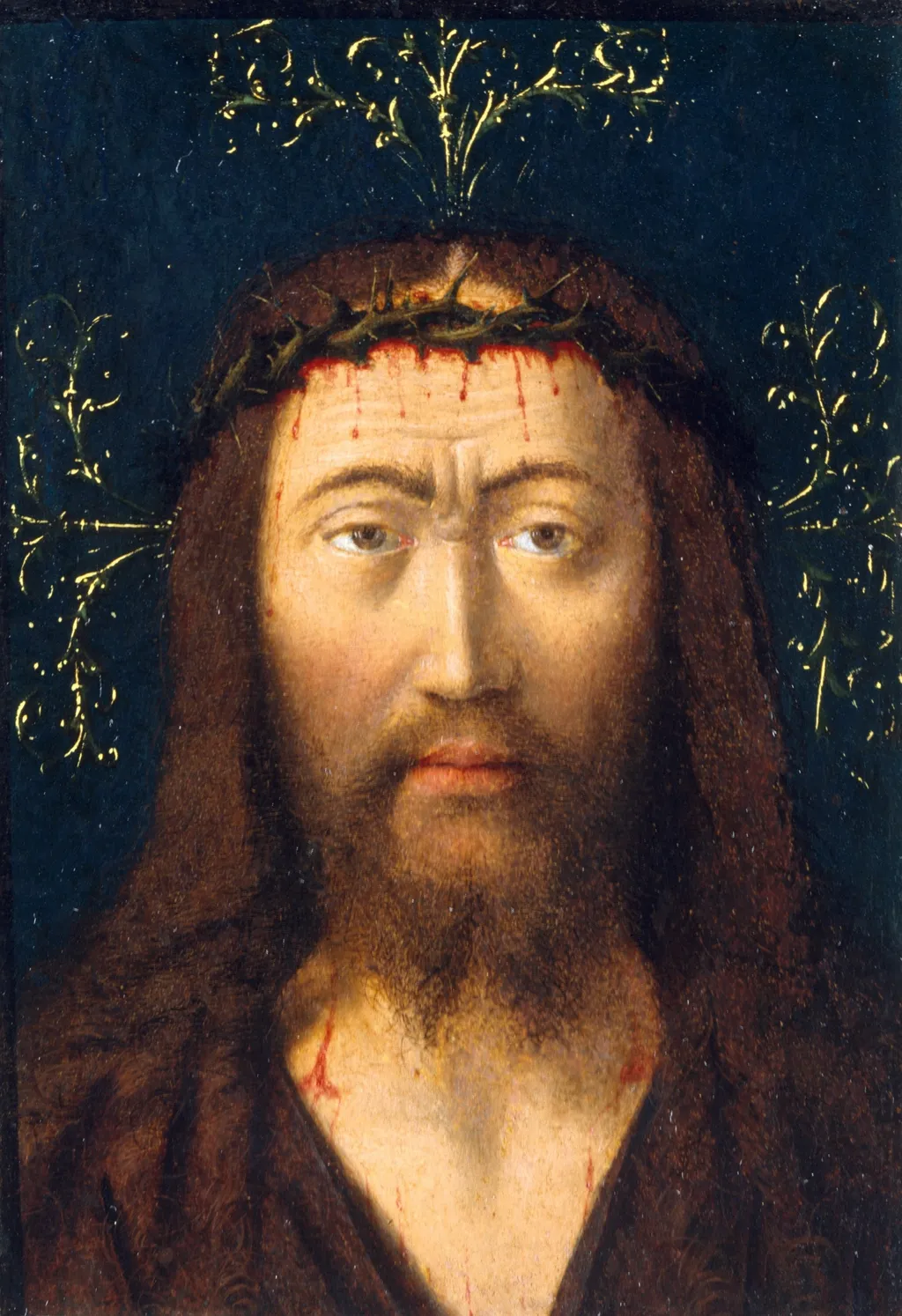
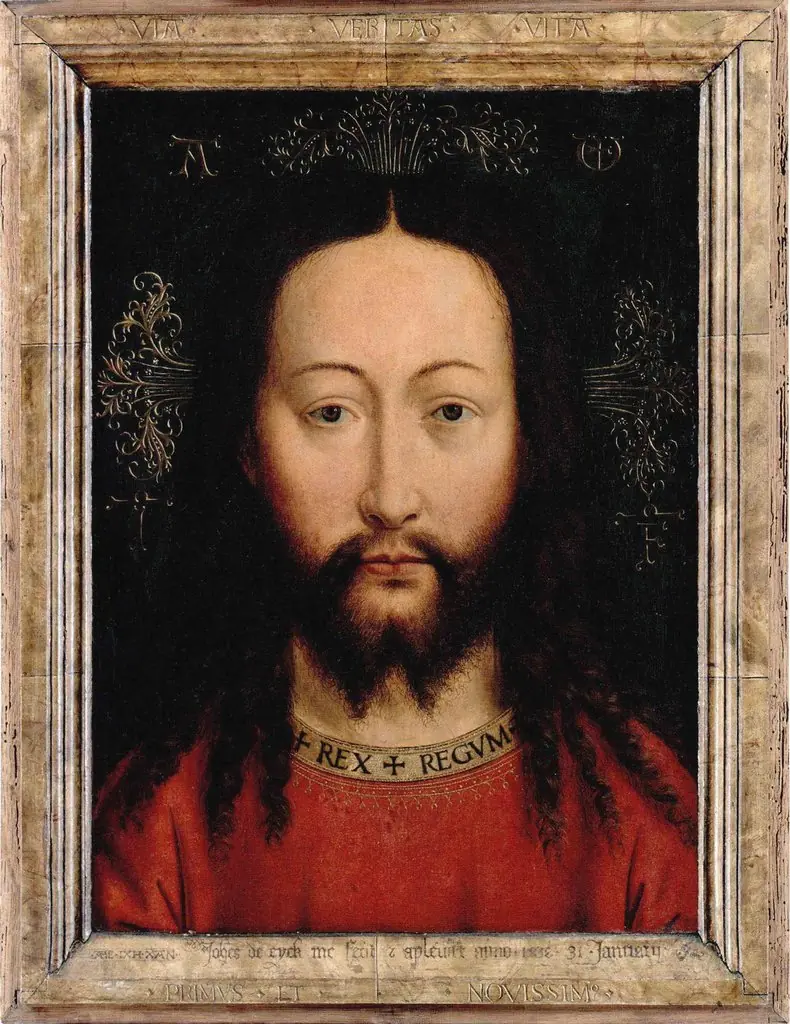
Head of Christ is an oil painting by the Northern Renaissance artist Petrus Christus. It dates from 1445 and is held in the collection of the Metropolitan Museum of Art.
About this work
Subject & Meaning
The subject's sorrowful expression, emphasized by a fixed, distant gaze and sealed lips, underscores the duality of Christ's humanity and divinity.
The Head of Christ by Petrus Christus depicts a devotional image of Jesus, rendered with naturalistic yet idealized features framed as if viewed through an illusionistic aperture. The subject's sorrowful expression, emphasized by a fixed, distant gaze and sealed lips, underscores the duality of Christ's humanity and divinity. Blood from the crown of thorns streaks the pale brow and temples, evoking sacrifice and impending Passion.
The cruciform nimbus with three radiating branches directs attention outward while the stark contrast between the dark robe and luminous neck and chest heightens the vulnerability of the body destined for suffering. These formal choices align with late-medieval devotional aims, inviting private contemplation of Christ's dual nature and redemptive mission.
Technique & Style
Created in 1445, this Early Netherlandish devotional image is executed in oil paint on a panel support, measuring approximately 14.9 by 10.8 centimeters. The work features a distinctive technique where the painted image of Christ is rendered on parchment affixed to the wooden panel. Stylistically, the portrait combines intense realism with idealized features, presenting the subject through an illusionistic frame that creates a sense of simultaneous proximity and distance.
The handling of light and shadow emphasizes the deep facial folds and contrasts with the white of the eyes, while a partially effaced Gothic inscription appears below the image. The composition highlights the vulnerability of the figure through the juxtaposition of dark robes against pale skin, with blood depicted flowing from the crown of thorns onto the forehead and shoulders.
History & Provenance
The Head of Christ is attributed to Petrus Christus and dated to 1445, with suggestions of 1444 or 1446 in scholarship. The small panel painting (14.9 × 10.8 cm) was created as a devotional image for private use, likely in Bruges. Art-historical discussion links its composition to a lost work by Jan van Eyck, known through later copies.
Ownership prior to the mid-20th century is undocumented; the painting entered the collection of the Metropolitan Museum of Art in 1959 through the bequest of Lillian S. Timken.
The work is housed in the Metropolitan Museum of Art, New York. The painting was featured in the museum's exhibition "Petrus Christus: Renaissance Master of Bruges" (1994), in the traveling show "From Van Eyck to Bruegel: Early Netherlandish Painting in The Metropolitan Museum of Art" (1998–1999), and in "Antonello da Messina: Sicily's Renaissance Master" (2005–2006).
Context
Petrus Christus's Head of Christ occupies a notable position within Early Netherlandish painting. The panel is widely regarded as a devotional miniature inspired by a lost composition by Jan van Eyck, of which several copies survive, situating Christus's image within a broader tradition of Salvator Mundi-type imagery. Scholarly attention to the painting includes John Oliver Hand's 1992 study "Salve Sancta Facies: Thoughts on the Iconography of the Head of Christ by Petrus Christus," published in the Metropolitan Museum Journal, which examined its iconographic significance.
The work was featured in the 1994 exhibition "Petrus Christus: Renaissance Master of Bruges," the 1998–1999 display "From Van Eyck to Bruegel: Early Netherlandish Painting in The Metropolitan Museum of Art," and the 2005–2006 exhibition "Antonello da Messina: Sicily's Renaissance Master," reflecting its place within broader narratives of fifteenth-century Flemish practice and its cross-regional resonances.
Overview
Petrus Christus's Head of Christ, an oil painting from 1445, presents a close-up portrayal of Jesus. Created by an Early Netherlandish artist active in Bruges, this work exemplifies the Northern Renaissance style. It depicts Christ from the chest up, adorned with a crown of thorns, conveying a profound sense of suffering. The painting is currently housed at The Metropolitan Museum of Art.
Own this work as a print
Artist & collection
Artist
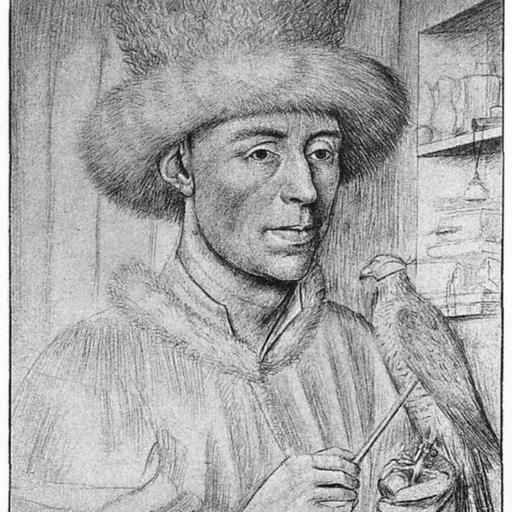
Petrus Christus (Dutch:; c. 1410/1420 – c. 1475/1476) was an Early Netherlandish painter active in Bruges from 1444, where, along with Hans Memling, he became the leading painter after the death of Jan van Eyck. He was…