Artwork
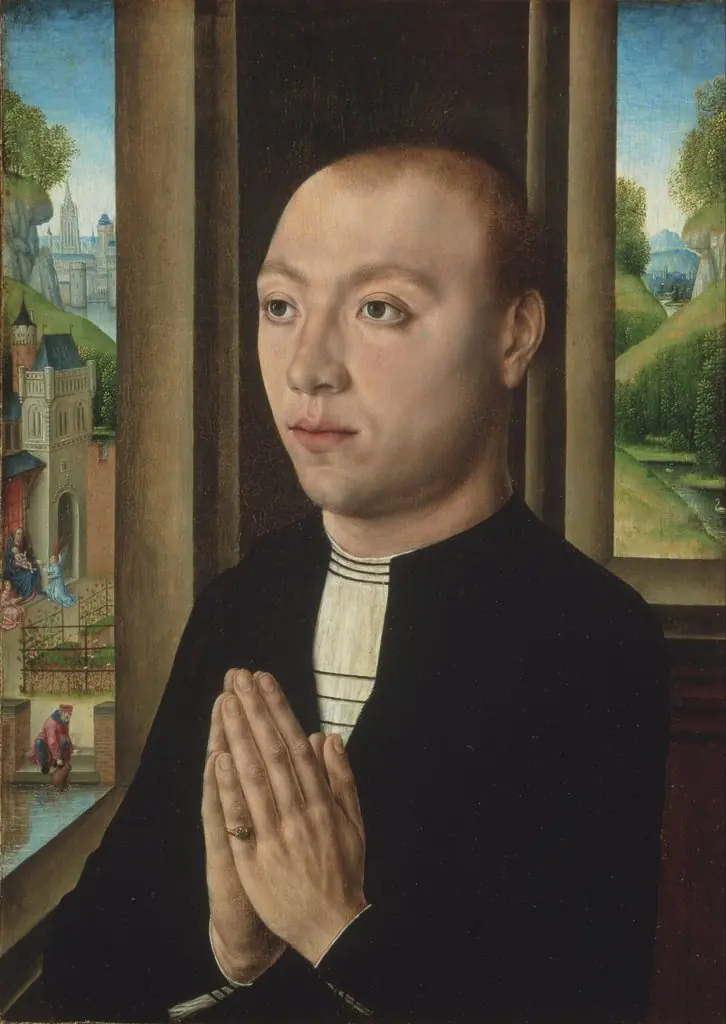
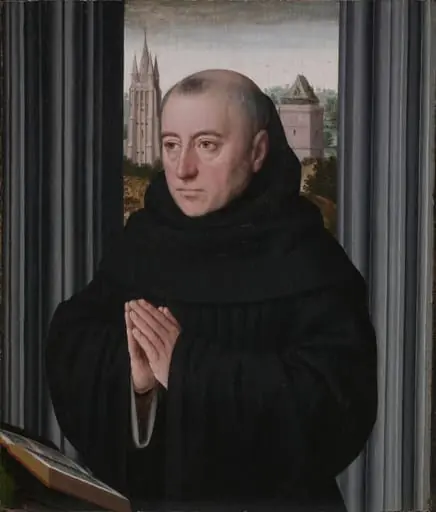
Portrait of a Male Donor
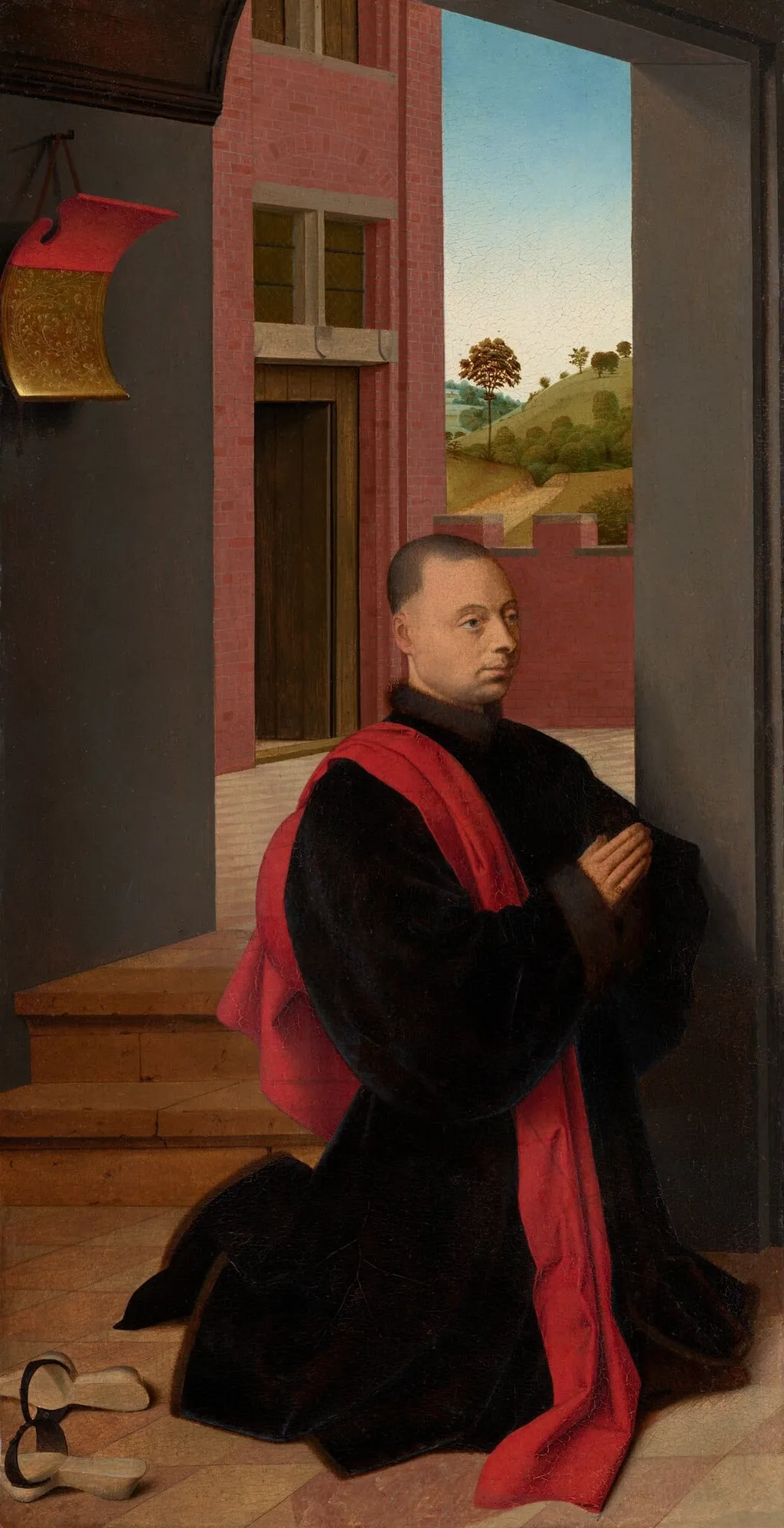
Portrait of a Male Donor is an oil painting by the Northern Renaissance artist Petrus Christus. It dates from 1455 and is held in the collection of the National Gallery of Art.
About this work
History & Provenance
Kress Foundation in 1961, having been purchased by the foundation in 1937 from the Florentine collector Count Alessandro Contini Bonacossi.
The portrait, dated 1450, was created by Petrus Christus as an oil painting on panel. While an unattributed statement in the National Gallery of Art curatorial file suggests a possible origin in a private collection in Genoa, no historical records from Carlo Giuseppe Ratti or Federigo Alizeri confirm the presence of this specific donor portrait in Genoa during the 18th or 19th centuries. By 1937, the work was in the possession of Count Alessandro Contini Bonacossi in Florence.
It was purchased that same year by the Samuel H. Kress Foundation in New York. The painting entered the National Gallery of Art in Washington, D.C., as a gift from the Kress Foundation in 1961.
The painting is held by the National Gallery of Art in Washington, D.C., where it is accessioned as 1961.9.10. It entered the museum as a gift from the Samuel H. Kress Foundation in 1961, having been purchased by the foundation in 1937 from the Florentine collector Count Alessandro Contini Bonacossi. Prior to that, the work may have been in a private Genoese collection, though this provenance is unattributed. No exhibition history is recorded in the provided sources.
Context
The Portrait of a Male Donor, executed in oil on panel around 1450, exemplifies early Netherlandish portraiture with its meticulous rendering and intimate characterization. Scholars note that its provenance, once attributed to a private collection in Genoa, lacks documentary support beyond an unattributed Kress Foundation file note, and the claim is contested in the corpus literature.
The work entered the Samuel H. Kress Collection in 1937 and was subsequently gifted to the National Gallery of Art in 1961, where it remains on public view. Its attribution to Petrus Christus situates it within the development of early Netherlandish painting, a period marked by advances in oil technique and individual portraiture.
The painting’s inclusion in the Kress Collection Digital Archive provides further scholarly reference for its study.
Overview
Petrus Christus's Portrait of a Male Donor, executed in 1455, is a seminal work of Early Netherlandish painting that depicts an unidentified man kneeling in prayer within an interior setting. The donor, dressed in a black robe with a red sash, is positioned in profile with hands clasped, facing a doorway that opens to a tiled floor. A distinctive element of the composition is the pair of spectacles resting on the floor near the figure, a detail that underscores the artist's meticulous attention to material reality and the intellectual pursuits of the sitter.
Christus employs the oil-on-panel medium to achieve a high degree of luminosity and texture, utilizing glazing techniques to render the subtle variations in the fabric and the reflective surfaces of the objects. The work exemplifies the Burgundian Netherlands' shift toward psychological depth and spatial coherence, integrating the donor into a believable architectural space rather than a flat, symbolic background. This painting stands as a key example of Christus's mature style, bridging the legacy of Jan van Eyck with a distinct, refined approach to portraiture that emphasizes the quiet dignity and individual presence of the subject.
Subject & Meaning
The painting presents a male figure in solemn prayer, distinguished by his black robe and a prominent red sash. His clasped hands and kneeling posture suggest devotion, likely intended for a religious context, possibly as part of a diptych or triptych. The inclusion of everyday objects, such as a pair of spectacles resting on the tiled floor, grounds the sacred act within a tangible, domestic environment, adding a layer of personal presence to the devotional image.
Technique & Style
Executed in oil on panel, the painting showcases Christus's meticulous approach to rendering detail and texture. The artist employed glazing, a technique involving multiple thin, translucent layers of paint, to achieve a profound sense of depth and luminosity. This method allowed for the precise depiction of surfaces, from the folds of the donor's robe to the reflective quality of the tiled floor, contributing to the work's overall realistic and refined aesthetic.
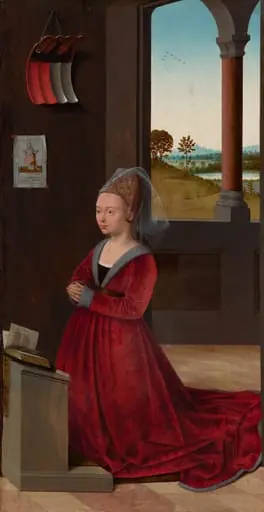
Artist & collection
Artist
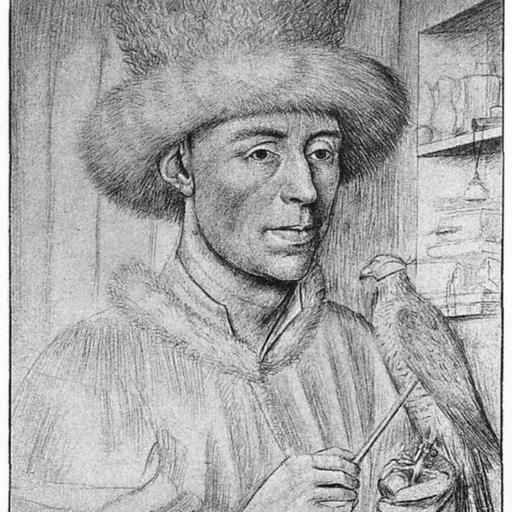
Petrus Christus (Dutch:; c. 1410/1420 – c. 1475/1476) was an Early Netherlandish painter active in Bruges from 1444, where, along with Hans Memling, he became the leading painter after the death of Jan van Eyck. He was…

 Portrait of Ludovico Portinari
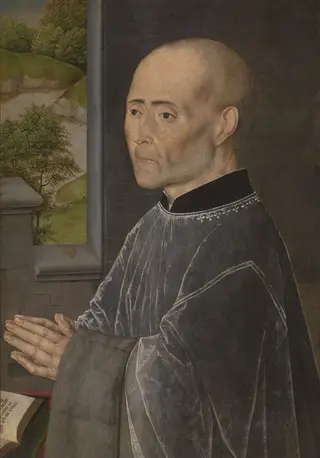 Portrait of a Canon
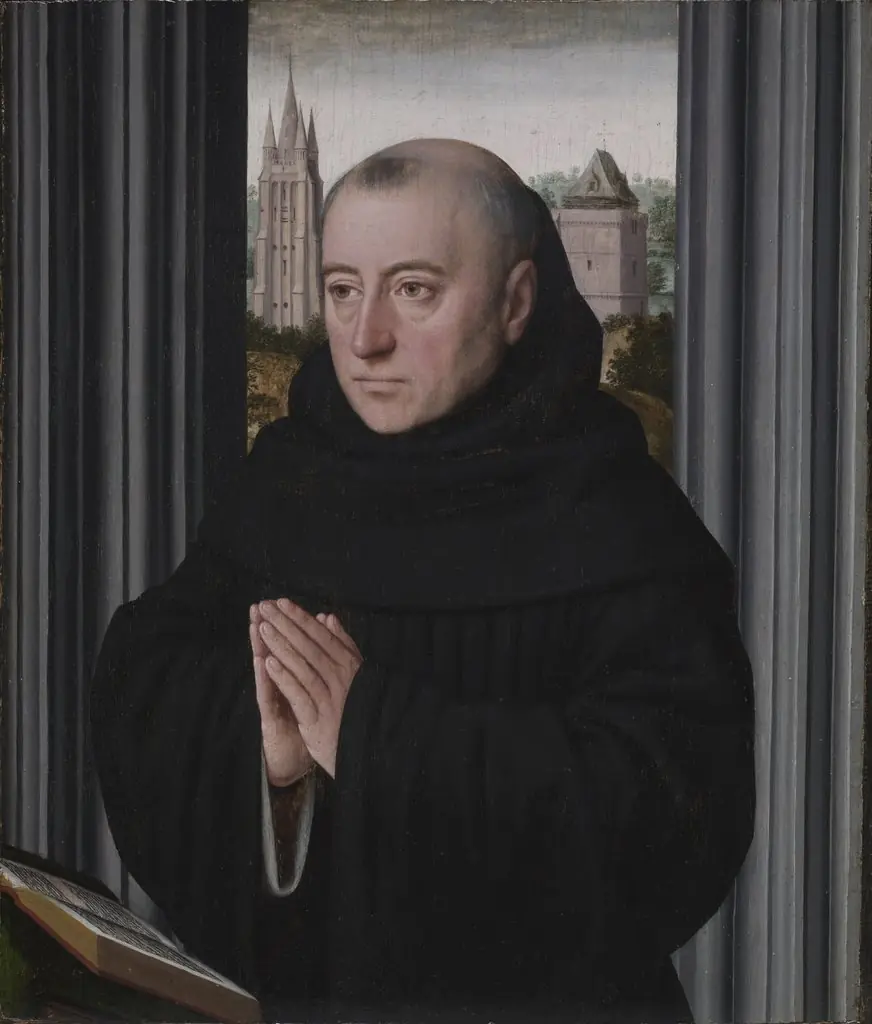 Portrait of a Monk
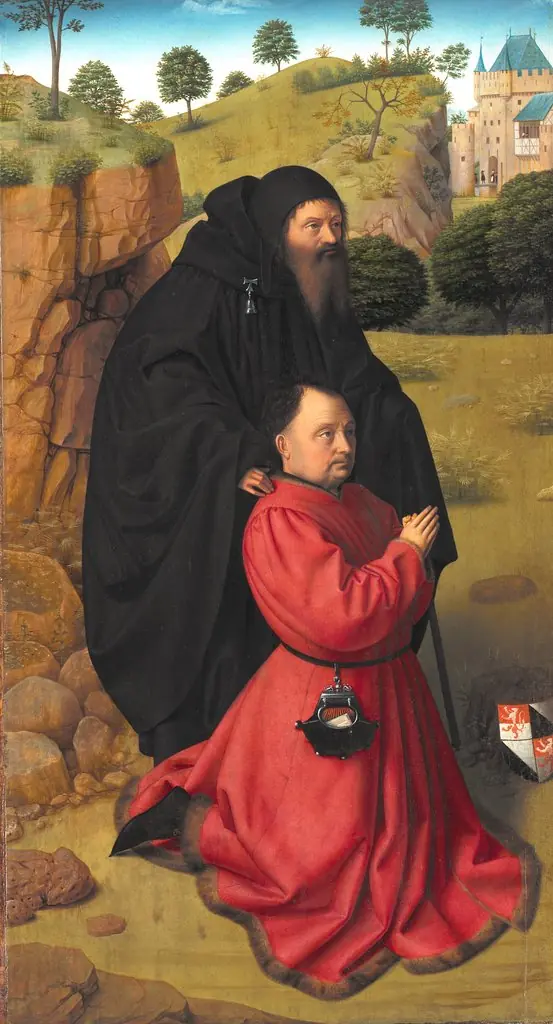 Altar Panel with a Portrait of a Donor in Scarlet under the Protection of St Anthony
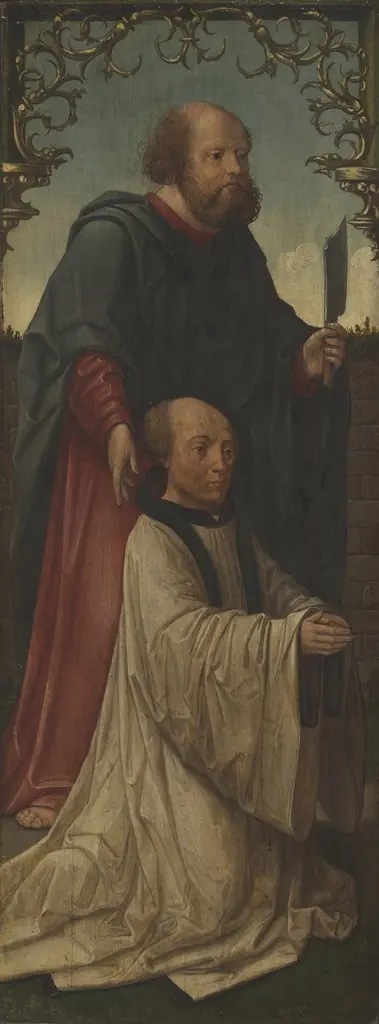 Saint Matthias (?) and a Donor; Saint Andrew (reverse)
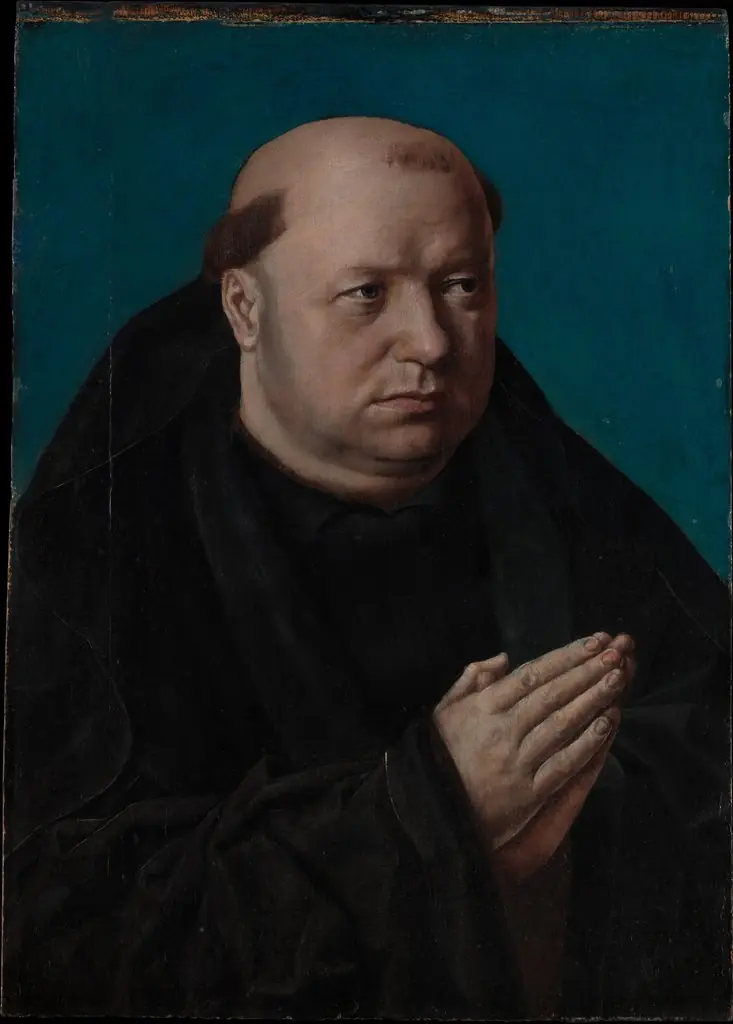 Portrait of a Monk in Prayer
 Bust of Saint Joseph
 Scenes from the Life of St Bertin
 Judgement of Cambyses: The Arrest of Sisamnes
 Portrait of a Monk