Artwork
De Koepoort te Delft
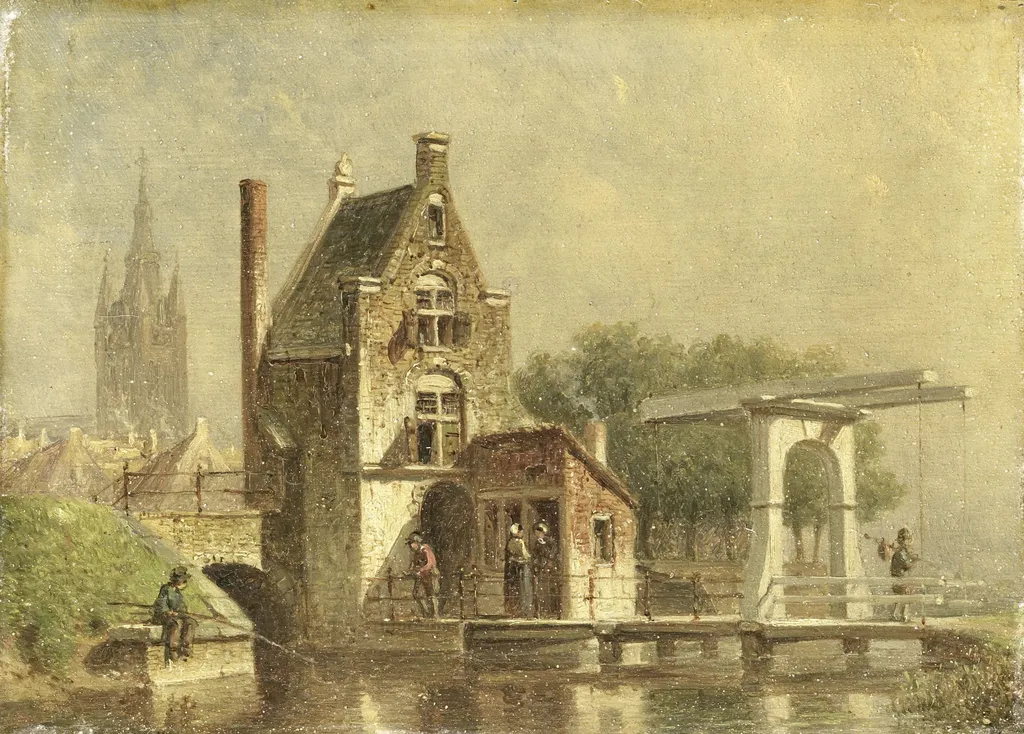
De Koepoort te Delft is an oil painting by the Dutch Golden Age artist Petrus Gerardus Vertin. It dates from 1850 and is held in the collection of the Rijksmuseum.
About this work
Subject & Meaning
The painting depicts the Koepoort in Delft, a specific architectural gate, alongside a house. As a landscape work created in 1850, the subject focuses on this Dutch urban landmark and its immediate surroundings. The composition captures the physical structure of the gate and the adjacent residential building, presenting them as the central elements of the scene.
Technique & Style
De Koepoort te Delft is executed in oil paint on panel, a support combination typical for small-scale nineteenth-century Dutch cabinet pictures.
De Koepoort te Delft is executed in oil paint on panel, a support combination typical for small-scale nineteenth-century Dutch cabinet pictures. The work is modest in size, measuring 15.5 cm in height by 21.5 cm in width, a format suited to detailed topographical observation. Classified as a landscape painting, it depicts the Koepoort, a Delft city gate, together with an adjacent house, reflecting Vertin's focus on architectural subjects rendered with precise, descriptive handling rather than dramatic stylistic flourishes.
History & Provenance
Petrus Gerardus Vertin created the oil painting De Koepoort te Delft in 1850. Executed on a panel measuring 15.5 by 21.5 centimeters, the work depicts the Koepoort gate and surrounding houses in a landscape setting. The painting is currently held in the collection of the Rijksmuseum.
Context
De Koepoort te Delft (1850) depicts a modest 17th-century Delft city gate rendered in oil on panel, reflecting Vertin's focus on quiet, topographically precise landscapes rather than dramatic effects. The work's restrained palette and careful handling of light demonstrate his engagement with 19th-century Dutch Romanticism while maintaining a distinct emphasis on architectural authenticity and atmospheric subtlety. Its restrained composition and emphasis on material presence underscore Vertin's contribution to the evolution of the Dutch landscape genre beyond the Hague School's later developments.
Scholarship highlights the painting's significance as a bridge between Romantic idealism and emerging realist tendencies, with its precise architectural rendering serving as a study in light and materiality that prefigures later developments in Dutch tonal painting. The work's presence in the Rijksmuseum collection since its acquisition reinforces its recognized importance within the national narrative of Dutch artistic heritage, though its critical reception has largely centered on its technical mastery rather than emotive or symbolic dimensions.
Overview
Petrus Gerardus Vertin’s oil on canvas, dated around 1850, presents a tranquil riverside view of Delft’s Koepoort. The composition is dominated by a mist‑filled atmosphere that softens the outlines of a large stone edifice with a steep roof and a smaller timber building nearby. Figures populate the scene, crossing a modest wooden bridge and lingering at the water’s edge, while a horse‑drawn rider adds a touch of everyday activity.
Own this work as a print
Artist & collection

- Old Houses at Harnham Bridge, Salisbury
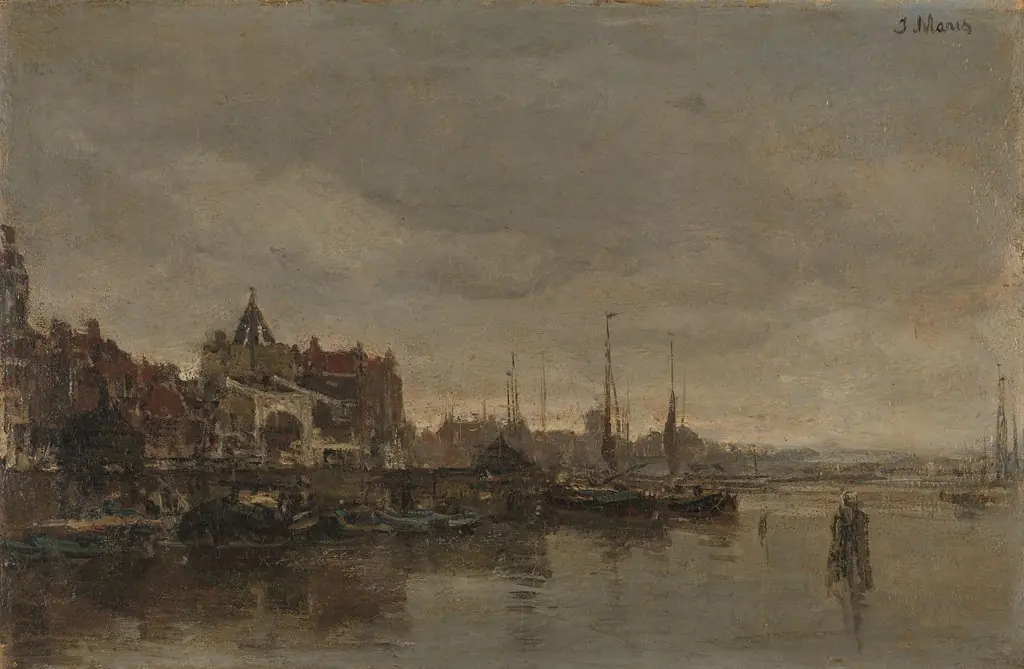 De Schreierstoren met de brug over de Gelderse Kade te Amsterdam
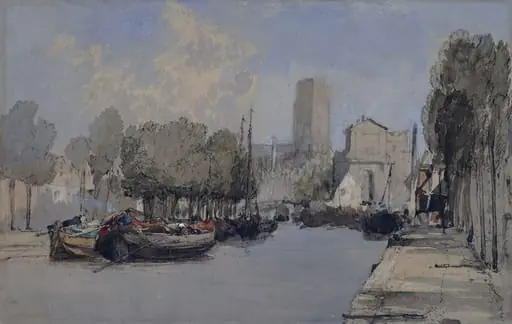 Dordecht
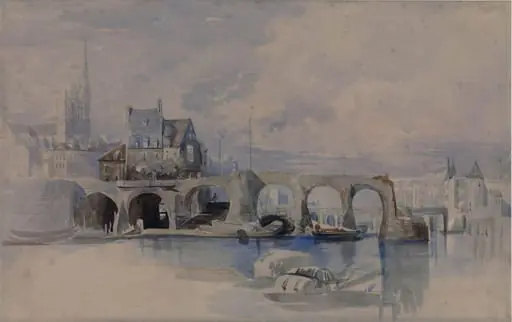 Avignon, the Ruined Bridge
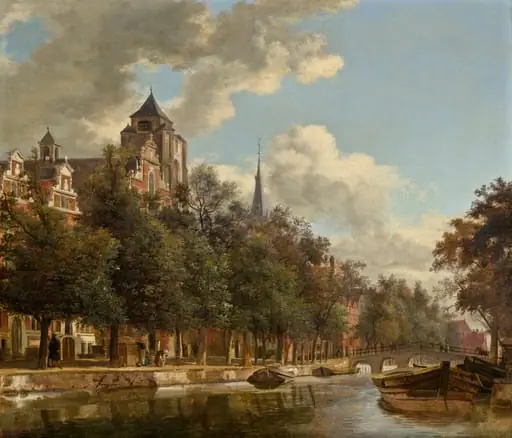 View Down a Dutch Canal
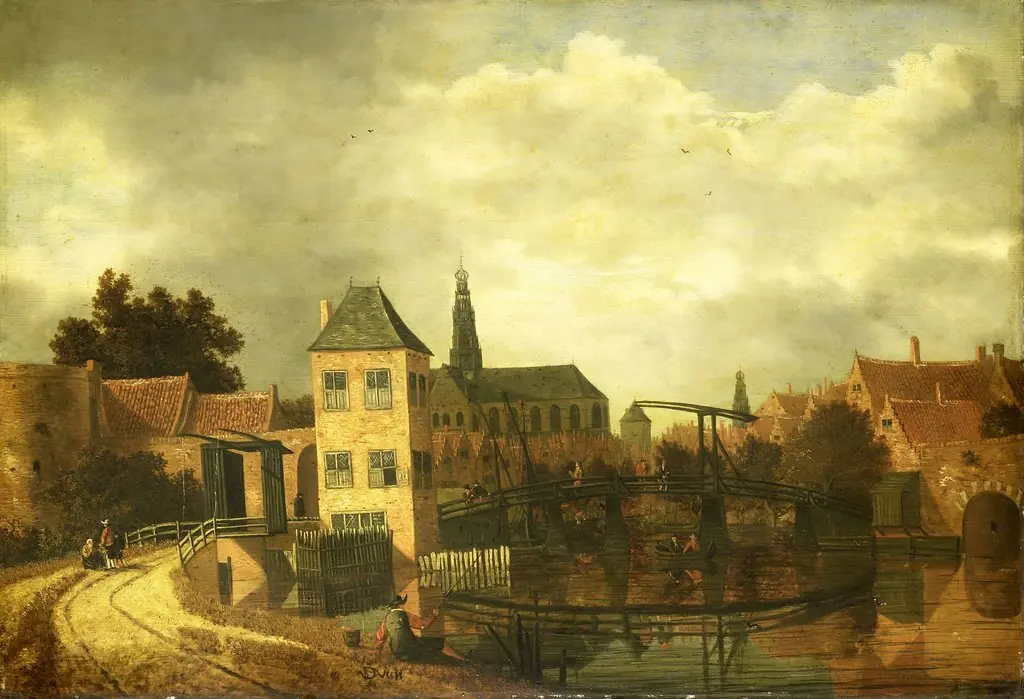 View of Haarlem from across the Spaarne, near the Eendjespoort
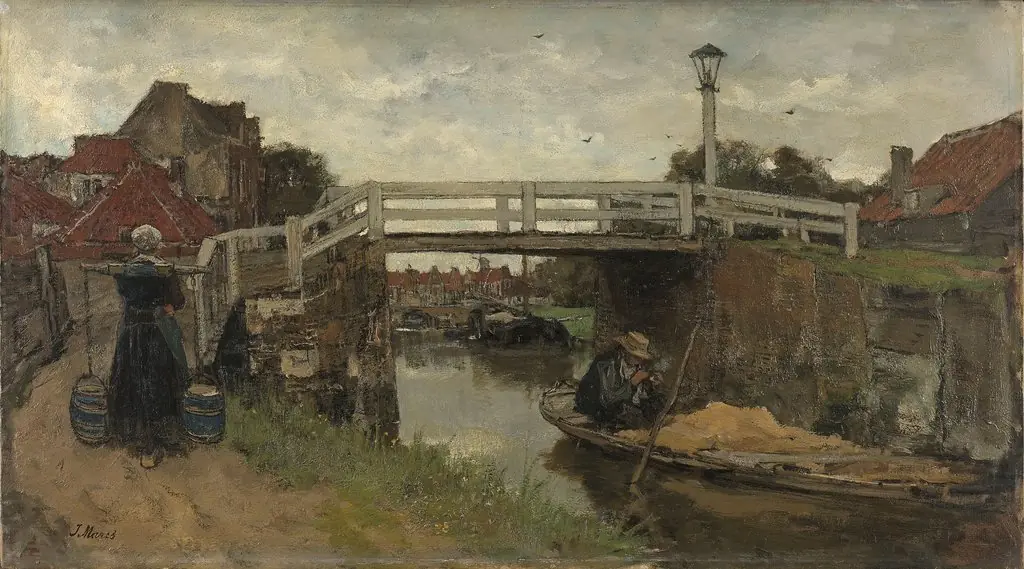 The Bridge
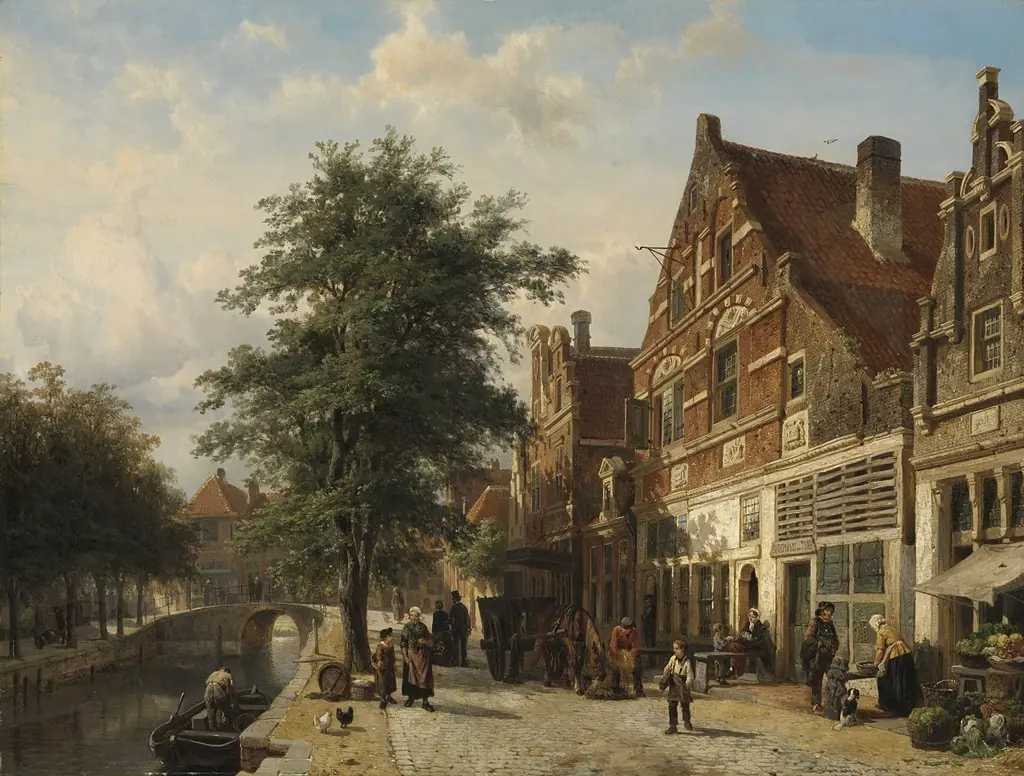 The Zuiderhavendijk, Enkhuizen
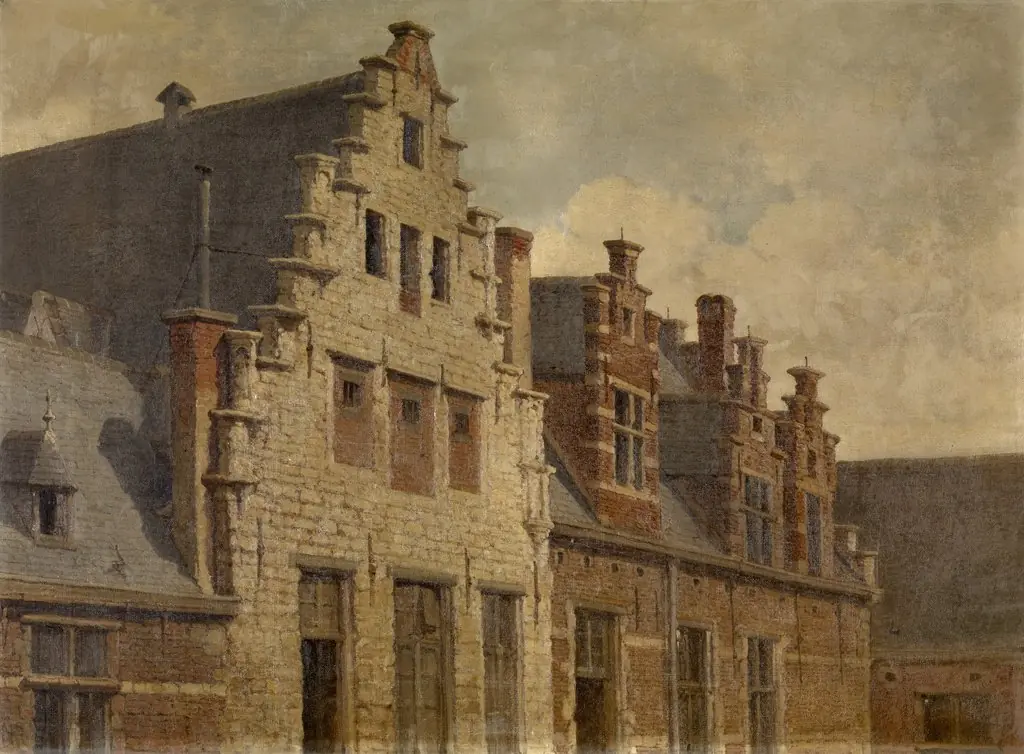 Huis van Liere
 The Brouwersgracht in Amsterdam
 Old country house with trees
 Batestein Castle near Vianen